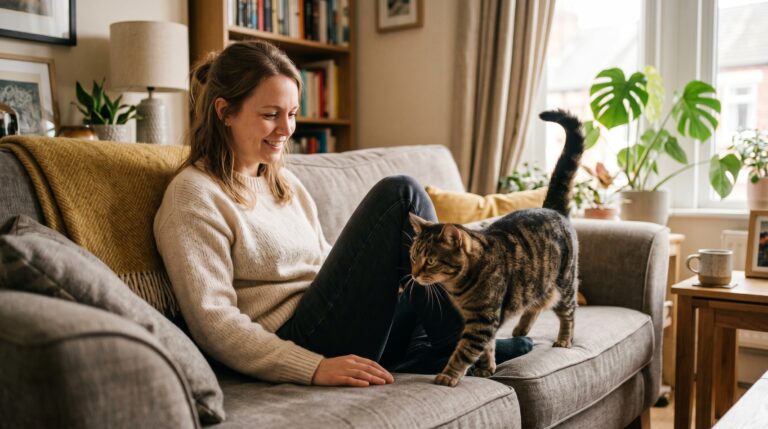
Your cat has rules. And if you’re breaking them — which most people are — your cat isn’t going to say a word. They won’t meow. They won’t complain. They’ll just quietly, slowly stop trusting you. And you’ll never even know it’s happening. Understanding cat behavior rules isn’t about being a perfect pet owner. It’s about learning a language your cat has been speaking since the day they arrived. These six silent rules are ones your cat tests you on every single day. Break enough of them and the bond quietly erodes. Follow them consistently and something remarkable happens — your cat chooses you, over and over again, freely and completely. The last rule on this list will tell you exactly how your cat feels
Rule 1: Never Stare Directly Into Your Cat’s Eyes
Have you ever looked straight into your cat’s eyes — lovingly, warmly — and they just turned away? You probably assumed they got distracted or lost interest. But something else entirely was happening in that moment.
In cat language, direct eye contact is not affection. It’s a threat. This is hardwired deep into their instincts. In the wild, a prolonged stare between two cats signals one thing clearly: a confrontation is coming. So every time you gaze into those beautiful eyes thinking you’re sharing a tender moment, your cat is sitting there processing you as a potential aggressor.
A study published in the journal Animal Cognition confirmed this. Cats actively avoid people who stare at them — but move closer to people who blink slowly and look away. That slow blink is the key. It’s “I love you” in cat language. It’s a signal of peace, safety, and trust. So next time your eyes meet your cat’s, look softly, slow blink deliberately, and look gently away. That small, three-second gesture communicates more warmth and trust than any prolonged stare ever could.

Rule 2: Know Exactly When to Stop Petting Them
Your cat is purring. You’re in the moment, completely enjoying it. And then, out of nowhere — they bite you. You didn’t do anything wrong. At least, that’s what it felt like. But the truth is, you did. You just didn’t know when to stop.
Cats have a neurological threshold for physical touch. Cross it, and what felt like pleasure becomes genuine overstimulation. Researchers have an actual name for this: petting-induced aggression. Think of it like someone rubbing the same spot on your arm over and over. At first it’s pleasant. Then it’s irritating. Then it becomes unbearable and you pull away.
The warning signs are always there before the bite. The tail starts flicking. The ears flatten slightly. The skin ripples along the back. Most owners miss every single one because they’re too focused on how perfect the moment feels. The rule is straightforward: pet in short sessions. The moment you notice those signals, stop completely. Let your cat come back for more on their own terms. That isn’t rejection. That is your cat teaching you exactly how they want to be loved — and trusting you enough to do it.
Rule 3: Never Disrupt Their Claimed Spaces Without Warning
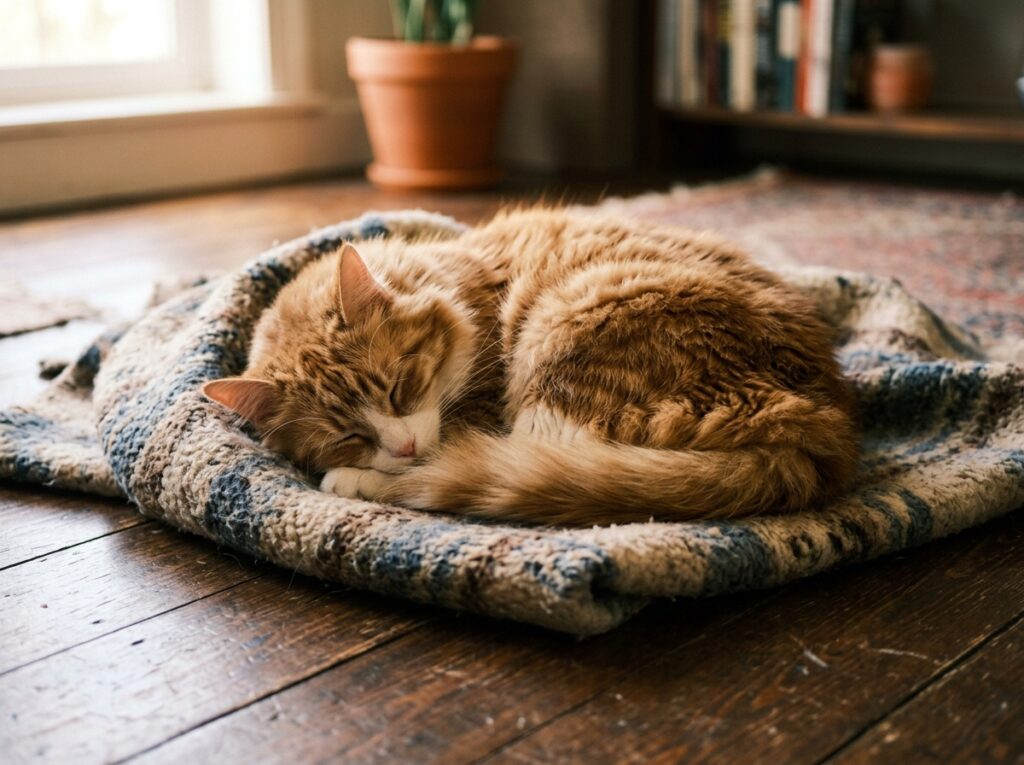
You know that one spot your cat always sleeps in. The specific corner of the couch, that folded blanket, that old cardboard box in the corner. What happens when you move it? Toss it out? Rearrange the room?
Most owners don’t think twice. You’re just tidying up, making the space look better. But to your cat, you just erased something that belonged entirely to them.
Cats don’t experience your home the way you do. They map their entire world through scent and territory. Every spot they claim gets marked with pheromones from their face and paws — their biological way of saying this is mine, this is safe, I belong here. When you move that spot, that sense of security disappears without explanation. And your cat has no way of understanding why.
A study from the Journal of Feline Medicine and Surgery found that environmental disruption is one of the top triggers of stress in indoor cats. Something as small as moving a bed to the other side of a room can cause anxiety, appetite changes, and litter box avoidance. The rule: respect what they’ve claimed. And if you absolutely must move or remove something, do it gradually — a little at a time — and give your cat the space to adjust at their own pace.
Rule 4: Give Them Complete Privacy During Meals
Do you ever talk to your cat while they’re eating? Stand nearby, lean down to say something sweet, or reach over to pet them while they’re at the bowl? It feels harmless and affectionate. Your cat, however, doesn’t experience it that way at all.
Mealtime is the most vulnerable moment in a cat’s day. Head down, guard lowered, senses narrowed to the food in front of them. That survival instinct doesn’t vanish just because they live indoors and have never faced a predator in their life. When you hover over them during a meal — even with the best intentions — part of their brain shifts from eating to tracking you. The stress is happening internally. You just can’t see it.
What you can see is the aftermath. Cats who feel pressured or watched during meals often start eating too fast, which leads to vomiting. Some develop food guarding behaviors. Others begin avoiding the bowl altogether, which owners mistake for pickiness or a dislike of the food. The rule is simple: when your cat is eating, give them space. No talking, no touching, no standing over them. Those few minutes at the bowl belong entirely to them.
Rule 5: Always Acknowledge Them When You Come Home
You come home after a long, exhausting day. Keys down, shoes off, phone in hand. And your cat was right there — waiting for you, watching from across the room. You walked past them without a word.
To you, it was nothing. You’ll pet them in a minute. But to your cat, that moment meant everything.
Cats don’t greet casually. When your cat shows up at the door or watches you walk in from across the room, that is a deliberate, intentional act. They are acknowledging you — and they expect acknowledgment in return. Researchers have found that cats form greeting rituals with their trusted owners in the same way they do with other cats they’re bonded to. A slow approach, tail raised, sometimes a soft chirp. That’s their version of I noticed you and I’m genuinely glad you’re here.
When you ignore that greeting, your cat doesn’t make a scene. They just quietly file it away. And over time, they stop coming to the door. They stop chirping when you walk in. Not because they stopped caring — but because they learned that you don’t follow the rule. The fix takes three seconds. Walk in. Slow blink. Say something soft and gentle. That is genuinely all they ever wanted from you in that moment.
Rule 6: Pay Attention to Where Your Cat Chooses to Sleep
This is the rule that brings everything together — and the one that will tell you exactly how your cat feels about you right now.
Where your cat chooses to sleep is the most honest thing they will ever communicate. There is no performance in it, no social calculation. It is pure, unfiltered instinct.
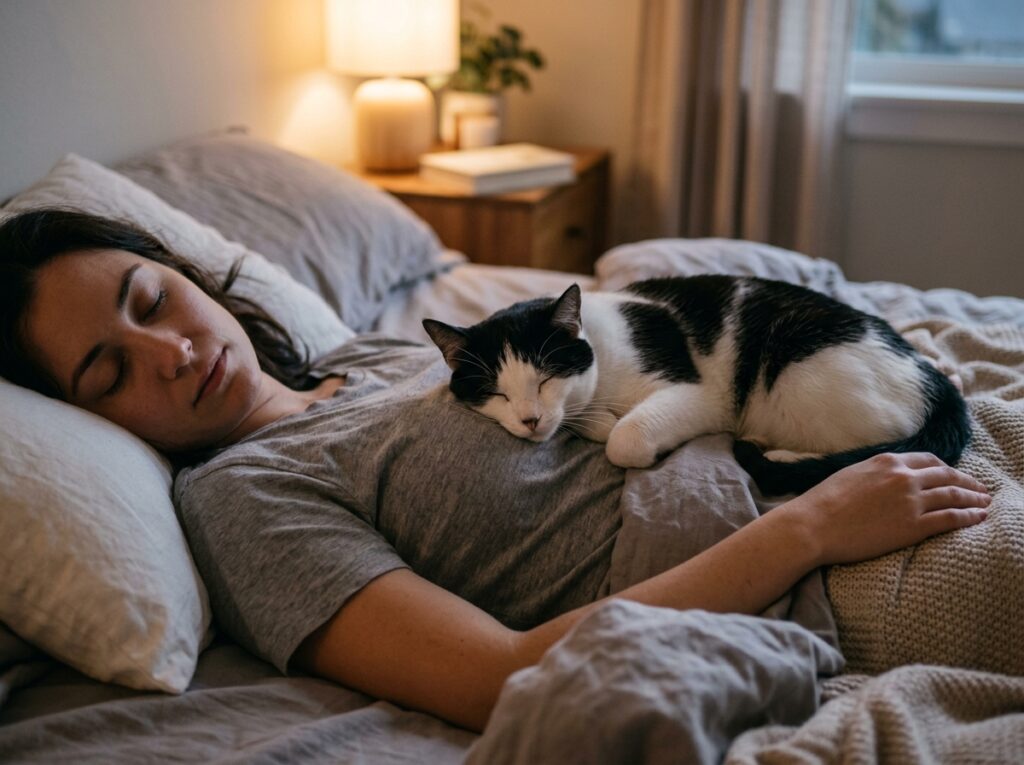
A cat who sleeps on your chest or near your face is showing complete surrender. They are placing themselves at their most vulnerable — in their deepest state of unconsciousness — right beside you. That is not just comfort-seeking. That is total, unconditional trust. It is the highest compliment a cat can pay another living being.
A cat who sleeps at the foot of the bed trusts you, but is maintaining a little healthy distance. They want to be close, but they also want a clear exit route. This is often a cat who is still learning your patterns, still building their confidence in the relationship.
A cat who sleeps in another room entirely doesn’t necessarily mean they don’t love you. But it may mean that something in your daily routine — possibly one of the rules above — is making them feel uncertain or unsettled. The good news is that none of this is permanent or fixed.
Final Thoughts: Every Day Is a New Chance With Your Cat
Here’s what makes cats so extraordinary: they are endlessly, patiently willing to give you another chance. Every single day resets. Every slow blink, every respectful pause at the food bowl, every soft word at the door — it all gets recorded quietly in their memory.
The relationship you have with your cat isn’t built in grand moments. It’s built in the small, daily, almost invisible ones. The three-second acknowledgment when you walk in. The decision to stop petting before the tail starts flicking. The choice to leave that worn blanket exactly where it is.
None of the rules on this list are complicated. None of them require time, money, or effort beyond a moment of awareness. What they require is understanding — an understanding of who your cat actually is, how their instincts work, and what they’re trying to tell you in the only language they have.
You chose to share your life with a cat. That was never a small thing. Now go look at where they’re sleeping tonight. Because now you know exactly what it means. Want to go deeper into understanding your cat’s behavior and psychology? Explore more science-backed guides right here at Furrology.net