You feed them every single day. You call their name with warmth in your voice. You genuinely, completely believe your cat knows how much you love them. But what if the love you’ve been pouring out has been spoken in a language your cat simply cannot hear?
This isn’t a story about bad pet owners. It’s a story about one of the most misunderstood animals on the planet — and the humans who never gave up trying to connect with them. Cats have been beside us for over 10,000 years. Through ancient civilizations, through centuries of silence and change, they watched it all from windowsills and warm corners. And yet we still don’t fully understand how they communicate. Science, however, is finally catching up. Researchers have discovered that your cat has a language — ancient, wordless, and precise. And once you start speaking it daily, your cat won’t just tolerate you. They’ll choose you. Here are seven simple habits that make all the difference.
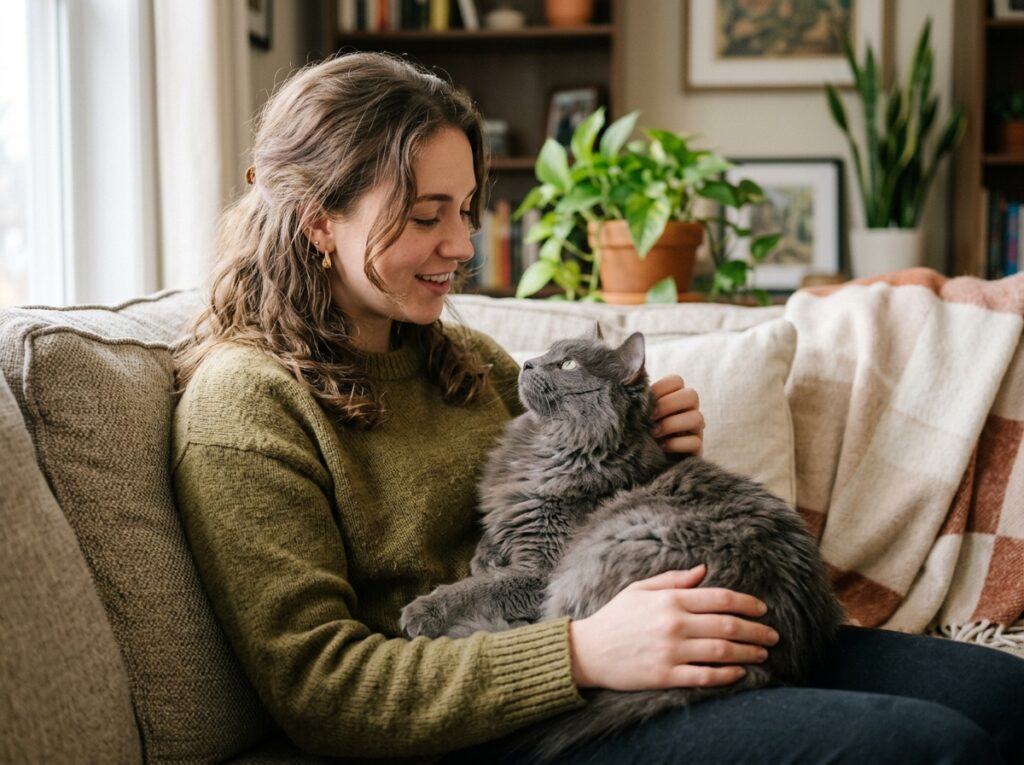
1. Talk to Your Cat Using That “Baby Voice” — Science Says It Works
You know that soft, high-pitched, slightly ridiculous voice that comes out the moment you see your cat? The one you’d never use in a meeting? You’ve probably felt embarrassed by it. Stop feeling embarrassed. Science just confirmed it’s the most important sound in your cat’s world.
In 2022, researchers at the University of Paris made a quiet but stunning discovery — cats can tell the difference between their owner’s voice and a complete stranger’s. But here’s the catch: that recognition only happened when the owner used that warm, exaggerated, tender tone. When owners spoke in a flat, normal adult voice, their cats barely reacted. But the moment that sweetness entered the voice, ears turned, heads lifted, paws moved closer.
Your cat doesn’t understand your words. They never have. But they understand everything in the way you say them. That soft tone isn’t silly — it’s a signal. It tells your cat in a language older than any spoken word: “You are safe. You are loved. I am yours.”
So talk to them. Every morning, every evening, every quiet moment in between. Say anything. Just say it gently.
2. Master the 3-Second Slow Blink — The Cat Language Sign for “I Love You”
Have you ever caught your cat staring at you from across a quiet room, and then slowly, deliberately, they closed their eyes? You probably thought they were drifting off to sleep. They weren’t sleeping. They were speaking.
That slow blink is one of the most intentional acts a cat can perform. It’s a carefully composed message aimed directly at you. In 2020, scientists at the University of Sussex brought this exact moment into the lab. They found that when owners slow-blinked at their cats, the cats blinked back — and then moved closer. Every single time. Even strangers who used the slow blink saw a measurable shift in how cats responded to them.
No treat. No toy. No elaborate gesture. Just three seconds: eyes soft, lids dropping slowly, holding for just a breath. And your cat reads it as clearly as any declaration ever spoken — I trust you. You are my person.
Make it a ritual. Every morning, every evening, whenever your eyes happen to meet — slow blink first. Always.
3. Play Like a Real Hunt, Not a Lazy Wiggle
Most people think their cat is lazy or hard to entertain. They dangle a toy, the cat stares blankly, and the owner sighs. But that isn’t boredom. That’s disappointment.
Inside every domestic cat — no matter how soft their bed or how full their bowl — lives a hunter. Ancient, precise, endlessly patient. Cats are hardwired for a very specific sequence: stalk, chase, pounce, catch. That sequence isn’t just play to them. It’s purpose. It’s identity.
When you wave a toy back and forth in the same spot at the same speed, you skip every single step that makes a hunt feel real. The toy becomes meaningless, and your cat looks away — not out of laziness, but because a core instinct has been left unfulfilled.
Move the toy like it’s alive. Drag it away from them, never toward them. Let it disappear behind a corner. Let it freeze, then dart, then vanish again. Watch what happens to your cat’s eyes. Pupils wide, body low, the whole world gone silent around them. That is your cat becoming completely, fully themselves. And the person who gives them that experience every single day becomes the most important living thing in their world.
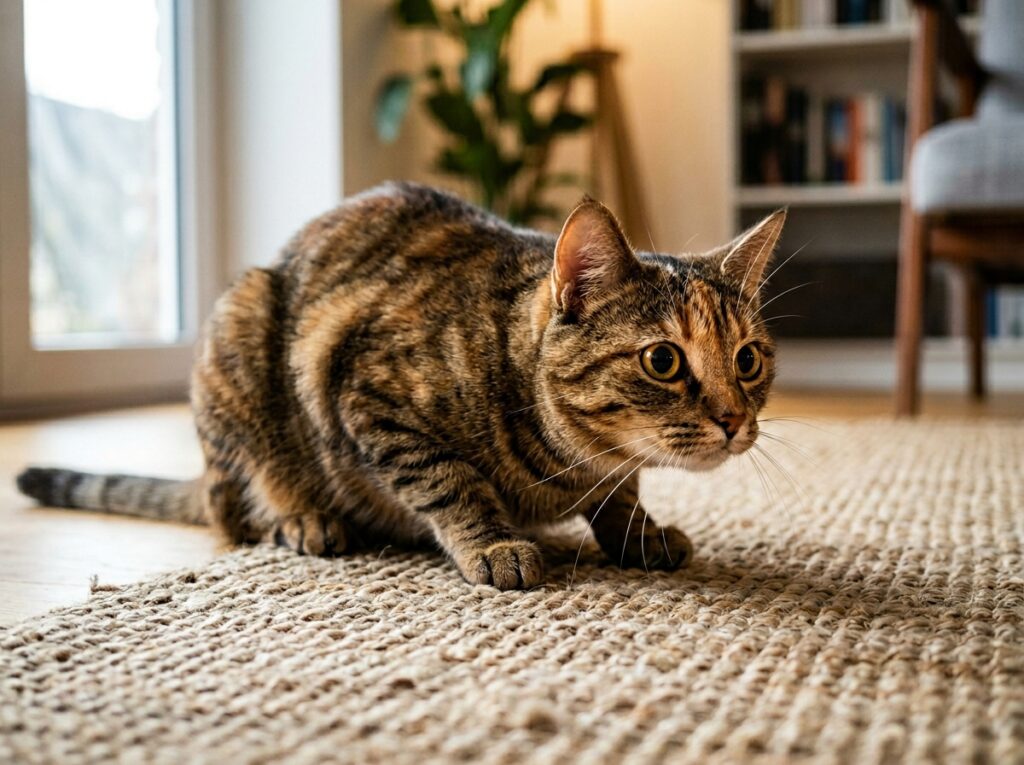
4. Sit Near Them and Do Absolutely Nothing
What if the most powerful thing you could do for your cat required zero effort? No petting, no calling their name, no reaching for a treat. Just sitting. Existing. Being near.
Most owners feel like nothing is happening in these moments. But your cat is watching. Your cat is calculating. And what you do in these quiet moments matters more than almost anything else you could do.
In the wild, cats only rest beside those they completely trust. They don’t cuddle to show affection the way dogs do. They share space. That is their love language — quiet, undemanding, and deeply profound.
When you sit near your cat without reaching for them, without needing anything from them, you’re telling them something no treat could ever communicate: I don’t need you to perform. I just want to be near you.
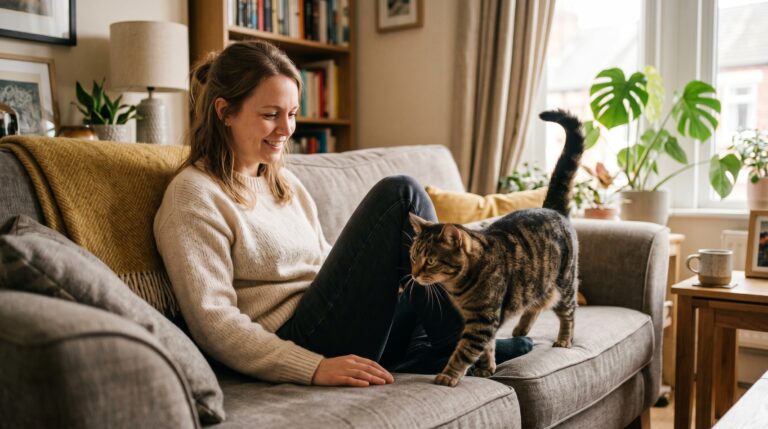
At first, they’ll keep their distance. But watch what happens over days and weeks. The gap gets smaller — slowly, quietly, entirely on their terms. First the same room. Then the same couch. Then right beside you, warm and still. And in the world of cats, being chosen freely, without pressure or force, is the highest form of love they know how to give.
5. Let Them Smell You Before You Touch Them
Think about how you greet your cat when you walk into a room. Do you reach down immediately? Go straight for the head scratch? If you do, you’re skipping the most important step of every single interaction.
Cats don’t process the world through sight the way we do. They process it through scent. Every greeting begins with the nose — always, without exception. This isn’t a preference or a quirk. It’s biology.
When two bonded cats meet — even cats who have lived together for years — they don’t simply walk up and start grooming. They touch noses first. A brief, deliberate exchange of scent. It’s a handshake. A password. A confirmation: I know you. You are familiar. You are safe.
When you skip this step, your cat experiences something jarring — like a stranger walking up and embracing you with no warning whatsoever.
The fix is almost embarrassingly simple. Every time, before you pet your cat, extend one finger, hold it a few inches from their nose, and wait. Let them come to you. Let them sniff. Let them decide. When they push their face into your hand or rub their cheek against your finger, that’s your green light. That’s your cat saying: Now I’m ready. You may.
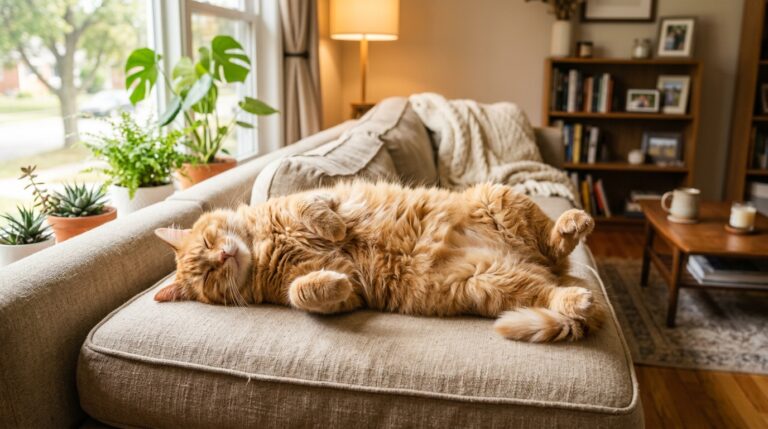
6. Never, Ever Wake Your Sleeping Cat
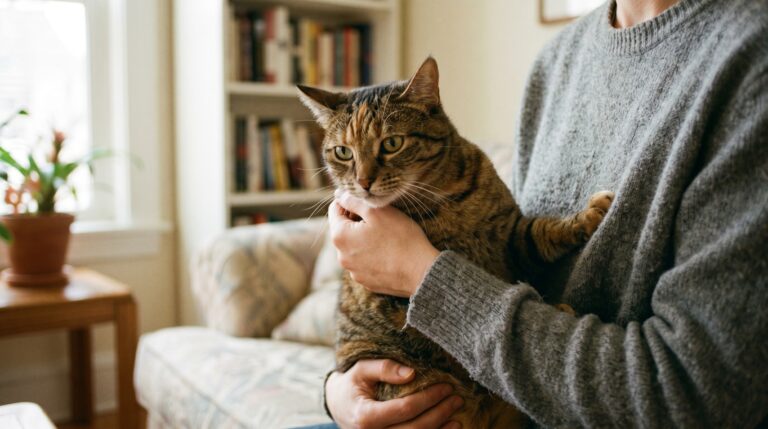
We’ve all done it. They’re curled up in that perfect little ball, impossibly soft, unbearably peaceful, and something in your brain says, “I need to hold that right now.” So you scoop them up. And for a brief moment, it feels like love.
But to your cat in that exact moment, it feels like the ground disappearing beneath them.
Cats sleep between 12 and 16 hours a day — not because they’re lazy, but because sleep is genuinely sacred to them. It’s how their body heals, how their nervous system resets, how stress dissolves. And deep sleep is when a cat is at their most vulnerable. They chose that spot precisely because they felt safe enough to drop their guard completely.
When you lift them without warning, their heart rate spikes, claws emerge, muscles tense. Even if they settle into your arms seconds later, something has been quietly recorded in their memory: that spot is no longer as safe as it seemed. Do this enough times and your cat starts sleeping in harder-to-reach places. They’re not hiding from the world. They’re hiding from you.
Protect their sleep. Walk past them. Resist the urge. That, too, is love.
7. The One Spot That Unlocks Everything — Between and Behind the Ears
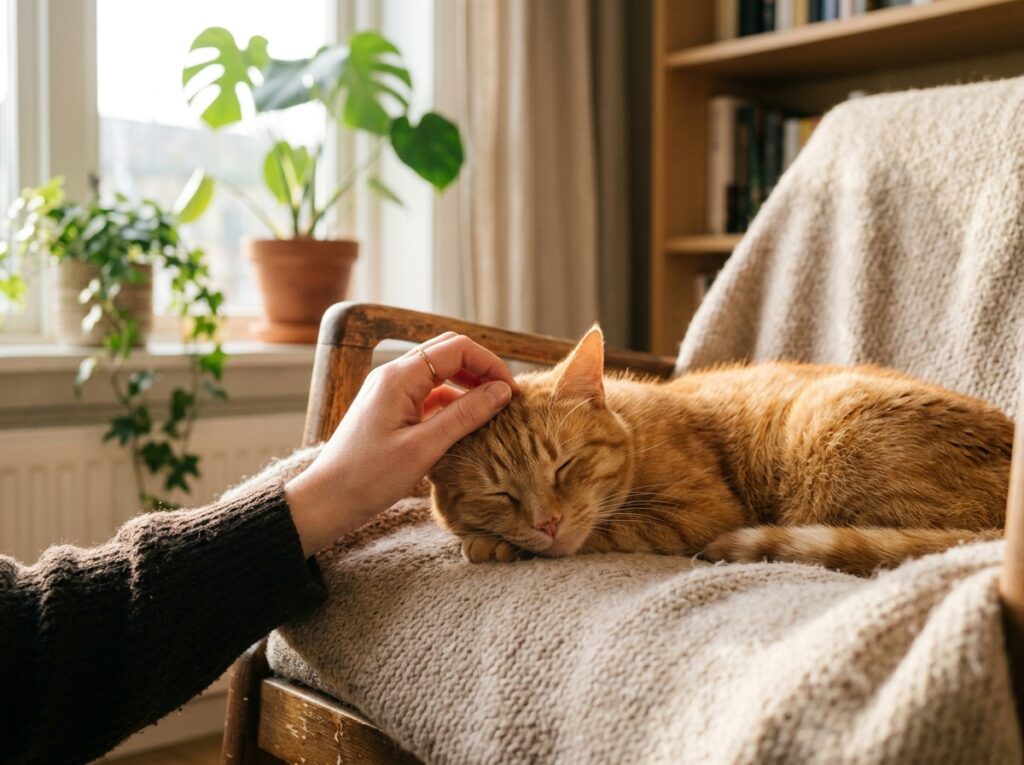
There is one place on your cat’s body that is entirely different from everywhere else. Not the belly — too vulnerable. Not the chin — pleasant, but ordinary. The spot between and just behind the ears, at the base of the head.
This is a spot your cat can never reach on their own. The only way they ever receive touch there is from someone they trust completely. It isn’t just sensitive — it is sacred.
When bonded cats groom each other, a behavior called allogrooming, they focus almost exclusively on this one area. And when they do, something extraordinary happens inside their brains. Oxytocin — the bonding hormone — is released not just in the cat being groomed, but in the one doing the grooming too. A chemical bond that says: we belong to each other.
You can trigger this same response every single day. Gently, with your fingertips, stroke that space between your cat’s ears. Not scratching, not rubbing hard. Slow, soft, and rhythmic — the same gentle pace another cat’s tongue would naturally use. Watch their eyes close. Watch their body soften. Watch their purr shift deeper and quieter, more real than anything you’ve heard from them before.
Final Thoughts: Your Cat Was Always Waiting for You to Learn Their Language
Your cat has never needed grand gestures. They never needed expensive toys or elaborate routines. What they’ve needed all along — what they’ve always been waiting for — is simply to be understood.
A soft voice. A slow blink. A hunt that feels real. A quiet presence. A respectful finger extended before a touch. An undisturbed sleep. And a hand that knows exactly where to reach.
These aren’t tricks. They aren’t training techniques. They are a language — ancient, wordless, and precise. A language your cat has been speaking since the day you brought them home. The relationship you’ve always wanted with your cat was never out of reach. It was just waiting, patiently and quietly, for you to learn the words.
Because in the end, love isn’t what we feel. It’s what the other one receives. Start speaking your cat’s language today — one small habit at a time. And if you want to go deeper into understanding your cat’s behavior and psychology, explore more science-backed guides right here on Furrology.net.