
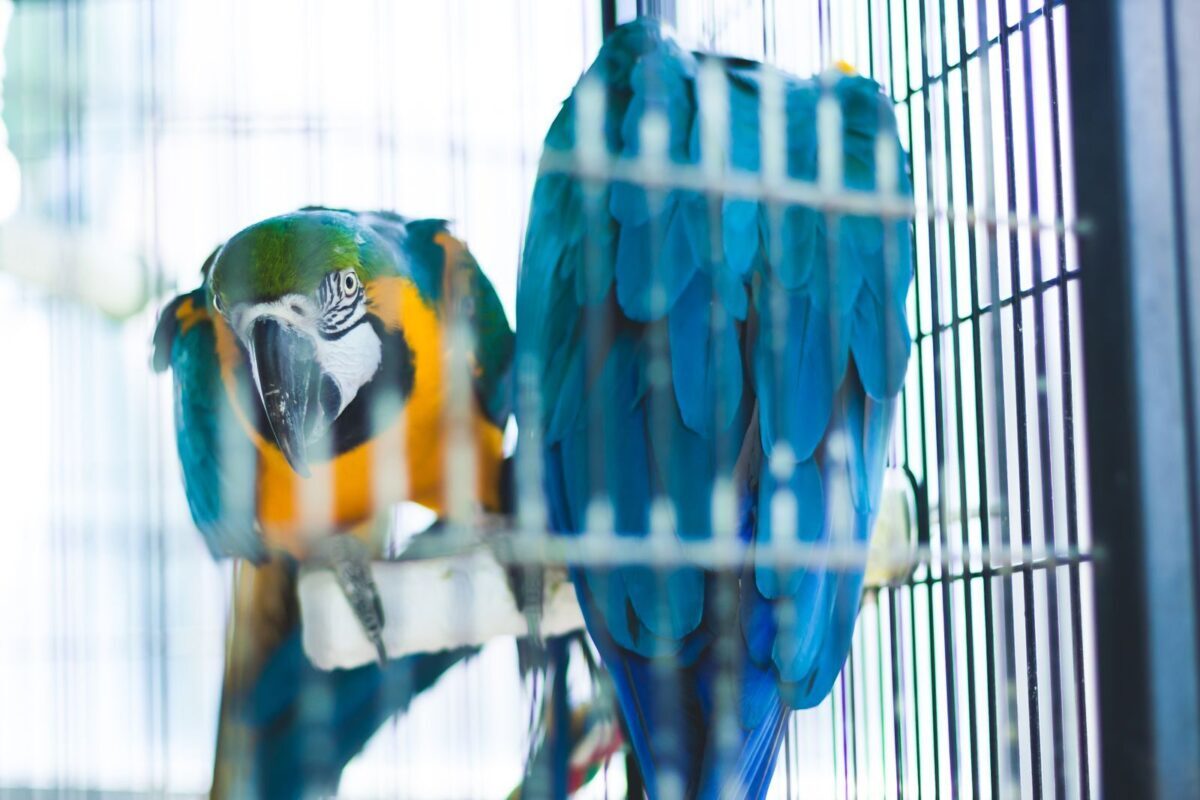
Parrots, budgies and cockatiels need 10 to 12 hours of dark, quiet sleep a night, and most homes cannot provide that without help. A breathable, well-fitting cage cover blocks light and drafts, signals bedtime clearly, and helps birds settle faster and wake less — the simplest upgrade to a bird’s daily routine.
Research-based only. No product was personally tested.
A cage cover is one of the simplest things you can buy for a pet bird, and one of the most useful. Parrots, budgies, and cockatiels need around 10 to 12 hours of dark, quiet sleep a night — far more than most households naturally provide. A cover blocks the light from lamps, screens, and streetlights, cuts drafts, and tells the bird, clearly, that the day is over.
Without that signal, many birds sleep badly: short, broken sleep, night frights where the bird thrashes around the cage in the dark, and behavior problems during the day that trace back to tiredness. A cover does not fix every behavior problem, but a well-rested bird is a calmer bird, and sleep is the easiest part of a bird’s routine to improve.
Why darkness matters
In the wild, birds sleep when it gets dark and wake at dawn. Indoor life breaks that rhythm: living-room lights stay on late, someone watches television, a phone screen glows. A bird in a lit room cannot get the deep sleep it needs, even if it sits still with its eyes closed.
A cover restores the night. It does not need to be pitch black inside — a good cover cuts most light and gives the bird a sense of enclosure and safety. Birds that sleep covered tend to settle faster, wake less in the night, and be less prone to night frights, the sudden panics where a bird flaps wildly in a dark cage and can injure itself.
Fit: measure before you buy
A cover that does not fit is worse than no cover. Too small and it pulls tight, leaving gaps that let light in and tempt the bird to chew the edges. Too big and it pools on the floor, where it collects dust and gets chewed from below.
Measure the cage: height, width, and depth, including any stand or playtop. Check whether the cover is shaped for your cage style — a square cover on a round-top cage leaves gaps, and a cover made for a tall parrot cage will swamp a small budgie cage. The cover should drape to just below the cage base, with enough slack to settle naturally, and a front opening or flap so you can peek in or uncover gradually in the morning.
Fabric and safety
Breathable fabric matters: a heavy, airtight cover traps heat and stale air, which is dangerous in a warm room. Cotton and cotton-blend covers breathe well and wash easily. Dark colors block light best; a light-colored cover looks nicer but lets more light through, which defeats the purpose.
Washability is practical, not cosmetic. Covers collect dust, feather dander, and the occasional dropping, and a cover you cannot wash becomes a hygiene problem. Pick one that machine-washes and dries without shrinking into the wrong size. And check for loose threads, dangling ties, or long cords inside the cage: anything a bird can chew, pull, or tangle a toe in should stay outside the bars.
Two options to compare
Product: Prevue Pet Products Cage Cover
Good for: A reliable everyday cover for standard square and rectangular cages. Breathable cotton-style fabric, a front flap for morning uncovering, and sizes matched to common cage dimensions. A solid default choice for budgie and cockatiel cages.
Watch out for: Sizing runs to standard cages, so unusual shapes or playtops need careful measuring first. Dark colors block light best — the lighter options look nicer but let more light through.
Product: JW Pet Cage Cover
Good for: A sturdier cover for medium and larger parrot cages, with a heavier drape that blocks light well and stays put. The generous cut suits taller cages that standard covers leave short.
Watch out for: The heavier fabric needs a cool room — in a warm house it can trap heat, so check ventilation and room temperature. It also needs a full wash cycle to stay fresh, so keep a spare if you wash weekly.
What to avoid
Avoid covers made from plastic or waterproof material — they do not breathe, and a bird under one can overheat. Avoid covers with long internal ties or cords, and avoid covering the cage for far longer than the bird’s natural night: a bird covered for 16 hours a day is not resting, it is being shut away. Aim for the same 10 to 12 hours of darkness, at roughly the same times each night, so the bird’s body clock can settle.
A bedtime routine that works
Cover at the same time each evening, after a last drink and a calm wind-down — no exciting play right before bed. Uncover gradually in the morning rather than whipping the cover off into bright light. If your bird has night frights, a small night light near (not in) the cage often helps more than total darkness, since the bird can see enough to settle without panicking. And if night frights are frequent, or the bird seems unwell in the morning, mention it to an avian vet — frequent night waking can have a medical cause as well as an environmental one.
FAQs
How many hours should a bird’s cage be covered?
Around 10 to 12 hours of darkness a night, at consistent times. Much longer than that is too much confinement, not rest.
Do I need a cover if the room is already dark?
A quiet, dark room can work without one, but most living rooms are not truly dark or quiet at night. A cover guarantees darkness and cuts drafts and visual disturbance.
Can a cage cover cause overheating?
Yes, if the fabric is heavy or airtight, or the room is warm. Use breathable fabric, keep the room cool, and never use plastic or waterproof covers.
My bird chews its cover. Is that a problem?
Chewing the outside edge is common and mostly harmless, but loose threads or holes near the bars can snag toes or be swallowed. Replace a cover that is fraying inside the bars.
What if my bird still has night frights with a cover?
Try a small night light near the cage so the bird is not in total darkness, keep the routine consistent, and mention frequent frights to an avian vet.
Should I cover the cage in summer?
Yes, but watch the temperature: summer nights still need 10 to 12 hours of darkness, yet a heavy cover in a warm room can trap heat. Use a light, breathable cotton cover, keep the room cool, and check the bird is not panting or restless under it.
How do I wash a cage cover?
Machine-wash it in unscented detergent and dry it fully before reuse, so it comes back the right size and free of dust and dander. Wash weekly if the bird sleeps covered every night, and keep a spare cover so bath night never means a night without one.
When should I uncover the cage in the morning?
At roughly the same time each morning, after the bird’s 10 to 12 hours of darkness, and gradually rather than all at once — lift a flap first so the bird wakes gently. A consistent uncovering time keeps the body clock steady, just as a consistent bedtime does.
Sources
- Lafeber Pet Birds, bird sleep needs and night frights
- PetMD, parrot sleep and cage setup
- VCA Animal Hospitals, pet bird behavior and environment
- RSPCA, pet bird welfare and housing