
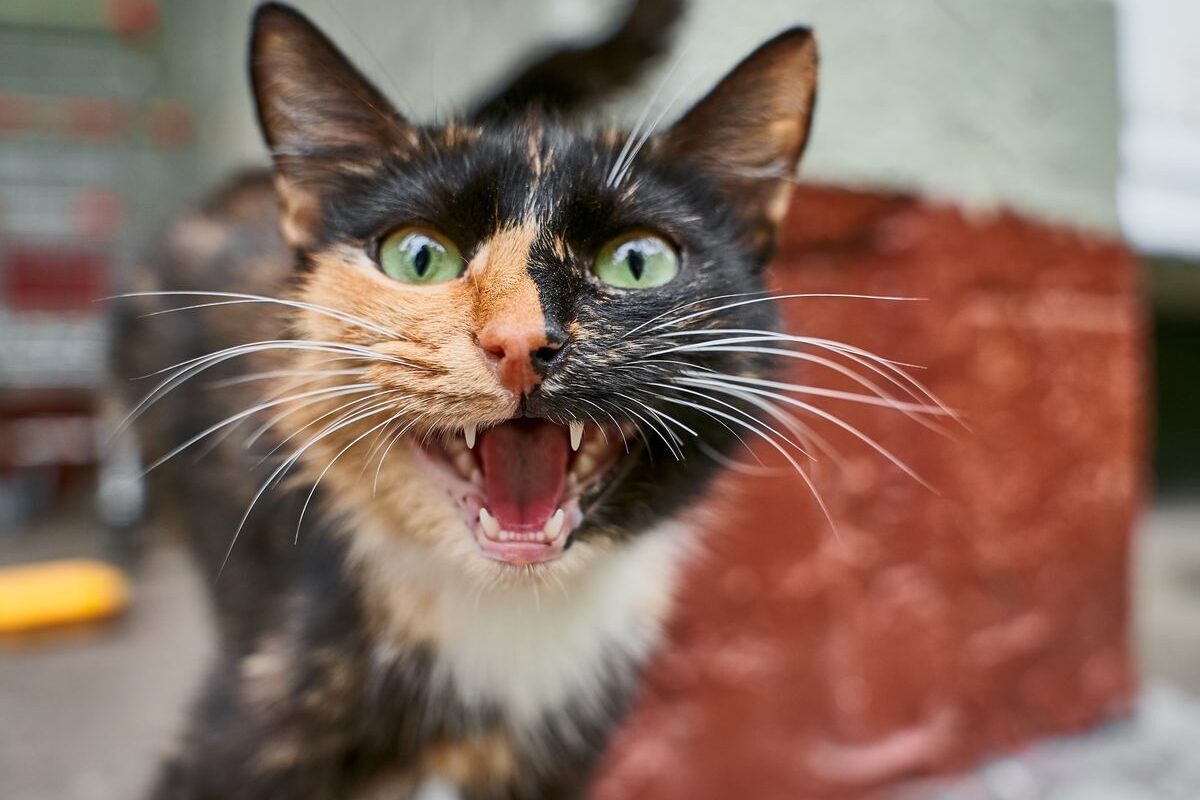
Here is a fact that surprises most cat owners: adult cats almost never meow at each other. In the wild, cats communicate with scent, posture, and a range of sounds that are not meows at all. Meowing is, almost entirely, a language cats developed for one audience — us. Your cat meows at you because, over thousands of years of living together, it learned that meowing works on humans in a way it never works on other cats.
That is why meowing varies so much from cat to cat. Some cats are nearly silent; some hold full conversations. Neither is wrong. But when a cat meows a lot, it is usually asking for something specific, and learning the common requests makes life easier for both of you.
The everyday requests

Most meowing is practical. Food is the classic: the meow by the empty bowl, the meow at 5 a.m. when breakfast is due, the meow that follows you into the kitchen. Attention is the second: a cat that walks up, meows, and then flops for a stroke is not confused, it is ordering affection. Doors are the third — the meow at a closed door, in or out, is a request for a human doorman, and cats are famously unhappy with whatever side of the door they are currently on.
Greeting meows are their own category: the short chirp or trill when you come home, quite different from the demanding meow at the food bowl. Cats that greet their owners vocally are usually cats that are well bonded to them, and the greeting is closer to a hello than a demand. Learning the difference between your cat’s greeting and its food meow is one of the small pleasures of living with a talkative cat.
Boredom and night meowing

A cat that meows a lot with no obvious request is often a bored cat. Indoor cats, especially, can run out of things to do by mid-evening, and meowing becomes a way of generating activity — if meowing brings a human, a game, or a treat, the cat has solved its boredom problem. More play in the active dawn and dusk windows, puzzle feeders, and a window perch with something to watch all cut down on boredom meowing more reliably than any amount of scolding.
Night meowing is the version owners find hardest. Cats are crepuscular, most active at dawn and dusk, so a cat that is quiet all day and loud at 4 a.m. is often just following its natural rhythm in a house that sleeps through it. A good play session before bed, a small late meal, and not rewarding night meows with attention or food all help — but it takes consistency, because one rewarded 4 a.m. meow teaches the cat that persistence pays.
When meowing changes
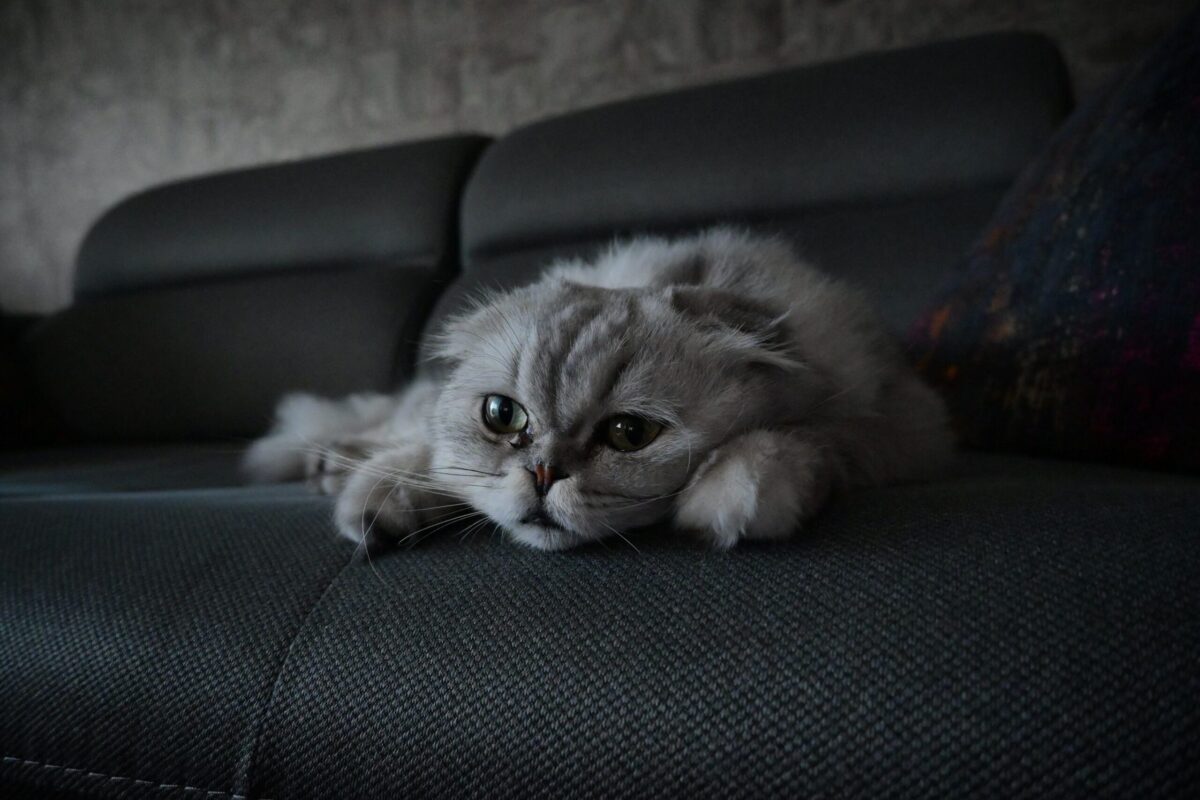
The line that matters is change, not volume. A cat that has always been chatty and still eats, plays, and uses the litter box normally is fine. A cat that suddenly meows far more than its own usual — or a quiet cat that suddenly becomes loud — is telling you something has shifted, and that shift is worth attention.
Watch for meowing paired with other changes: eating more or less, drinking much more, litter box changes, hiding, restlessness at night, or confusion in an older cat. Any of those alongside a meowing change moves the question from behaviour to health, and that question belongs to a vet, promptly — especially in senior cats, where thyroid and kidney problems, and the confusion of feline cognitive decline, often show up first as a cat that will not stop meowing.
Living with a talkative cat

Talking back helps, oddly enough. Cats that are answered — a word, a glance, a brief stroke — often settle faster than cats that are ignored, because the meow was a conversation attempt and it got a reply. That does not mean rewarding every demand: answer the greeting, meet the real needs, and stay boring about the 4 a.m. food demands. Over time, most cats settle into a meowing level that suits the household, and the ones that stay chatty are usually the ones whose owners enjoy the conversation anyway.
Frequently Asked Questions
Why does my cat meow at me but not at other cats?
Because meowing is a human-directed language. Adult cats communicate with each other mostly through scent and body language; meowing evolved to get responses from people.
Why does my cat meow at night?
Cats are most active at dawn and dusk, so night and early-morning meowing often follows their natural rhythm. Play before bed and a late meal help; avoid rewarding night meows with food or attention.
Is my cat meowing from boredom?
Possibly, especially an indoor cat with little to do. More play, puzzle feeders, and a window perch usually cut boredom meowing better than scolding.
When should I worry about extra meowing?
When it is a sudden change from your cat’s normal level, especially paired with eating, drinking, litter, or behaviour changes. That combination needs a vet promptly.
Do some breeds meow more than others?
Yes. Siamese and related breeds are famously talkative, while some quieter breeds barely meow at all. Individual personality matters as much as breed, though.
Sources
PetMD, why cats meow and excessive meowing
VCA Animal Hospitals, feline vocalisation and behaviour
RSPCA, cat behaviour and communication
American Association of Feline Practitioners, feline behaviour and aging