
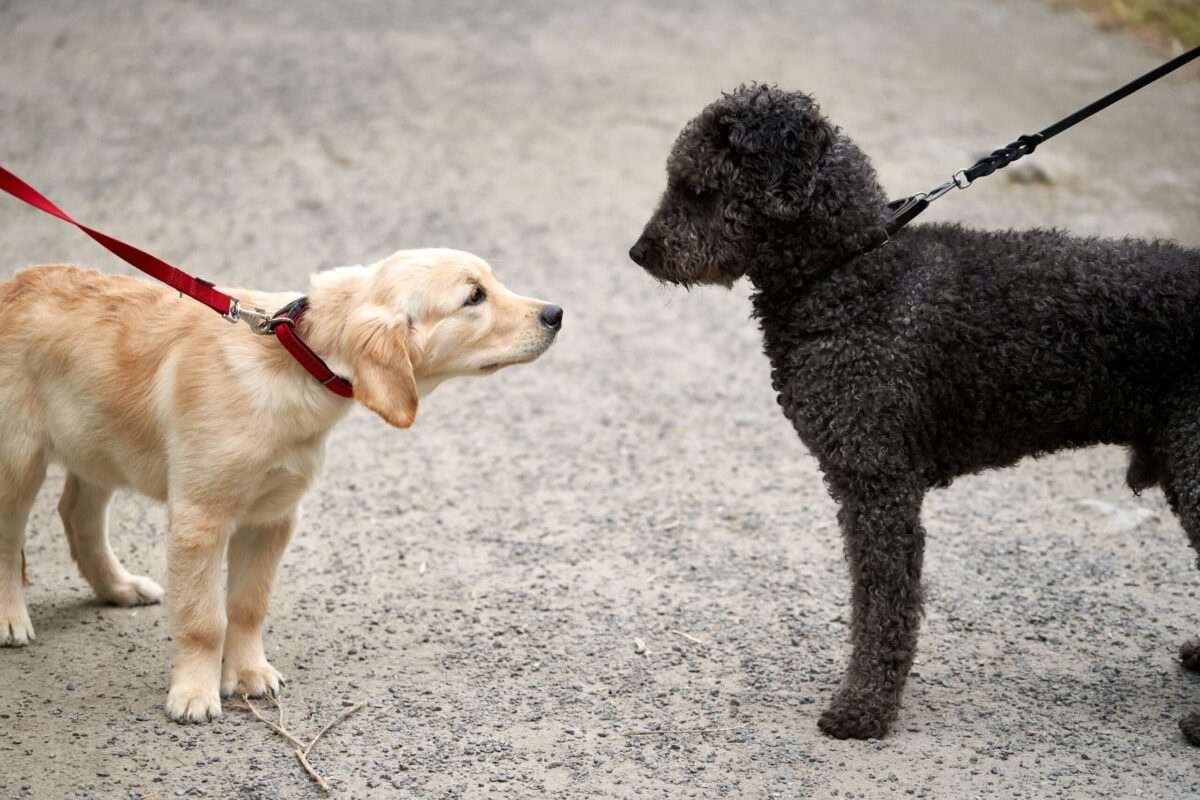
The way to introduce a new dog to your resident dog is slowly, on neutral ground, with both dogs on leads and a walk together before anyone goes inside. The first meeting sets the tone for everything that follows — and a calm first meeting is worth more than a week of fixing a bad one.
Bringing a second dog home is exciting. For you, at least. For your resident dog, it’s a stranger moving into his house, eating his food, sleeping in his space, and getting attention from his people. That’s a lot to ask of any dog, and how you handle the first meeting and the first week decides whether the two dogs become friends, learn to tolerate each other, or spend months in conflict.
The encouraging part is that most introductions go well when they’re done slowly. Dogs are social animals, and most of them want to get along. The trouble starts when introductions are rushed — when two dogs are thrown together in a small space with no escape, no preparation, and no plan. This guide walks through how to introduce a new dog to your resident dog, step by step: what to do before the meeting, the first meeting itself, the first day, the first week, and what to do when it doesn’t go smoothly.
Before the meeting

Know your resident dog. Before a new dog comes home, take an honest look at the dog you already have. Is he friendly with other dogs, or does he guard his space? Has he lived with another dog before? Does he play happily at the park, or does he go tense around dogs he doesn’t know? A dog who loves company will probably welcome a companion. A dog who is anxious, territorial, or reactive will need a much slower introduction — and if your dog has a history of aggression towards other dogs, talk to a qualified behaviourist before you bring a second dog home at all.
Match the dogs. The best second dog is usually the opposite sex to your resident dog. Male-female pairs tend to get along better than two males or two females, though there are plenty of exceptions, and personality matters more than sex in the end. Age matters too: a calm older dog and a bouncy puppy can work, but the puppy will need to learn boundaries and the older dog will need somewhere to escape to. Energy levels should be similar — two high-energy dogs will play together happily, while a high-energy dog and a low-energy dog will frustrate each other. If the new dog is a puppy, our guide to Bringing Home a Puppy covers the first week in detail. And our guide to dog body language will help you read both dogs during the introduction — what you see in their bodies tells you far more than what you hear.
Let them smell each other first. A simple step that makes the meeting easier: swap scents before the dogs meet. Give the new dog a blanket or towel to sleep on for a night, then put it in your resident dog’s space, and do the same the other way round. Each dog gets used to the other’s smell before they ever see each other, so the stranger on meeting day is already a familiar scent. It costs nothing, and it takes the edge off the first encounter.
Prepare the house. Before the new dog arrives, set up a separate space for him — a room, or a pen, with his own bed, water, food bowl and toys. He’ll need his own things, and he’ll need somewhere to retreat to. Put away high-value items: favourite toys, chews, bones. Those are the things dogs fight over. And make sure there are two of everything that matters: two water bowls, two feeding spots, two beds. Sharing comes later. At the start, each dog needs his own.
Exercise your resident dog first. On the day of the introduction, give your resident dog a good walk and a play session before the new dog arrives. A tired dog is a calmer dog, and a calmer dog is a better host. Don’t introduce two dogs when one of them is bursting with energy and the other is stepping into a strange place for the first time.
The first meeting: neutral ground

Don’t meet in the house. The first meeting should happen on neutral ground — a quiet street, a park, or a friend’s garden — somewhere your resident dog doesn’t feel is his territory. Meeting in the house, or in the garden, puts the resident dog on home turf and the new dog at a disadvantage before anything has even happened. Neutral ground levels the field for both of them.
Walk together first. Start with both dogs on leads, at a distance, walking in the same direction. Let them see each other, smell the air, and get used to the idea of another dog nearby. Walk parallel for ten or fifteen minutes, gradually closing the distance. If both dogs are relaxed — loose bodies, soft eyes, tails wagging gently — let them get closer. If either dog goes stiff, stares, or pulls hard, keep the distance and keep walking. The walk is the introduction. The dogs don’t need to meet face to face to start getting to know each other; walking together is enough for a first step, and it’s often the calmest way to begin.
Let them greet briefly. When both dogs are calm, let them meet — briefly. A few seconds of sniffing, then move on. Keep the leads loose. A tight lead makes a dog feel trapped, and a trapped dog is far more likely to react. Don’t let them circle each other for a long time, and don’t let one dog mount the other. A short, calm greeting, then walk on. Repeat it a few times. If both dogs stay relaxed, you can let each greeting last a little longer than the last.
Watch the body language. A good greeting looks like this: loose, wiggly bodies, soft eyes, ears in a normal position, tails wagging in wide sweeps, and both dogs able to move away from each other easily when the greeting ends. A bad greeting looks like this: stiff bodies, hard stares, raised hackles, ears pinned forward or back, tails held high and stiff, growling, or one dog freezing completely. If you see the second list, separate the dogs calmly, walk them apart, and try again later — or another day. Don’t force it. A greeting that ends well matters far more than a greeting that happens on schedule.
Into the house

Bring them in together. After a good walk and a calm greeting, walk both dogs into the house together, on leads. Let the resident dog go in first, then the new dog. Walk them around the house, letting the new dog sniff and explore while the resident dog watches. Then take the leads off — in a large room, with the doors open so either dog can leave whenever he wants. An open door is an escape route, and dogs who know they can leave are dogs who feel safe enough to stay.
Keep it short. The first time in the house together should be short — twenty or thirty minutes, then separate them. The new dog goes to his own space, the resident dog goes to his usual spot, and both dogs rest. Short, positive experiences are better than long, tiring ones. You can do another short session later in the day, and another the next day. Build it up gradually, a little at a time, and let the dogs set the pace.
Supervise everything. For the first week at least, the two dogs should never be left alone together unsupervised. Even dogs who seem to get along can have a disagreement over a toy, a bed, or a doorway — and a disagreement between two dogs who are still learning each other can escalate fast. When you can’t supervise, separate them. It’s not a lack of trust. It’s common sense, and it’s how you protect a friendship that’s still forming.
The first week: the rules
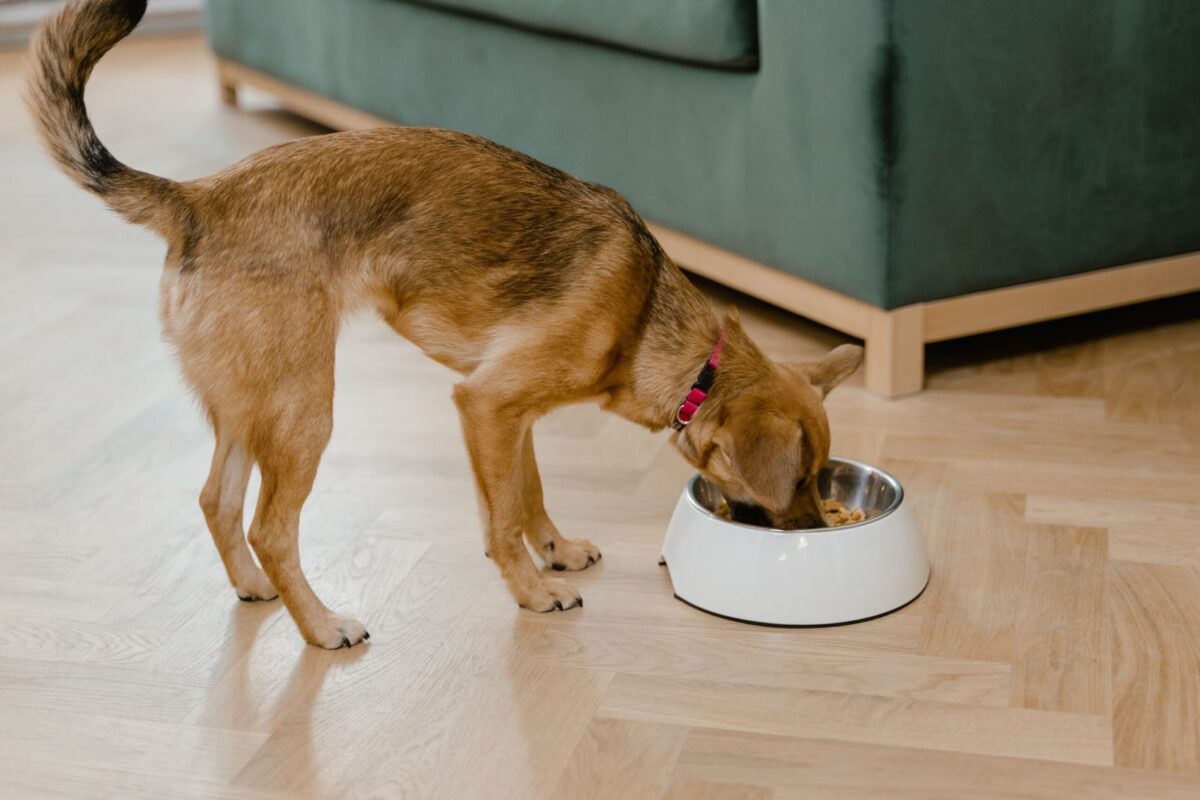
Feed separately. Feed the dogs in different rooms, or at least at a distance, with a barrier between them. Food is the most common cause of fights between dogs, and feeding separately removes the problem entirely. Don’t let one dog approach the other’s bowl while he’s eating. Over time, you can move the bowls closer — but there’s no rush, and feeding separately forever is perfectly fine. Plenty of happy multi-dog households feed their dogs apart for life.
Give each dog attention separately. Both dogs need your attention, and both dogs need to know they haven’t lost you. Spend time with each dog alone — a walk, a play session, a cuddle — every day. A resident dog who feels replaced is a dog who resents the newcomer. A new dog who feels ignored is a dog who never quite settles. The attention doesn’t have to be equal to the minute; it has to be real, and it has to happen every day.
Let the resident dog keep his routines. Keep the resident dog’s walk times, feeding times, and favourite spots the same. The new dog is the one who has to adapt — he’s the one in a new house, learning new rules. The resident dog’s life should change as little as possible, because the less his life changes, the less he has to resent. The new dog will learn the household rhythm soon enough; there’s no need to rewrite it for both of them at once.
Toys and chews: separate, for now. Don’t give both dogs a high-value chew at the same time in the same room. Give chews separately, in separate spaces. Toys can be shared when the dogs are playing together, but put the favourite toys away when you’re not there to supervise. A toy left on the floor between two dogs who are still working each other out is a disagreement waiting for a moment to happen.
Sleeping. The new dog should sleep in his own space for the first week at least — his own bed, in his own room or pen. Letting two dogs sleep together is a big step, and it should come after they’ve had time to get comfortable with each other. Our guide to dog sleeping positions explains what sleeping arrangements say about how dogs feel about each other, and what to look for as they grow closer.
Signs it’s going well

Relaxed bodies. Both dogs move around the house with loose, easy bodies. No stiffness, no staring, no guarding doorways or food bowls. A relaxed dog is a dog who isn’t worried about the other dog, and that’s the foundation everything else is built on.
Play. Play bows, chasing, wrestling, taking turns — play is the best sign that two dogs are getting along. Play should be balanced: both dogs take turns being the chaser and the chased, and both dogs can stop and walk away when they want to. If one dog is always the chaser and the other is always running away, that’s not play — that’s bullying, and you need to step in and give the chased dog a break.
Sleeping near each other. Dogs who sleep in the same room, or near each other, are dogs who trust each other. It doesn’t have to be cuddled up together. Just being comfortable in the same space is a good sign, and it’s often the first quiet proof that the introduction is working.
Sharing space. Both dogs can be in the same room without tension, both dogs can pass each other in a doorway without a reaction, and both dogs can eat in the same room — even if not side by side — without guarding. None of this needs to happen in the first week. When it does happen, it’s worth noticing, because it means the dogs have worked it out between themselves.
Signs to slow down

Resource guarding. One dog growls, snaps, or blocks the other from food, toys, beds, or you. Resource guarding is normal dog behaviour, but it needs managing. Separate the dogs for those resources, and don’t punish the guarding dog — punishing a dog for guarding makes the guarding worse, because now he has two things to worry about instead of one. If guarding is serious or frequent, talk to a qualified behaviourist.
Constant tension. One dog is always stiff, always watching the other, always on edge. That’s not a dog who is settling in — that’s a dog who is stressed. Give them more space, more separation, and more time. Slow the process down to whatever pace the tense dog can handle, even if that pace feels frustratingly slow to you.
Fights. A fight — even a short one — is a sign that the introduction was too fast. Separate the dogs, let them calm down completely, and go back to the beginning: separate spaces, parallel walks, short supervised sessions. Don’t punish either dog. And if fights keep happening, get professional help — a qualified behaviourist, not a trainer who uses punishment.
One dog hiding or not eating. A dog who hides all day, or who stops eating, is a dog who is not coping. That’s a sign to slow down, give more space, and — if it continues — talk to the vet or a behaviourist. A dog who won’t eat is telling you something clearly, and it’s worth listening to.
When to get help

If fights keep happening. One scuffle during an introduction is not unusual. Repeated fights are a problem, and they need professional help. A qualified behaviourist — not a trainer who uses punishment, but someone who understands dog behaviour — can assess both dogs, watch how they interact, and give you a plan that fits your dogs, not a generic one.
If one dog is very fearful. A dog who is terrified of the other dog — hiding, shaking, refusing to eat — is a dog who needs more time and a slower process. A behaviourist can help you work out whether the two dogs can live together, and if so, how to get there step by step. Fear doesn’t always mean the match is wrong; sometimes it just means the pace was wrong.
If you’re not sure. If you’re unsure whether the introduction is going well, or whether what you’re seeing is normal, ask for help. Your vet, a local rescue organisation, or a qualified behaviourist can all advise. Asking for help early is better than asking for help after a serious fight — and there’s nothing to be embarrassed about. Every pair of dogs is different, and even experienced owners get a tricky introduction now and then.
Frequently Asked Questions
How long does it take for two dogs to get used to each other?
It varies. Some dogs are friends within a few days. Others take weeks, or even months, to become truly comfortable. The average is two to four weeks for the dogs to settle into a routine, and a few months before they’re fully relaxed with each other. Don’t rush it — slow is normal, and slow is what works.
Should I introduce dogs on neutral ground?
Yes. The first meeting should happen somewhere neither dog considers his territory — a quiet street, a park, or a friend’s garden. Meeting in the house puts the resident dog on home turf and the new dog at a disadvantage. Walk together first, then let them greet briefly.
What if my dogs fight during the introduction?
Separate them calmly — don’t grab collars, and don’t get between them. Use a loud noise, or a barrier, to break their attention, then separate them into different rooms and let them calm down completely. Go back to the beginning: separate spaces, parallel walks, short supervised sessions. If fights keep happening, get help from a qualified behaviourist.
Should I feed two dogs together?
Not at first. Feed them separately — in different rooms, or at a distance with a barrier between them. Food is the most common cause of fights between dogs. Over time, you can move the bowls closer, but there’s no rush, and feeding separately forever is perfectly fine.
Is it better to get a male or female second dog?
Male-female pairs tend to get along better than two males or two females, though there are many exceptions. Energy levels and personality matter more than sex — two dogs with similar energy and compatible temperaments will do better than two dogs chosen by sex alone.
How do I know if the introduction is going well?
Relaxed bodies, play that takes turns, sleeping near each other, and sharing space without tension. If both dogs can be in the same room, pass each other in a doorway, and eat without guarding, the introduction is working.
Should I let the new dog sleep with my resident dog?
Not in the first week. The new dog should sleep in his own space — his own bed, in his own room or pen. Letting two dogs sleep together is a big step, and it should come after they’ve had time to get comfortable with each other.
What if my resident dog ignores the new dog?
That’s actually a good sign. Ignoring is better than aggression — it means your resident dog isn’t threatened, just not interested yet. Give it time. Many dogs who start by ignoring each other become friends over weeks, as they get used to sharing space.
Can two dogs who don’t get along learn to live together?
Sometimes, with time, management, and professional help. But sometimes the answer is no — and if two dogs genuinely can’t live together safely, the kindest thing is to accept that and make a different plan. A behaviourist can help you work out which situation you’re in, and what the options are.
Sources and further reading
- American Kennel Club — Introducing a new dog to your home
- Royal Society for the Prevention of Cruelty to Animals — Introducing dogs to each other
- International Association of Animal Behavior Consultants — Multi-dog households