
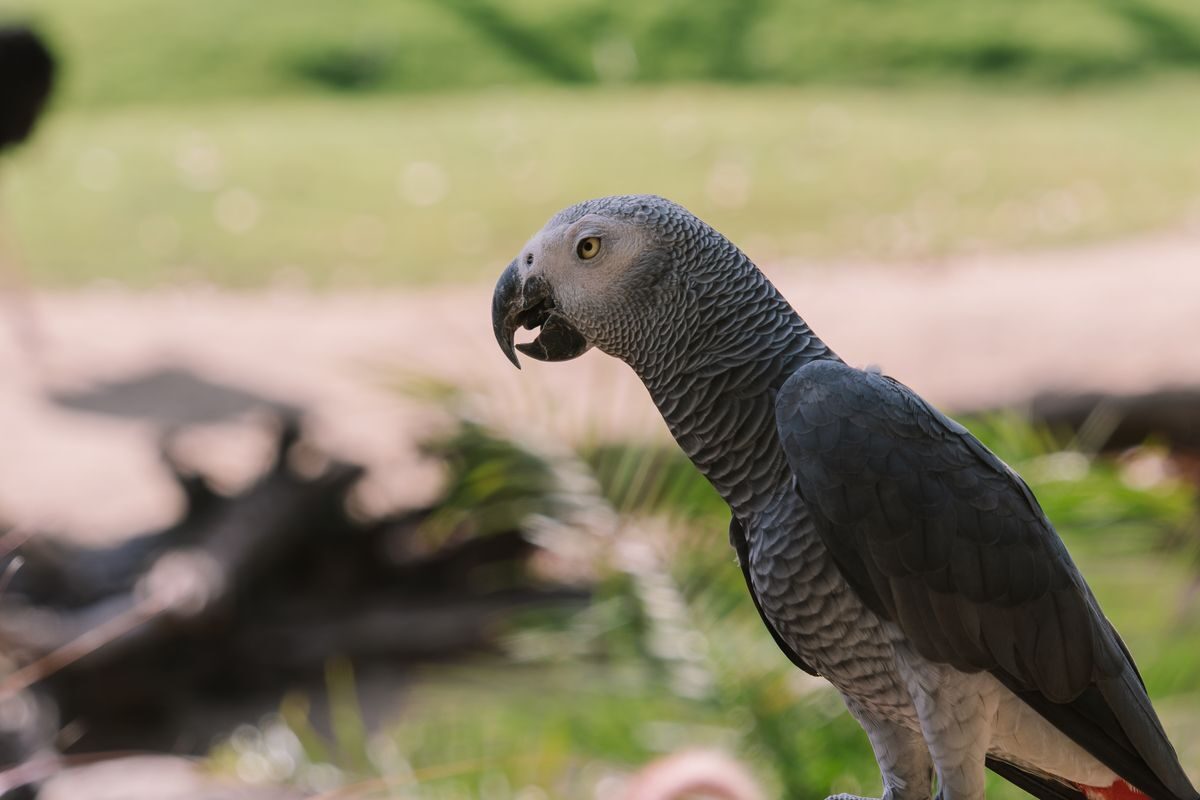
African greys are widely regarded as the top talkers, but they are sensitive, demanding birds that may live 40 to 60 years. Amazons talk clearly and enthusiastically but are loud, bold birds needing experienced handling. Budgies offer real talking ability in a small, beginner-friendly bird.
The parrots that talk best are African greys for clarity and vocabulary, Amazon parrots for clear, expressive speech, and — surprisingly — budgies, whose tiny voices have produced the largest verified vocabulary of any bird. Eclectus, Indian ringnecks and Quaker parakeets can also talk clearly, cockatiels whistle better than they speak, and conures usually learn only a few rough words while being very loud about everything else.
Talking is the reason many people buy a parrot. It is also the reason many parrots are rehomed. A species can be a brilliant talker and a terrible fit for a flat or a work schedule. So read this list in two directions: how well each species can talk, and what living with it costs in years, noise and daily attention.
New to birds entirely? Start with our overview of choosing and keeping pet birds for the housing, diet and routine every species below depends on.
At a Glance
- African greys are widely regarded as the top talkers, but they are sensitive, demanding birds that may live 40 to 60 years.
- Amazons talk clearly and enthusiastically, and are also loud, bold birds needing experienced handling.
- Budgies offer real talking ability in a small, beginner-friendly bird — the record vocabulary for any bird belongs to a budgie.
- Cockatiels are champion whistlers rather than talkers. Conures are the reverse of quiet: limited words, maximum volume.
- No individual bird is guaranteed to talk. Buy the bird for its company, and treat speech as a bonus.
Contents
- How parrots that talk should be compared
- The 8 parrots that talk, compared in one table
- The top talkers in detail
- The smaller and mid-sized talkers
- What talking actually involves for the owner
- Frequently Asked Questions
- Sources and Further Reading
How parrots that talk should be compared

Talking ability is not one thing. Clarity matters — can a visitor understand the word, or only you? Vocabulary matters, and so does willingness: some species perform for an audience, others save their voices for one trusted person.
Individual variation beats species ranking every time. Within any talking species there are stars, average mimics, and birds that never say a word. Sex can tilt the odds: male budgies and male cockatiels tend to mimic more than females, on average. Age, health, trust and consistent teaching all move the result. Use the table as a map of tendencies, not a promise — and read the commitment column twice.
The 8 parrots that talk, compared in one table

Lifespans are captive ranges from veterinary and care sources; individual birds vary, as noted below.
| Species | Talking ability | Size (length) | Lifespan in captivity | Noise level | Care commitment |
|---|---|---|---|---|---|
| African grey | Excellent — clearest speech, largest vocabularies, often used in context | Medium, about 33 cm (13 in) | Commonly reported 40–60 years | Moderate to loud; more talk than scream | Very high — sensitive, needs hours of interaction and stimulation |
| Amazon parrot | Excellent — clear, expressive, loves performing | Medium, about 25–46 cm (10–18 in) depending on species | About 40–60 years | Loud | High — bold, social, needs structure and experience |
| Budgerigar (budgie) | Very good — fast, high voice; huge vocabularies possible | Small, about 18 cm (7 in) | Roughly 5–12 years; 10–12 with proper care | Moderate — chatter rather than screams | Low to moderate — beginner-friendly, still needs daily company |
| Eclectus | Very good — clear voice, extensive vocabulary possible | Medium, about 35 cm (14 in) | Around 30 years; up to 30–40 reported | Moderate — generally not prone to excess noise | High — specific diet needs, calm household, sensitive nature |
| Indian ringneck | Very good — unusually clear for its size, phrases well | Medium, about 40 cm (16 in) | About 20–30 years | Moderate to loud | Moderate to high — needs daily handling to stay tame |
| Quaker (monk) parakeet | Very good — clear early talker, picks up phrases readily | Small to medium, about 28–30 cm (11–12 in) | About 20–30 years | Moderate to loud | Moderate to high — social, busy, legal restrictions apply |
| Cockatiel | Limited — a few words in a soft voice; outstanding whistler | Small, about 30–33 cm (12–13 in) | About 15–20 years, sometimes longer | Moderate — whistles and calls, quieter than most parrots | Low to moderate — gentle, good first parrot |
| Conures | Limited — a few rough, gravelly words | Small to medium, about 25–30 cm (10–12 in) for many pet species | About 20–30 years, varies by species | Very loud for their size | Moderate to high — playful, busy, needs a lot of attention |
On lifespans, sources genuinely vary. African greys are an example: many care sources report 40 to 60 years in captivity, while some veterinary writers urge planning around 30-plus years, with well-cared birds reaching their 40s and 50s. Either way, assume decades, and plan for the bird outliving your ability to care for it.
The top talkers in detail

1. African grey
African greys set the standard here. Across talking-parrot guides they are regarded as the clearest, most capable speakers, with large vocabularies and a well-documented ability, in research settings, to link words to objects and categories.
The trade-off is sensitivity. Greys bond strongly, need several hours of interaction and mental work a day, and are prone to stress behaviours, including feather plucking, when bored or unsettled. Add a lifespan commonly reported at 40 to 60 years in captivity, and this bird may need a place in your will.
2. Amazon parrots
Amazons — especially yellow-naped, double yellow-headed and blue-fronted birds — are the performers of the parrot world. Exotic bird hospital guidance picks out those three as having the most talking potential among Amazons, and describes Amazons in general as excellent mimics. Their speech is clear, and they tend to enjoy an audience rather than tolerate one.
They are also loud, confident and bold, with strong opinions during hormonal periods. An Amazon needs an owner who can set kind, consistent boundaries and enjoy a big personality for 40 years or more.
3. Eclectus
Eclectus are the quiet achievers here. Lafeber describes them as generally not prone to excessive noisiness, capable of developing an extensive vocabulary, with a clear voice. Males are bright green and females bright red — so different that ornithologists once thought they were separate species.
Their care is the catch. Eclectus have a longer digestive tract than most parrots and do best on a low-fat, high-fibre diet heavy in fruit and vegetables. They are calm, cautious birds that dislike frantic households — clear speech without the full Amazon volume, for a patient home.
The smaller and mid-sized talkers

4. Budgerigar
Never underestimate the small bird. Budgies have fast, high voices, but dedicated talkers learn many words, and males in particular can build remarkable vocabularies. The verified extreme is Puck, a budgerigar credited by Guinness World Records with an estimated 1,728 words — the largest vocabulary recorded for a bird, confirmed on Guinness’s own record page.
For a beginner, a budgie may be the smartest choice on this list: real talking potential, moderate noise, and care needs covered in our complete starter guide to budgie care. The honest limits are a quieter voice and a shorter life — a decade is a good outcome.
5. Indian ringneck
Ringnecks produce some of the clearest speech of any mid-sized parrot, with a distinctive, almost childlike voice and a talent for whole phrases. Care profiles agree on a size around 40 cm including the long tail, and a lifespan of roughly 20 to 30 years.
The condition is handling. Ringnecks not interacted with daily can lose tameness and become wary, and they go through an independent, testy adolescent stage. Keep up the daily work and you get an affectionate, entertaining talker.
6. Quaker (monk) parakeet
Quakers are compact, clever and impressively clear talkers that often start young. Care sources put them at about 28 to 30 cm long with a lifespan of roughly 20 to 30 years.
Check the law first. Quakers are illegal to keep, or restricted, in some US states — including California, where the monk parakeet is named as a restricted species — because escaped birds form feral colonies that can damage crops and infrastructure. Rules differ by state and change, so verify the current position where you live before buying.
7. Cockatiel
A cockatiel’s genius is musical, not verbal. Veterinary profiles describe cockatiels as vocalising and whistling while not being as loud as other parrots, and note that males are thought to be better mimics. Many learn a tune perfectly and manage a few soft, hard-to-decipher words. If you want a gentle first parrot whose performance is a whistled song, a cockatiel living 15 to 20 years, sometimes longer, may suit your home better than any bird above it.
8. Conures
Conures bring up the rear for speech and the front for enthusiasm. Bird veterinary guidance describes them as very vocal, known for noisy calls and screeches, and not good talkers as a group — most learn a few words in a rough, gravelly voice. Buy a conure for playfulness and clownish energy, in full knowledge of the volume. If you expected clear speech and met screaming instead, our guide to why parrots scream and how to calm them will help.
What talking actually involves for the owner

The species gives a bird the voice and the temperament to use it; everything after that — the patience, the short daily sessions, the trust — comes from you. Talking is learned socially, through short, repeated, rewarded interaction with a person the bird trusts. The full method is set out in our step-by-step guide to teaching your parrot its first words. Sessions of a few minutes, once or twice a day, over weeks and months, are what produce speech — not recordings left playing to an empty room.
Budget the rest of the life too. Every bird here needs a large cage, a diet of quality formulated food and fresh produce rather than seed alone, daily out-of-cage time, toys, an avian vet, and 10 to 12 hours of sleep.
A parrot that never talks has not failed. Choose the species whose noise, lifespan and temperament you want even if it never says a word.
Frequently Asked Questions
Which parrot talks the clearest?
African greys are the most consistent answer across guides and veterinary sources, for clarity, vocabulary and copying tone. Amazons run them close. Among smaller birds, ringnecks and Quakers are notably clear for their size.
Can a budgie really talk better than a big parrot?
A budgie can learn more words than most big parrots ever will — the Guinness record of an estimated 1,728 words belongs to Puck, a budgerigar. Big parrots, especially greys and Amazons, usually win on clarity, because a budgie’s high, fast voice can be hard to make out.
Do female parrots talk?
Yes. In budgies and cockatiels, males mimic more on average, but females of talking species can and do learn words. Temperament, trust and consistent teaching matter more than sex alone.
Are talking parrots louder than other pets?
The talking itself is rarely the problem — the natural calls are. Amazons and conures are genuinely loud, greys and Eclectus more moderate, and budgies and cockatiels easiest for neighbours. Research natural volume, not just speech, before you buy.
Is it cruel to buy a parrot mainly for talking?
It becomes cruel when the bird is valued only for speech it may never produce, then neglected or rehomed for staying silent. Buy the bird for the whole animal, and talking becomes a fair expectation rather than a condition of its home.
How long does it take to teach a parrot to talk?
It varies by species and by bird. Budgies and cockatiels may pick up first words within weeks or months of daily, short training sessions, while larger parrots can take months of patient repetition. Daily talking, a quiet room and the same few words repeated clearly work better than long, irregular sessions.
Do parrots understand the words they say?
Partly. Most parrots copy sounds without knowing their meaning, but African greys and some other species can learn to use words in context — naming foods, asking for things, or answering simple questions. That level of understanding takes years of interaction and is the exception, not the rule, even for good talkers.
What does a talking parrot cost to keep?
More than the bird itself: a large cage, daily fresh food, toys that are destroyed regularly, and avian vet care over a lifespan that can reach decades. African greys and Amazons are a multi-decade commitment, while budgies cost far less to house and feed. Budget for the whole life of the bird, not just the purchase.
Sources and Further Reading
- Guinness World Records — Largest vocabulary for a bird ever: Puck the budgerigar, owned by Camille Jordan, an estimated 1,728 words. https://www.guinnessworldrecords.com/world-records/70967-largest-vocabulary-for-a-bird-ever
- PetMD — Budgie Care Sheet: budgie size, 10–12 year lifespan with proper care, and budgies imitating repeated words. https://www.petmd.com/bird/budgie-care-sheet
- Lafeber Pet Birds — Eclectus species page: medium size, up to 30 years, generally not prone to excessive noisiness, capable of an extensive vocabulary, longer digestive tract and diet notes. https://lafeber.com/pet-birds/species/solomon-islands-eclectus/
- Exotic Bird Hospital (Association of Avian Veterinarians handout) — Amazon Parrots: 10–18 inch length, double yellow-headed, yellow-naped and blue-fronted Amazons have the most talking potential, excellent mimicry. http://exoticbirdhospital.com/wp-content/uploads/2015/05/Amazons-PRESS-AAV.pdf
- Bird Vet Melbourne — Conures and African Greys: conures very vocal with noisy calls, not good talkers as a group; African grey life expectancy around 50 years, excellent talkers with large vocabularies used in context. https://birdvetmelbourne.com/caring-for-conures/
This article is educational information only and is not a substitute for advice from an avian veterinarian. If a parrot you are considering or already own seems unwell, stops eating, or changes behaviour suddenly, contact an avian vet promptly.
About the author
Furrology Team — pet owner and researcher behind Furrology. We read the veterinary research and draw on real owner experience, then turn it into plain-English guides about dogs, cats, birds and small pets. We are not vets — Furrology is researched information, not veterinary advice, and a poorly pet always needs a real vet. More about how we work: About Us · Editorial Policy