

Research-based only. No product was personally tested.
A budgie without toys is a bored budgie, and a bored budgie is a loud, feather-plucking, cage-bar-chewing budgie. In the wild, budgies spend most of the day foraging, flying, and interacting; in a cage, toys are the closest substitute for that busy life. But budgie toys are not one-size-fits-all: a toy made for a parrot can be too big, too heavy, or downright dangerous for a small beak and small feet.
The goal is variety, not quantity. A cage stuffed with ten toys leaves no room to fly, while three or four well-chosen toys, rotated every week or two, keep a budgie curious for months. Think about what the toy asks the bird to do: shred, forage, climb, swing, or chew — and cover at least two or three of those jobs.
Shredding and foraging toys first

Shredding is the single most natural budgie activity after flying. Toys made of soft wood, palm leaf, paper, or seagrass let a budgie tear, strip, and destroy, which is exactly what its beak is built for. A budgie that shreds daily is a budgie using its energy well, and shredded toys are easy to replace when they are destroyed — destruction is the point, not a defect.
Foraging toys are the second essential. In the wild, budgies work for every seed; in a cage, food arrives in a bowl for free, which leaves a lot of empty time. A toy that hides a few seeds behind paper, inside a small basket, or under a flap makes mealtimes last longer and gives the bird a job. Start easy — a treat visible under a flap — and make the hiding spots trickier as the budgie learns.
Swings, ladders, and climbing
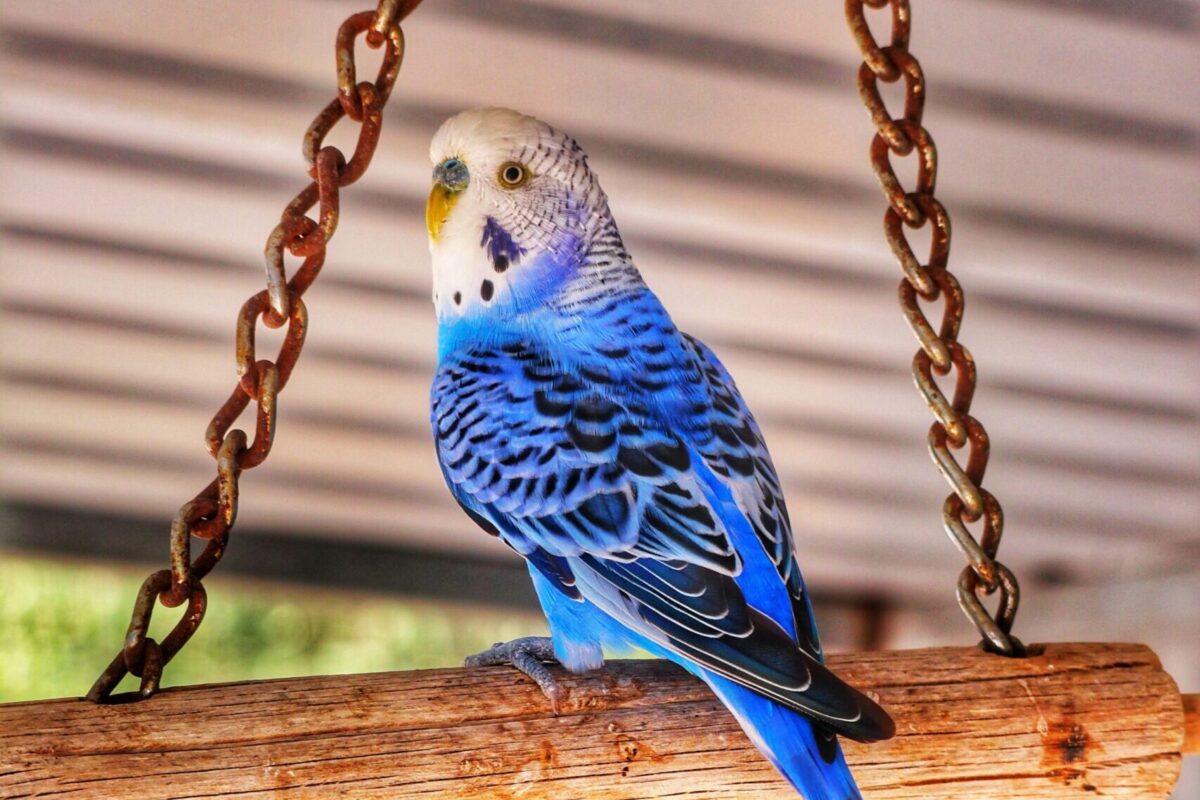
Budgies love height and movement, so a swing or a ladder is worth its perch space. A simple wooden swing gives a budgie somewhere to balance and sway, and a small ladder or rope perch adds climbing routes around the cage. Keep them sized for budgies: rungs close enough for small feet, wood untreated and unpainted, and no long loops of rope or string that a toe or a neck could catch in.
Bells are popular, but check them. A bell with a wide slot can trap a beak or a tongue, so choose enclosed bells or small solid ones, and remove any toy with open hooks or clasps a budgie can work open. Budgies are persistent little engineers, and a clasp that looks secure to you is a puzzle to them.
A word about mirrors

Mirrors deserve caution, and this site has covered the question in full: some budgies become obsessed with their reflection, treating it as a mate, regurgitating to it, and losing interest in their real flockmates. A small mirror for a short time may entertain one budgie and trouble another, so watch the reaction closely. If your budgie spends all day with its reflection, ignores food, or becomes aggressive around the mirror, take it out. Shredding and foraging toys are safer everyday choices, and they never cause that problem.
Two options to compare
Product: Planet Pleasures Shreddable Toys
Good for: Natural shredding toys made from palm leaf, paper, and soft fibres, sized for small birds. They give a budgie the tearing and stripping work its beak wants, and they are easy to replace once destroyed.
Watch out for: They are destroyed quickly by an enthusiastic budgie, so buy a few and rotate them — a shredded toy left as a bare frame is no longer a toy.
Product: Super Bird Creations Small Foraging Toys
Good for: Small foraging toys with hidden treat spots, sized for budgie beaks and feet. They turn feeding into a job and suit budgies that have learned the easy hiding spots and need a harder puzzle.
Watch out for: Start with the easiest version — a budgie that cannot find the treat at all will give up, so make the first few foraging toys simple and visible.
What to avoid
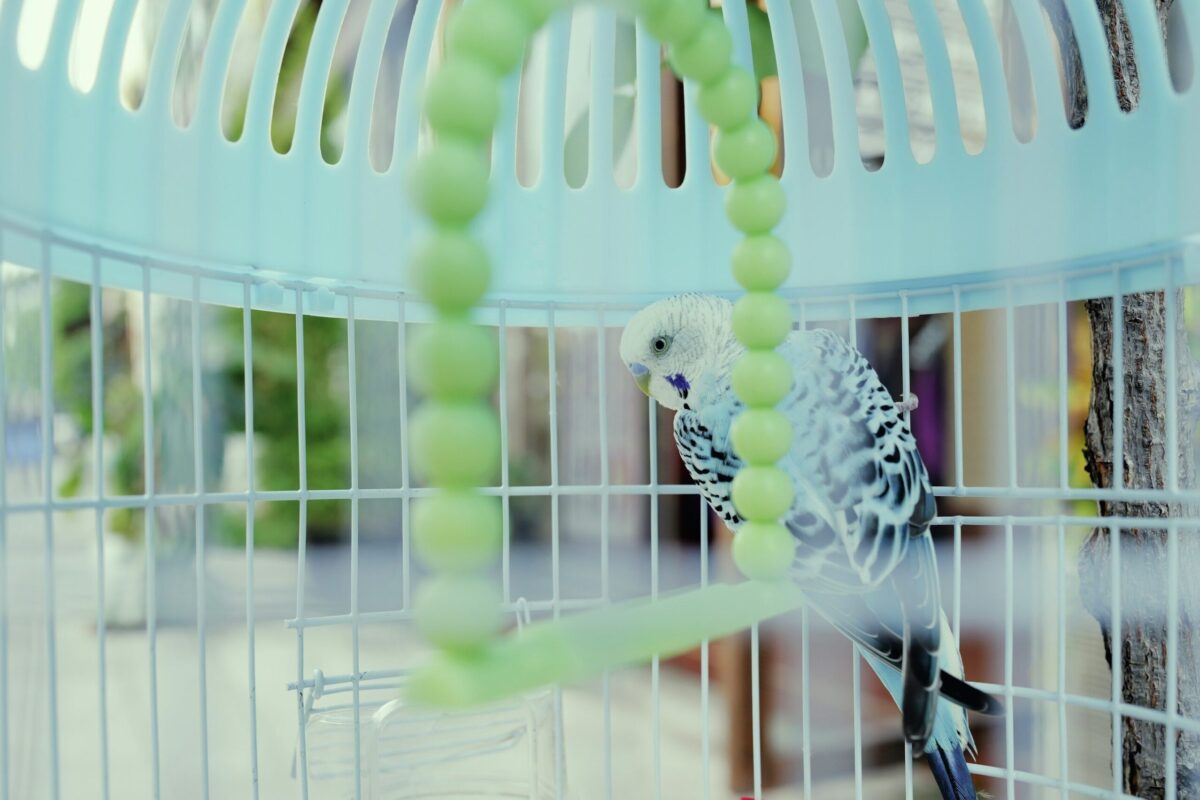
Avoid toys with long loose strings, open hooks, or small parts that can be swallowed. Avoid painted or treated wood of unknown origin, and avoid any toy with sharp wire ends. Avoid overcrowding the cage: if a budgie cannot stretch its wings and hop between perches without bumping into toys, there are too many. And avoid leaving the same toys in place for months — rotation is what keeps them interesting, so swap two toys a week and keep a small box of spares.
Frequently Asked Questions
How many toys should a budgie have?
Three or four in the cage at once is plenty, rotated weekly. Too many toys leave no flying room, and the same toys left for months become boring.
Are mirrors safe for budgies?
Sometimes, but watch closely. Some budgies become obsessed with their reflection and ignore food and flockmates. If that happens, remove the mirror.
What is the best first toy for a young budgie?
A simple shredding toy made of soft natural material. It is easy to use, safe for a small beak, and gives the budgie an obvious job.
How do I introduce a foraging toy?
Start easy, with the treat visible. Let the budgie succeed a few times before hiding treats behind flaps or inside baskets, or it may give up.
How often should I replace budgie toys?
When they are destroyed, dirty, or damaged — shredded toys are meant to be replaced, and any toy with frayed rope, loose parts, or sharp edges should come out at once.
Sources
RSPCA, budgie enrichment and cage toys
PetMD, budgie toys and enrichment
VCA Animal Hospitals, budgie care and enrichment
Budgerigar welfare guidance, safe toys and mirrors