

Research-based only. No product was personally tested.
Every cat grooms itself, and every cat still benefits from a brush. Brushing removes loose fur before it lands on your sofa, cuts down hairballs, and — just as important — lets you feel for lumps, mats, and sore spots early, when they are small problems rather than vet visits. But the brush aisle is confusing: slickers, combs, gloves, de-shedders, and a dozen lookalikes, all claiming to be the one your cat needs.
The truth is simpler: the right brush depends on the coat in front of you. A short-haired cat and a long-haired cat do not need the same tool, and a nervous cat that hates brushing needs a different approach from a cat that purrs through it. Match the brush to the coat and the cat, and brushing becomes a five-minute routine instead of a wrestling match.
Short coats: light and often

Short-haired cats shed constantly but mat rarely, so the job is mostly loose-fur removal. A soft bristle brush or a grooming glove works well here: gentle, quick, and easy to use while the cat sits on your lap. A few minutes twice a week is enough for most short coats, and the glove has a bonus — for a cat that runs from a brush, a glove feels like petting, which makes the whole routine easier to start.
The mistake with short coats is over-brushing with a harsh tool. A heavy de-shedding blade on a short coat can irritate the skin and thin the coat, which is the opposite of the goal. Keep it light, keep it short, and stop while the cat is still happy rather than pushing for one more pass.
Long coats: combs before slickers
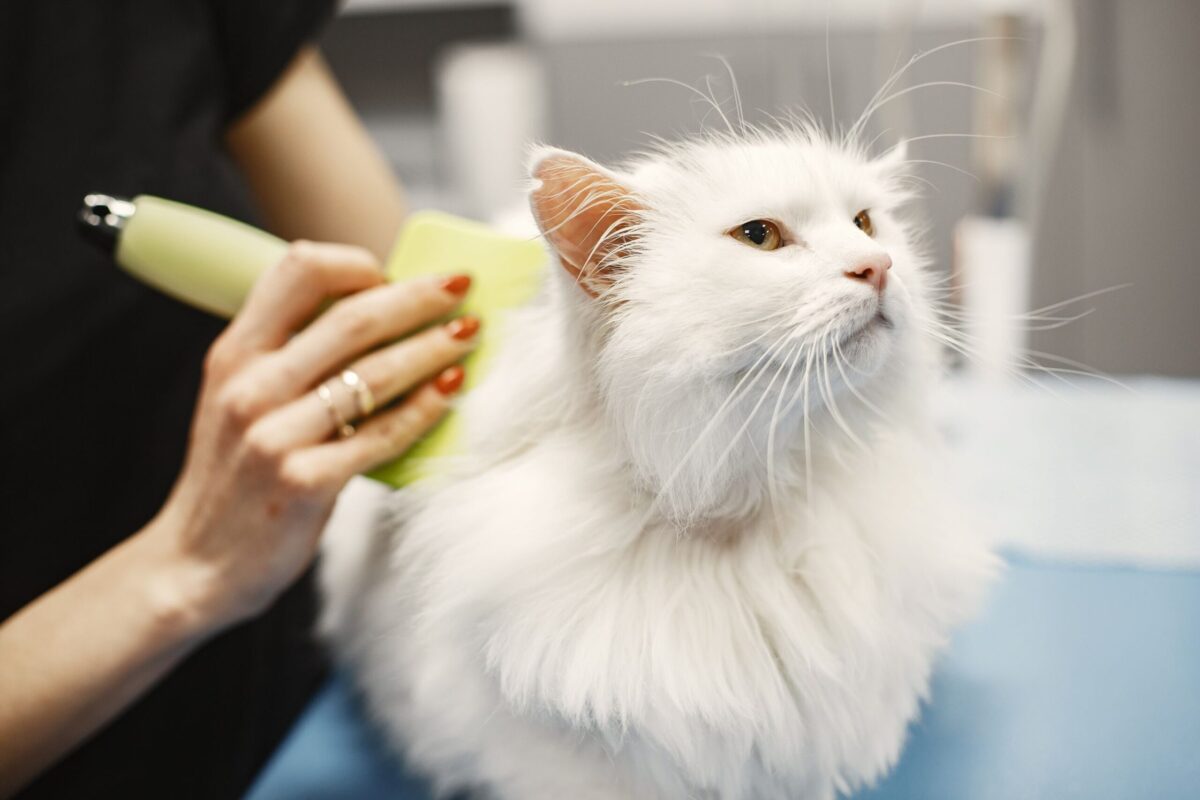
Long-haired cats are a different job. Their coats mat, especially behind the ears, under the armpits, and around the back legs, and a mat left alone tightens into a felted lump that pulls the skin and sometimes needs shaving out. For long coats, a wide-toothed comb is the essential tool: it finds mats early, works them apart gently, and reaches the undercoat a surface brush skims over.
A slicker brush follows the comb, smoothing the coat and lifting loose fur once the mats are out. The order matters — slickering over a mat just presses it tighter. Work in sections, hold the base of the fur near the skin so you are not pulling, and check the mat-prone spots every session, even if the rest of the coat looks fine.
Two options to compare
Product: Hertzko Self-Cleaning Slicker Brush
Good for: A widely used slicker for everyday brushing, with fine wire pins that lift loose fur and smooth the coat, and a self-cleaning button that retracts the pins and drops the collected fur off in one motion. Suits medium and long coats as a finishing brush after combing.
Watch out for: It is a slicker, not a de-matting tool — press too hard or use it on a matted coat and it will pull. Comb mats out first, use light strokes, and keep sessions short.
Product: GoPets Dematting Comb
Good for: A double-sided comb for working through tangles and early mats, with different tooth densities on each side so you can start coarse and finish fine. Suits long-haired cats and any cat with mat-prone areas behind the ears and legs.
Watch out for: The teeth are sharp enough to work through mats, so they need a gentle hand and a still cat — never yank through a tight mat, and work from the ends of the fur toward the skin, not the other way round.
What to avoid

Avoid de-shedding blades on cats with sensitive skin or thin coats, and avoid any brush with sharp metal edges that can scratch. Avoid brushing a matted cat all in one marathon session: ten unhappy minutes teach a cat to run from the brush, while five calm minutes teach it to stay. And avoid brushing a cat that is showing pain — flinching, hissing, or biting at one spot is information, not naughtiness, and a sore or matted patch that hurts needs a gentler approach or a vet’s look, not a firmer brush.
Brushing as a health check

Brushing is also a health check in disguise. While you brush, you are feeling the whole cat: new lumps, weight changes, dry or flaky skin, and mats forming in new places. That quiet weekly check is worth as much as the fur you remove.
Frequently Asked Questions
How often should I brush my cat?
Short coats: twice a week. Long coats: daily or every other day, with extra attention to mat-prone spots behind the ears, armpits, and back legs.
What brush is best for a long-haired cat?
A wide-toothed comb first, to find and work out mats, then a slicker to smooth and lift loose fur. Never slicker over a mat — it presses it tighter.
My cat hates brushing. What helps?
Start with a grooming glove, which feels like petting. Keep sessions to a few minutes, end while the cat is still calm, and pair brushing with a treat afterwards.
Are de-shedding tools safe for cats?
They can be, on thick coats used gently, but they are too harsh for short coats, thin coats, or sensitive skin, where they can irritate and thin the fur.
When does a mat need a vet or groomer?
When it is tight against the skin, large, or painful to touch. Do not cut a tight mat out with scissors — skin folds into mats easily, and a cut needs a vet.
Sources
- PetMD, cat grooming tools and brushing frequency
- VCA Animal Hospitals, feline grooming and coat care
- RSPCA, cat grooming and matting
- Feline grooming guidance, slicker and comb use