

If you have lived with a ferret, you know the sound: a rapid, chuckling chatter, somewhere between a giggle and a cluck, that bursts out of a ferret mid-play and stops as suddenly as it started. Ferret owners call it dooking, and it is one of the most recognisable sounds in pet keeping — and one of the most misunderstood by people meeting a ferret for the first time, who often have no idea what they are hearing.
What dooking sounds like

Dooking is, in short, a happy sound. It is the sound a ferret makes when it is excited, playful, and enjoying itself, and learning to recognise it changes how you read your ferret’s whole mood.
Dooking is fast and rhythmic — a series of short chuckles, usually made with the mouth open, often while the ferret is moving. It is quite different from the other sounds a ferret makes: softer and quicker than a hiss, nothing like a scream, and nothing like the low, grumbling sounds a ferret makes when it is annoyed or guarding food. Once you have heard it a few times, it is unmistakable, and most owners learn it within the first week of living with a ferret.
Ferrets dook most during play: wrestling with another ferret, chasing a toy, exploring a new tunnel, or greeting a favourite person after a nap. It is closely tied to the weasel war dance — the bouncing, sideways-hopping display of joy — and many ferrets dook loudest right in the middle of a dance. The sound and the dance go together so often that owners treat dooking as the soundtrack to ferret happiness.
Why ferrets dook
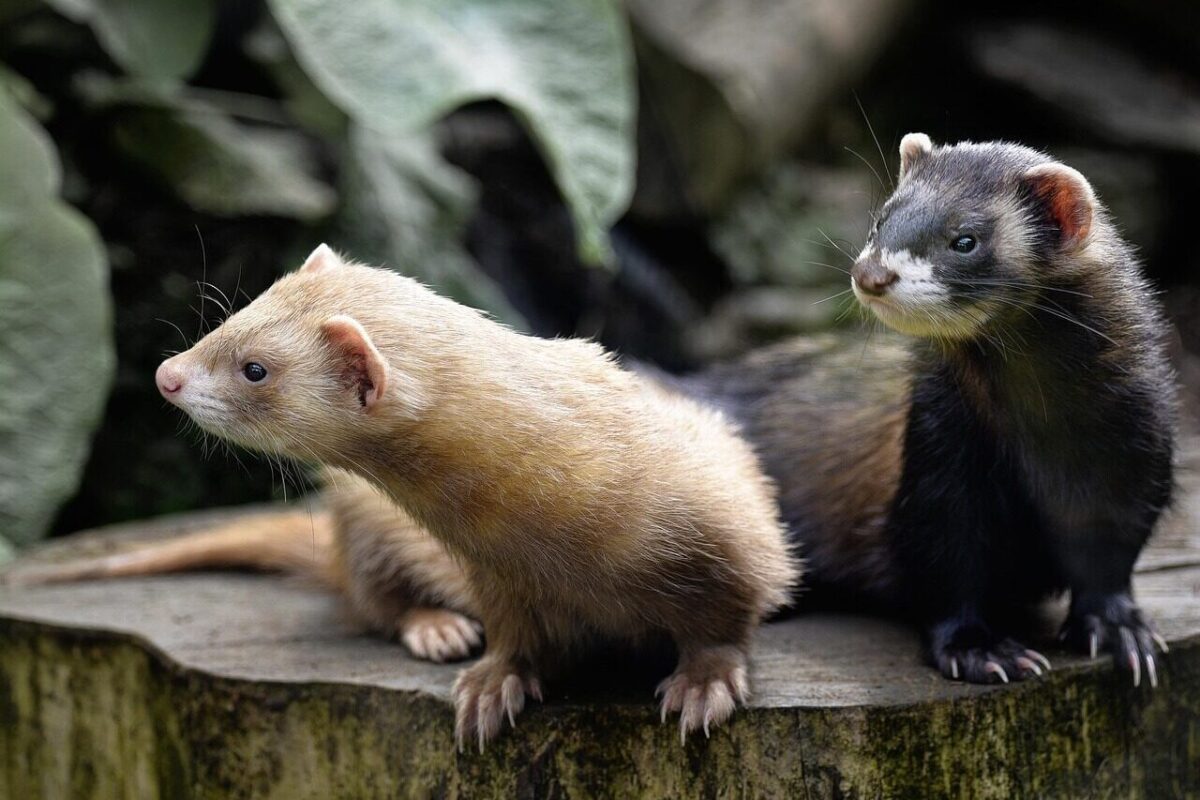
Nobody knows exactly why ferrets evolved this sound, but its function is fairly clear: it is social communication. Ferrets are social animals, and dooking seems to signal excitement and friendly intent to other ferrets — an invitation to play, or a running commentary on a game already underway. Ferrets playing together often dook at each other in turns, and a ferret that starts dooking often sets off its cagemates.
It is also a sound directed at people. Ferrets dook at owners they like, during games they enjoy, and when something exciting happens — a new toy, a favourite treat, the cage door opening for playtime. A ferret that dooks at you is a ferret that is pleased to see you, which is a small thing that feels surprisingly good after a long day.
Dooking versus the sounds that worry

The important skill is telling dooking apart from the sounds that mean trouble. A hiss is a warning: a ferret that hisses is frightened or annoyed and wants space. A scream is distress or pain, and it needs attention at once — a ferret that screams and does not stop is a ferret that needs help, not play. A low, sustained grumble or growl during feeding usually means “this is mine,” and it is best respected rather than challenged.
Dooking is none of those. It is fast, light, and loose, made by a relaxed, moving ferret. A ferret that is dooking is not a ferret that needs rescuing — it is a ferret having a good time, and the best response is usually to let the game continue.
When the dooking stops

A ferret that dooks a lot and then suddenly goes quiet is worth watching. Some ferrets are naturally quieter than others, and older ferrets dook less as they calm down, so quiet alone is not a problem. But a sudden change — a ferret that stops playing, stops dooking, and also eats less, sleeps far more, or seems lethargic — is a change worth a vet call. Ferrets hide illness well, and a change in their normal sounds and play is often the first sign an owner notices.
The same goes in reverse: a ferret that suddenly starts hissing or screaming when it used to dook is telling you something has changed, whether that is pain, fear, or a new stress in the house. Sounds are information, and the change matters more than any single sound.
Frequently Asked Questions
What does ferret dooking sound like?
A rapid, chuckling chatter, like a giggle, usually made during play with the mouth open. It is fast and light, nothing like a hiss or a scream.
Why does my ferret dook at me?
Because it is excited and pleased to see you. Ferrets dook at favourite people during games, greetings, and playtime — it is friendly social communication.
Is dooking the same as the weasel war dance?
Not the same, but closely linked. The war dance is the bouncing, hopping display; dooking is the chuckling sound that often goes with it. Many ferrets dook loudest mid-dance.
What is the difference between dooking and hissing?
Dooking is happy and playful; hissing is a warning from a frightened or annoyed ferret that wants space. A screaming ferret needs help at once.
Should I worry if my ferret stops dooking?
Not if it is a gradual change with age, but a sudden stop paired with less play, less eating, or more sleeping is worth a vet call.
Sources
RSPCA, ferret behaviour and vocalisations
PetMD, ferret behaviour and sounds
VCA Animal Hospitals, ferret behaviour
Ferret welfare guidance, dooking and play behaviour