
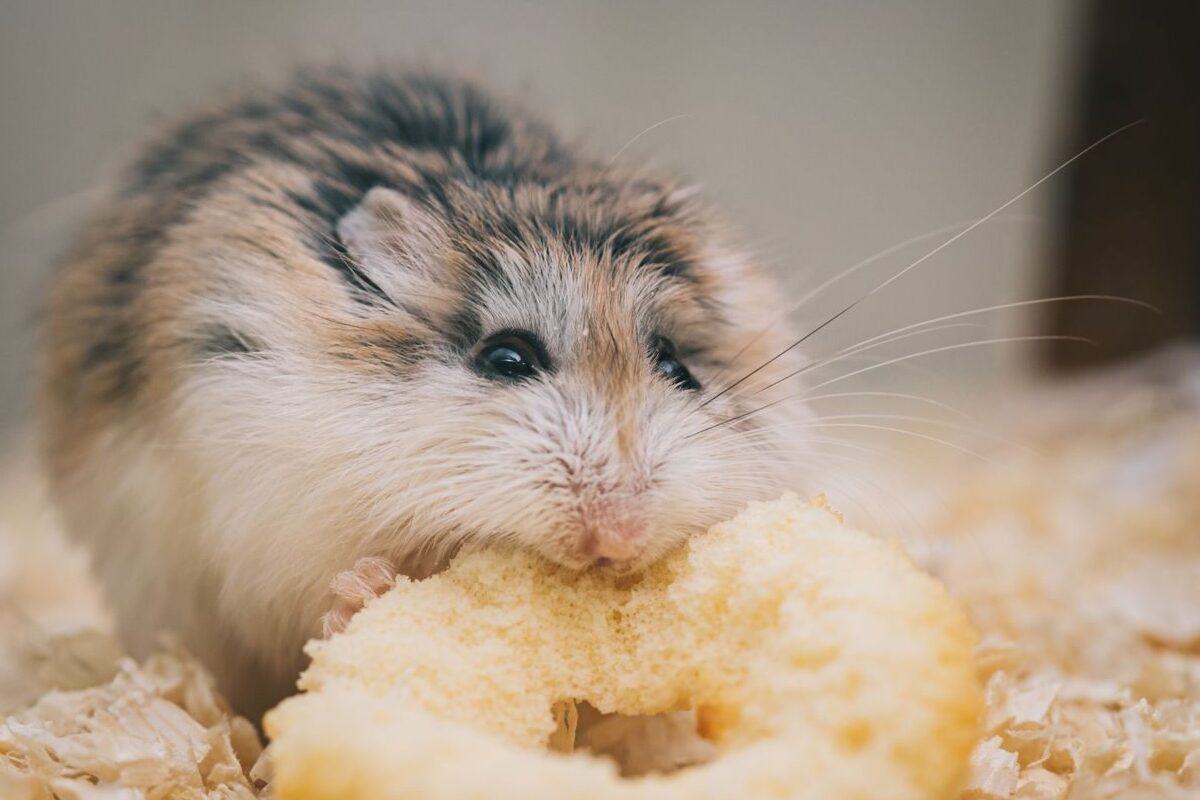
Few sights in pet keeping are funnier than a hamster with its cheeks stuffed so full it can barely see past them. It looks absurd, and it looks uncomfortable, and new owners often worry something is wrong. Usually, nothing is wrong at all. A hamster stuffing its cheeks is doing one of the most normal hamster things there is — and the pouches behind those cheeks are one of the cleverest bits of hamster design.
Hamsters have cheek pouches that stretch from the mouth all the way back past the shoulders. They are not part of the stomach: food goes into the pouch, gets carried somewhere safe, and comes back out later to be eaten or stored. In the wild, that lets a hamster gather food quickly in the open — where predators hunt — and eat it later in the safety of its burrow. Your pet hamster, safe in its cage, runs exactly the same programme.
What the pouches are for
Fast gathering. A hamster in the open grabs as much as possible as fast as possible, because every second outside the burrow is a risk. Stuffing the pouches full is efficient: one trip can carry a surprising amount of food.
Hoarding. Hamsters do not just eat what they gather. They stash it — in cage corners, under bedding, inside hideouts — building a private food store they return to over days. If you find a pile of seeds hidden under the bedding, your hamster is not being messy. It is running a pantry, and it will be genuinely upset if you throw the whole hoard away during cleaning. Clean around hoards where you can, and leave the main stash alone unless it is soiled.
Choosing favourites. Hamsters stuff their pouches selectively. Watch one at feeding time and you will see it pick up a seed, drop it, pick up another, and keep the one it likes. Pouches let a hamster carry the good stuff home and leave the rest.
How much can they hold?
A lot more than looks possible. A hamster can carry a load approaching a significant share of its own body weight in its pouches, and dwarf hamsters, small as they are, manage impressive loads too. The cheeks stretch enormously, which is why a stuffed hamster looks so round. The pouches empty by the hamster pushing the food forward with its front paws, or by the food being released into the mouth for eating — it is a controlled process, not a one-way trap.
Things hamsters should not pouch
Not everything a hamster picks up belongs in a pouch. Sticky foods can glue a pouch shut, sharp foods can scratch or cut the pouch lining, and stringy foods can tangle inside. Avoid giving sticky sweets, sharp or splintery items, and anything fibrous and stringy. Dry, small, hamster-safe foods — seeds, grains and small pieces of hamster-safe vegetables — are the right pouch cargo. If you see your hamster pouching bedding material, it is usually nesting behaviour, not eating, and soft, safe bedding is the reason that matters.
When full cheeks are a problem
Normal pouching is temporary: cheeks fill, the hamster scurries off, and the cheeks empty within minutes to hours as food is stored or eaten. Cheeks that stay full for a day or more, a cheek that looks swollen on one side only, a hamster that stops eating, drools, or paws at its face, are all reasons to see a vet promptly — this guide does not diagnose, but pouch impaction and pouch infections are real hamster problems, and a vet needs to see them early. Do not try to empty a hamster’s pouches yourself: squeezing a pouch can injure it, and a frightened hamster bites.
One more cleaning note: if you must clean out a hoard because it is soiled or mouldy, leave a little fresh food in its place. A hamster that finds its whole store gone can become stressed and start hoarding even harder.
Frequently Asked Questions
Is it normal for a hamster’s cheeks to look huge? Yes. Cheek pouches stretch enormously and can hold a large load. Full cheeks that empty within hours are completely normal.
Why does my hamster hide food under the bedding? Hoarding instinct. Wild hamsters store food in burrows to eat later, and pet hamsters do the same in cage corners and hideouts. Leave the main hoard alone unless it is soiled.
Should I clean out my hamster’s food hoard? Only if it is soiled or mouldy. Removing a healthy hoard stresses the hamster and often makes it hoard harder. Clean around it where possible.
What foods should a hamster not pouch? Sticky, sharp or stringy foods — they can glue, cut or tangle inside a pouch. Stick to dry, small, hamster-safe foods.
When should full cheeks worry me? If cheeks stay full for a day or more, one side looks swollen, or the hamster stops eating, drools or paws at its face — see a vet promptly. Do not try to empty the pouches yourself.
How much food can a hamster carry in its cheeks? A surprising amount: cheek pouches stretch from the mouth to the shoulders, and a hamster can carry a large share of its body weight in food. That is why a hamster can empty a food bowl in minutes without eating much — the food is in the pouches, on its way to the hoard.
Why does my hamster empty its pouches in one spot? That spot is the hoard — the hamster’s pantry. Wild hamsters hoard food in burrow chambers, and pet hamsters hoard in a favourite corner, hideout or burrow. The hoard is normal and important: a hamster that cannot hoard becomes stressed. Clean around the hoard, not through it, and remove only spoiled fresh food.
Can cheek pouches get injured or infected? Yes, rarely: sharp foods, bedding or objects can cut a pouch, and a pouch that stays full, swells, smells, or drools needs a vet check — it may be an abscess or an impacted pouch. Never try to empty a hamster’s pouches yourself. Prevent problems by avoiding sticky, sharp or stringy foods, and by keeping the cage free of small sharp objects.
Related reading
https://furrology.net/dwarf-hamster-care-guide/
https://furrology.net/hamster-cage-setup-checklist/
https://furrology.net/why-does-my-hamster-bite/
https://furrology.net/dwarf-hamster-vs-syrian-hamster/
Sources
RSPCA, hamster care and behaviour. PetMD, hamster cheek pouches and hoarding. Blue Cross, hamster care advice. VCA Animal Hospitals, hamster behaviour.