
Cat treats under $30 buy the lot: crunchy treats, soft treats, lickable treats, and training treats, in bags big enough to last weeks. The budget is generous for treats — the expensive bags mostly buy a fancier packet, and your cat doesn’t care about the packet.
Treats are the smallest purchase in cat ownership, and one of the most useful. A treat is a reward, a distraction, a bribe, a bonding moment, and a way to get a cat to do something she’d rather not do — all for a few pence a piece. And because treats are cheap, it’s easy to end up with a cupboard full of them and no idea which ones are actually good.
This guide covers the types worth looking at under $30, what the budget buys in each type, how to read a treat label, how many treats is too many, what to skip, and how to use treats for training without turning your cat into a full-time beggar. No specific product is named with an invented price, and nothing here recommends a particular brand — just the types and features worth your money.
What the budget buys

Under $30 buys a large bag or a multi-pack of almost any cat treat type, and most bags last weeks. Treats are sold in small quantities, so the price per bag is low — which means the difference between a cheap treat and a good treat is usually a matter of pence, not pounds.
The important thing to understand is that a treat is a small part of a cat’s diet, and it should be treated as one. The best treat isn’t the most expensive, or the one with the fanciest packet, or the one your cat likes most. It’s the one that fits your purpose — training, bonding, dental health, or just a little pleasure — and that doesn’t upset her stomach or her waistline.
The other thing the budget buys is variety. Because treats are inexpensive, you can keep two or three types on hand: a crunchy treat for everyday rewards, a lickable treat for training and for hiding medicine, and a soft treat for an older cat. That’s a better setup than one expensive bag used for everything, and it still costs very little.
The types worth looking at
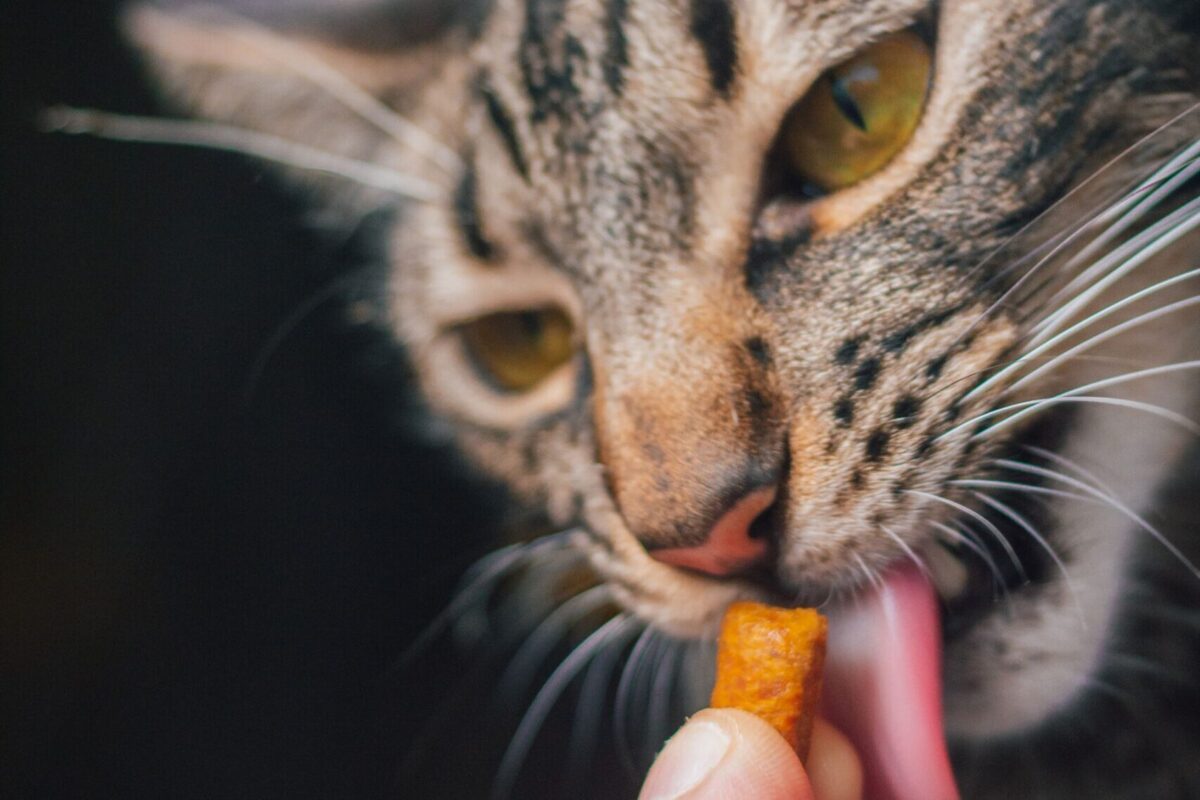
Crunchy treats. Small, hard biscuits or bites that a cat crunches once or twice and swallows. They’re the default treat for a reason: they’re easy to carry in a pocket, they don’t make a mess, they keep well, and most cats like them. They’re good for everyday rewards and for training, because the cat eats them quickly and stays focused on you. Look for a small size — a treat your cat can eat in one bite is a treat that doesn’t break her concentration. Under $30 buys a large bag easily.
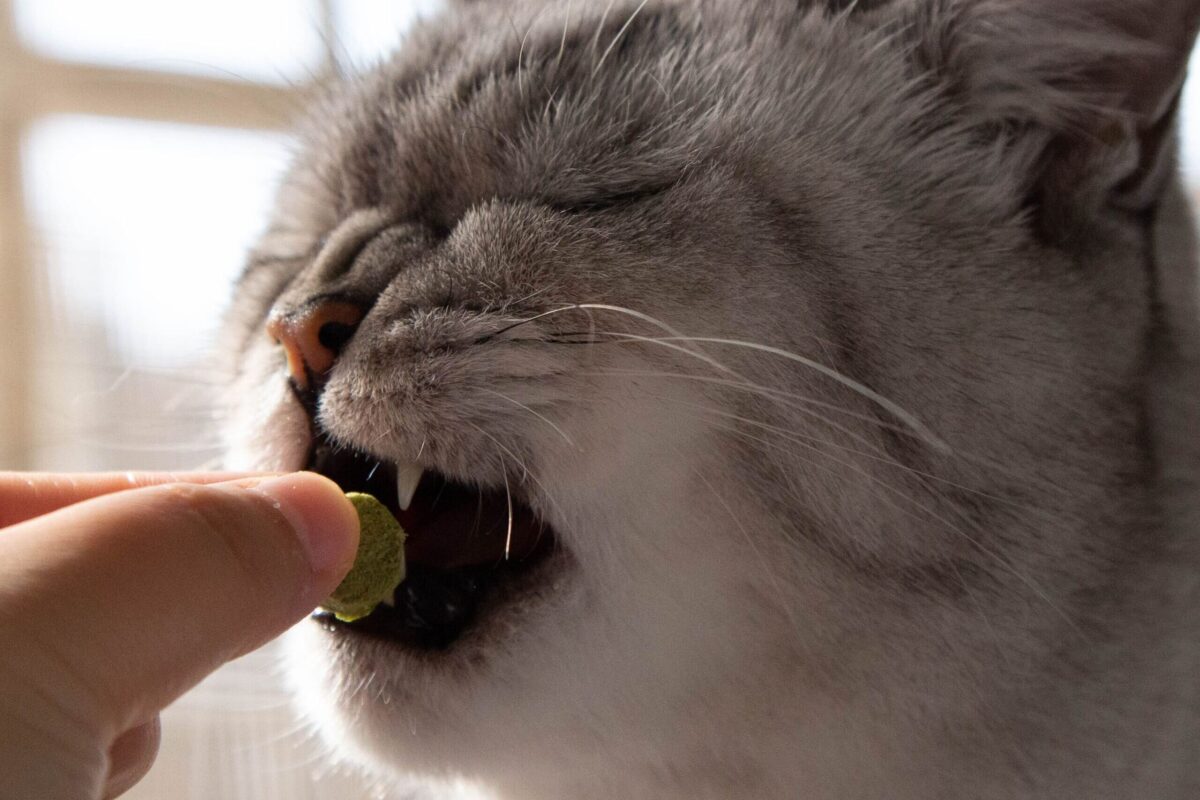
Soft treats. Chewy, moist treats that are easier on the teeth. They’re a good choice for older cats, cats with sore mouths, and kittens — and for cats who simply prefer them. They don’t keep as long once opened, and they can be messier in a pocket, but they’re worth having for a cat who struggles with crunchy treats. Keep them sealed, and use them within a few weeks of opening.
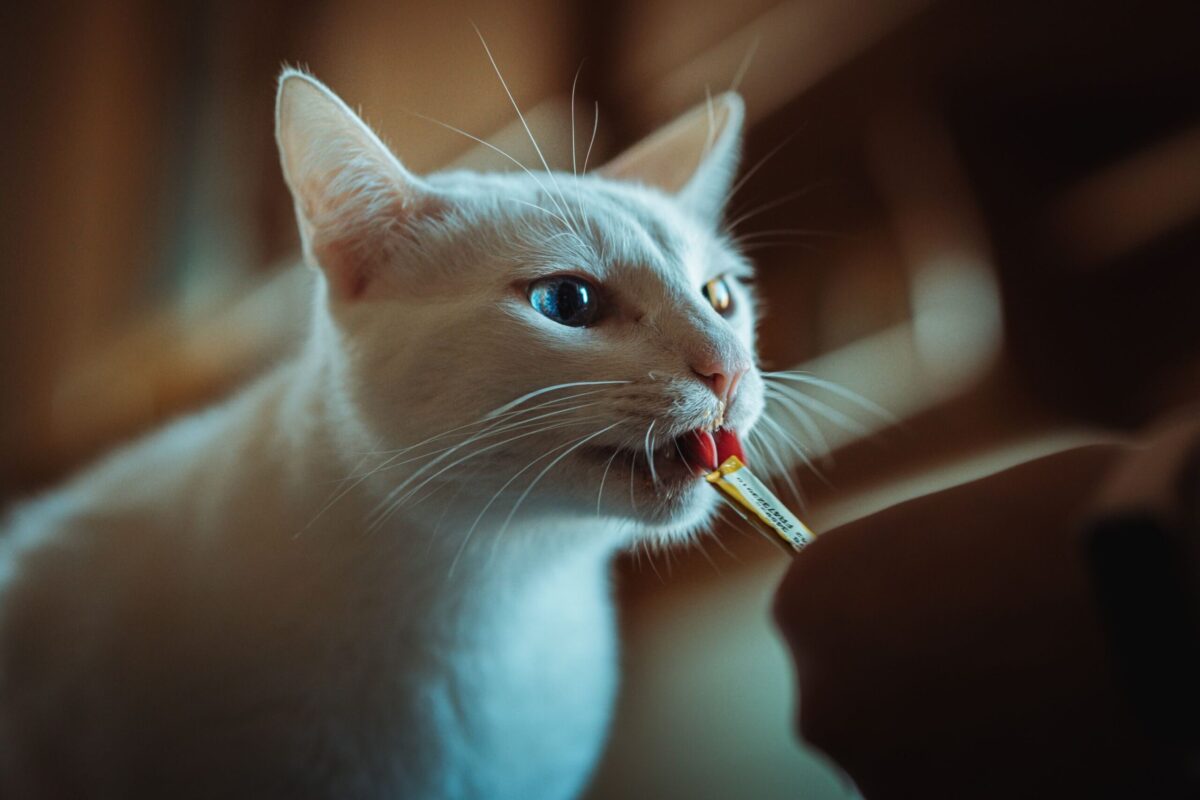
Lickable treats. Squeezable tubes or pouches of paste that a cat licks directly. These are the most useful treat type for training and handling, because the cat stays in one place, focused on licking, while you do whatever you need to do — trim a nail, brush a patch of fur, or just get her used to being handled. They’re also the best way to hide medicine, because most cats will lick the paste without noticing what’s in it. Under $30 buys a multi-pack. Look for a short ingredient list and no added sugar.
Freeze-dried treats. Single-ingredient treats — usually a piece of freeze-dried meat or fish — with nothing added. They’re the simplest treat there is, and they’re a good choice for cats with sensitive stomachs, because there’s nothing in them to react to. They can be broken into smaller pieces for training, and they keep well. They’re usually more expensive per bag than crunchy treats, but under $30 still buys a good bag, and a little goes a long way.
Dental treats. Treats designed to help clean teeth — usually larger, with a texture that makes the cat chew rather than swallow whole. They help a little, but they don’t replace brushing or a dental checkup, where the vet looks at the teeth and gums properly and tells you what actually needs doing. If your cat’s teeth are a concern, a dental treat is a useful addition to the routine, not a substitute for it — and check with the vet before relying on treats for a cat with known dental problems.
Catnip treats. Treats with catnip mixed in, or catnip itself as the treat. About two-thirds of cats respond to catnip, and for those cats it’s a reliable way to make a treat more exciting. For the other third, catnip does nothing at all — which is normal, and not a sign that anything is wrong. Catnip treats are inexpensive, and they’re worth trying once to see if your cat is one of the responders.
Reading the label: what matters

Treat labels are simpler than food labels, but a few things are worth checking.
The first ingredient. For a meat-based treat, the first ingredient should be a named meat — chicken, fish, turkey — not “meat derivatives” or “animal by-products”. A named first ingredient is the simplest sign of a decent treat.
The ingredient list length. Shorter is usually better. A treat with three ingredients is easier to trust than a treat with twenty, especially if your cat has a sensitive stomach. If you can’t pronounce half the list, your cat probably doesn’t need it either.
Sugar and sweeteners. Some treats contain sugar, syrup, or sweeteners to make them more appealing. Cats don’t need sugar, and they can’t taste sweetness the way we do — so sugar in a cat treat is there for the manufacturer, not the cat. Avoid it.
Calories. Treats are small, but they add up. Most treats list calories per piece or per hundred grams. A treat with a high calorie count is fine in small numbers, but it’s the kind you should count, not scatter. The rule is simple: treats should be no more than a tenth of what your cat eats in a day.
“Complete” vs “complementary”. Treats are complementary — they’re not a complete food, and they shouldn’t be treated as one. If a treat bag says “complete”, it’s a food, not a treat, and it should be fed as a meal, not as a reward.
How many treats is too many?

This is the question that matters most, and the answer is simpler than most owners think: treats should be no more than ten percent of your cat’s daily food. For most cats, that means a small handful of treats a day — perhaps ten small crunchy treats, or one lickable tube — and no more.
The reason is weight. Treats are calorie-dense, and a cat who gets too many treats will gain weight — slowly, quietly, and then all at once. An overweight cat is at risk of diabetes, joint problems, and a shorter life, and treats are one of the easiest causes to miss, because each one seems so small.
A few practical rules help. Count the treats, don’t scatter them. Use small treats for training, so you can give more without overfeeding. Break large treats in half. And if you’re using treats to hide medicine, count those too — they still count.
If your cat is already overweight, talk to the vet before changing her diet, and don’t cut her food suddenly. A vet can work out a plan that keeps her satisfied while she loses weight slowly and safely. Our guide to how often to feed a cat covers feeding routines and portion sizes, which sit alongside the treat question.
Using treats for training
Treats are the best training tool for cats, because cats don’t work for praise the way dogs do. They work for food. But using treats well takes a little technique.
Keep them small. A training treat should be eaten in one second. If the cat spends ten seconds crunching, she’s forgotten what she did to earn it. Small treats, given quickly, are what make training work.
Reward the right moment. Give the treat the instant the cat does what you want — not three seconds later. Timing is everything. If you can’t get the treat to her fast enough, use a lickable treat, which she can start on immediately.
Fade them out. Once the cat has learned something, start giving the treat every other time, then every third time, then only sometimes. A reward that comes unpredictably is more powerful than one that comes every time. If you always treat, the cat only works for treats. If you sometimes treat, the cat works because the behaviour itself has become a habit.
Don’t bribe. There’s a difference between a reward and a bribe. A reward comes after the behaviour. A bribe comes before it — holding a treat out to lure the cat into doing something. Bribes teach the cat to wait for the treat before she moves. Rewards teach her that doing the thing is what earns the treat. Always reward after, never lure before — except in the very first session, when you’re showing her what you want.
Use them for handling. The best use of treats isn’t training tricks. It’s getting your cat comfortable with being handled — with having her paws touched, her mouth looked at, her ears checked. A lickable treat while you touch a paw, a crunchy treat after you look in her ear: that’s how a cat learns that handling is safe, and it’s what makes vet visits and grooming easier for the rest of her life.
What to skip

Treats with sugar or syrup. Cats don’t need sugar, and they can’t taste it. It’s there for the manufacturer.
Treats with a very long ingredient list. If the list is a paragraph, the treat is mostly filler. Choose something simpler.
Treats that are too big. A treat the size of a coin is too big for training, and too big for a kitten. Break it, or choose a smaller type.
“Gourmet” treats at a premium price. The packet is prettier. The treat inside is usually the same as the budget version. Your cat doesn’t read the packet.
Treats your cat doesn’t like. It sounds obvious, but many owners keep buying a treat their cat ignores, because it was expensive or because it came recommended. If she won’t eat it, it’s not a treat. Try another type.
Rawhide and hard chews made for dogs. Some dog chews are sold for cats, or end up in a cat’s reach. They can splinter, and they’re too hard for a cat’s teeth. Stick to treats made for cats.
Storing treats so they stay good

Keep them sealed. Opened treats go stale, and stale treats get ignored. A clip, a jar, or a sealed bag is enough. Soft treats and lickable treats need sealing most of all.
Keep them cool and dry. Heat and damp make treats go off faster, and make crunchy treats go soft. A cupboard is fine. A windowsill in summer is not.
Check the date. Treats have a use-by date, and it’s worth respecting — especially for soft and lickable treats. An out-of-date treat won’t poison your cat, but it won’t taste right, and she’ll know.
Don’t buy in bulk unless you’ll use it. A huge bag is good value only if you finish it before it goes stale. For one cat, a standard bag lasts weeks. Buy the size you’ll actually use.
Frequently Asked Questions
How many treats can I give my cat a day?
Treats should be no more than ten percent of what your cat eats in a day. For most cats, that’s a small handful — perhaps ten small crunchy treats, or one lickable tube. Count them, don’t scatter them, and if your cat is overweight, talk to the vet before changing her diet.
What are the healthiest cat treats?
The simplest ones: freeze-dried single-ingredient treats, or treats with a short ingredient list starting with a named meat. Avoid sugar, long ingredient lists, and treats with “meat derivatives” as the first ingredient. The healthiest treat is a small one, given for a reason, in the right amount.
Are lickable treats good for cats?
Yes — they’re one of the most useful treat types. They’re good for training, because the cat stays focused on licking; they’re good for hiding medicine; and they’re good for getting a cat used to being handled. Look for a short ingredient list and no added sugar. One tube a day is plenty.
Can kittens have treats?
Yes, in small amounts, once they’re eating solid food. Use small, soft treats, and keep the amount tiny — a kitten’s stomach is small, and treats should never replace a meal. Avoid crunchy treats for very young kittens, and never give a kitten a treat made for an adult dog. Our guide to socialising a kitten covers the first few months, when treats are most useful for building trust.
My cat won’t eat treats. Is something wrong?
Probably not. Some cats are simply not food-motivated, or they prefer their normal food to anything else. Try a different type — lickable treats, freeze-dried treats, or a little cooked chicken — and try offering it at a calm moment rather than when she’s excited. If she won’t eat anything at all, including her normal food, that’s different, and it’s worth a vet visit.
Are dental treats a substitute for brushing?
No. Dental treats help a little — they make the cat chew, which cleans the teeth slightly — but they don’t replace brushing, and they don’t fix a tooth that’s already damaged. Think of them as a useful addition to the routine, not a substitute for it. If your cat’s teeth are a concern, the vet can advise on what actually helps.
Do cats get addicted to treats?
Not in the way people mean it, but cats do learn quickly. A cat who gets a treat every time she meows will meow more. A cat who gets a treat every time she jumps on the counter will jump on the counter more. That’s not addiction — it’s training, and it works both ways. If a behaviour is getting worse, check whether treats are rewarding it by accident.
Can I give my cat dog treats?
No. Dog treats are often too big, too hard, and made with ingredients that aren’t right for cats. Some contain ingredients that are fine for dogs but not for cats. Stick to treats made for cats, and keep dog treats out of reach.
What treats are best for training a cat?
Small, soft or lickable treats that can be eaten in one second. The cat should be able to eat the treat and stay focused on you, not spend ten seconds crunching. Freeze-dried treats broken into small pieces work well, and lickable treats are best for handling work. Reward the instant the cat does what you want, and fade the treats out as the behaviour becomes a habit.
Sources and further reading
- International Cat Care — Feeding and treats
- Cornell Feline Health Center — Feeding your cat
- Royal Society for the Prevention of Cruelty to Animals — Cat nutrition