

Yes, do ferrets smell is a fair question with an honest answer: ferrets have a natural, musky odour that comes from oil glands in their skin, and it never disappears completely. A neutered ferret in a clean home smells far less strong than an intact ferret in a dirty one, though, and most of what visitors notice is bedding, litter and over-bathing, all of which you can fix.
People brace themselves before they meet a ferret, then look faintly surprised. A well-kept ferret smells like warm musk and clean bedding, closer to a dog’s natural scent than to the blast many people expect.
This guide separates the smell you cannot remove, and should not try to, from the smell you can. For the rest of small-pet life, our guide to small pets and their care sets out what each animal needs.
At a Glance
- Ferrets produce a musky odour from sebaceous glands in the skin. That everyday musk is not from the anal glands.
- Intact ferrets smell strongest, especially males in season. Neutering and spaying reduce the odour a great deal, but a light musk remains.
- Descenting removes only the anal glands. It does not remove the skin musk, and in the UK routine removal is treated as unnecessary unless medical.
- Bathing too often makes the smell worse: washing strips skin oils, glands produce more to replace them, and the musk returns stronger.
- The biggest wins are unglamorous: scoop litter daily, wash bedding weekly, clean ears gently, feed a proper meat-based diet.
- A sudden, strong change in smell, with sore skin, hair loss or ear discharge, is a reason to see a vet.
Contents
- Do ferrets smell day to day? The skin glands behind the musk
- Intact, neutered and spayed: how hormones change the smell
- Descenting: why it does not remove the musky smell
- What makes it worse: why do ferrets smell stronger some weeks
- How to reduce the musk: a weekly plan that works
- Bathing, ears and bedding: the details
- When a change in smell means a vet visit
- A simple table: where the smell comes from and what helps
- Frequently Asked Questions
- Sources and Further Reading
Do ferrets smell day to day? The skin glands behind the musk

The everyday ferret smell comes from the skin. Ferrets have sebaceous glands across their skin that secrete oils, and those oils carry the characteristic musk. The American Ferret Association (AFA) states the point directly: the natural scent is produced by oils in the skin, not by the anal glands. Chewy’s veterinary-reviewed guidance says the same, that ferrets have scent glands all over the body behind the musky smell.
That musk has a job. Ferrets communicate by scent, sharing information about territory, identity and breeding status, which is why the smell is strongest where a ferret sleeps. A favourite blanket can smell more ferrety than the ferret.
Ferrets also have anal scent glands, a pair of sacs that can release a much sharper burst when a ferret is startled. That release is brief and occasional. It is not the background musk in a ferret’s room, and confusing the two leads people towards surgery that cannot fix the smell they live with.
Expect a permanent light musk from any healthy ferret. What you manage is its strength, and how much builds up in fabric and litter.
Intact, neutered and spayed: how hormones change the smell

Sex hormones turn the skin glands up and down, and this is the biggest biological factor in how strong a ferret smells.
The AFA notes that the skin scent is mostly apparent in intact ferrets cycling into their breeding season, and that once a ferret is spayed or neutered, most of its odour is reduced, though a light musk remains. Agriculture Victoria lists desexing as the first of its three ways to reduce a ferret’s scent, alongside washing bedding often and limiting baths.
Intact males are usually the most pungent, particularly in season, when they also tend to have oilier, yellower coats. Intact females smell stronger in season too, and they need a veterinary plan for the season in any case, a health matter your vet should lead on.
Neutering will not make a ferret odour-free, and anyone selling it that way is overpromising. By lowering hormone-driven oil production, it moves a ferret from strong to manageable, which for most homes is the difference that matters.
Descenting: why it does not remove the musky smell
Descenting is the surgical removal of the anal scent glands. In the United States, many pet-shop ferrets are descented as kits, before sale. It sounds like a total solution, and it is not one, for a simple anatomical reason.
The AFA calls the term misleading: everyday scent can never be eliminated by descenting, because it is not produced by the anal glands but by sebaceous secretions of the skin, which the operation leaves untouched. Agriculture Victoria agrees that having the anal glands removed will not affect a ferret’s scent. All descenting removes is the occasional sharp burst released in fright, which pet ferrets produce rarely in a calm home.
In the UK, the Royal College of Veterinary Surgeons deems routine removal of these glands an unnecessary mutilation, and removal should happen only when a specific condition requires it, as reported in Vet Times’ clinical overview of ferrets. The AFA likewise opposes descenting except where health requires it.
So leave those glands alone, and spend the effort on litter, bedding and bathing habits instead. Those are where the smell you live with actually comes from.
What makes it worse: why do ferrets smell stronger some weeks
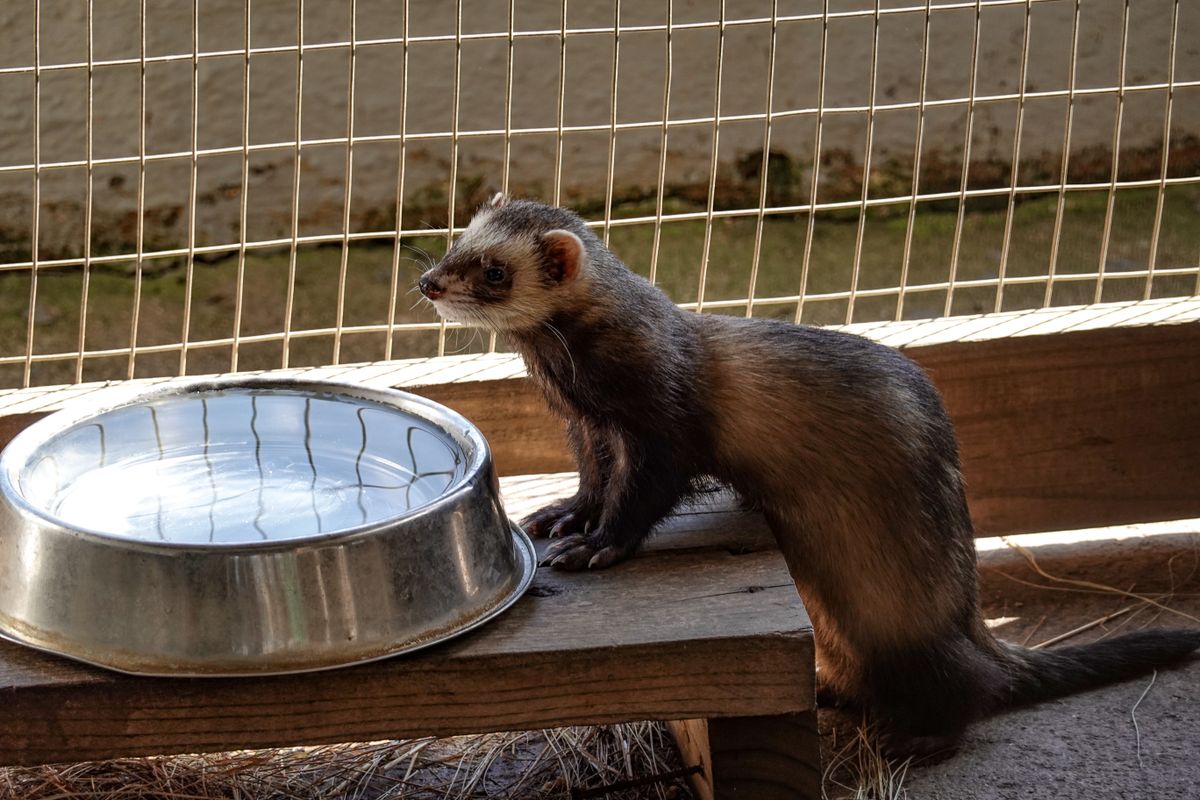
When a ferret’s room smells bad, the ferret is usually third on the list of suspects, behind its toilet and its laundry.
Dirty bedding and housing hold most of the odour. Blue Cross advises that litter trays should be cleaned every day and the rest of the housing at least weekly, and that hidden, stored food needs removing before it goes mouldy. Musk transfers to fabric every time a ferret sleeps, so a hammock washed last month is a scent sponge. The AFA makes the same point in reverse: owners who find the scent strong can often fix it by replacing bedding, hammocks and sleep sacks with clean ones.
Over-bathing is the second culprit. Frequent bathing is not recommended because the skin produces more oils to replenish what the bath stripped away, as the AFA explains, so a weekly bath manufactures a smellier ferret. Diet plays a smaller part: poor-quality, high-carbohydrate food is linked in care guidance to stronger-smelling waste, while a complete meat-based diet suits an obligate carnivore. Our guide to what ferrets eat and how to feed them well covers that side. Unneutered status is the fourth factor.
How to reduce the musk: a weekly plan that works
Work on the home first, the ferret second, and products last. Scented sprays mostly layer perfume over musk, and PetMD warns against spraying products directly onto a ferret.
Daily, scoop the litter tray, check for stashed food, and refresh water. Ferrets often choose one or two toilet corners, making this a two-minute job once a tray sits where the ferret wants to go, a tip Blue Cross gives for litter training.
Weekly, wash all fabric bedding, hammocks and sleep sacks, wipe down trays, and check ears. Keep a spare set so the enclosure is never bare while the wash runs. Monthly at most, bath the ferret if it needs it.
Keep other pets’ housing separate too. The slow introductions in our step-by-step rabbit bonding guide and the secure housing in our complete hamster cage setup checklist both work best in calm rooms of their own, and a ferret, a natural hunter, should always live apart from smaller pets. Our room-by-room guide to ferret-proofing your home will help you set up that separate play space.
Bathing, ears and bedding: the details

Bath less than you think. PetMD’s grooming guidance says bathing can be done about once a month at most, with a shampoo made for ferrets or kittens, and that over-bathing removes natural skin oils, causing dry skin and glands that work overtime to produce more oil, which makes the smell worse. Many keepers bath far less often, only when a ferret is visibly dirty, and Agriculture Victoria matches that pattern.
Ears are the detail people miss. PetMD notes that ferret ears get very waxy with a strong, musky odour, and suggests cleaning once a week with an ear cleaner made for pets, using a moistened cotton bud on the outer ear only, never pushed into the canal. Dark wax with a new bad smell, scratching or head shaking is a vet appointment, not a cleaning problem, because those signs can point to ear mites or infection.
For bedding, wash fabric in hot water where the fabric allows it, with unscented detergent, and dry it fully. A second set in rotation means no damp hammock is ever pressed back into service.
When a change in smell means a vet visit

A steady, familiar musk is normal. A change is information, and some changes need a vet rather than a laundry day.
Book a check if the smell suddenly becomes much stronger or different, if it is concentrated around the ears or mouth, if it comes with sore, flaky or greasy skin, or if toileting changes alongside it. The same distinction applies here: a new foul smell around the ears or mouth, or persistent loose or unusually foul stools, need a vet to look at them, not just a wash.
One illness is worth knowing about here, without trying to diagnose your own ferret from this page. Adrenal gland disease is common in pet ferrets, usually over two or three years old, and veterinary proceedings list a return to sexual behaviour and a musky odour stronger than normal among its signs, alongside the most common sign, hair loss starting at the tail. A neutered ferret who becomes smellier while losing hair at the tail should be examined promptly. Skin infections can also change smell, and only an examination can separate these possibilities.
A simple table: where the smell comes from and what helps
| Source | Smell | What helps |
|---|---|---|
| Skin glands | Constant light musk | Neutering, clean bedding, not over-bathing |
| Anal glands | Rare, sharp burst when startled | Nothing needed day to day |
| Litter tray | Ammonia, waste | Scoop daily, housing clean weekly |
| Bedding, hammocks | Built-up musk in fabric | Wash weekly, keep a spare set |
| Ears | Waxy, musky | Weekly outer-ear clean, vet if wax turns dark |
| Over-bathing | Musk rebounds stronger | Bath at most monthly, usually less |
Frequently Asked Questions
Can a ferret be made completely odour-free?
No. The everyday musk comes from oil glands in the skin, as the American Ferret Association explains, and no bath, spray or operation removes those glands. Neutering, clean bedding, daily litter care and rare baths can make the smell mild, which is the realistic goal.
Does descenting stop a ferret smelling?
No. Descenting removes the anal glands, which produce only the occasional sharp burst when a ferret is frightened. The background musk comes from the skin, so a descented ferret still smells like a ferret.
How often should I bath my ferret?
At most once a month, and many ferrets need far less, only when visibly dirty. PetMD and Agriculture Victoria both warn that bathing strips skin oils and glands then produce more to replace them, so frequent baths make the odour stronger.
Do male ferrets smell worse than females?
Intact males usually smell strongest, especially in season, because sex hormones drive oil production in the skin. Neutering reduces a male’s odour a great deal, and spaying does the same for females.
My neutered ferret has suddenly started smelling much stronger. Why?
Treat a sudden change as a health flag. Check ears and skin, then book a vet visit, especially with hair loss at the tail, sore skin or ear discharge. Veterinary sources list stronger-than-normal musk among the possible signs of adrenal gland disease, and infections can also change smell.
What litter and bedding routine helps most?
Scoop litter daily, clean the rest of the housing at least weekly as Blue Cross advises, and wash hammocks and sleep sacks weekly, keeping a spare set. That routine, not bathing, is what brings the room back under control.
Sources and Further Reading
- PetMD — How to Make Ferrets Smell Better — https://www.petmd.com/ferret/grooming/how-get-stink-out-your-ferret
- American Ferret Association — Position Statement on Descenting — http://www.ferret.org/pdfs/health/AFA_Position_Descenting.pdf
- Blue Cross — Caring for Your Ferret — https://www.bluecross.org.uk/advice/ferret/caring-for-your-ferret
- Agriculture Victoria — Caring for Your Pet Ferret — https://agriculture.vic.gov.au/livestock-and-animals/animal-welfare-victoria/other-pets/caring-for-your-pet-ferret
- Chewy — Do Ferrets Stink? Why Ferrets Smell and How to Improve Their Scent — https://www.chewy.com/education/small-pet/ferret/do-ferrets-stink
- Vet Times — Overview of Ferrets — https://www.vettimes.com/clinical/exotics/overview-of-ferrets-part-one-conditions-and-behaviour
- dvm360 — Ferret Endocrine Conditions — https://www.dvm360.com/view/ferret-endocrine-conditions-proceedings
This article is educational and is not a substitute for veterinary advice. If your ferret’s smell changes suddenly, or comes with hair loss, skin problems, ear discharge, appetite or behaviour changes, contact your vet.
About the author
Furrology Team — pet owner and researcher behind Furrology. We read the veterinary research and draw on real owner experience, then turn it into plain-English guides about dogs, cats, birds and small pets. We are not vets — Furrology is researched information, not veterinary advice, and a poorly pet always needs a real vet. More about how we work: About Us · Editorial Policy