Your cat loves you. But here’s something most owners never find out: there are specific things you can do — starting today — that will make your cat love you significantly more. Not tricks. Not treats. Real, scientifically proven behaviors that literally trigger the love hormone in your cat’s brain. And the twist that makes this so frustrating? Most owners are doing the complete opposite of every single one of them, every single day, with the best intentions in the world. Here’s how to change that — starting right now.
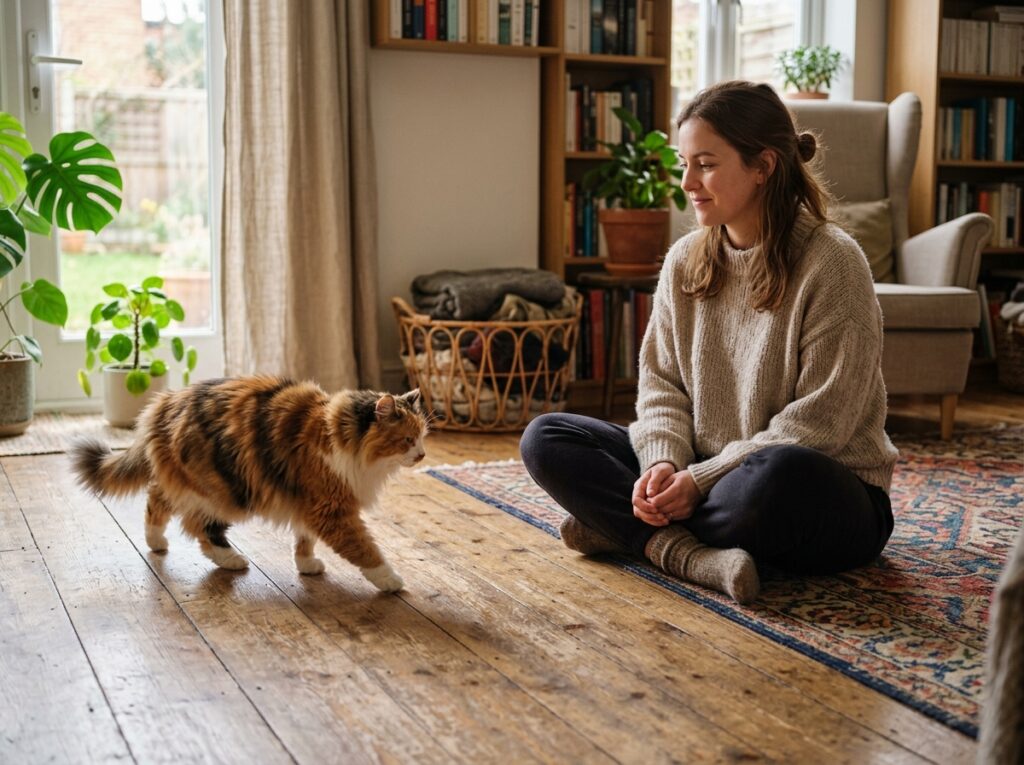
Let Your Cat Come to You First (Most Owners Get This Wrong From the Start)
Most owners make this mistake in the very first second of every interaction. They see their cat, they go to their cat, they reach out and pet their cat. And every single time they do that, they’re quietly making their cat trust them a little less.
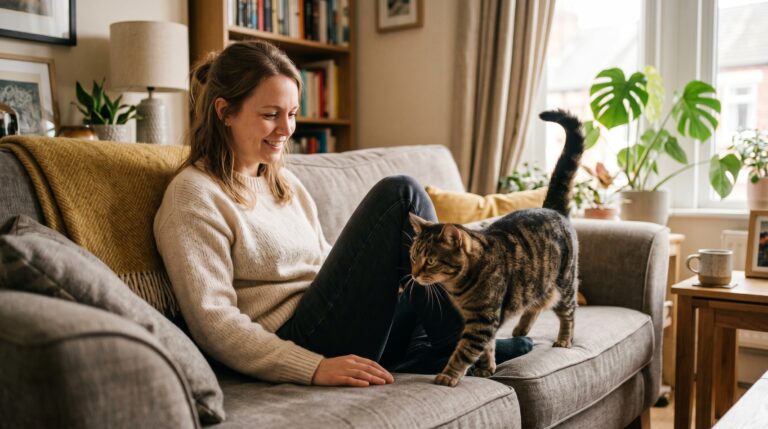
A study from the University of Zurich found something that genuinely changes the way you think about cat bonding. When humans sit back, relax, and let the cat make the first move, interactions last significantly longer and are far more meaningful. When humans initiate the contact, the cat pulls away faster — every time.
Think about what that actually means. Every time you chase your cat’s affection, you’re pushing it further away. Every time you sit back and wait, you’re pulling it closer to you. The owners who do this right look like they’re doing absolutely nothing. They’re sitting quietly, not reaching out, not calling the cat’s name, not trying at all — and their cat walks straight over to them. That’s not luck or a particularly friendly cat. That’s science working exactly the way it’s supposed to.
The Slow Blink Triggers the Love Hormone in Both of You Simultaneously
This one was proven in a lab at the University of Sussex, and it might be the single most powerful thing on this entire list. When a cat slowly closes their eyes at you and opens them again, that is the highest compliment they are capable of giving. It is their version of a smile. It means: I feel completely safe with you. I trust you. I am not afraid.
And here’s the remarkable part. When you do it back — when you look at your cat softly and slowly close your eyes — the study found that cats are significantly more likely to approach you, choose you, and stay near you than they are with people who simply stare.
A 2025 study confirmed it goes even deeper than that. The slow blink actually triggers oxytocin — the love hormone — in both you and your cat simultaneously. One small, three-second gesture. Two brains releasing the bonding chemical at exactly the same time. Most owners stare at their cats thinking it’s a moment of connection. Slow blink instead. The difference in your cat’s response will be immediate and unmistakable.
Play With Your Full Attention — Your Cat Notices When You’re Half Present
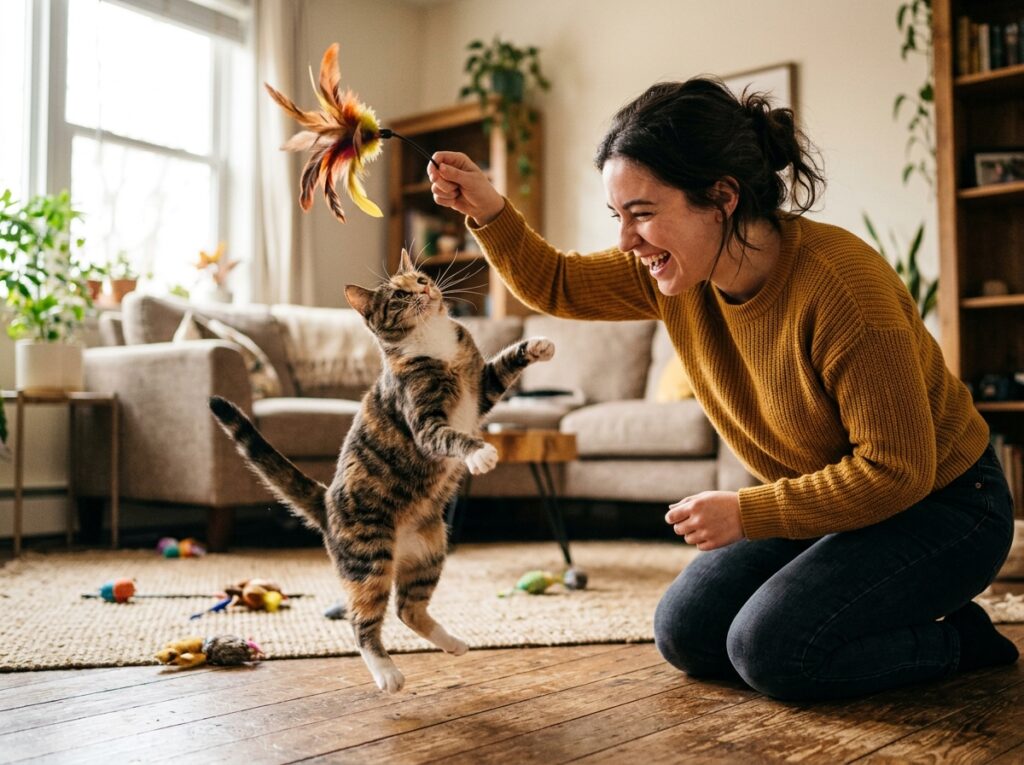
Most owners play with their cat while watching TV, scrolling their phone, or half-focused on something else in the room. Their cat notices every single time. And it matters far more than most people realize.
A 2017 study from Oregon State University tested what cats actually want most — food, toys, scent, or human interaction. The answer surprised even the researchers. Most cats chose human interaction over everything else. Over food. Over toys. Over all of it.
But here’s the catch that changes everything: the interaction has to be real, focused, and fully present. Ten minutes of completely focused play — a wand toy, a feather, a piece of string, anything that lets your cat stalk, chase, and catch — does more for your bond than an hour of distracted, half-hearted attention. And always let them catch it. Every hunt needs a victory. A cat that never wins starts to lose interest and give up. A cat that wins regularly, with you as the one giving them that victory, starts to associate you with one of the best feelings in their entire world. That association is the foundation of a genuinely deep bond
Respecting the “No” Is the Most Important Cat Bonding Skill You Can Have
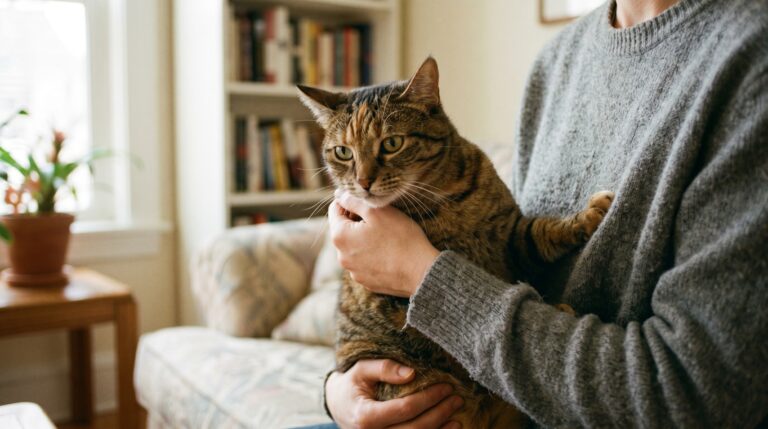
Your cat turns away. They flick their tail. They get up and walk off. And most owners follow. They call after them, they try one more pet, one more reach, one more attempt to keep the moment going just a little longer.
This is the single biggest mistake in cat bonding — and it quietly undoes everything else on this list.
A 2025 study measured oxytocin levels in cats during different types of interactions. When owners forced contact on cats who clearly wanted to leave, oxytocin levels actually dropped. The bonding hormone went into reverse. The connection weakened in real time, at a biological level, because the cat’s boundaries weren’t respected.
But when owners simply let the cat go — no following, no calling after them, no one more try — those same cats came back sooner, stayed longer, and initiated more contact on their own terms. Your cat leaving is not rejection. It is a test. The owners who pass it — who simply say okay, let them go, and return to what they were doing — are the owners their cats trust the most. Consistently, measurably, deeply. Respect the no, and your cat will keep coming back to give you another yes.
Your Calm, Soft Voice Is One of the Most Powerful Bonding Tools You Own
You don’t need to be silent around your cat. You just need to be soft.
A 2021 study from Japan found that speaking to your cat in a calm, gentle tone — even just narrating what you’re doing around the house — raised oxytocin levels in owners during the interaction and produced measurable calming responses in the cats themselves. The specific words didn’t matter at all. The tone did everything.
Your voice is one of the most powerful bonding tools you have, and most owners waste it — letting it get sharp when they’re frustrated, raising it during stressful moments, using it almost exclusively to stop unwanted behavior. Your cat hears all of it, and their nervous system responds to all of it.
Talk to your cat softly. Tell them what you’re making for dinner. Narrate the thing you’re watching. Describe what you’re doing as you move around the house. It sounds strange to anyone watching. But the science is unambiguous: your calm voice tells your cat’s nervous system that everything in their world is safe, and that you — specifically you — are a source of safety and calm rather than unpredictability. A cat that feels safe around you is a cat that chooses to be near you. Every single time.
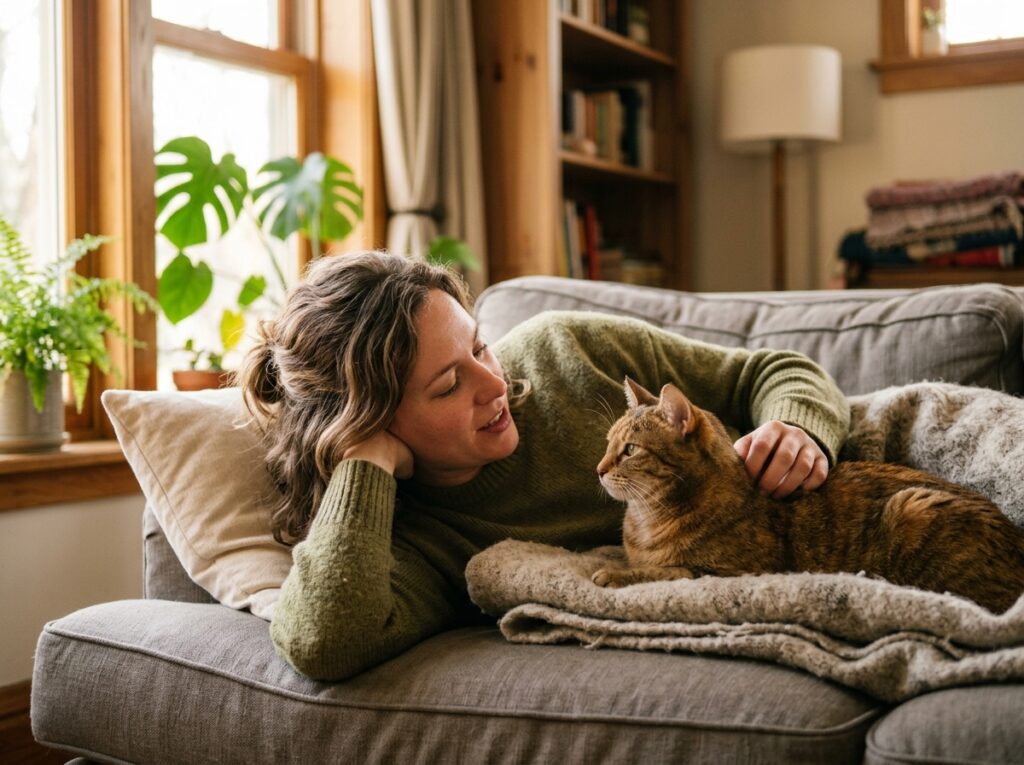
Final Thoughts: Think Like Your Cat, Not Like a Human
None of these are complicated. None of them cost a single dollar. They don’t require special training, new equipment, or any significant change to your daily routine. What they require is something harder and more valuable than all of that: the willingness to think like your cat instead of like a human.
Let them come to you. Slow blink when your eyes meet. Play with your full, undivided attention. Respect it when they walk away. Keep your voice soft, even when you’re not talking to them directly.
Five things. That’s the entire list. And your cat will feel the difference faster than you ever expected — because they’ve been waiting for this kind of communication their entire life. They just needed you to learn the language.
The bond you’ve always wanted with your cat isn’t out of reach. It never was. It was just waiting for you to stop trying so hard and start paying better attention. Want to dive deeper into the science of cat behavior and bonding? Explore more research-backed guides right here at Furrology.net.