You love your cat more than most people love anything. And that’s exactly why this is going to be hard to hear. Right now, today, there’s a good chance you’re stressing your cat out. Not on purpose. Not because you’re a bad owner. But because nobody ever told you that these completely normal, completely innocent everyday habits are quietly destroying your cat’s sense of safety — one small moment at a time. These are the seven most common stress-causing habits cat owners don’t know they have, and what to do about every single one of them.
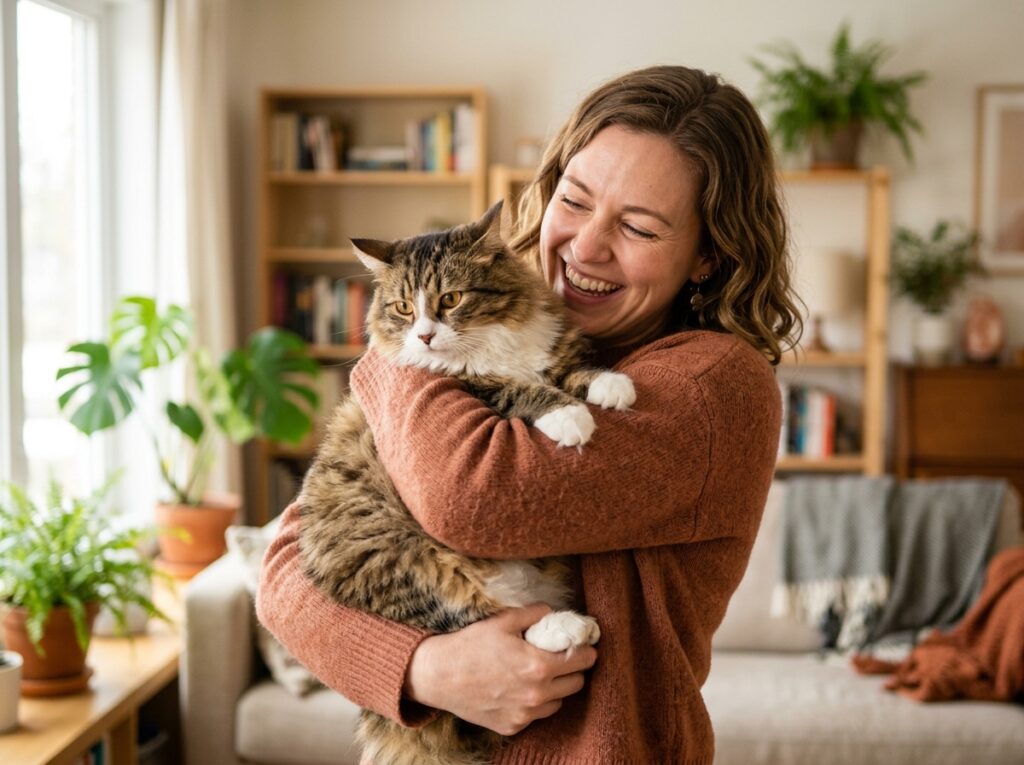
Forcing Affection Is One of the Biggest Ways Owners Stress Their Cats
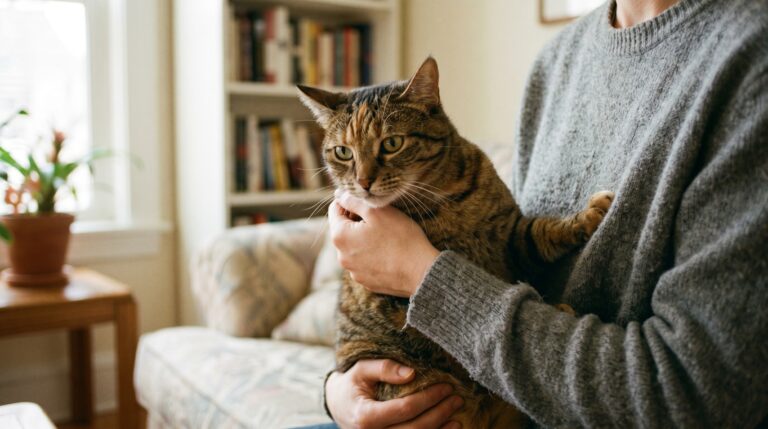
You see your cat looking irresistibly cute. You scoop them up, pull them close, and squeeze them tight. It comes from pure, genuine love. But the moment that happens, your cat’s brain makes a very different calculation: I cannot escape.
Cats are not wired for forced physical contact. The moment they can’t get away, their survival instinct activates — and that warmth you’re giving them? They’re experiencing it as a trap. A study published in the journal Applied Animal Behavior Science confirmed that cats show significantly elevated stress responses when held against their will, even by owners they deeply trust and have bonded with over years. This one hurts to hear because it comes from such a loving place. But the fix is genuinely simple. Put them down the moment they want to leave. Let them come back on their own terms. And they always will. That return — chosen freely, without pressure — means infinitely more than a hug they never asked for.
An Unpredictable Daily Routine Spikes Your Cat’s Stress Hormones
Yesterday you fed them at 7:00 AM. Today it was 9:00. Tomorrow you’re not sure. It doesn’t seem like a big deal. But to your cat, their entire world just became unpredictable — and unpredictability is one of the most stressful things a cat can experience.
Cats build their sense of safety around routine the same way humans build it around trust. Same feeding time, same play time, same patterns every single day. When that schedule shifts — even by just 30 minutes — their cortisol levels actually spike. Their body physically responds to the uncertainty with a measurable biological stress reaction. Think about that. A 30-minute difference in feeding time can trigger the same kind of stress response as a genuine threat in their environment. Consistency isn’t just convenient for your cat. It is their security blanket. Protecting that routine is one of the most powerful things you can do for their daily wellbeing.
Loud Noises in the Home Trigger Your Cat’s Survival Instincts
You had a rough day. You raised your voice on a phone call. You shouted at the TV during a game. You slammed a door out of frustration. Your cat heard every single bit of it — and somewhere in that small body, their heart rate went up.
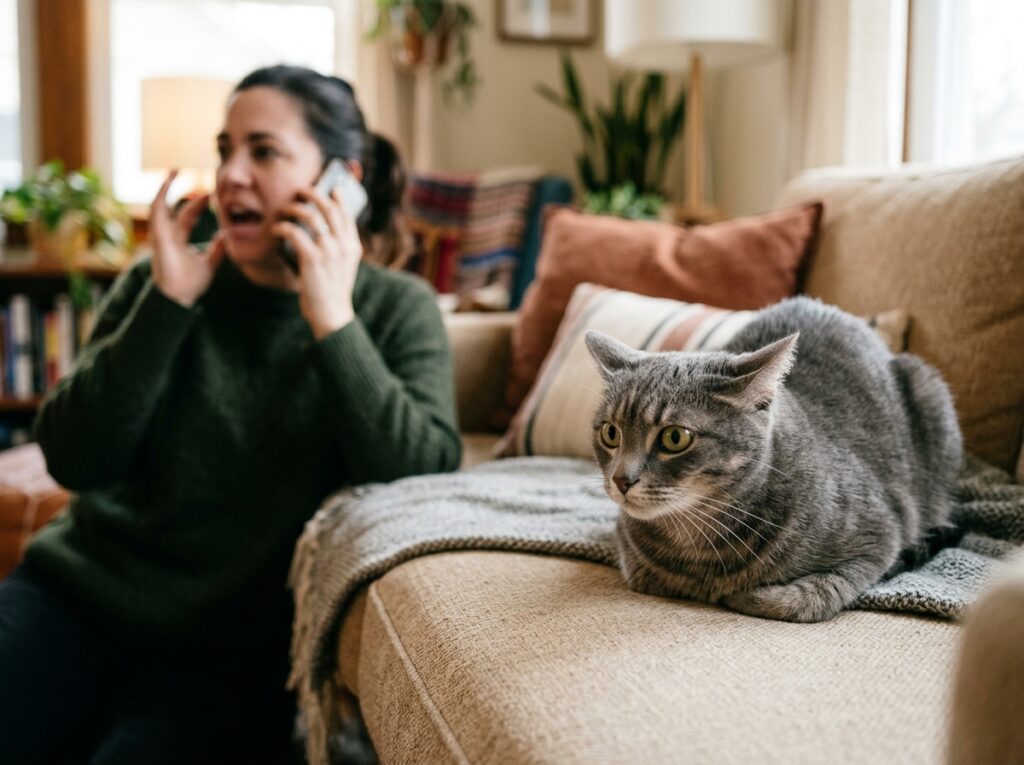
Cats associate loud, sudden sounds with danger. It is hardwired into them from thousands of years of survival. In the wild, loud meant predator. Loud meant run. Their nervous system doesn’t know you were just frustrated at traffic or annoyed at a news segment. It only registers: something threatening just happened inside my safe space. Veterinarians consistently rank unpredictable loud noise among the top three chronic stressors for indoor cats. And unlike a single bad event, the damage from repeated daily noise exposure builds silently over time, accumulating into long-term anxiety your cat has no way of communicating to you. A softer voice at home — even when you’re not talking to your cat — makes a measurable difference. They are always listening.
Strong Scents Are Overwhelming Your Cat More Than You Realize
You lit your favorite candle. You sprayed the air freshener. You put on perfume before leaving the house. Your cat was in that room for all of it.
Cats have a sense of smell that is approximately 14 times more powerful than a human’s. That lavender candle you find relaxing and soothing? To your cat, it is the equivalent of someone spraying perfume directly into your face in a sealed room with no way out. Heavily scented cleaning sprays, plug-in air fresheners, fabric softeners, and strong perfumes are among the most consistently overlooked stressors in any cat household. The most difficult part of this one is that your cat cannot tell you it’s overwhelming. They can’t ask you to stop. They just quietly endure it, day after day, in a home that smells like sensory overload to them. Switching to unscented cleaning products where possible, opening windows when using sprays, and always giving your cat a clear exit from any heavily scented room can dramatically reduce their daily stress levels. This single change alone can make a noticeable difference.
Holding Eye Contact Feels Like Connection — But Your Cat Reads It as a Threat
This is the one most owners never catch, because it feels like a genuine moment of connection. You look at your cat. They look back. You hold that gaze because it feels warm and intimate. But in cat language, an unbroken direct stare communicates one thing clearly: challenge, threat, aggression.
Every single time you hold eye contact too long, your cat is registering stress — even if they don’t flinch, even if they don’t run, even if they seem completely unbothered on the surface. The stress is happening internally, invisibly. And in most households, it happens dozens of times throughout the day. A study published in Animal Cognition found that cats actively move away from people who stare at them and actively move toward people who slow blink and look away gently. The slow blink is their language for I love you. I am not a threat. You are safe with me. Use it deliberately, every single time your eyes meet your cat’s. It takes three seconds and it changes everything about how your cat reads your presence.
Inconsistent Rules Keep Your Cat in a Constant State of Low-Level Anxiety
Monday, you let them on the sofa. Tuesday, you push them off and raise your voice. Wednesday, they jump up and you laugh and let them stay. To you, it just depends on your mood or the situation. To your cat, the world they live in operates on rules they cannot figure out — and that uncertainty is genuinely exhausting for them.
Cats need to be able to predict their owner’s behavior in order to feel safe. When they can’t — when the rules keep shifting based on something they have absolutely no way of understanding — they exist in a permanent low-grade state of anxiety. Every interaction becomes a gamble. Every moment near you carries a question mark they cannot answer. Research on feline stress consistently identifies owner unpredictability as one of the leading causes of chronic anxiety in domestic cats. The fix doesn’t require perfection. It requires consistency. Pick your rules, commit to them, and apply them the same way every time. Your cat’s nervous system is genuinely asking you to be steady.
Taking Away Their Safe Spaces Removes Their Sense of Security Completely
You deep cleaned the whole house. You rearranged the furniture. Guests came over and sat in your cat’s favorite spot all afternoon. You feel refreshed and organized. Your cat feels lost in a home that no longer makes sense.
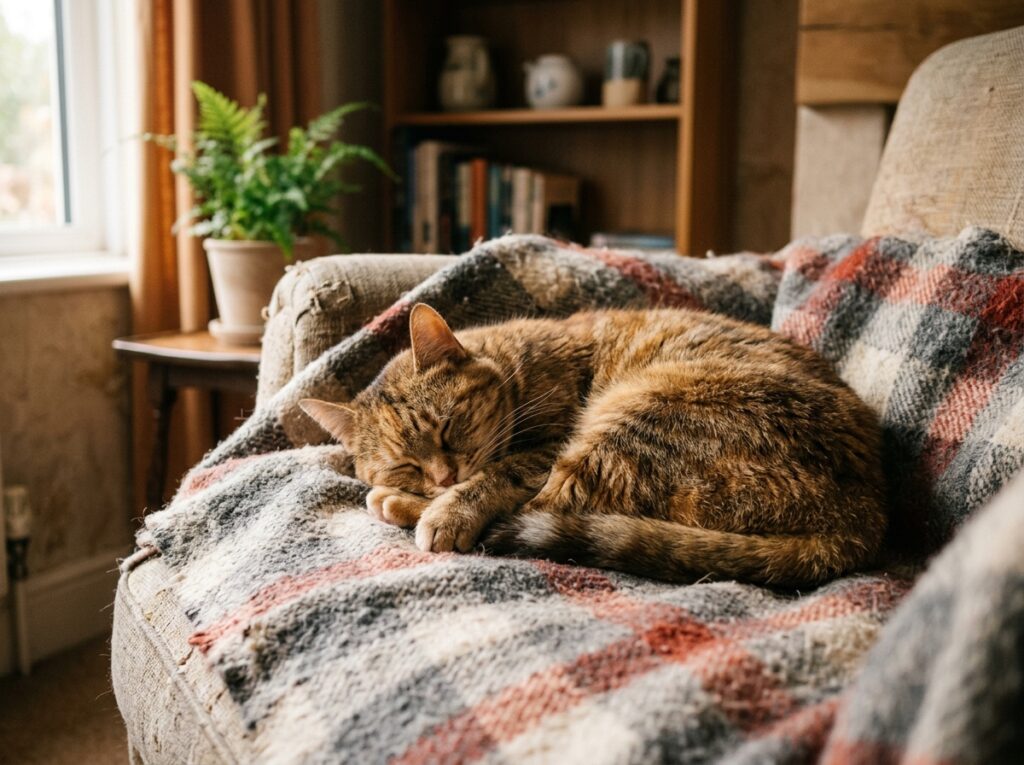
Every single spot your cat claims is marked with pheromones from their face and paws. That scent isn’t just a habit or a preference — it’s how your cat tells their own nervous system: this place is mine. This place is safe. Nothing can hurt me here. When you scrub it away, rearrange it, or allow someone else to occupy it without warning, that invisible layer of security disappears completely. And your cat has no way of understanding why. According to the Journal of Feline Medicine and Surgery, environmental disruption is one of the top documented triggers of stress in indoor cats, directly linked to anxiety, appetite changes, and litter box avoidance. Keeping their claimed spaces consistent isn’t about rearranging your life. It’s about recognizing that what looks like a worn blanket or an old couch cushion to you is your cat’s entire sense of safety. When guests come over, give your cat access to a quiet room of their own. Their safe space is not a preference. It is survival instinct made physical.
Final Thoughts: You Can Fix Every One of These Starting Today
None of these habits make you a bad owner. Not a single one. Every item on this list comes from love, from busyness, or from simply never being told. And that’s the part that matters most — because now you know.
Every single one of these is fixable. Not eventually. Not after a major lifestyle overhaul. Starting today, starting with the very next interaction you have with your cat. Put them down when they want to leave. Feed them at the same time tomorrow. Use a softer voice at home. Open a window. Slow blink instead of staring. Pick a rule and stick to it. Leave their blanket exactly where it is.
Your cat will feel the difference faster than you think. They are constantly, quietly reading everything you do. And when you start speaking their language — when the home becomes quieter, more predictable, more consistent — something shifts. The distance gets smaller. The trust gets deeper. And the cat who once kept to themselves starts showing up, again and again, right beside you.
That is what all of this is really about. Not perfection. Not mastery. Just a little more understanding, offered a little more consistently, every single day. Want to keep learning how to give your cat the life they deserve? Explore more science-backed guides right here at Furrology.net.