Your cat is doing something strange right now. And if you’re like most owners, you have absolutely no idea why. Why does your cat cram itself into a tiny box when it has the entire house? Why does it stare at you like it’s plotting something? Why does it bring you dead animals as though it’s doing you a massive favor?
Every single weird thing your cat does has a reason. Behind each bizarre habit is thousands of years of instinct, biology, and feline psychology — and once you understand what’s actually going on, you’ll never look at your cat the same way again. Here are 19 of the strangest cat behaviors, and the real science behind every one of them
Why Cats Squeeze Into Tiny Spaces (And Other Instinct-Driven Behaviors)
1. Cramming Into Tiny Spaces
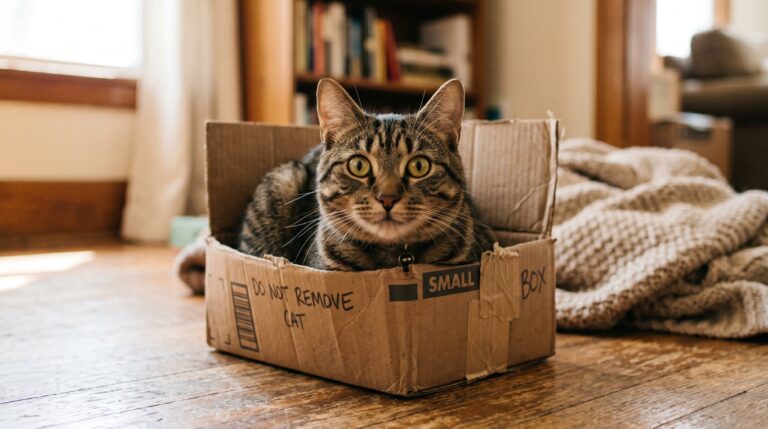
Your cat has the entire house — every sofa, every bed, every warm sunny patch of floor — and they choose a shoebox. Here’s why. Before cats were domesticated, sleeping out in the open was genuinely dangerous. Any predator could spot them. Their instinct drove them to find small, hidden spaces where nothing could sneak up on them.
That shoebox isn’t random. That’s your cat’s ancient survival brain saying: in here, I’m safe. In here, nothing can touch me. Next time your cat squeezes into something impossibly small, that’s not weirdness. That’s thousands of years of survival instinct playing out on your living room floor.
2. Kneading (Making Biscuits)
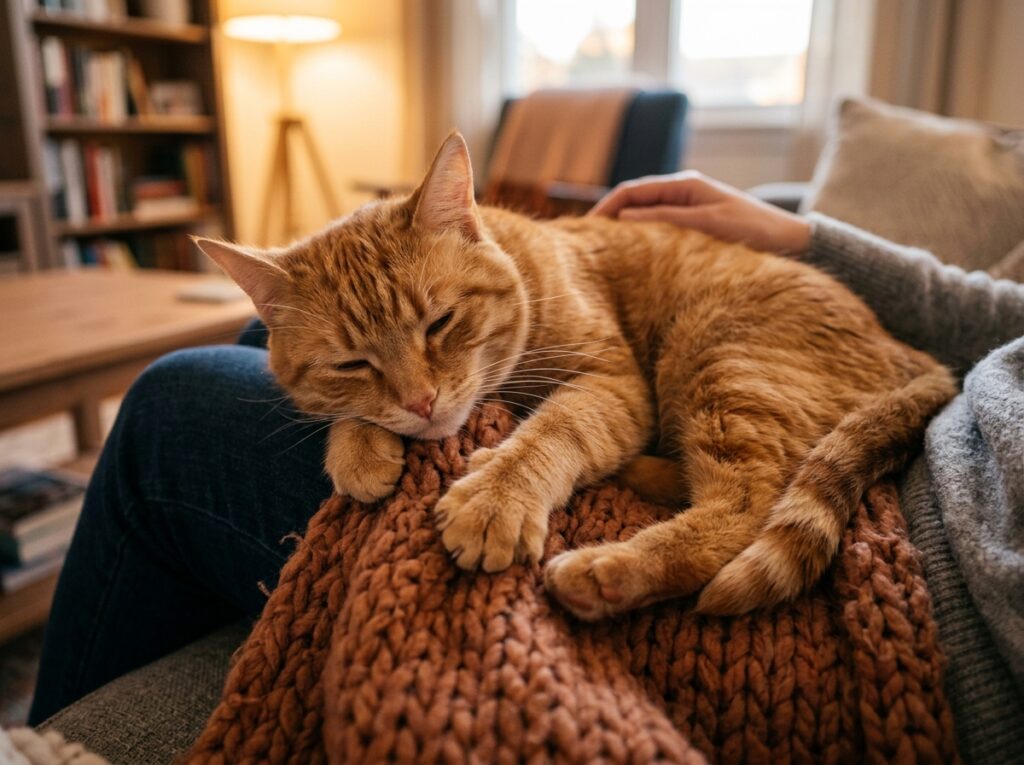
Your cat climbs on you, starts pushing their paws rhythmically in and out, purring loudly, eyes half-closed in pure bliss. This behavior starts the day they’re born. Kittens knead their mother to stimulate milk flow, and over time their brain forms a powerful association: warmth plus kneading equals safety, fullness, and love.
When your adult cat kneads you, you have become their safe place. You are everything good in their world. That’s not just a quirky habit — that’s the highest compliment your cat knows how to give another living being.
3. Rolling on Their Back
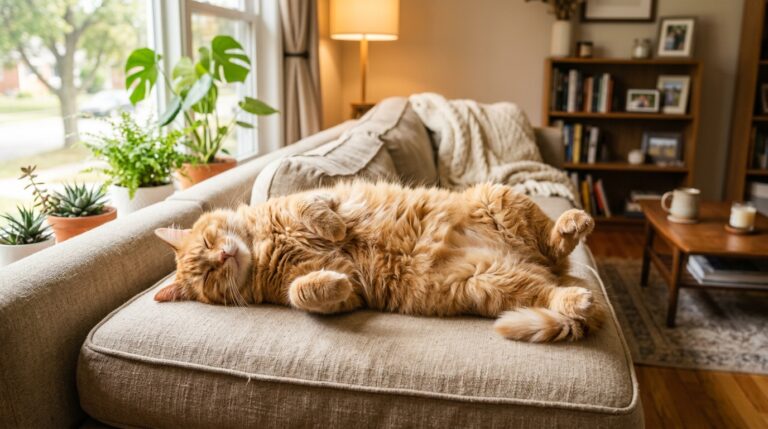
A cat rolling onto their back and showing you their belly is not an invitation to touch it. It’s something far more significant. The belly is the most vulnerable part of any cat’s body. Exposing it means they have zero defenses up, zero fear, and zero need to protect themselves in your presence.
If your cat rolls over in front of you, they are telling you they feel completely safe. That trust was earned — and it deserves to be respected, not immediately tested with a belly rub.
4. Presenting Their Behind
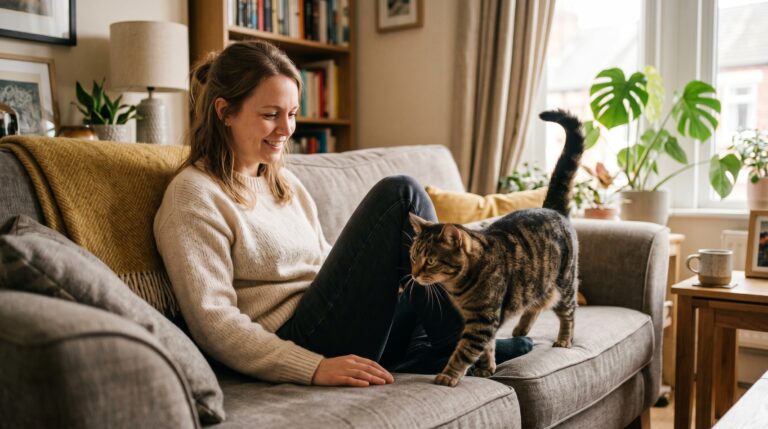
Your cat walks up and puts their tail end directly in your face. Rude? Actually, it’s the opposite. A raised tail is a greeting signal between cats — it means I feel secure, I trust you, I come in peace. When your cat does this to you, they’re greeting you exactly the way they would greet their most trusted companions. It’s essentially a handshake. A very up-close handshake.
Strange Cat Behaviors That Are Actually Health Signals
5. Chewing on Plastic or Non-Food Items
If your cat is chewing on plastic bags, blankets, or things that are definitely not food, pay close attention. This is called pica, and unlike most behaviors on this list, this one needs your attention. Pica usually indicates anxiety or gastrointestinal issues. Your cat is trying to self-soothe, using chewing to calm their nervous system.
The problem is that what they’re chewing on can seriously injure them internally. If you notice this behavior consistently, don’t dismiss it — schedule a vet visit. This is one of the few items on this list that requires a real solution, not just understanding.
6. Not Covering Their Waste
In the wild, cats bury their waste to hide their scent from predators. When your cat stops doing this, something has shifted. Sometimes it means they feel so safe and protected that they no longer feel the need to hide their presence — you’re their protector, and they know it.
But sometimes it’s a medical signal: a paw injury, a urinary tract infection, or another health issue worth investigating. The rule of thumb: if this is new behavior, visit the vet first. Once health is ruled out, consider whether the litter box is being cleaned frequently enough. Cats are remarkably particular about their bathroom situation.
7. Biting Their Nails
Just like people, cats bite their nails for two very different reasons. The first is basic grooming — keeping claws clean and at the right length. Completely normal. The second is anxiety. If your cat is biting their nails frequently and compulsively, they may be stressed or under-stimulated. Watch when it happens. Is it random, or does it occur in specific situations? The pattern will tell you whether you’re looking at healthy grooming or a stress response that needs addressing.
Cat Behaviors That Are All About Communication
8. Rotating Their Ears Independently
Have you ever watched your cat’s ears swivel independently, like two tiny satellite dishes scanning the room? That’s not a glitch in their system — that’s your cat’s emotional radar working at full capacity. Ears moving independently mean they’re uncomfortable and something in their environment has them on edge. Ears slightly pulled back but still upright mean they’re alert and focused. Your cat’s ears are one of the most honest windows into how they’re actually feeling. Learn to read them and you’ll always know.
9. Knocking Things Off Surfaces
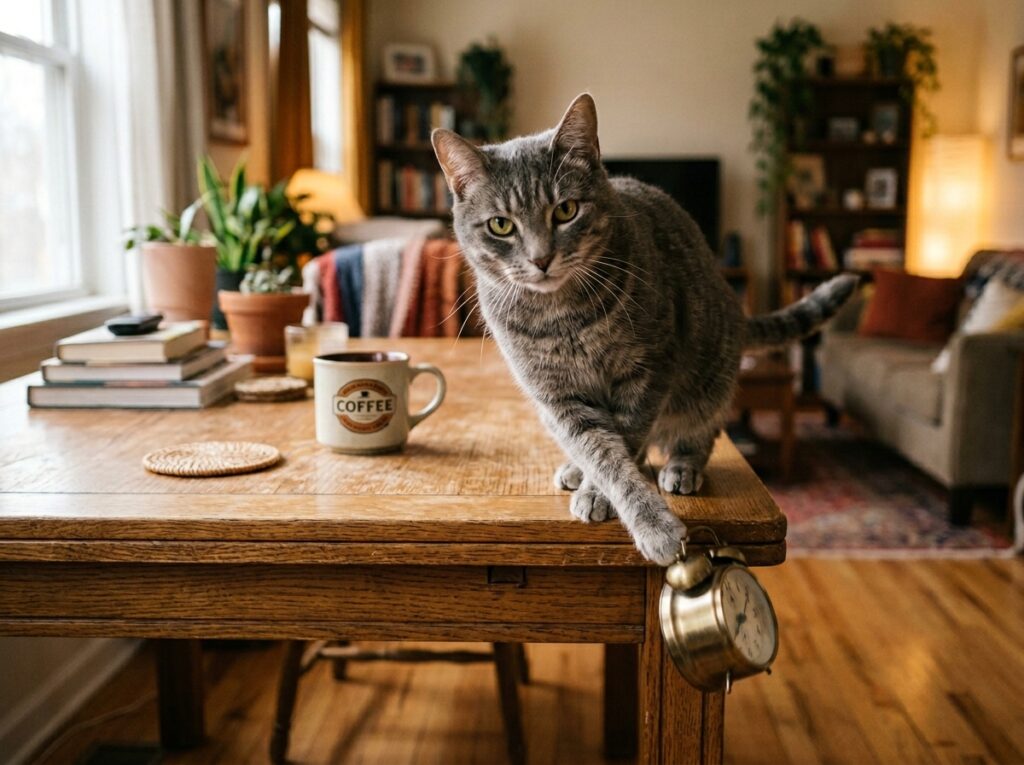
Your cat looks you dead in the eyes, places their paw on your favorite mug, and slowly, deliberately pushes it off the table. This is not an accident. A cat’s paws are incredibly sensitive, and knocking objects over is genuinely how they explore their environment — feeling textures, testing weight, observing how things react. But when they do it while staring directly at you, they’ve learned something even more powerful: knocking things over gets your attention immediately and reliably. The fix? Ignore it completely. The moment it stops working, they stop doing it.
10. Rubbing Their Head on You
Your cat walks up and presses their head firmly against your leg, your hand, or your face. This is called bunting, and it means something very specific. By rubbing their head on you, your cat is spreading their scent and pheromones onto you. In cat language, this translates directly to: you’re mine. You belong to my world. I am claiming you. That’s not strange behavior — that’s your cat officially making you part of their family.
11. The Unblinking Stare
Your cat is staring at you, unblinking, unmoving, for what feels like an uncomfortably long time. This is their predator brain activating. Cats are natural hunters. Before they pounce, they study — tracking movement, calculating distance, reading their target completely. When your cat stares at you this intently, they’re either locked onto a bug behind you, plotting a playful ambush, or simply doing what their instincts have done for thousands of years. It’s not unsettling. It’s pure, ancient focus.
Everyday Cat Quirks With Surprisingly Deep Explanations
12. The Zoomies (Crazy Runs)
Without any warning, your cat explodes into a full sprint, bouncing off walls, sliding across floors, launching off furniture. This is called the zoomies, and it’s completely normal. Cats can naturally run up to 30 miles per hour. When they spend all day indoors, that physical energy builds and builds until it has to go somewhere. The zoomies are your cat’s pressure valve releasing. If it happens constantly — especially at night — increase their daily play sessions and give them more outlets during daylight hours.
13. Sleeping on Your Laptop
You open your laptop and your cat immediately sits directly on it. Two things are happening simultaneously. First, your cat has noticed that whatever holds your attention is competition. By sitting on your laptop, they are redirecting your focus back where it belongs — on them. Second, your laptop generates heat, and cats instinctively seek out warmth. They naturally gravitate toward temperatures around 20 degrees higher than what humans find comfortable. Your laptop is essentially a heated throne that simultaneously gets them your full attention. They have completely outsmarted you.
14. Eating Houseplants
Your cat nibbles on your plants, and there are a few reasons this happens. In the wild, cats eat grass to help settle an upset stomach or move something through their digestive system. If your cat feels gassy or uncomfortable, your houseplant is the closest available remedy. It can also be curiosity, boredom, or simply a reliable way to get you to look at them immediately.
The critical thing to remember: not all plants are safe for cats. Many of the most popular houseplants are toxic to them, and they have no instinct for identifying which ones are dangerous. Always verify that every plant in your home is cat-safe.
15. The Crazy Legs Sprawl
Your cat is lying in the most ridiculous, completely undignified, fully sprawled-out position imaginable. And that’s a genuine compliment. A cat only sprawls out completely when they feel zero threat, zero danger, and zero need to stay ready to run. If your cat does this around you, they see you as their safe place and their protector. They don’t need to stay alert because they know, completely and without question, that you’ve got them.
Nighttime Cat Behaviors Explained
16. 3 AM Vocalizing
Your cat has been asleep all day and now, at exactly 3 AM, they want to sing at full volume. The main reason: hunting instinct. In the wild, cats are most active at night — their eyesight is genuinely built for darkness. When that urge to hunt activates and there’s nothing to hunt, it comes out as noise. The solution is consistent daytime engagement. Food puzzles, extra toys, and a feeding session before bed give that nighttime energy somewhere productive to go before it becomes a bedroom concert.
17. Drinking From the Tap
Your cat has a perfectly clean bowl of fresh water sitting right there, and they’re drinking from the running faucet instead. This traces back directly to their wild ancestors. Still water was often contaminated — stagnant, full of bacteria, genuinely unsafe. Running water meant fresh water. Clean water. Safe water. Your cat’s instincts still carry that ancient knowledge, and a running tap triggers something deep that says this is the good stuff. If your cat consistently prefers running water, consider a cat water fountain — it works with their instincts instead of against them.
18. Staying Active All Night
Your cat sleeps all day and the moment you want to sleep, they’re wide awake and ready to play. Cats are naturally crepuscular, meaning they’re most active at dawn and dusk. But indoor cats without enough daytime stimulation often shift to fully nocturnal patterns. The fix requires consistent effort: more activity during the day, more play sessions, and a solid play-and-feed routine before bed. Tire them out during daylight hours and they will sleep when you sleep.
Final Thoughts: Every Weird Thing Your Cat Does Has a Reason
19. Bringing You Dead Animals
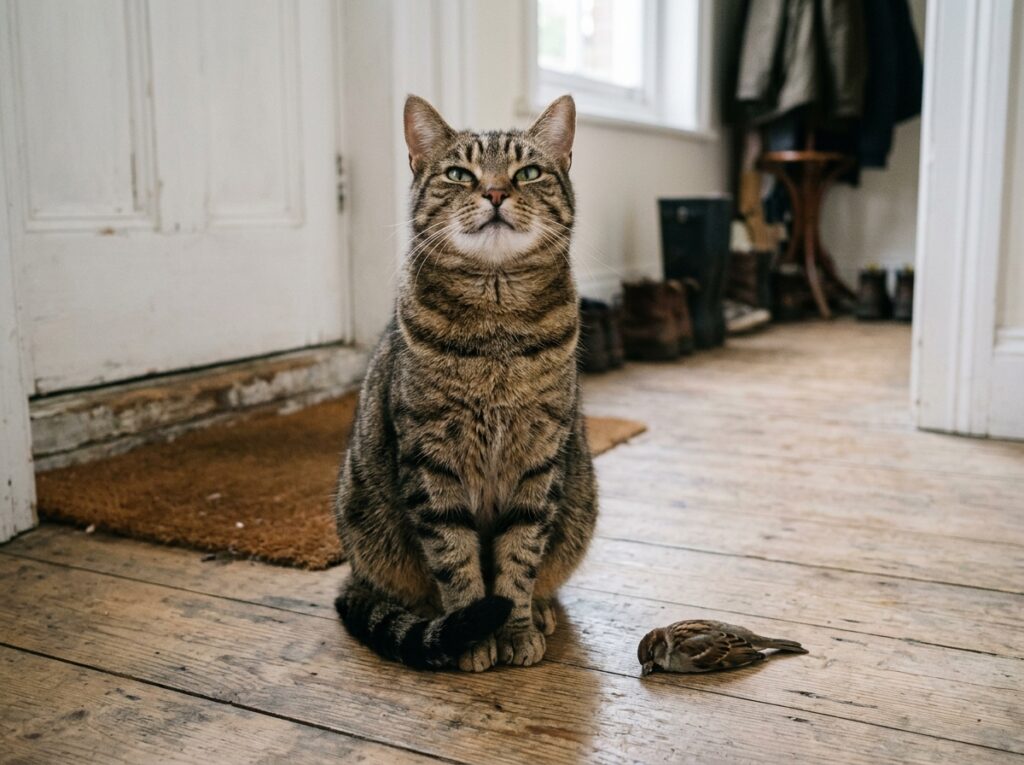
Your cat drops a dead bird at your feet and looks up at you like they just delivered the greatest gift in the world. Because in their mind, they absolutely did. When cats were kittens, their mother brought them prey to teach them to hunt. Successful kills were shared with the whole colony — because in the wild, if one cat eats, everyone eats.
Your cat is doing exactly that. They are sharing their hunt with you. They are feeding their family. They are making sure you survive. Don’t punish them for it. They are showing you love in the most primal, genuine way they know how.
And that’s the thread running through all 19 of these behaviors. Every strange thing your cat does has a reason. Every quirky habit has a story rooted in instinct, biology, and thousands of years of feline evolution. They’re not being weird. They’re being exactly what they are — one of the most fascinating, complex, and deeply layered animals that has ever chosen to share a home with a human being.
Now that you understand what they’ve been telling you all along, go watch your cat for a while. You’ll be amazed at how much you suddenly understand. Want to go even deeper into your cat’s behavior and psychology? Explore more science-backed guides right here at Furrology.net.