
If you want weird cat behaviors explained without the guesswork, start here: most strange things cats do – kneading, head-bunting, chattering at birds, slow-blinking and racing around at night – are normal communication, hunting instinct or self-soothing. A behaviour only becomes a worry when it is new, intense, or paired with appetite, toilet or energy changes.
At a Glance
- Most odd habits have a simple job: scent-marking, bonding, hunting practice or calming down.
- A slow blink is a positive signal. Cats in a 2020 study were more likely to slow-blink back and to approach a person who slow-blinked first.
- Purring does not always mean happy. Cats also purr when stressed, anxious or in pain.
- Sudden changes matter more than the habit itself. New hiding, aggression or loss of appetite deserves a vet check.
Contents
- Why does my cat knead, bunt and slow-blink?
- The hunter behaviours: chattering, zoomies and bringing you gifts
- Night-time, boxes and water: three everyday mysteries
- Purring, tail talk and the sudden bite
- When should you worry?
- Frequently Asked Questions
- Sources and Further Reading
It is 11 p.m. and your cat is staring at a blank wall. Then she tears down the hallway, skids round a corner, and settles on your feet as if nothing happened.
If that scene sounds familiar, you are living with a small predator whose instincts and social rules differ from yours. Once you translate them, the behaviour usually makes sense.
This guide sits inside our wider guide to understanding and caring for cats, where you will find the basics of food, health and daily care in one place. Here, we focus on the translation work.
Why does my cat knead, bunt and slow-blink?
1. Kneading, or “making biscuits”
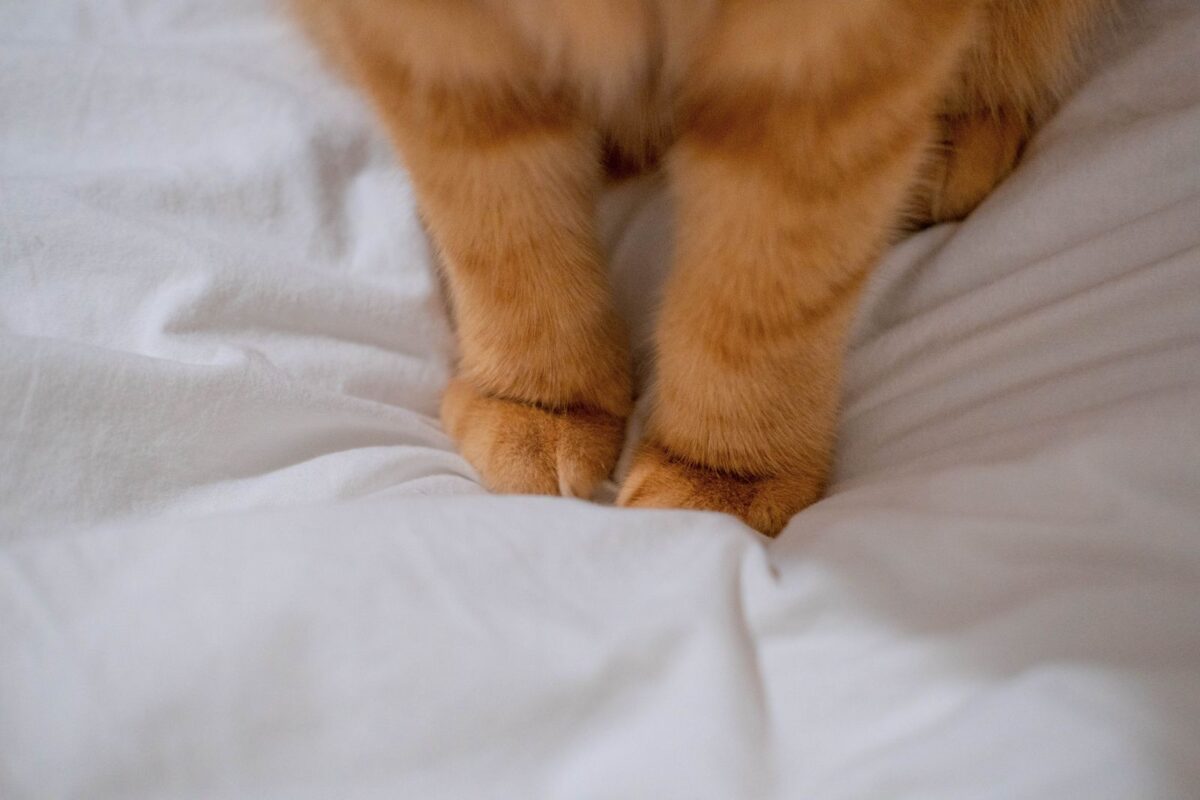
Kneading is that rhythmic push-push of the front paws into a blanket, a cushion or your lap. It starts in kittenhood, when kittens knead around the teat to help stimulate milk flow.
Many adult cats keep the habit when they feel safe and settled. Cornell-affiliated experts also note that kneading can be a sign of affection, and cats have scent glands in their paws, so the action can leave scent behind as well. Think comfort first, marking second.
What helps: a folded blanket on your lap if claws are part of the package, regular claw trims, and lifting her gently if you need to get up.
2. Head-bunting and cheek rubbing
When your cat pushes her head or cheek firmly into your hand, leg or the corner of a table, that is bunting. Cornell describes bunting as depositing pheromones to mark you as “theirs” and as a sign the cat wants you in their social structure.
Cheek rubbing on furniture does similar work around the home. Your cat is building a shared, familiar scent profile – a map that says this place and these people are known and safe.
Respond by letting the cat start it: offer a loose fist at cat height, let her rub, and stop when she moves away – the choice that builds trust, as our guide on building a stronger, kinder bond with your cat explains.
3. The slow blink
A slow blink is a soft narrowing and closing of the eyes, held for a beat longer than a normal blink. Owners have long called it a cat smile. Research now backs that reading.
In a 2020 study in Scientific Reports by researchers at the University of Sussex and the University of Portsmouth, cats were more likely to half-blink and narrow their eyes after their owner slow-blinked at them than when the owner did not interact. In a second experiment, cats were more likely to approach an unfamiliar researcher who had slow-blinked than one who kept a neutral expression.
Try it yourself. Look at your cat with relaxed eyes, blink slowly, and look slightly away. Do not stare hard or lean in. If she blinks back, you have just had a short, polite conversation.
The hunter behaviours: chattering, zoomies and bringing you gifts

4. Chattering at birds through the window
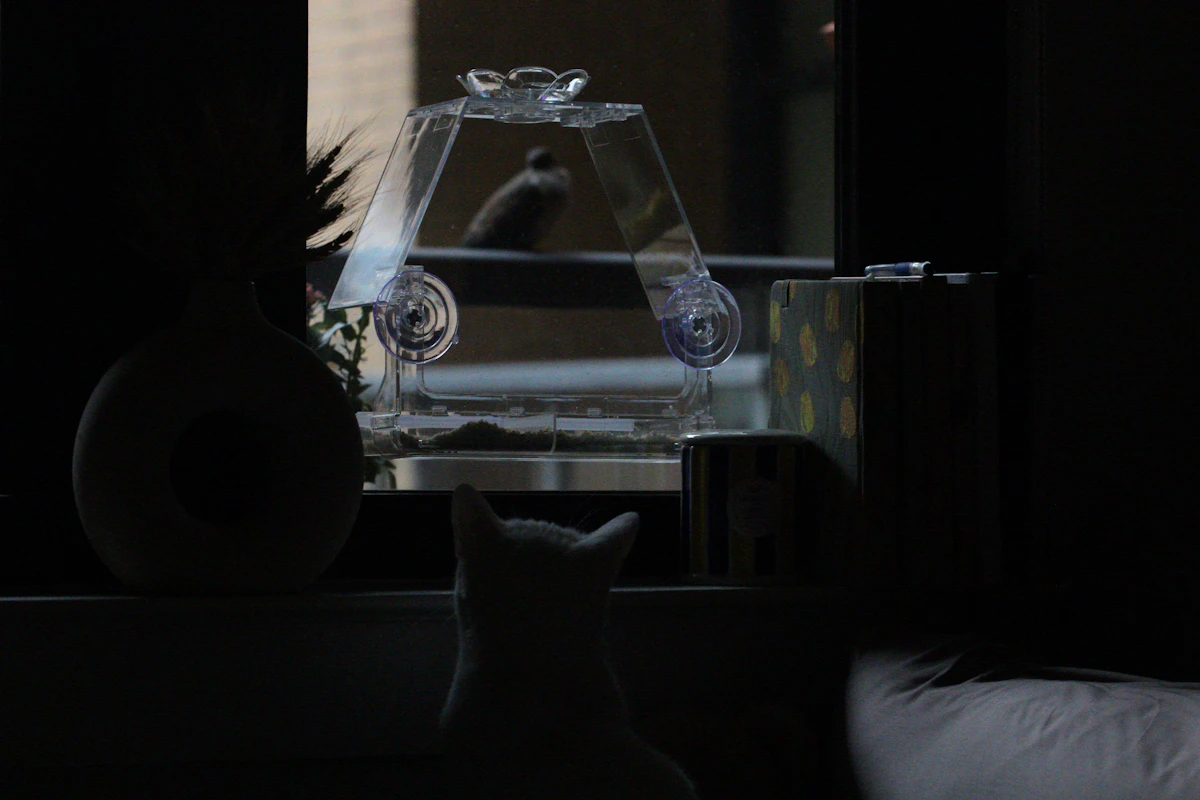
That fast “ek-ek-ek” jaw chatter at a bird your cat cannot reach is one of the most puzzling sounds in the house. Experts have not settled on one cause.
The leading explanations are excitement and frustration at seeing prey that cannot be caught, and a possible rehearsal of the neck bite cats use on prey. Both fit what you see: fixed eyes, forward body, twitching tail and a jaw working on its own.
You do not need to fix chattering. Give the hunter a wand-toy session where she can stalk, chase, pounce and finally catch something instead.
5. The zoomies
Zoomies have a scientific name – frenetic random activity periods, or FRAPs – and a simple logic. Cats are crepuscular, meaning they are built to be most active at dawn and dusk, when prey is moving.
An indoor cat who has slept for hours wakes up with energy stored for a hunt that never comes. A short, wild release is normal, especially after a nap or after using the litter tray. Most bursts last only a minute or so.
A regular evening play session, followed by a small meal, shifts that burst to a time that suits you better. Play, eat, groom, sleep is the order cats follow in the wild, and it works on your carpet too.
6. Bringing you a toy – or something worse
A cat who drops a toy at your feet is often inviting play or repeating a hunting sequence in a safe place. Outdoor cats sometimes bring home prey they have caught. It is not spite. Reward the toy delivery with a game, rotate toys, and hide a few to keep the indoor hunt interesting.
Night-time, boxes and water: three everyday mysteries

7. Sitting in boxes that are clearly too small
If it fits, the cat sits. If it does not fit, the cat sits anyway. Boxes offer warmth, pressure on the sides, a hiding place and a good vantage point – all things an animal that is both predator and prey values.
Offer boxes on purpose and you will learn where your cat feels safest. A sudden need to hide all day is different, though – that change is covered in the checklist below.
8. Staring, then running off at 3 a.m.
Cats hear and smell far more than we notice in a dark house, so a pipe tick or an insect can trigger a stare or a chase. Night waking becomes a habit when it reliably produces food or attention – keep the response boring, tire the cat out before bed, and keep mornings predictable.
9. Pawing at water, or drinking from the tap
Some cats dip a paw and lick it, splash in a bowl, or insist the tap tastes better. Moving water looks and smells fresher to a cat, and whiskers brushing a narrow bowl can be irritating for some cats.
Try a wide, shallow bowl away from food, refreshed daily. If thirst, drinking or urination changes noticeably, do not treat it as a quirk – book a vet visit.
| Behaviour | Most likely meaning | Simple response |
|---|---|---|
| Kneading | Comfort, settling, kittenhood habit | Blanket on lap, keep claws trimmed |
| Bunting / cheek rub | Scent-marking, social bonding | Let the cat initiate, stop when she leaves |
| Slow blink | Relaxed, positive communication | Slow-blink back, avoid a hard stare |
| Chattering | Excitement or frustration at prey | Offer a catchable play session |
| Zoomies | Stored hunting energy released | Evening play, then a small meal |
| Box sitting | Warmth, hiding, vantage point | Provide boxes and high perches |
Purring, tail talk and the sudden bite

10. Purring – not always happiness
This is the myth worth retiring. PetMD notes that cats purr when content, but also when anxious, when greeting, when asking for attention, and when sick or in pain. A cat purring at the vet may be trying to self-soothe, not saying she is enjoying the visit.
Read the whole cat, not the sound alone. A loose body, soft eyes and a cat who chose to be near you point to contentment. A tense, crouched cat who is hiding, off her food and purring should not be reassured and left alone – she should be checked.
11. Tail language you can actually use
A tail held high with a soft curve at the tip usually signals a friendly, confident approach. A tail tucked tight to the body, flattened ears and a crouched posture point the other way – give space.
A fast-thrashing tail is not a dog-style wag. In a cat being stroked, a thumping or lashing tail, skin rippling on the back, ears turning back and a head whipping round are early “enough, please” signals. Stop before the bite, not after.
12. The petting bite
Many cats love a stroke for thirty seconds and then, suddenly, do not. That switch is often overstimulation, not moodiness. The cat asked, enjoyed, reached a limit, and used the clearest signal left.
Keep strokes short, favour cheeks, chin and the base of the ears, and pause every few seconds. If the cat leans in or rubs again, continue. If she goes still, moves away or flicks her tail, the session is over. Respecting that limit is also one of the fastest ways to avoid the everyday mistakes covered in our article on everyday habits that can quietly upset or harm a cat.
When should you worry?

Weird is normal for cats. Change is the red flag. Use this checklist, and act on patterns, not one-off moments.
See a vet promptly if you notice:
- ☐ A new behaviour that starts suddenly and keeps repeating
- ☐ Hiding much more than usual, especially with loss of appetite
- ☐ Purring paired with crouching, hiding, or not eating
- ☐ Straining in the litter tray, crying when urinating, or blood in urine
- ☐ Big changes in thirst, drinking or urination
- ☐ Vomiting, diarrhoea, weight loss or a swollen belly
- ☐ Aggression that is out of character, or a cat who cannot settle
Write down when the behaviour happens and what happened just before. A short phone video helps your vet more than a long description. Do not wait on urinary straining in male cats – that can be an emergency. Most of the time, though, the strange thing is the point: your cat is telling you she feels safe, spotted prey, or wants the stroking to stop.
Frequently Asked Questions
Why does my cat stare at me and slow-blink?
A slow blink usually signals relaxed, positive communication. In the 2020 Sussex and Portsmouth study, cats were more likely to slow-blink back at a person who slow-blinked first, and more likely to approach that person. Try a soft gaze and a slow blink in return, then let the cat decide what happens next.
Why does my cat knead me and then bite?
Kneading signals comfort and settling. A bite after kneading and stroking often signals overstimulation – the cat has had enough touch. Watch for tail flicking, ears turning back and skin rippling, and stop stroking at the first of those signs.
Why does my cat get the zoomies at night?
Cats are crepuscular, built for dawn and dusk activity. An indoor cat who sleeps through the day often releases stored hunting energy at night. A play session followed by a small meal before bed usually moves the burst earlier.
Is purring always a good sign?
No. Cats purr when content, but PetMD and other veterinary sources note they also purr when anxious, stressed, sick or in pain, possibly to self-soothe. Judge purring by body language and context, and see a vet if a purring cat is hiding, tense or off her food.
Why does my cat chatter at birds?
No single cause is proven. The most supported explanations are excitement and frustration at prey that cannot be reached, and possibly rehearsing the killing bite. Chattering at a window is normal and does not need correcting.
Sources and Further Reading
- Humphrey, T. et al. (2020), “The role of cat eye narrowing movements in cat-human communication,” Scientific Reports – https://www.nature.com/articles/s41598-020-73426-0
- Cornell University / Cornell Feline Health Center, “The ABCs of C-A-Ts” (bunting and kneading) – https://alumni.cornell.edu/cornellians/abcs-of-cats/
- Cornell Feline Health Center, “Common Cat Hazards” – https://www.vet.cornell.edu/departments-centers-and-institutes/cornell-feline-health-center/health-information/feline-health-topics/common-cat-hazards
- PetMD, “Why Do Cats Purr? 5 Meanings Behind a Purring Cat” – https://www.petmd.com/cat/behavior/why-do-cats-purr?utm_source=NewsletterSubscribers&utm_medium=Email&utm_content=Newsletter&utm_campaign=Newsletter&utm_source=platform&utm_source=petmd_newsletter&lid=bx4lyux3w9r3
- Great Pet Care, “Cat Zoomies: What They Are and Why They Happen” – https://www.greatpetcare.com/cat-behavior/cat-zoomies/
This article is for general education only and is not a substitute for veterinary advice. If your cat’s behaviour changes suddenly or you are worried about pain, appetite or toileting, contact your vet.
About the author
Furrology Team — pet owner and researcher behind Furrology. We read the veterinary research and draw on real owner experience, then turn it into plain-English guides about dogs, cats, birds and small pets. We are not vets — Furrology is researched information, not veterinary advice, and a poorly pet always needs a real vet. More about how we work: About Us · Editorial Policy