
Rabbits overheat fast in summer, and they can’t sweat or pant the way dogs do. The way to keep a rabbit cool is shade, cool water, good airflow, and a frozen water bottle to lie against — and knowing the warning signs that mean cool him down immediately and call the vet.
Rabbits are built for cool weather. Their thick fur, their small bodies, and the way they lose heat — mostly through their ears — all work well in spring and autumn, and all work against them in summer. A rabbit in a hot hutch, in direct sun, with warm water and no airflow, can overheat in less time than most owners realise. Heatstroke in rabbits is fast, frightening, and often fatal — and it’s almost entirely preventable.
The good news is that keeping a rabbit cool isn’t complicated or expensive. It’s a handful of simple habits, started before the hot weather arrives, and checked daily while it lasts. This guide covers why rabbits overheat, how to set up a cool space, what to do on hot days, the warning signs that mean act now, and what to do if your rabbit is already too hot.
Why rabbits overheat so easily
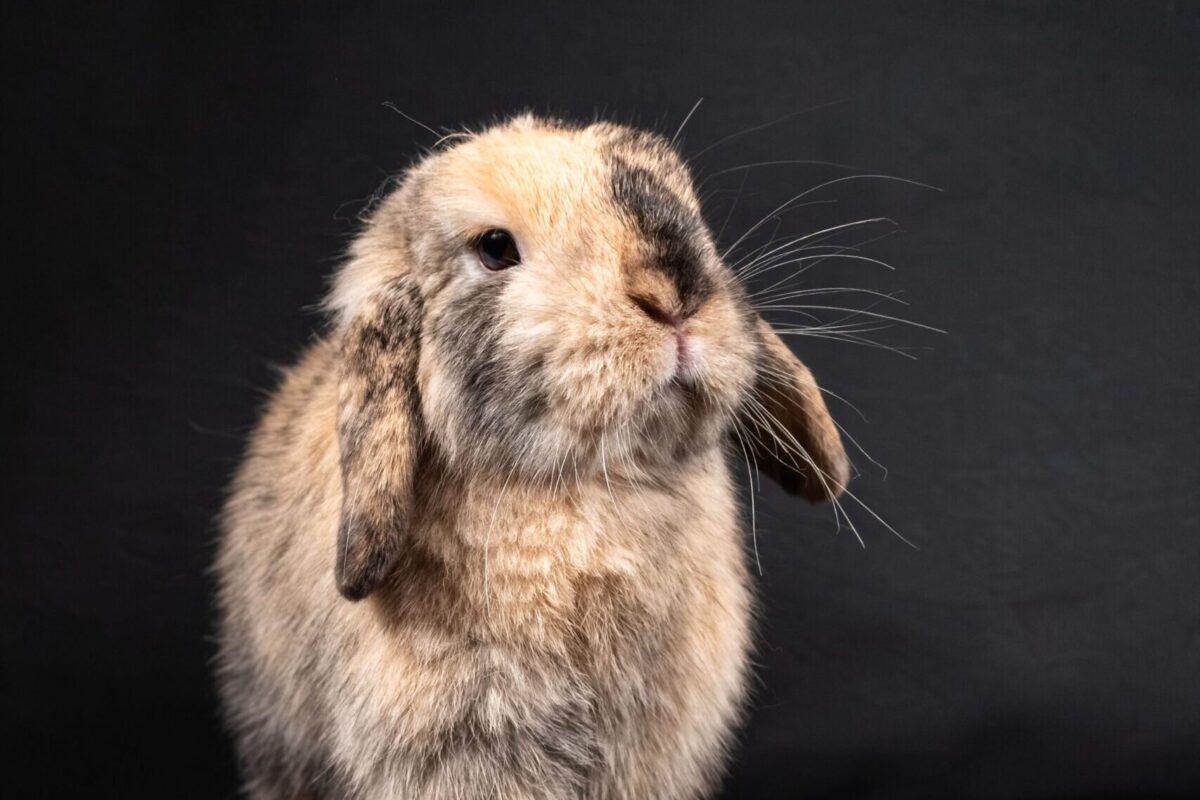
A rabbit’s body is designed to keep heat in, not to lose it. The fur is dense and insulating. The body is compact, with a small surface area for its weight. And unlike a dog, a rabbit can’t pant effectively — a rabbit who is panting is a rabbit in serious trouble, not a rabbit cooling down.
Rabbits lose most of their heat through their ears. The ears are thin, full of blood vessels, and when a rabbit is hot, the blood vessels in the ears widen to dump heat into the air. That’s why a hot rabbit’s ears feel warm, and why a rabbit in a breeze will sit with his ears up — he’s radiating heat. But the ears can only do so much, and in still, humid air they do very little.
A rabbit’s normal body temperature is higher than yours — around 38 to 40 degrees — which means he has less room to warm up before he’s in danger. In air temperatures above about 28 degrees, a rabbit starts to struggle. Above 30 degrees, in direct sun or a poorly ventilated hutch, he can overheat in under an hour.
Some rabbits are at more risk than others. Overweight rabbits overheat faster, because fat insulates and makes it harder to lose heat. Long-haired rabbits overheat faster, because their coats trap more warmth. Older rabbits, and rabbits with health problems, cope less well with heat. And a rabbit in a hutch — especially a wooden hutch in direct sun — is at far more risk than a rabbit in a shaded, ventilated space, because a hutch heats up like a box in the sun.
Setting up a cool space

The single most important thing is where your rabbit lives in summer. A hutch in direct sun is a danger, not a home.
Shade, all day. The hutch or enclosure needs to be in shade for the whole day, not just the morning. The sun moves, and a spot that’s shady at nine in the morning can be in full sun by two in the afternoon. Check the spot at midday and in the afternoon, not just in the morning. If you can’t move the hutch into permanent shade, cover it with a light-coloured sheet or a reflective cover — not a dark tarpaulin, which traps heat underneath — and leave a gap for air to flow.
Airflow. A rabbit needs moving air. A hutch with solid walls on all sides is a hot box. Make sure at least one side is open mesh, and that the hutch isn’t pushed up against a wall or a fence that blocks the breeze. If the hutch is indoors, keep a window open nearby, or a fan running in the room — not blowing directly at the rabbit, but moving the air around him. A fan blowing straight at a rabbit can chill him and dry his eyes; a fan moving air through the room is what you want.
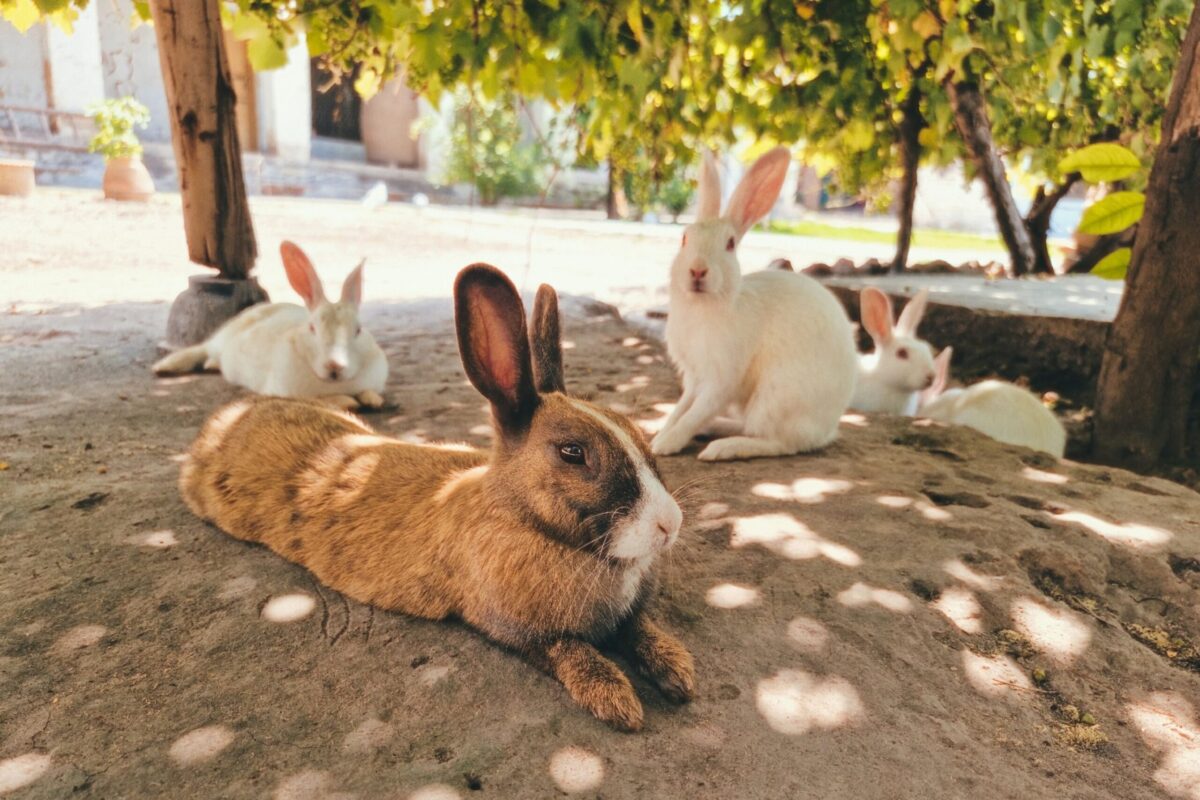
A cool floor. A rabbit cools himself partly through his belly, by lying stretched out on a cool surface. A ceramic tile, a marble slab, or a cool stone in the enclosure gives him somewhere to lie that pulls heat out of his body. Put the tile in the shade, and your rabbit will find it. Indoors, a tiled floor works the same way — leave a patch of bare floor available rather than covering everything with blankets.
Space to stretch. A rabbit who is hot needs to lie stretched out, flat, with his ears up and his body extended. A cramped hutch doesn’t allow that. In summer, your rabbit needs more space than in winter, not less — room to move to the coolest spot, and room to stretch out fully.
Water: the daily essentials
Water is the second most important thing, after shade, and in summer it needs more attention than usual.
Fresh, cool water, twice a day. In hot weather, change the water at least twice a day — morning and evening — and use cool water from the tap, not warm water that’s been sitting in the sun. A bottle or bowl left in the sun warms up fast, and a rabbit won’t drink warm water happily. If you use a bottle, check the spout daily: in hot weather, algae grows faster, and a blocked spout is a rabbit with no water at all.
A bowl as well as a bottle. A bowl lets a rabbit drink more, faster, and it also lets him dip his ears — which is one of the ways rabbits cool themselves. A heavy ceramic bowl that can’t be tipped over is best. Put the bowl in the shade, and keep it full.
Ice in the water. On very hot days, a few ice cubes in the bowl keep the water cool for longer. Don’t make the water icy cold — just cool. And never put ice directly against the rabbit, or in his bedding.
Wet vegetables. A little extra wet food — leafy greens rinsed in cold water, or a piece of cucumber — adds water to the diet as well as food. Don’t overdo it, and don’t introduce new foods suddenly, but a damp handful of greens on a hot day is a small help.
Frozen bottles and cool tiles
The simplest cooling trick, and the one most rabbit owners swear by, is a frozen water bottle.
How it works. Fill a plastic bottle with water, freeze it, and put it in the enclosure wrapped in a thin cloth or an old sock. The rabbit will lie against it when he’s hot, and move away when he’s cool enough. The cloth stops the bottle from being too cold against his skin, and stops condensation from soaking his bedding. Two bottles are better than one — one in use, one in the freezer — so you can swap them during the day.
What not to do. Don’t use a bottle that’s too small to make a difference, and don’t put a frozen bottle in the hutch without a cover. Don’t use ice packs with gel inside — if the rabbit chews through one, the gel is a problem. A plain frozen water bottle, covered, is safe and effective.
Cool tiles. A ceramic floor tile, kept in the fridge or in the shade, works the same way as a frozen bottle — a cool surface to lie on. Put it in the shadiest part of the enclosure, and your rabbit will use it. If you have a marble slab or a cool stone, that works too.
Damp towels. A towel dampened with cool water, draped over part of the hutch, cools the air underneath as the water evaporates — the same principle as a wet sheet over a window. Don’t cover the whole hutch, because that blocks airflow. A damp towel over the sunny side, with the shady side open, is the right balance. And never drape a wet towel directly over the rabbit.
The daily routine on hot days
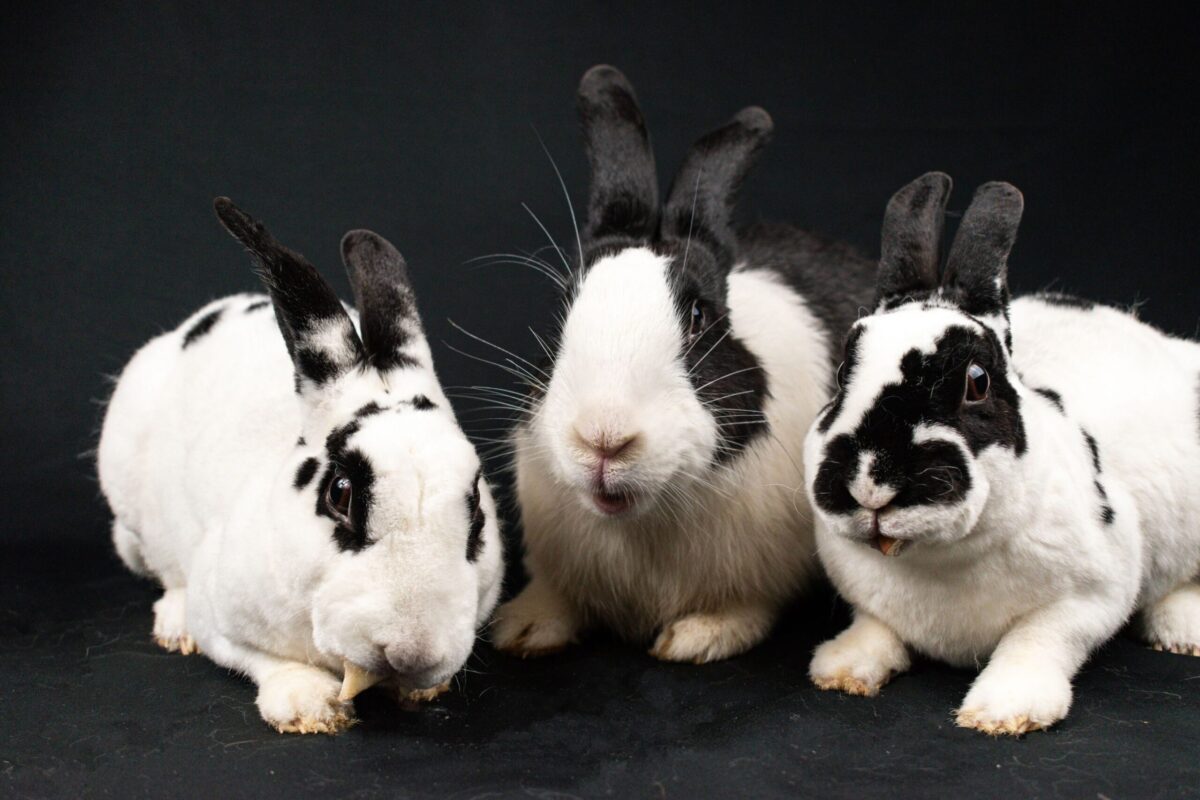
On a hot day, the routine changes a little, and it’s worth building the habit before the first heatwave arrives.
Check twice a day, minimum. Morning and evening, check the water, check the shade, check the rabbit. Is he eating hay normally? Are his droppings normal? Is he moving around, or lying flat and still? Is he breathing normally, or fast? A rabbit who has stopped eating hay on a hot day is a rabbit to worry about, whatever the cause.
Feed in the cool hours. Offer fresh hay and vegetables in the morning and evening, when it’s cooler, rather than in the middle of the day. A rabbit who eats well in the cool hours is a rabbit whose gut is working properly.
Keep him still in the heat. Don’t handle your rabbit more than necessary on a hot day, and don’t let children chase him or carry him around in the sun. Handling raises a rabbit’s temperature and his stress, and both make overheating more likely. Let him rest.
Bring him indoors if you can. If your rabbit lives outside and the temperature is very high, the safest thing is to bring him indoors for the hottest part of the day — into a cool room, in his carrier or a pen, with hay and water. A rabbit who lives indoors in summer is a rabbit who doesn’t overheat. If bringing him in isn’t possible, make sure the outdoor space is as shaded and ventilated as it can be, and check him more often.
Watch the forecast. When a hot spell is coming, prepare the day before: freeze the bottles, move the hutch into shade, check the water supply. Don’t wait until the hot day arrives to discover the shady spot isn’t shady at two in the afternoon.
The warning signs: act immediately
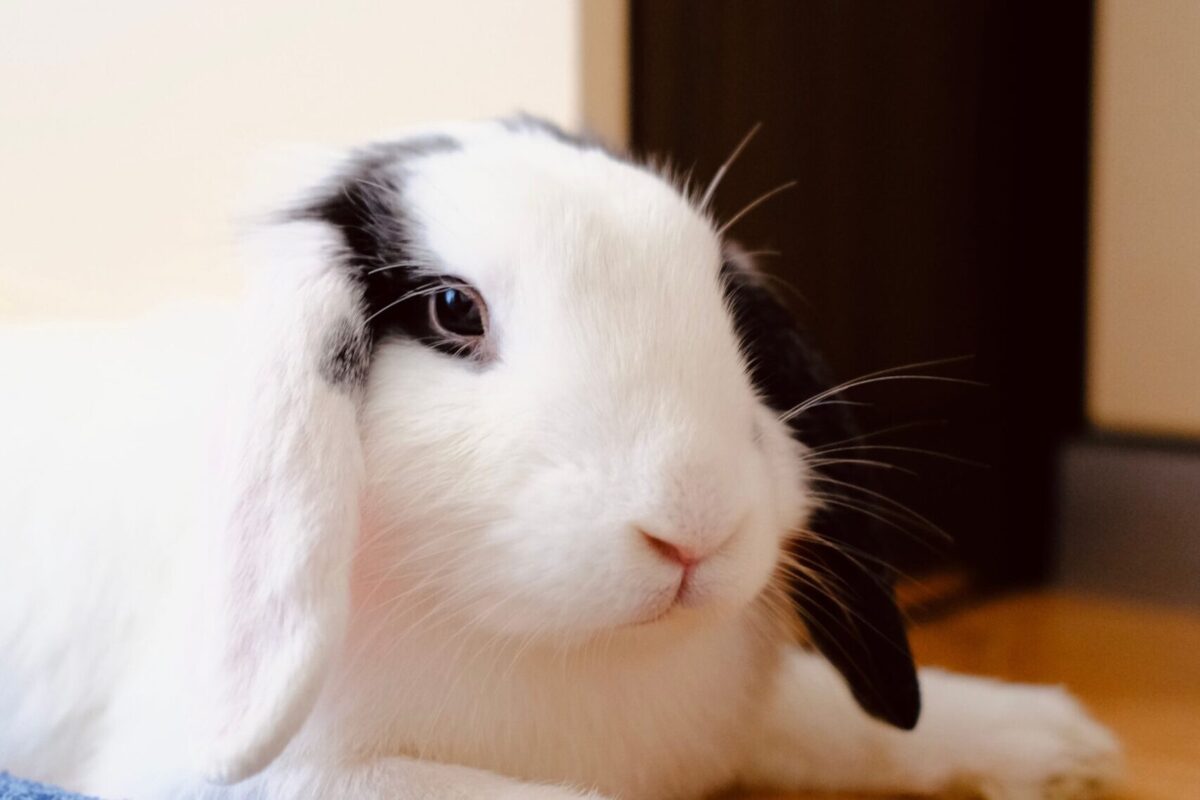
Heatstroke in rabbits moves fast, and the signs are easy to miss if you don’t know what to look for. If you see any of these on a hot day, act immediately — don’t wait to see if it gets better.
Lying flat and still, stretched out, and not responding normally. A hot rabbit lies flat, stretched out, and doesn’t move when you approach. That’s not relaxing — it’s a rabbit who can’t cool down.
Fast breathing, or panting. A rabbit who is breathing fast, with his mouth open, is in serious trouble. Rabbits don’t pant the way dogs do. Panting in a rabbit is an emergency.
Hot ears. Ears that feel very hot to the touch mean the rabbit is trying hard to lose heat and not managing it. Cool ears are normal. Very hot ears on a hot day are a warning.
Wet fur around the nose or mouth, or drooling. A rabbit who is drooling, or whose fur around the mouth is wet, is in distress.
Not eating, or not moving. A rabbit who has stopped eating hay, or who won’t move, on a hot day is a rabbit who needs help now.
What to do. Move the rabbit into the shade immediately, or indoors into the coolest room you have. Dampen his ears gently with cool — not cold — water, using a cloth. Offer cool water. Do not put him in cold water, and do not use ice directly on him — cooling too fast is also dangerous. Call the vet immediately and describe what you’re seeing. Heatstroke is an emergency, and a vet can cool a rabbit safely and give him fluids. The sooner you call, the better his chances.
Flies and summer hygiene

Summer brings a second danger for rabbits: flies. A rabbit who can’t clean himself properly — because of stiffness, weight, or a sore bottom — is at risk of flystrike, where flies lay eggs on damp, dirty fur and the maggots that hatch cause serious damage. It’s a horrible problem, and it’s preventable.
Check the bottom daily. In summer, check your rabbit’s bottom every day. If it’s damp, dirty, or matted, clean it gently with warm water and dry it carefully. A clean, dry bottom is the best protection against flystrike.
Keep the hutch clean. Remove soiled bedding daily in summer, and do a full clean more often than in winter. Flies are attracted to dirty bedding and to droppings, and a clean hutch is a less attractive place for them.
Use a fly screen. A fine mesh over the hutch keeps flies out while letting air through. It’s a small investment that makes a real difference in summer.
Frequently Asked Questions
How hot is too hot for a rabbit?
Above about 28 degrees, a rabbit starts to struggle. Above 30 degrees, in direct sun or a poorly ventilated hutch, he can overheat in under an hour. The exact number matters less than the conditions — shade, airflow, and water matter more than the temperature on its own. If you’re hot and uncomfortable, your rabbit is hotter.
Can rabbits go outside in summer?
Yes, as long as they have shade all day, good airflow, cool water, and somewhere cool to lie. A rabbit in a shaded, ventilated run with a frozen bottle and fresh water is fine. A rabbit in a hutch in direct sun is not. Check the spot at midday and in the afternoon, not just in the morning, because the sun moves.
Should I bring my rabbit indoors in summer?
If you can, yes — especially on very hot days. A rabbit who lives indoors in summer is a rabbit who doesn’t overheat. Bring him into the coolest room, in his carrier or a pen, with hay and water. If bringing him in isn’t possible, make the outdoor space as shaded and ventilated as you can, and check him more often.
How do I cool down a rabbit who is too hot?
Move him into shade or indoors immediately. Dampen his ears gently with cool — not cold — water, using a cloth. Offer cool water. Do not put him in cold water, and do not use ice directly on him. Call the vet immediately and describe what you’re seeing. Heatstroke is an emergency.
Do rabbits sweat?
No. Rabbits lose heat mostly through their ears, which is why a hot rabbit’s ears feel warm. They can’t sweat, and they can’t pant effectively — a rabbit who is panting is a rabbit in serious trouble, not a rabbit cooling down. That’s why shade, airflow, and water matter so much.
Can I put ice in my rabbit’s water?
A few ice cubes in the bowl are fine — they keep the water cool for longer. Don’t make the water icy cold, and never put ice directly against the rabbit or in his bedding. A frozen water bottle wrapped in a cloth, placed in the enclosure for him to lie against, is more effective than ice in the water.
Should I trim my rabbit’s fur in summer?
For most rabbits, no — the fur insulates against heat as well as cold, and cutting it can make things worse. For very long-haired rabbits, a light trim around the belly and bottom can help with hygiene and cooling, but don’t shave a rabbit. If you’re unsure, ask your vet or a rabbit-savvy groomer.
What is flystrike, and how do I prevent it?
Flystrike is when flies lay eggs on damp, dirty fur — usually around the bottom — and the maggots that hatch damage the skin. It’s serious and preventable. Check your rabbit’s bottom daily in summer, keep it clean and dry, clean the hutch regularly, and use a fly screen over the hutch. If you ever see maggots, or a wound that looks wrong, call the vet immediately.
My rabbit is lying flat and stretched out. Is he too hot?
He might be — or he might just be relaxed. The difference is in the rest of the picture: is he breathing fast? Are his ears very hot? Has he stopped eating hay? Does he respond normally when you approach? A relaxed rabbit lying flat will get up and move if you offer food. A rabbit who is too hot won’t. If you’re unsure, cool him down and call the vet — it’s always better to act than to wait.
Sources and further reading
- Rabbit Welfare Association and Fund — Rabbits in hot weather
- House Rabbit Society — Summer care for rabbits
- VCA Animal Hospitals — Heatstroke in rabbits