
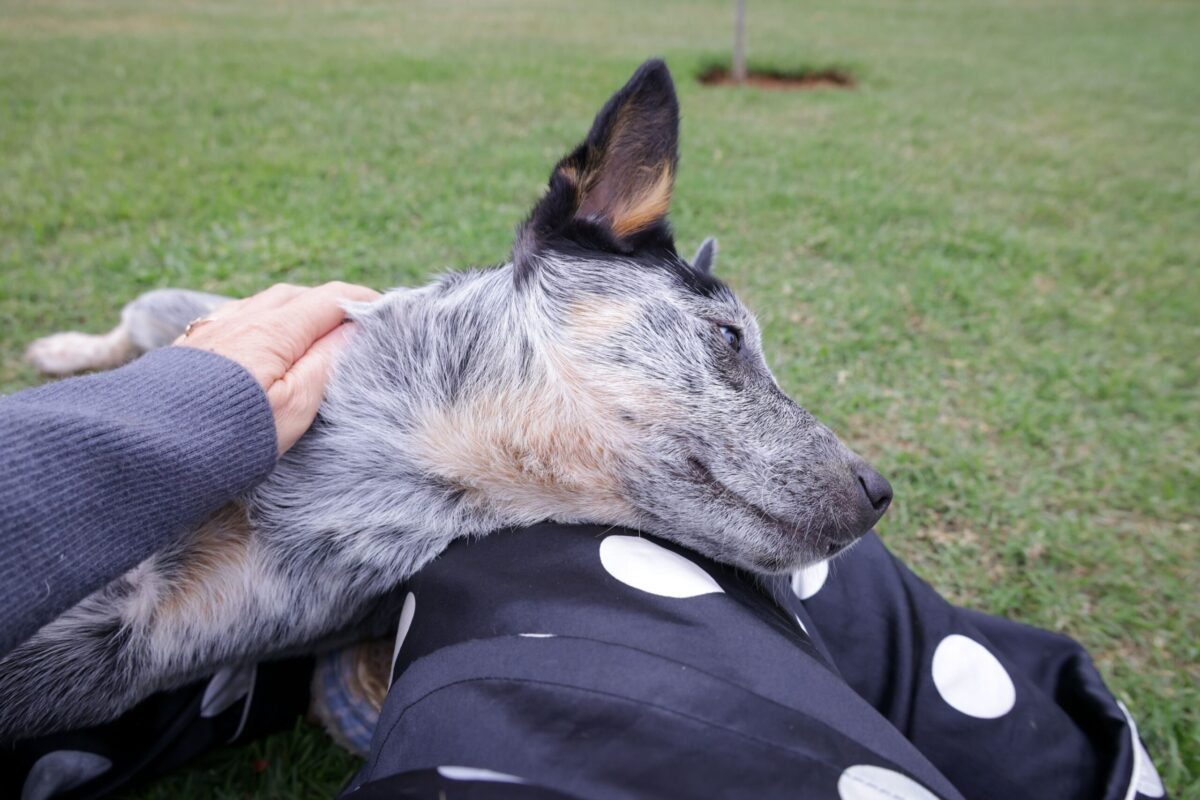
Your dog leans on you because he trusts you and wants to be close — it’s affection, comfort, and reassurance, all in one gesture. Leaning is usually a good sign. It’s only a concern if it starts suddenly, comes with other changes, or looks like anxiety rather than affection.
Every dog owner knows the feeling: you’re standing in the kitchen, or sitting on the sofa, and suddenly there’s a warm weight against your leg, or a head resting on your knee, or a whole dog leaning into you as if you’re the most comfortable piece of furniture in the house. It’s one of the most ordinary things a dog does, and one of the most meaningful. A dog doesn’t lean on someone he doesn’t trust.
This guide covers what leaning means, the different reasons a dog leans, how to tell affection from anxiety, when leaning is a sign of a health problem, and what to do — and not do — when your dog leans on you.
What leaning means

At its simplest, leaning is contact. Dogs are social animals, and physical contact is one of the main ways they express connection. A dog who leans on you is saying, in the only language he has, that you’re his person and he wants to be near you. It’s the same instinct that makes dogs sleep pressed against their owners, or follow them from room to room — the instinct that says “my people are my safety, and I want to be close to them.”
Leaning is also practical. A dog’s body is warm, and leaning against you shares that warmth. A dog who leans into you on a cold evening is partly seeking heat. A dog who leans into you after a walk is partly resting — your leg is a convenient support for a tired body.
And leaning is a habit. Dogs learn what gets a response, and leaning gets a response — a pat, a scratch, a word, a smile. Once a dog has learned that leaning makes good things happen, he’ll do it more. That’s not manipulation. It’s learning, and it’s the same learning that makes a dog sit for a treat.
The main reasons dogs lean

Affection. The most common reason, and the simplest. Your dog loves you, and leaning is how he shows it. A dog who leans into you while you’re sitting together, with a relaxed body, soft eyes, and a slow tail wag, is a content dog. He’s not asking for anything. He’s just enjoying being close to you. This is the leaning you’ll see most often, and it’s the one to enjoy.
Comfort and reassurance. Dogs lean on their people when they’re unsure. A dog who leans against your leg at the vet’s waiting room, or during a thunderstorm, or when a stranger comes to the door, is looking for reassurance. He’s saying “this is strange, and I feel safer touching you.” This kind of leaning usually comes with other signs: ears back, body low, tail tucked, or a worried expression. The leaning itself is a coping strategy, and it’s a healthy one — he’s coming to you, not running away.
Attention. Some dogs lean because they’ve learned it works. A dog who leans into you and then looks up at you, waiting, is asking for something — a pat, a treat, a game, or just your attention. There’s nothing wrong with this. It’s communication. But if you always respond by giving him what he wants, the leaning will become his default way of asking, and it can become demanding. The answer isn’t to ignore him — it’s to respond on your terms, not his. A pat when you choose to give one is fine. A pat every time he leans, instantly, teaches him that leaning is a button that always works.
Warmth and rest. A dog who leans into you on a cold day, or after exercise, is partly seeking warmth and partly resting. Your body is warm, and your leg is a solid support. This is especially common in older dogs, who get tired faster and whose joints ache — leaning takes the weight off their legs. If your older dog leans more than he used to, it may be that standing is getting harder for him, and it’s worth mentioning to the vet at his next checkup.
Bonding and habit. Some dogs lean because that’s what they’ve always done, since they were puppies. A puppy who leaned on you for comfort grows into a dog who leans on you out of habit, and the habit deepens over the years. This is the leaning that says “you’re my person, and this is where I belong.” It’s the hardest kind to explain, and the easiest kind to recognise — it’s just what your dog does.
How to tell affection from anxiety

The leaning itself looks similar either way. The difference is in the rest of the dog.
Affectionate leaning comes with a relaxed body: loose muscles, soft eyes, ears in their normal position, a tail that’s still or wagging slowly, and a dog who leans in and then settles — breathing normally, perhaps closing his eyes. He leans, and he stays. He’s comfortable.
Anxious leaning comes with tension: a stiff body, ears back, tail tucked or low, eyes wide or showing the whites, panting, lip-licking, or yawning. He leans, and he presses — pushing his weight into you, rather than resting it. He may also shake, or try to climb into your lap, or hide behind you. He’s not settling. He’s seeking safety.
The context matters too. Affectionate leaning happens in calm, familiar places — the sofa, the kitchen, the garden. Anxious leaning happens in stressful places — the vet, a thunderstorm, a crowded street, a fireworks display. If your dog only leans in stressful situations, the leaning is a coping strategy, and the thing to address is the stress, not the leaning.
If your dog’s leaning is anxious, the answer is to make the stressful situation easier, not to push him away. Let him lean. Comfort him. And work on the underlying fear — gradually, patiently, and with rewards for calm behaviour. Our guide to why dogs bark at strangers covers the same principle: a dog who is frightened needs reassurance and gradual exposure, not punishment.
When leaning is a sign of something else
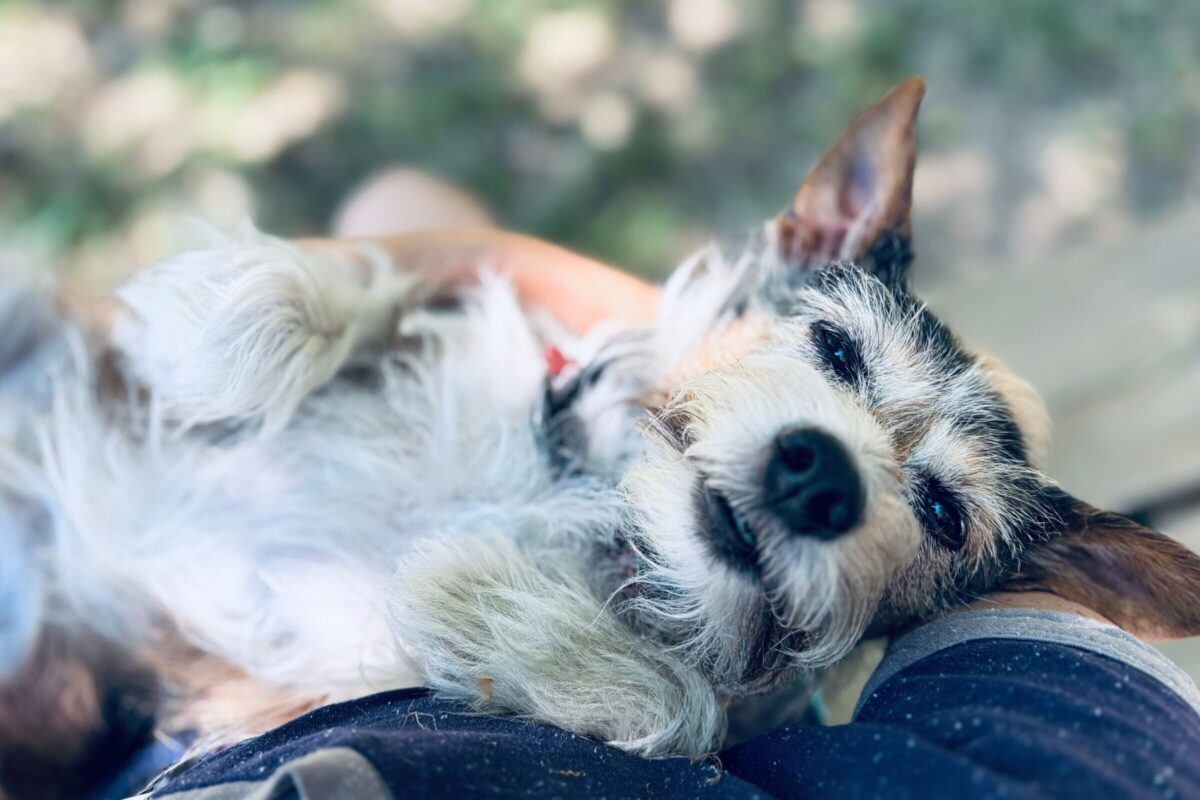
Most leaning is normal. But a change in leaning — a dog who suddenly starts leaning much more, or who leans in a new way — is worth noticing, because it can be a sign of something else.
Sudden, heavy leaning. A dog who suddenly starts leaning heavily to one side, or who seems to need to lean to stay upright, may have a balance problem, an ear infection, or a neurological issue. This is different from the normal, gentle lean of a content dog — it’s a dog who can’t stand straight without support. If you see this, call the vet.
Leaning plus other changes. A dog who starts leaning more and also eats less, sleeps more, seems stiff, or has trouble getting up may be in pain, or may be getting older and finding movement harder. Leaning can be a way of taking weight off sore joints. A sudden change in how your dog moves is one of the changes worth acting on — our guide to senior dog vet visits explains what changes as a dog ages and what the vet checks at each visit.
Leaning as a new behaviour in an older dog. An older dog who starts leaning on furniture, walls, or people when he never did before may be losing his sight or his sense of balance. Dogs who can’t see well lean on things to orient themselves. If your older dog is bumping into things, hesitating at doorways, or leaning on walls, mention it to the vet.
Leaning plus fear that won’t settle. A dog who leans on you constantly, in every situation, and who panics when you’re not there, may have separation anxiety. This is different from normal affection — it’s a dog who can’t cope without you. Separation anxiety needs a patient, gradual approach, and sometimes professional help. If your dog is distressed every time you leave, talk to the vet or a qualified behaviourist.
None of this means you should worry about normal leaning. A dog who has always leaned, and who leans in the same way, in the same situations, is fine. The thing to watch for is change — a new pattern, a new intensity, or leaning that comes with other symptoms.
What to do when your dog leans on you
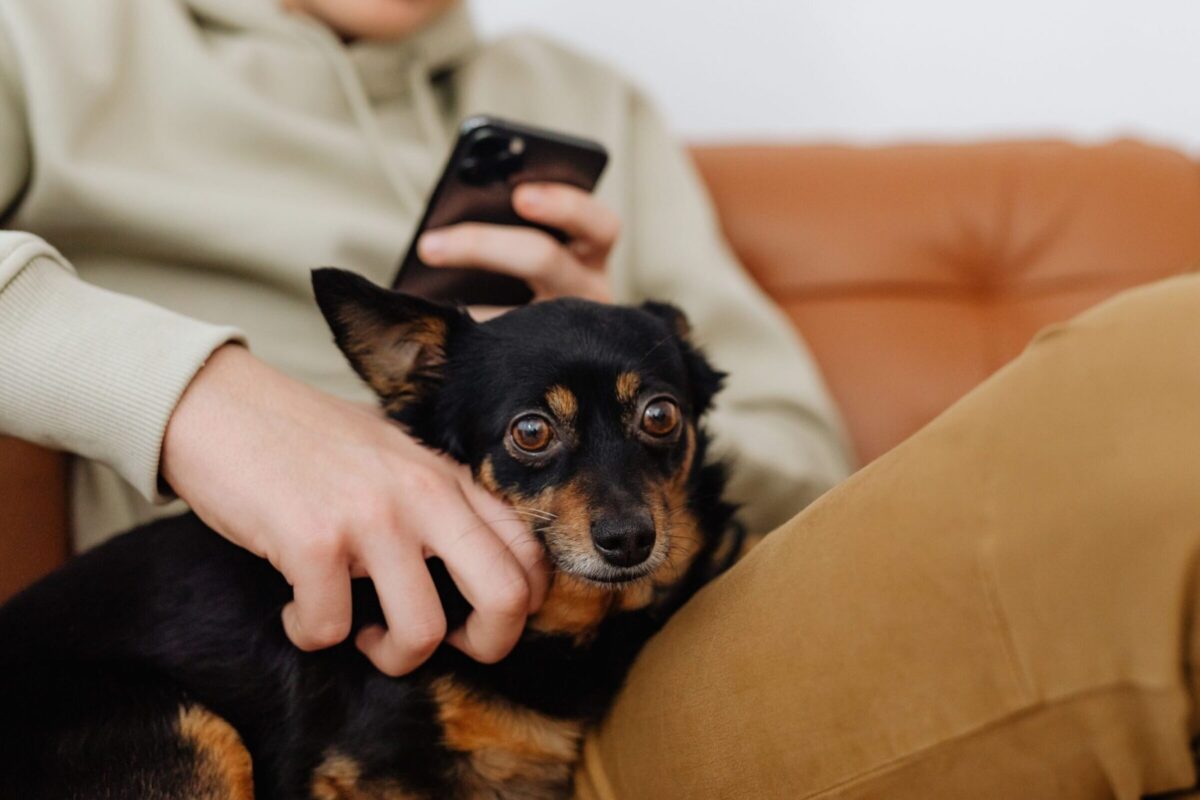
Enjoy it. The simplest answer, and the right one most of the time. A dog who leans on you is a dog who trusts you. Pat him, talk to him, let him stay. That’s the whole point of having a dog.
Respond on your terms. If your dog leans to ask for attention, and you always give it instantly, he’ll lean more and more. That’s not a problem unless it becomes demanding. If it does, the answer is to sometimes wait — let him lean, wait a moment, and then give him the attention. Or ask him to do something first — a sit, a down — and then reward him. That way, leaning stays a pleasant habit rather than a demand.
Don’t push him away. Pushing a leaning dog away confuses him and can damage the trust that makes him lean in the first place. If you need him to move — because you’re carrying something, or you’re about to stand up — ask him to move with a word and a gesture, and reward him for moving. Don’t shove.
Notice the context. If your dog leans on you in a stressful situation, comfort him. If he leans on you at home, enjoy it. If he leans on you in a new way, or much more than usual, notice it and think about whether anything else has changed.
Teach a “place” if you need space. If your dog’s leaning gets in the way — if he’s a large dog and he leans on you while you’re cooking, or if he leans on visitors who don’t want a dog leaning on them — teach him a “place” command: a bed or a mat where he goes and settles when you ask. That’s a better answer than pushing him away, because it gives him something to do instead of leaning, and it gives you space when you need it.
Why some dogs lean more than others

Some breeds are famous leaners — large, affectionate breeds who seem to think they’re lap dogs. But any dog can be a leaner, and the amount a dog leans has more to do with his personality and his history than his breed.
Dogs who were handled a lot as puppies tend to lean more, because they learned early that people are safe and warm. Dogs who were rescued, or who had a hard start, sometimes lean more too — they’ve found safety, and they want to stay close to it. Anxious dogs lean more, because leaning is how they cope. Older dogs lean more, because standing is harder and your leg is a good support.
And some dogs simply don’t lean much, and that’s fine too. A dog who shows affection in other ways — bringing you a toy, following you around, sleeping near you — is just as bonded as a dog who leans. Leaning is one language among many, and a dog who doesn’t speak it isn’t a dog who doesn’t love you.
Frequently Asked Questions
Why does my dog lean on me all the time?
Because he trusts you and wants to be close. Leaning is affection, comfort, and habit, all in one gesture. If it’s always been his way, it’s normal. If it’s new, or much more frequent than usual, and it comes with other changes — eating less, moving stiffly, seeming anxious — it’s worth mentioning to the vet.
Does leaning mean my dog is anxious?
Not usually. Affectionate leaning comes with a relaxed body: loose muscles, soft eyes, a slow tail wag. Anxious leaning comes with tension: stiff body, ears back, tail tucked, panting or lip-licking. The context matters too — a dog who leans at the vet or during a thunderstorm is looking for reassurance. Let him lean, and work on the underlying fear gradually.
Why does my dog lean on strangers?
Some dogs are just friendly and lean on anyone who’s warm and willing. Others lean on strangers because they’re unsure and seeking reassurance from the nearest person. Either way, it’s usually harmless, but it’s worth watching: a dog who leans on a stranger and then growls, or stiffens, is a dog who is conflicted, and you should move him away calmly.
Should I stop my dog from leaning on me?
No — unless it’s causing a problem. Leaning is a normal, healthy behaviour, and stopping it can damage trust. If the leaning is getting in the way — a large dog leaning on you while you cook, or on visitors — teach him a “place” command instead, so he has somewhere to go when you need space. Don’t push him away.
Why does my dog lean on me when I’m sitting down?
Because you’re at his level, you’re warm, and you’re still — which makes you the most comfortable thing in the room. A dog who leans on you on the sofa is a dog who has chosen you over every other spot in the house. That’s a compliment.
My dog never leans on me. Does he not love me?
He does — he just shows it differently. Some dogs bring toys, some follow you from room to room, some sleep pressed against your feet, some wag their whole body when you come home. Leaning is one way among many. A dog who doesn’t lean isn’t a dog who doesn’t love you; he’s a dog who loves you in his own way.
Why does my dog lean on me and sigh?
A sigh, with a relaxed body, is contentment — the dog equivalent of sinking into a comfortable chair. A sigh with a stiff body, or with other signs of tension, can be frustration or discomfort. Read the whole dog, not just the sigh. Our guide to why dogs sigh covers the different kinds of sigh and what each one means.
Is leaning a sign of dominance?
No. The idea that a dog leans on you to “dominate” you is an old myth, and it doesn’t match what we know about how dogs actually behave. Leaning is about connection, comfort, and habit — not about status. A dog who leans on you is a dog who trusts you, not a dog who is trying to control you.
Why does my older dog lean more than he used to?
Standing gets harder with age, and leaning takes the weight off sore joints. An older dog who leans more may be finding movement more difficult, or may be losing his sight or balance and using you to orient himself. Mention it to the vet at his next checkup, especially if it comes with stiffness, hesitation, or bumping into things.
Sources and further reading
- American Kennel Club — Why do dogs lean on people?
- The Kennel Club — Understanding your dog’s body language
- International Association of Animal Behavior Consultants — Canine body language