
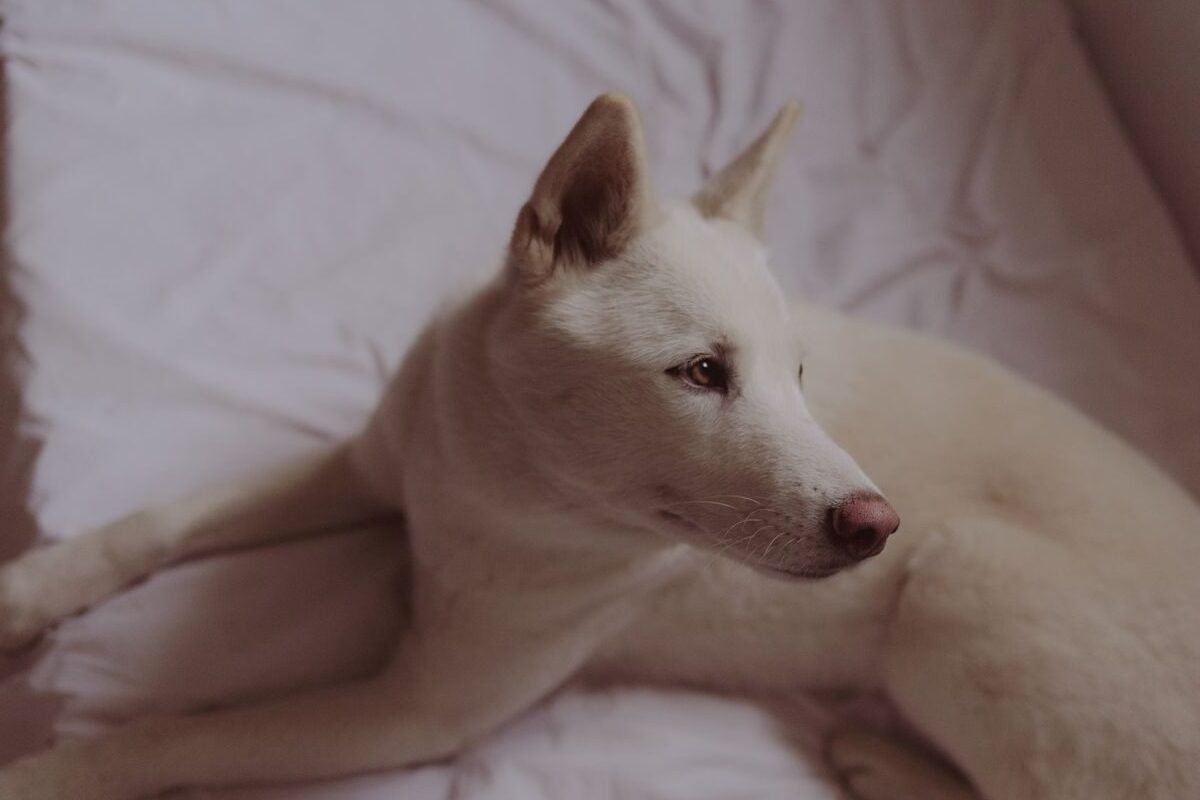
Every dog owner knows the sound: your dog settles onto his bed with a long, audible sigh, as if the whole day has been a great effort, and then he is asleep within minutes. Sometimes he is just being dramatic. But a dog’s sigh is a real piece of communication, and context tells you which kind it is.
Every dog owner knows the sound: your dog settles onto his bed with a long, audible sigh, as if the whole day has been a great effort, and then he is asleep within minutes. It is funny, and it is easy to read as your dog being dramatic. Sometimes he is. But a dog’s sigh is a real piece of communication, and it can mean several quite different things. The trick is not the sigh itself — it is everything around it.
Dogs sigh the way people do: a deep breath out, sometimes with a little groan at the end. Puppies sigh when they settle. Old dogs sigh when they lie down. And just like people, dogs sigh when they are relaxed, when they are bored, and when they are quietly unhappy about something. Context is what separates them.
The contented sigh
This is the one you hear most. Your dog has had his walk, his dinner, and a bit of attention, and now he flops onto his bed, lets out a long breath, and goes loose all over — ears soft, eyes half closed, body heavy. That sigh means the day is done and he is comfortable. Dogs sigh as they settle into sleep the same way people do: the body letting go. If the sigh comes with a relaxed body and closed or drooping eyes, there is nothing to fix. It is the sound of a dog who feels safe.
You will hear this version most from older dogs and from dogs that have had a full day. A puppy sighs when he finally stops for a nap; a senior dog sighs every time he lies down, because lying down takes more effort than it used to. Neither is a problem on its own.
The bored or disappointed sigh
Then there is the other sigh: the one that comes with eyes open, head on paws, and a long stare at you. This is the sigh of a dog that wants something — a walk that has not happened, a game that ended too soon, or the treat you are eating. Dogs learn quickly that a dramatic sigh gets attention, and owners laugh at it, which teaches the dog that sighing works. If your dog sighs at you, looks at you, sighs again, and then follows you to the door, he is not relaxed. He is lobbying.
Boredom sighs usually come in clusters through a quiet day, especially in young, high-energy dogs that have not had enough to do. The fix is not to scold the sigh — it is to fill the day better: a longer walk, a puzzle feeder, a training game, or a chew that takes real time. A dog with a full day sighs contentedly at bedtime; a dog with an empty day sighs at you from noon onwards.
The worried sigh
A third kind is quieter and easier to miss. A dog that sighs repeatedly while pacing, panting, licking his lips, yawning, or tucking his tail is not relaxed or bored — he is stressed. Sighing can be part of a stress pattern, especially in new situations: a new house, a vet waiting room, fireworks, or a change in routine. The sigh alone does not prove stress, but a sigh plus restlessness, ears pinned back, or avoidance is worth taking seriously. Give the dog space, remove the stressor if you can, and do not force comfort on a dog that is asking for room.
How to read a sigh in five seconds
Look at the body, not the sound. Eyes half closed and body loose means contentment. Eyes open, head on paws, staring at you means he wants something. Pacing, panting, lip licking or a tucked tail alongside the sigh means worry. One sigh at bedtime is nothing; sighing all day, every day, is a pattern worth understanding — either his day needs more in it, or something is bothering him.
When sighing plus something else is a vet matter
Sighing itself is not a symptom. But breathing changes are. A dog that sighs along with new coughing, wheezing, faster breathing at rest, unusual tiredness, appetite loss, or a reluctance to move needs a vet promptly — this guide does not diagnose, but breathing and energy changes are vet territory, and they should not be written off as “just sighing.” The same goes for a senior dog whose sighs suddenly come with groaning when he lies down or gets up: that combination can mean pain, and pain is worth a vet visit, not a new bed on its own.
Frequently Asked Questions
Why does my dog sigh when he lies down? Usually contentment. A dog that flops down, sighs, and goes loose all over with half-closed eyes is settling happily, the same way people sigh as they relax.
Why does my dog sigh at me? Often because he wants something — a walk, a game, or your food — and he has learned that sighing gets attention. Look at his eyes: an open-eyed stare after the sigh means he is lobbying.
Is sighing a sign my dog is bored? It can be, if it happens repeatedly through a quiet day in a young, energetic dog. A fuller day — walks, puzzle feeders, training games — usually turns boredom sighs into bedtime sighs.
Can sighing mean my dog is stressed? Yes, when it comes with pacing, panting, lip licking, pinned ears or a tucked tail. A single sigh is nothing; a sigh inside a stress pattern is worth noticing.
When should a sigh worry me? If it comes with breathing changes, coughing, unusual tiredness, appetite loss, reluctance to move, or groaning when lying down or standing — see a vet promptly. Those combinations are vet territory.
Why does my dog sigh when I stop petting him? Usually disappointment or a request for more: the good thing stopped, and the sigh says so. If the dog then nudges your hand, leans in, or settles calmly, it was a mild protest, not distress. A dog who sighs, paces and whines every time petting stops may be anxious about attention ending — in that case, end petting gradually and reward calm settling.
Do puppies sigh more than adult dogs? Often, yes — puppies sigh as they learn to settle, and as they process new experiences. A puppy who sighs, stretches and sleeps after play is winding down normally. Puppies also sigh when overtired, which is a cue for a nap, not more play. An overtired puppy who keeps going becomes bitey and hyper — the sigh is your signal to enforce rest.
Can sighing be a sign of pain in dogs? Yes, when it changes: a dog who suddenly sighs more, sighs with groaning, or sighs paired with stiffness, appetite loss, reluctance to move or changes in sleep should see a vet. Pain sighs are usually deeper, longer, or accompanied by other signs. A single contented sigh at bedtime is not pain; a new pattern of sighing plus something else is worth checking.
Related reading
https://furrology.net/dog-body-language-guide/
https://furrology.net/dog-sleeping-positions-meaning/
https://furrology.net/how-much-exercise-does-a-dog-need/
https://furrology.net/why-does-my-dog-lick-me/
Sources
PetMD, dog body language and vocalisations. VCA Animal Hospitals, dog behaviour and stress signals. RSPCA, understanding dog behaviour. Blue Cross, dog behaviour advice.