
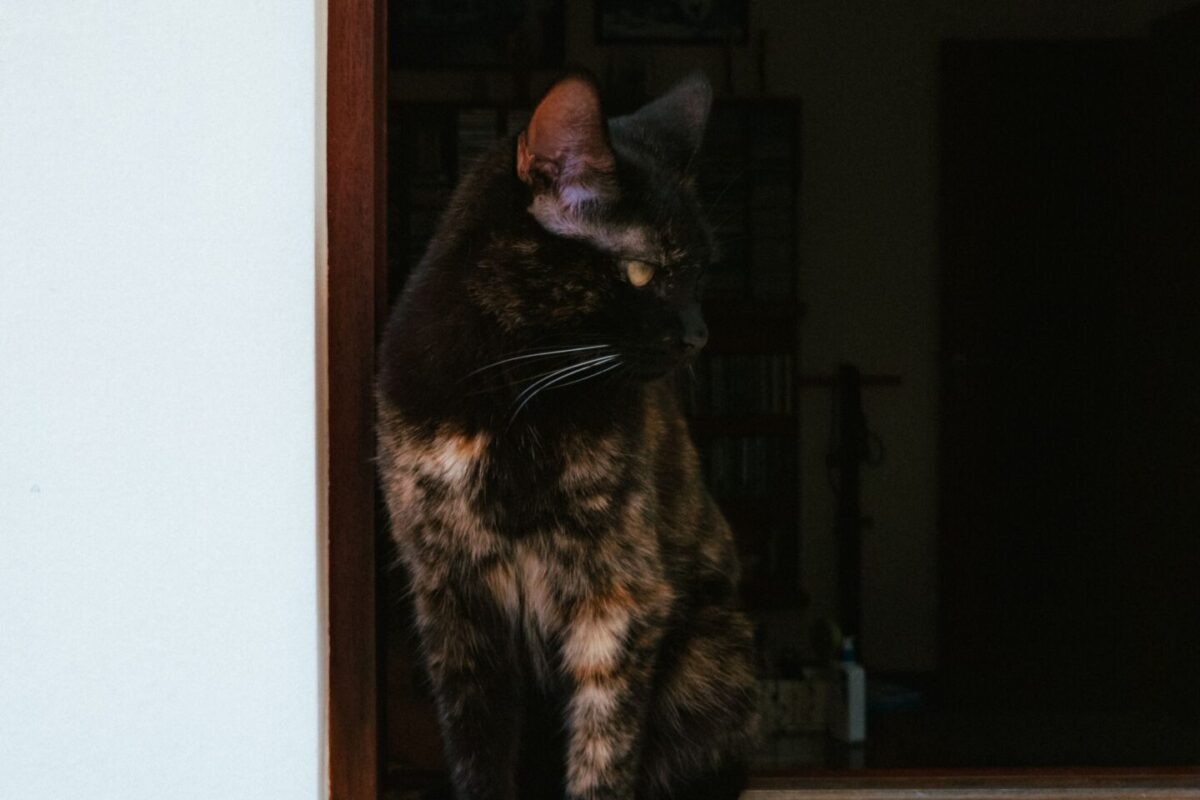
Yes, cats get lonely. They’re more independent than dogs, but they still bond with their people — and a cat left alone too long can feel it. The difference is that a lonely cat doesn’t whine at the door the way a lonely dog does. It looks quieter: sleeping more, eating less, hiding, or suddenly demanding your attention the moment you walk in.
The idea that cats don’t care whether you’re there is one of the most stubborn myths about them, and it’s easy to see why it survives. A cat won’t follow you from room to room the way a dog does. She won’t greet you at the door with a wagging tail. She can spend a whole afternoon asleep in a sunbeam and look perfectly happy doing it. So it’s natural to assume she’s fine on her own, and that your absence barely registers.
It registers. Cats form real attachments to their people. Studies of cat behaviour have found again and again that cats use their owners as a secure base — much the way a child uses a parent — and that given the choice, they often prefer human company to food or toys. A cat who is used to your company and then loses it notices the difference, and it affects her.
This guide covers why cats get lonely, what loneliness looks like in a cat, which cats are most at risk, how long is too long to leave a cat alone, and what actually helps — including whether a second cat is the answer.
Why people think cats don’t get lonely

The myth comes from a misunderstanding of what independence means. A cat is independent in the sense that she doesn’t need you to take her outside, doesn’t need feeding on a strict schedule to survive, and can keep herself occupied for stretches of time. But independence isn’t the same as not caring. A cat can be self-sufficient and still attached to you.
Part of the confusion is how cats show affection. Dogs show it loudly — jumping, licking, tail-wagging, following you everywhere. Cats show it quietly — sleeping near you, slow-blinking at you, headbutting your hand, sitting on your laptop while you work. If you’re looking for dog-style affection, a cat looks aloof. Once you learn to read cat-style affection, the attachment is obvious.
There’s also the fact that cats hide distress. In the wild, a cat who shows weakness is a cat in danger, so cats have evolved to mask discomfort. A lonely cat doesn’t cry about it. She goes quiet, or she sleeps more, or she eats a little less — and those changes are easy to miss, or easy to explain away as “she’s just being a cat.”
What loneliness looks like in a cat

Loneliness in a cat is usually quiet, which is why it gets missed. The signs are changes in behaviour, and the key word is change — a cat who has always slept eighteen hours a day isn’t lonely, she’s just a cat. A cat who used to greet you at the door and now doesn’t, or who used to play and now doesn’t, is telling you something.
Sleeping much more than usual. All cats sleep a lot. But a lonely cat may sleep even more, and in hidden places rather than her usual spots. She’s not resting — she’s withdrawing. If your cat has started sleeping in cupboards, under beds, or in corners she never used before, that’s worth noticing.
Eating less, or eating differently. Some lonely cats lose interest in food. Others eat too fast when you come home, as if making up for lost time. Either change matters. A cat who suddenly eats much less, or who vomits after eating quickly, is a cat whose routine has been disrupted — and the disruption may be your absence.
Hiding more. A cat who spends most of the day hidden, even when you’re home, is a cat who doesn’t feel safe or settled. Hiding is normal cat behaviour in small doses — every cat has a favourite hiding spot. But a cat who hides all day, every day, is a cat who is coping with something, and loneliness is one of the common causes. Our guide to why cats hide covers the hiding that often comes with it.
Over-grooming, or not grooming at all. Some lonely cats groom themselves obsessively, licking the same patch until the fur thins. Others stop grooming, and their coat becomes dull and matted. Both are stress responses, and both are worth a vet visit if they continue — because over-grooming and poor grooming can also be signs of illness, and it’s important to rule that out first.
Attention-seeking when you come home. A lonely cat may become clingy the moment you walk in — following you, meowing constantly, demanding to be picked up, or sitting on you and refusing to move. It’s tempting to read this as affection, and it is affection, but it’s also a sign that the hours without you were hard. A cat who is desperate for attention every evening is a cat who spent the day wanting it.
Destructive behaviour. Cats don’t destroy things out of spite, but a bored, lonely cat may scratch furniture more, knock things off shelves, or chew things she normally ignores. She’s not being naughty — she’s under-stimulated, and she’s making her own entertainment.
Litter box problems. A lonely, stressed cat may start avoiding the litter box, or using it less reliably. This is one of the most common stress signs in cats, and it’s also one of the signs that most often gets mistaken for a behaviour problem when it’s really a sign that something in the cat’s life needs to change.
Which cats get lonely most

Kittens and young cats. A kitten who has just left her mother and littermates is especially vulnerable to loneliness. Kittens are social, playful, and need interaction — and a kitten left alone all day in an empty flat is a kitten who isn’t getting what she needs. Kittens who grow up lonely can become anxious adults, or cats who never learn to play properly with people.
Single indoor cats. A cat who lives alone, indoors, with no other animals and no outdoor access, depends entirely on you for stimulation. If you’re out for ten hours a day, that’s ten hours of nothing — no company, no new smells, no change. Indoor cats can be perfectly happy, but only if their indoor life is rich enough to make up for the absence of the outside world.
Cats who have lost a companion. A cat who has lived with another cat, or with a dog, and then loses that companion can become lonely in a very visible way — calling for the missing animal, searching the house, sleeping in the other animal’s favourite spot. Grief in cats is real, and it takes time.
Older cats. Senior cats are often more attached to routine and to their people, and more sensitive to change. An older cat who has always had you around and suddenly doesn’t may cope less well than a younger cat. Older cats also sleep more and play less, which makes loneliness harder to spot — the signs blend in with normal ageing.
Cats in a new home. A cat who has just moved house, or who has just been adopted, hasn’t bonded with you yet — but she also hasn’t bonded with anyone, and she’s in a strange place with strange smells and no familiar company. New cats need extra time and attention in the first weeks, not less.
How long is too long to leave a cat alone

There’s no single number that works for every cat, but there are some sensible limits.
A few hours is fine for most adult cats. A healthy adult cat can be left alone for a normal working day — eight hours or so — as long as she has food, water, a clean litter box, and things to do. Most cats sleep through much of it anyway.
Overnight is usually fine, with preparation. A cat can be left overnight if she has everything she needs and she’s used to it. But she’ll notice, and a cat who is left overnight regularly may start to show signs of loneliness.
A full weekend is too long without help. Leaving a cat alone for two days with a big bowl of food and water is not enough. The food goes stale, the water gets dirty, the litter box fills up, and the cat has no company for forty-eight hours. If you’re away for a weekend, arrange for someone to visit at least once a day — to feed her, change the water, clean the litter box, and spend a little time with her.
A week or more needs a sitter, not a bowl. For any absence longer than a day or two, a cat needs a person coming in daily, or a stay with someone she knows. A cattery is an option, but many cats find catteries stressful — a familiar person visiting her own home is usually kinder.
The honest test is your cat’s behaviour. If you come home to a cat who is relaxed, eating normally, and glad to see you in a calm way, the time alone was fine. If you come home to a cat who is frantic, or hiding, or has stopped eating, the time alone was too long — and it’s time to change the arrangement.
What helps a lonely cat

Keep a routine. Cats are creatures of habit, and a predictable routine makes alone time easier. Feed her at the same times, play with her at the same time each evening, and keep the house calm and familiar. A cat who knows when you’ll be back copes better than a cat who doesn’t.
Play before you leave. A good play session in the morning — ten minutes with a wand toy, or a puzzle feeder — tires a cat out and gives her something to think about. A tired cat sleeps; a bored cat paces. Play is one of the simplest things you can do, and it makes a real difference.
Leave things to do. A puzzle feeder, a cardboard box, a paper bag, a window with a view of birds — these are all small things that make a cat’s day less empty. Rotate toys so they stay interesting. Leave a radio or television on quietly — the sound of human voices can be comforting to a cat who is used to a busy house. Our guide to how to make your cat love you more has more ideas for enriching a cat’s day.
Give her a view. A window perch, or a windowsill with a cushion, gives a cat something to watch all day. Birds, people, leaves moving in the wind — it’s television for cats, and it costs nothing. A cat with a good window is a cat who is less bored. Our guide to window hammocks covers the hanging kind, which many cats prefer to a bare sill.
Come home and be present. When you do come home, spend real time with your cat — not just a pat as you walk past, but a proper play session, a grooming session, or just sitting with her on your lap. The quality of the time you spend together matters more than the quantity. Fifteen focused minutes is worth more than an hour of you being in the same room while looking at your phone.
Should you get a second cat?

It’s the obvious answer, and sometimes it’s the right one — but not always.
When it works: a second cat gives a lonely cat company, play, and someone to sleep next to. Kittens, in particular, do well in pairs — two kittens entertain each other, learn from each other, and are much less lonely than one kitten alone. If your cat is young, social, and used to other cats, a companion can transform her life.
When it doesn’t work: some cats are genuinely happier alone. An older cat who has lived alone for years may not welcome a newcomer. A territorial cat may see a second cat as an intruder, not a friend, and the result is stress, fighting, and a worse situation than before. Introducing cats is slow work — our guide to introducing a new cat to your home explains how to do it properly — and it doesn’t always succeed.
The honest answer: a second cat is a commitment, not a fix. If you’re considering it, think about your cat’s personality first. If she’s social, playful, and has lived with other cats before, a companion is likely to help. If she’s shy, territorial, or has always been alone, the kindest thing may be to enrich her life in other ways — more play, more routine, more of your time — rather than adding another cat.
When it’s not loneliness

Not every change in a cat’s behaviour is loneliness, and it’s important to check the other possibilities before assuming it is.
Illness. A cat who sleeps more, eats less, hides, or grooms less may be ill, not lonely. Cats hide illness well, and behaviour change is often the first sign. If the change is sudden, or if it comes with other symptoms — vomiting, diarrhoea, weight loss, a dull coat — have her checked over first, before changing anything else.
Boredom. Loneliness and boredom overlap, but they’re not the same. A bored cat has things to do but finds them dull. A lonely cat wants company. The fixes overlap too — more play, more enrichment, more stimulation — but a bored cat in a house full of people is a different problem from a lonely cat in an empty house.
Stress from something else. A new baby, a new partner, building work, a neighbour’s cat staring through the window — any of these can change a cat’s behaviour. If the change started at the same time as something else changed in the house, the cause may be that, not loneliness.
Age. Older cats sleep more, play less, and become less social. That’s normal ageing, not necessarily loneliness. But an older cat who is also losing weight, or who has stopped grooming, or who seems confused, needs a check-up — those are signs that go beyond normal ageing.
Frequently Asked Questions
Do cats get lonely when left alone?
Yes. Cats bond with their people and can feel lonely, especially if they’re left alone for long hours every day. Loneliness in cats is usually quiet — sleeping more, eating less, hiding, or becoming clingy when you come home — which is why it’s easy to miss.
How long can you leave a cat alone?
A healthy adult cat can manage a normal working day of around eight hours, with food, water, a clean litter box and things to do. Overnight is usually fine with preparation. A full weekend alone is too long without someone visiting daily, and any absence of a week or more needs a sitter.
Do cats prefer to be alone?
Some cats are more independent than others, but no cat prefers to be alone all the time. Cats are social animals who bond with their people, and even the most independent cat enjoys company on her own terms. A cat who seems to prefer being alone may actually be a cat who is stressed, unwell, or hasn’t learned to trust people yet.
Is my cat lonely or just bored?
The two overlap. A lonely cat wants company — she follows you, meows when you come home, or becomes clingy. A bored cat wants stimulation — she scratches furniture, knocks things over, or plays roughly. The fixes are similar: more play, more enrichment, more routine, more of your time. If you’re unsure, try both and see what changes.
Should I get a second cat for my lonely cat?
Sometimes. A second cat can be wonderful company, especially for a young, social cat. But some cats are happier alone, and a bad introduction can make things worse. Think about your cat’s personality first, and introduce any new cat slowly and properly. A second cat is a commitment, not a quick fix.
Do kittens get lonely?
Yes, more than adult cats. Kittens are social, playful, and need interaction. A kitten left alone all day in an empty home is a kitten who isn’t getting what she needs. Two kittens are almost always happier than one, because they entertain and comfort each other.
Does my cat miss me when I’m away?
Yes, in her own way. Cats recognise their people, and they notice when you’re gone. A cat who greets you at the door, or who sleeps on your clothes while you’re away, is a cat who misses you. It’s one of the reasons a predictable routine matters — a cat who knows when you’ll be back copes better than one who doesn’t.
What are the signs of a lonely cat?
Sleeping much more than usual, eating less, hiding, over-grooming or not grooming, becoming clingy when you come home, and destructive behaviour like scratching furniture. The key is change — a behaviour that is new, or much stronger than it used to be, is worth paying attention to.
Can a cat die of loneliness?
Loneliness alone doesn’t kill a cat, but the stress it causes can make a cat ill — eating less, grooming less, and becoming more vulnerable to illness. A lonely cat who stops eating is a cat in danger, because cats who stop eating can develop serious liver problems quickly. If your cat has stopped eating, see the vet promptly, whatever the cause.
Sources and further reading
- International Cat Care — Cats and loneliness
- American Society for the Prevention of Cruelty to Animals — Cat behaviour
- Cornell Feline Health Center — Behavioural problems in cats