
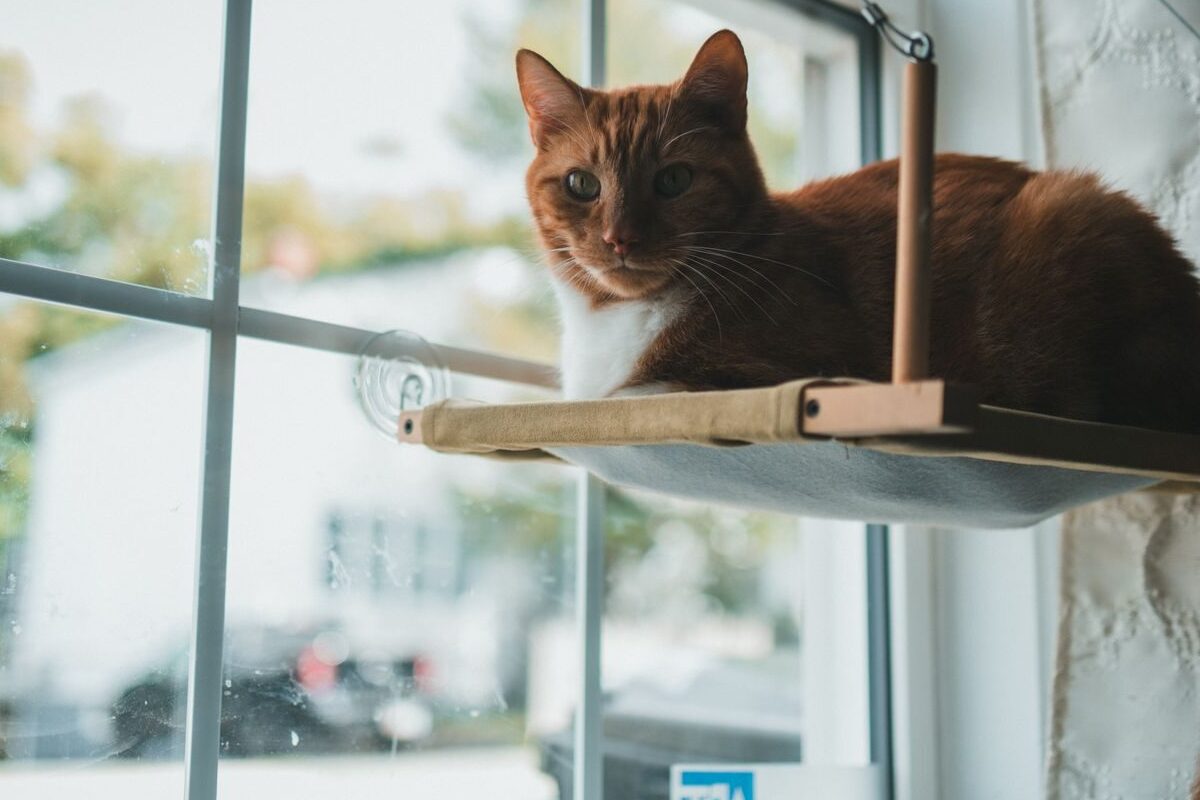
Every cat has a favourite window: where the birds are, where the sun lands in the afternoon, and where the whole street can be supervised in comfort. A window hammock turns that spot from a cold sill into a proper perch.
Every cat has a favourite window. It is where the birds are, where the sun lands in the afternoon, and where the whole street can be supervised in comfort. A window hammock turns that spot from a cold sill into a proper perch — a sling of fabric stretched across the window that your cat can sprawl on for hours. Done right, it is one of the cheapest pieces of enrichment you can buy for an indoor cat. Done wrong, it is a cat sliding to the floor at 3 a.m. with a suction cup still attached to one paw.
The difference is almost entirely in how it mounts and how much weight it honestly holds. Get those two things right and the rest is easy.
Research-based only. No product was personally tested.
What to check before you buy
- Weight limit — with margin. Check the stated limit, then buy above your cat’s weight, not exactly at it. A cat does not sit politely still on a hammock; he lands on it from a jump, kneads, stretches and sometimes shares it with a second cat. A hammock rated for 10 kg will hold a 5 kg cat through all of that; one rated for exactly your cat’s weight may not.
- Mounting type. Suction-cup hammocks are the most common: they stick to the glass, need no tools, and come off cleanly. They only work on smooth, clean glass, and the cups need checking. Windowsill hammocks clamp or rest on the sill itself and suit cats that launch hard. Wall-mounted perches bolt beside the window and hold the most weight, but they need drilling. Pick the mount that suits your window, not just the prettiest hammock.
- Your window. Suction cups grip flat glass, not textured, frosted or leaded panes, and they struggle on very cold glass in winter. A wide, deep sill gives a sill-mounted hammock something to grip; a narrow sill does not. Measure the window before ordering — a hammock wider than the glass will not mount at all.
- Fabric and washability. The sling takes fur, sun and the occasional muddy paw. Removable, washable fabric lasts far longer than a fixed cover you can only wipe. Mesh or breathable fabric suits warm rooms; a fleece cover suits a cat that naps in the sun through winter.
- Fall height. Even a good hammock can come down if a cup ages. Do not mount one above a hard floor with nothing underneath on the first week — a rug or a cushion below turns a fall into a non-event while you learn whether your cups hold.
Hammock types, briefly
Suction-cup slings are the simplest and the most popular: a fabric bed on a frame, four cups on the glass. Sill perches sit on the windowsill itself, often with a bolster, and suit heavier cats. Radiator beds are a different thing — they hang on a radiator, not a window — but cats that love window sun often love radiator warmth too, so they are worth knowing about separately. For a first window hammock, a suction-cup sling on a clean, flat window is the easiest start; a sill or wall mount is the upgrade if your cat is large or launches hard.
Two options to compare
Kitty Cot Original Cat Perch — Good for: A straightforward suction-cup sling with a sturdy frame and a washable cover, sized for one cat to stretch out in the sun. A good first window hammock for a standard flat window. Watch out for: It lives or dies by its suction cups. Clean the glass properly before mounting, press each cup firmly, and re-check the cups weekly — replace any cup that has gone stiff or yellowed.
K&H Pet Products EZ Mount Window Bed — Good for: Cats that want a deeper, bed-like perch rather than a flat sling. The EZ Mount design uses large suction cups and a padded bed, and the cover comes off for washing. Watch out for: It is bigger than a basic sling, so measure your window first. As with any suction mount, test it with your cat’s weight gradually — let him step on from the sill rather than launching at it on day one.
Getting it to stay up
Clean the glass with warm soapy water, rinse, and dry it fully — grease and dust are the main reason cups fail. Warm the cups slightly in your hands, press each one flat against the glass, and leave the hammock empty for a few hours so the seal sets. Check the cups once a week by pressing them again, and replace cups that no longer grip. If a cup keeps failing on one window, try another window: some glass coatings defeat suction no matter how clean the pane is, and no amount of pressing fixes that.
Getting your cat to use it
Put the hammock on the window your cat already watches from, not the one you think looks best. A treat trail onto the sill and a familiar blanket on the sling help a cautious cat, and a feather toy dangled just above the hammock is often all it takes. Do not lift your cat onto it and hold him there — a cat that chooses the perch will use it daily; a cat that is placed on it will avoid it. If your cat ignores it for a week, try moving it to a sunnier window or one with a better view of birds; location matters more than the hammock itself.
When a window perch is a bad idea
A window hammock is not for a window that opens wide with no screen, or for a high flat with a window your cat could push open. Keep windows on a latch when the hammock is up, and never mount one on a window above a balcony drop where a fall would be dangerous. Also watch the sun: a south-facing window in summer can make a dark fabric perch hot enough to be uncomfortable, so offer shade or a second, cooler perch alongside it.
Frequently Asked Questions
Will a suction-cup hammock really hold my cat? Yes, if the cups are good, the glass is clean and flat, and the weight limit has margin above your cat’s weight. Re-check the cups weekly and replace any that stiffen.
Why does my hammock keep falling down? Usually dirty or coated glass, old suction cups, or a hammock rated too close to your cat’s weight. Clean the glass, warm and re-press the cups, and try another window if one pane keeps failing.
Is a window hammock safe for a large cat? Yes with the right mount: choose a hammock rated well above his weight, or a sill or wall-mounted perch, which holds more than suction cups alone.
What if my cat ignores the hammock? Move it to the window he already watches from, add a familiar blanket, and let him discover it himself. A sunnier window or a better bird view usually fixes it.
Can I leave the hammock up in winter? Yes, but suction grips less well on very cold glass, so check the cups more often in cold weather and keep a rug underneath for the first weeks.
Suction cup or frame-mounted hammock: which is better? Frame-mounted hammocks hold more weight and never fall, but need a suitable windowsill or frame. Suction-cup hammocks fit any smooth glass window and are easier to move, but need clean glass, correct installation, and regular suction checks. For large cats, or cats who leap onto the hammock, a frame-mounted or sill-mounted option is the safer choice.
How do I get my cat to use a new window hammock? Put it on the cat’s favourite window, not a window you prefer, and make it rewarding: a treat on the hammock, play near it, and a blanket that smells like home on the fabric. Do not place the cat on it — let curiosity do the work. Most cats try a hammock within days once it sits on their chosen window in the sun.
Is a window hammock safe in summer sun? Watch the temperature: a sunny window can overheat a cat, especially a dark-coated or flat-faced cat. Make sure the cat can move off the hammock into shade, and never leave a cat in a closed, sun-facing room without ventilation. A hammock in morning or afternoon sun, with a cool retreat nearby, is ideal; an all-day sun trap is not.
Related reading
Indoor vs Outdoor Cats: Lifespan, Risks & the Honest Trade-Offs
Why Does My Cat Stare at Me? 7 Reasons, Explained
How to Make Your Cat Love You More: 10 Science-Backed Ways to Bond
Cat Sleeping Positions and What They Mean: A Visual Guide
Sources
PetMD, indoor cat enrichment and window perches. International Cat Care, environmental enrichment for cats. RSPCA, keeping indoor cats happy. VCA Animal Hospitals, indoor cat behaviour.