
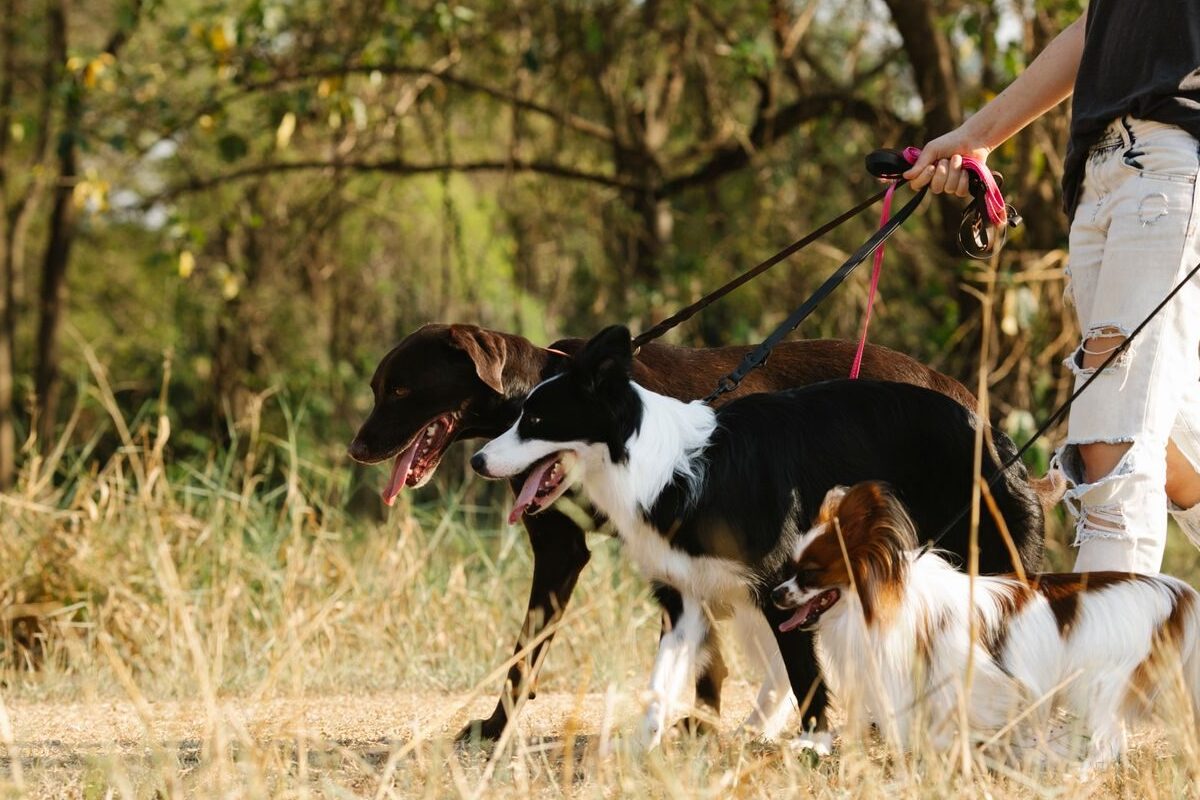
Dogs pull mainly because pulling works: it has always got them to the smell, the dog or the park gate faster. Reward the walking you want — praise and treat the moment the lead hangs loose and your dog checks in with you.
Leash training a dog that pulls works by reversing what pulling pays for: when the lead is loose, the walk moves forward and good things happen; when it goes tight, everything stops. Reward loose-lead walking generously, stop and wait for slack every time your dog pulls, practise first in quiet places, and use comfortable, non-painful equipment. No jerking, shouting or punishment tools are needed — reward-based training is what the major welfare charities recommend.
Most pulling is not defiance. It is a dog walking at their natural pace, towards exciting smells and sights, using a method that has worked every day so far. Your dog pulls, the lead tightens, and yet the walk still arrives at the park and the interesting hedge. From your dog’s side, pulling is not a bad habit. It is a successful strategy.
A strategy can be retrained. You do not need to be stronger than your dog, or to use equipment that hurts. You need to be more consistent than the environment: loose lead pays, tight lead pauses, every time.
Our overview of everyday dog care and training basics puts walks in wider context. This article is the walk itself, step by step.
At a Glance
- Dogs pull mainly because pulling works: it has always got them to the smell, the dog or the park gate faster.
- Reward the walking you want. Praise and treat the moment the lead hangs loose and your dog checks in with you.
- When your dog pulls, stop, stand still and wait for slack. Do not pull back. Move only on a loose lead.
- Start in quiet places, keep sessions short and regular, and build distractions up gradually.
- Use reward-based methods only. Charities advise against anything painful or restrictive, such as choke collars, and recommend a harness for a dog that pulls.
Contents
- Why dogs pull, and why leash training a dog that pulls takes patience
- Gear for leash training a dog that pulls
- The step-by-step plan
- A realistic first two weeks
- Common mistakes that keep pulling alive
- When to get professional help
- Frequently Asked Questions
- Sources and Further Reading
Why dogs pull, and why leash training a dog that pulls takes patience

The PDSA lists the reasons plainly: dogs pull if they are excited or have lots of energy, if they are desperate to explore something, or if it has become a habit, because some dogs learn young that pulling gets them forward. Dogs also walk faster than most people, and a walk is packed with scent information we cannot detect.
Punishment makes little sense here. Your dog is not breaking a rule they understand; they do not yet know a loose lead is what you want. The PDSA is direct: never punish your dog for pulling, because they learn much faster with positive training, and never tell them off or yank them back.
Expect it to take time, too. The PDSA warns this can be a very long process needing consistency and patience, and the RSPCA builds its method around short, regular sessions. Consistent work should bring steady improvement: longer loose stretches, quicker recovery after distractions, and more check-ins.
Energy helps, too. A dog bursting with energy is a hard student, which is why the amount in our guide to how much exercise a dog needs matters, and why the PDSA suggests a play session before early training walks. Build sniff breaks in as rewards — sniffing is a large part of what a walk is for.
Gear for leash training a dog that pulls

A well-fitting harness. The PDSA recommends walking a dog that pulls on a harness, because this will help prevent them from hurting their neck. A lead on a collar concentrates pulling force at the neck, while a harness spreads the load across the chest and body. This does not mean a collar will inevitably injure a calm dog — many wear a flat collar for ID every day. For a dog actively pulling, a comfortable harness is the kinder choice. Straps should sit flat, not rub, allow full shoulder movement, and not spin.
A normal-length lead. One that lets your dog walk a little away without going tight instantly, while keeping control near roads. Keep your hands relaxed; constant tension gives noise instead of a clear signal.
Treats your dog cares about, in a pouch. The PDSA suggests favourite treats, kept sensible — small pieces of boiled chicken or turkey, or carrot — and trimming main meals a little on heavy training days. Soft, small, quick treats work best on the move.
What to leave out. The PDSA advises against anything painful or restrictive, such as a choke collar. This plan never uses choke chains, prong or shock collars, or lead jerks. Equipment that needs pain or fear works against calm, attentive walking.
The step-by-step plan

Work through the stages in order, moving on when a stage looks easy most of the time.
Stage 1: Pay for attention before you move. The RSPCA starts here, standing still. Stand quiet, let your dog use the full lead, and the split second they pay attention to you, praise and treat. Repeat until looking at you becomes your dog’s opening move — making the area around you fun and rewarding underpins everything else.
Stage 2: Reward loose-lead steps near you. Move off, using your voice and treats to encourage your dog to stay close. Reward frequently at first — every few steps, beside your leg, so next to you becomes where good things arrive. The PDSA’s core rule runs through this plan: a loose lead gets a reward, pulling does not.
Stage 3: Stop the moment pulling starts. As soon as your dog pulls, or moves so far away the lead is about to go tight, stop. Stand still and quiet. Never pull back — just wait. When there is slack again, reward your dog, then continue. The RSPCA adds: stop before the lead goes tight where you can, do it every single time, then reward and move off.
Expect Stage 3 to feel absurd at first. You may stop twenty times in fifty metres, and your walk will take much longer, as the PDSA admits. That is the teaching working: forward motion is bought with a loose lead, and nothing else counts as payment.
Stage 4: Add the turn. If stopping alone is not getting through, calmly turn and walk a few steps the opposite way when the lead tightens, without any jerk. When your dog catches up on a loose lead, praise, treat, and turn back. Turns make you less predictable, so your dog keeps half an eye on you.
Stage 5: Practise around a controlled distraction. The RSPCA suggests placing something your dog would like to reach, such as a toy, on the floor. Walk towards it on a loose lead. If your dog pulls, stop and call them back towards you. When they walk the last stretch loose, their reward is the toy. The lesson generalises: pulling slows things down, and loose walking is how good things get reached.
Stage 6: Take it to real routes, gradually. Build from the garden or a quiet street to busier pavements, one step at a time, in short, regular sessions. On longer outings, alternate focused practice with relaxed sniffing stretches, as long as the lead stays slack. Let your dog drink and rest on warm walks, too — a thirsty dog cannot concentrate, which is why the amounts in our guide to how much water a dog should drink matter on walk days.
A realistic first two weeks

No honest plan can promise dates, because dogs and routes differ. This shape is realistic for most households:
| Time | Focus | What success looks like |
|---|---|---|
| Days 1–3 | Stages 1–3 at home, garden or a very quiet street | Dog looks to you when you stop; short loose stretches |
| Days 4–7 | Stage 3 on one familiar quiet route; sniff breaks as rewards | Fewer stops per street; dog returns faster |
| Week 2 | Stage 5 distraction practice; a slightly busier route at its quietest time | Dog can pass a placed toy on a loose lead |
| After week 2 | Busier routes; treats spaced out slowly, praise kept up | Loose lead is the default on familiar routes |
Treats are phased out slowly. The PDSA advises phasing them out gradually, replacing them with praise, and warns that going cold turkey can cost motivation. A reward every few steps becomes one every corner, then one for the best moments.
Common mistakes that keep pulling alive

- Pulling or jerking back. It teaches nothing except that walks involve sudden discomfort at the neck. Stop instead. Stillness is the signal.
- Training only in hard places. Starting at the dog park entrance is an exam before the lessons. Quiet first, distractions later.
- Expecting the harness to do the job. Gear protects the neck and gives safer control. Learning comes from what a loose lead earns and a tight lead pauses.
- Reading every surge as naughtiness. A lunge with a tense body, fixed stare or lip licking is often stress or over-arousal. Spotting those moments in our guide to dog body language helps you add distance early. At home, a dog who greets you with lots of licking may be more wound up than they look — see why your dog licks you.
When to get professional help

Most everyday pulling responds to consistent reward-based practice. Get help sooner if your dog lunges or spins at dogs, people or traffic and you cannot create distance; if pulling risks pulling you over; if your dog seems frightened on walks; or if progress has stalled for weeks.
Choose a reward-based trainer who is open about qualifications and does not reach for punishment collars. Your vet is a sensible first call if behaviour changed suddenly, since pain and illness can show up as reluctance or reactivity.
Frequently Asked Questions
How long does leash training a dog that pulls take?
There is no honest fixed timeline. The PDSA warns it can be a very long process requiring consistency and patience, and the RSPCA’s method is built on short, regular sessions. Many dogs improve on familiar quiet routes within a few weeks of consistent work, then need the same lessons in busier places. Judge progress by trends — fewer stops, faster recovery, more check-ins — not by one bad walk.
Should I use a harness or a collar for a dog that pulls?
The PDSA recommends a harness for a dog that pulls, because it helps prevent them hurting their neck. Keep a flat collar for ID tags if you use one, but attach the lead to a well-fitting harness during training. Fit matters more than brand: straps should not rub, restrict the shoulders or rotate.
My dog only pulls on the way to the park, and walks home beautifully. Why?
Because the rewarding thing is ahead of them on the way out, and behind them on the way home. This is normal. Practise stop-and-reward work on the first half of the route in short bursts, let reaching the park be earned in loose-lead stretches, and expect the exciting direction to take longer. Note that loose, exploratory walking with a slack lead is always fine — the rule in this plan is about tension, not position.
What gear helps most for a dog that pulls?
A well-fitted front-clip harness usually helps most, because it steers the dog back towards you instead of letting it lean in. A standard flat collar works for dogs who pull mildly. Avoid retractable leads for training — they teach the dog that tension means forward movement, which is the opposite of loose-lead walking.
What are the common mistakes that keep pulling alive?
Moving forward while the lead is tight, yanking the lead, training only in exciting places, and sessions that are too long. Also: everyone in the household must follow the same rules. If one person lets the dog drag them to the park, the dog learns that pulling sometimes works — and sometimes is enough to keep it going.
When should I get professional help for pulling?
When pulling is strong enough to hurt you or the dog, when the dog lunges, barks or reacts aggressively on lead, or when weeks of consistent training bring no improvement. A qualified, reward-based trainer or behaviourist can spot handling mistakes and reactivity issues that are hard to see yourself, and will set a plan that fits your dog.
Sources and Further Reading
- PDSA — Training Dogs Not to Pull: reward-based training; dogs pull from excitement, energy, wanting to explore or learned habit; stop when your dog pulls, never pull back, wait for slack then reward; never punish or yank; practise in quiet areas; phase treats out slowly; nothing painful or restrictive such as a choke collar; a harness is recommended if a dog pulls, to help prevent them hurting their neck. https://www.pdsa.org.uk/pet-help-and-advice/looking-after-your-pet/puppies-dogs/training-dogs-not-to-pull
- RSPCA — Teach Your Dog to Walk Without Pulling: stand still and quiet, praise and treat the split second your dog pays attention; reward loose-lead walking; stop before the lead goes tight, every time; short, regular sessions; a wanted toy is earned by loose-lead walking, so pulling slows things down. https://young.rspca.org.uk/en/web/rspca/adviceandwelfare/pets/dogs/training/walknicely
- Ontario SPCA — How to Teach Loose-Leash Walking: mark and reward your dog beside you; if your dog pulls, stop and wait for a look back or looser tension, then continue; if pulling continues, change direction; reward check-ins; increase difficulty gradually. https://ontariospca.ca/blog/how-to-teach-loose-leash-walking/
- Dogs Trust loose-lead advice, as summarised in a charity-advice comparison: reward loose-lead walking, stop as the lead tightens, start at home or in the garden, and use comfortable equipment such as a flat harness or collar. https://toptierfind.com/blog/loose-lead-walking-charity-advice
This article is educational information only and is not a substitute for advice from your veterinarian or a qualified, reward-based trainer or behaviour professional. If your dog’s behaviour has changed suddenly, or walks feel unsafe, contact your vet or a professional for help.
About the author
Furrology Team — pet owner and researcher behind Furrology. We read the veterinary research and draw on real owner experience, then turn it into plain-English guides about dogs, cats, birds and small pets. We are not vets — Furrology is researched information, not veterinary advice, and a poorly pet always needs a real vet. More about how we work: About Us · Editorial Policy