
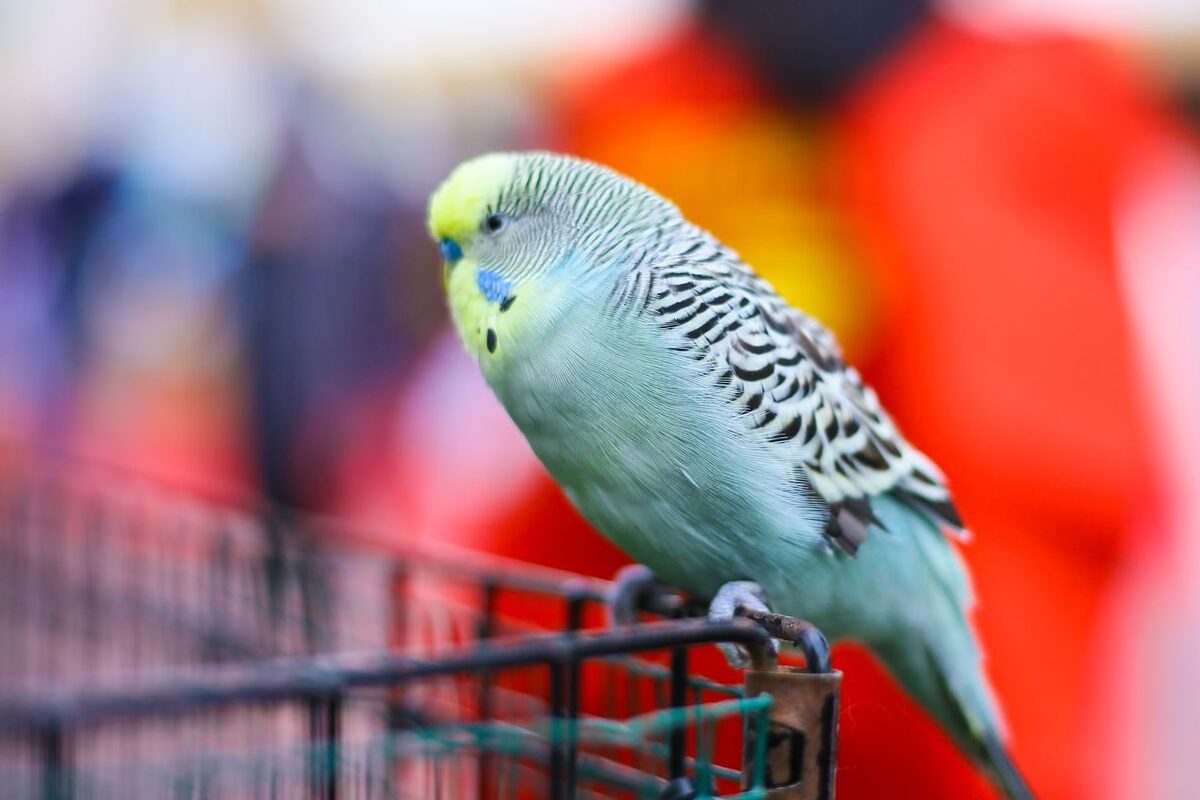
If you have ever sat near your budgie’s cage in the evening, you may have heard it: a soft, rhythmic crunching, like someone quietly grinding their teeth, coming from a bird that looks half asleep. New owners often worry about it. It sounds like something is wrong. In most cases, it is the opposite — it is one of the clearest signs of a contented budgie.
Beak grinding is a normal budgie behaviour, and once you know it, you will start to notice when your bird does it, and what it means about how the bird is feeling.
What beak grinding looks and sounds like
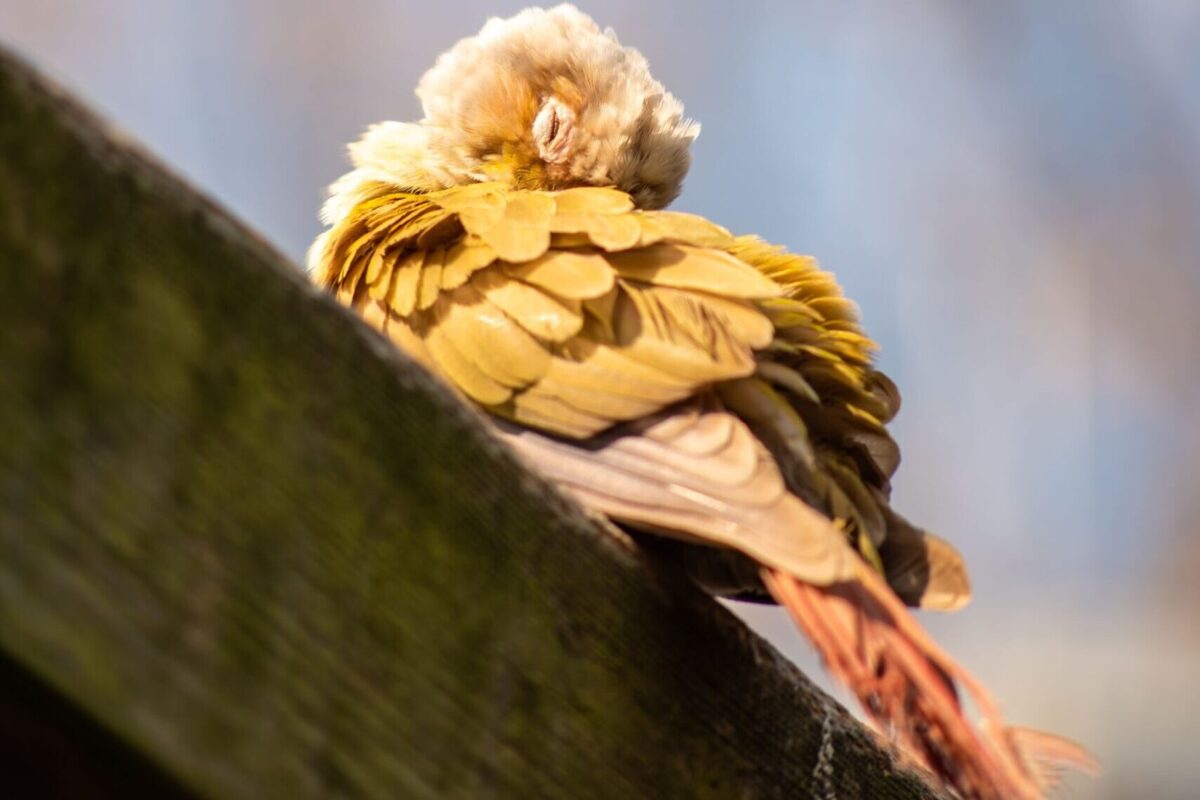
Beak grinding is a side-to-side movement of the lower beak against the upper beak, making a soft crunching or clicking sound. The budgie usually does it with its eyes half closed or fully closed, feathers slightly fluffed, and one foot tucked up — the classic resting pose. It happens most often in the evening, as the bird settles for the night, or after a good meal, a bath, or a play session.
It is easy to confuse with other beak sounds, so it helps to know the differences. Beak clicking is sharper and faster, and it often comes with an alert, upright posture — a different mood entirely. Beak wiping, where the bird rubs its beak on a perch after eating, is about cleaning, not contentment. Grinding is slower, softer, and sleepier than both, and the bird’s body language gives it away: a grinding budgie looks relaxed, not tense.
Why budgies grind: contentment and beak care

The main reason budgies grind is contentment. Birds grind when they feel safe, comfortable, and ready to rest — the budgie equivalent of a cat purring on your lap. A budgie that grinds in the evening, after eating and playing, is telling you its day went well.
Grinding also helps with beak maintenance. A budgie’s beak grows constantly, and the grinding motion helps keep the edges smooth and aligned, the way chewing keeps a rabbit’s teeth in shape. This is one reason budgies grind more when they have good things to chew during the day — cuttlebone, mineral blocks, and safe wooden toys all support healthy beak wear, and a bird with a well-kept beak grinds contentedly at rest.
Young budgies grind too, and it is part of how they learn to use their beaks. A baby budgie practising grinding is not doing anything wrong; it is a young bird getting comfortable with its own body.
When grinding is not just contentment

Most grinding is good news, but the beak itself deserves a look now and then. A healthy budgie beak is smooth, symmetrical, and a consistent colour for the bird. Changes worth noticing include a beak that grows noticeably long or crooked, flaking or peeling that goes beyond normal wear, sores around the beak, or a bird that struggles to eat or drops food. Those are not things to diagnose from a blog post — they are reasons to talk to an avian vet, who can look at the bird and tell you what is going on.
Grinding that comes with other changes is also worth noting: a bird that grinds constantly during the day while fluffed up and quiet, rather than in the evening while settling, may be telling you something different from a bird that grinds before sleep. Context matters. Evening grinding in a relaxed bird is contentment. All-day grinding in a withdrawn bird is a reason to ask a vet.
How to encourage happy grinding

The best way to hear more beak grinding is to give your budgie a good day: a cage with room to move, toys to chew and shred, a cuttlebone or mineral block, time out of the cage, and a calm evening routine with dimming light. A budgie that has played, eaten, and felt safe all day will usually grind itself to sleep — and that soft crunching from the cage is one of the most reassuring sounds a budgie owner can hear.
Frequently Asked Questions
Is beak grinding normal in budgies?
Yes, very normal. It usually means the bird is content and settling to rest, especially in the evening after eating and playing.
What is the difference between grinding and clicking?
Grinding is slow, soft, and sleepy, with relaxed body language. Clicking is sharper and faster, often with an alert posture. They are different sounds with different moods.
Why does my budgie grind after eating?
After a good meal is a classic grinding time. The bird is full, comfortable, and settling — grinding is part of that wind-down.
Should I worry if my budgie’s beak looks overgrown?
A beak that grows long, crooked, or flaky, or a bird that struggles to eat, needs an avian vet. Do not try to trim a beak yourself — a vet can assess it safely.
My budgie grinds all day and sits fluffed up. Is that normal?
Evening grinding in a relaxed bird is normal. All-day grinding in a quiet, fluffed-up bird is different — talk to an avian vet, because context changes the meaning.
Related reading
- Signs Your Budgie Is Happy
- Budgie Care for Beginners
- Why Does My Budgie Bob Its Head? Courtship, Excitement, and When to Watch Closer
- Why Does My Budgie Bite?
Sources
Association of Avian Veterinarians, budgie behaviour guidance
PetMD, budgie beak grinding and beak health
RSPCA, budgie care and behaviour basics
VCA Animal Hospitals, budgerigar behaviour and health