
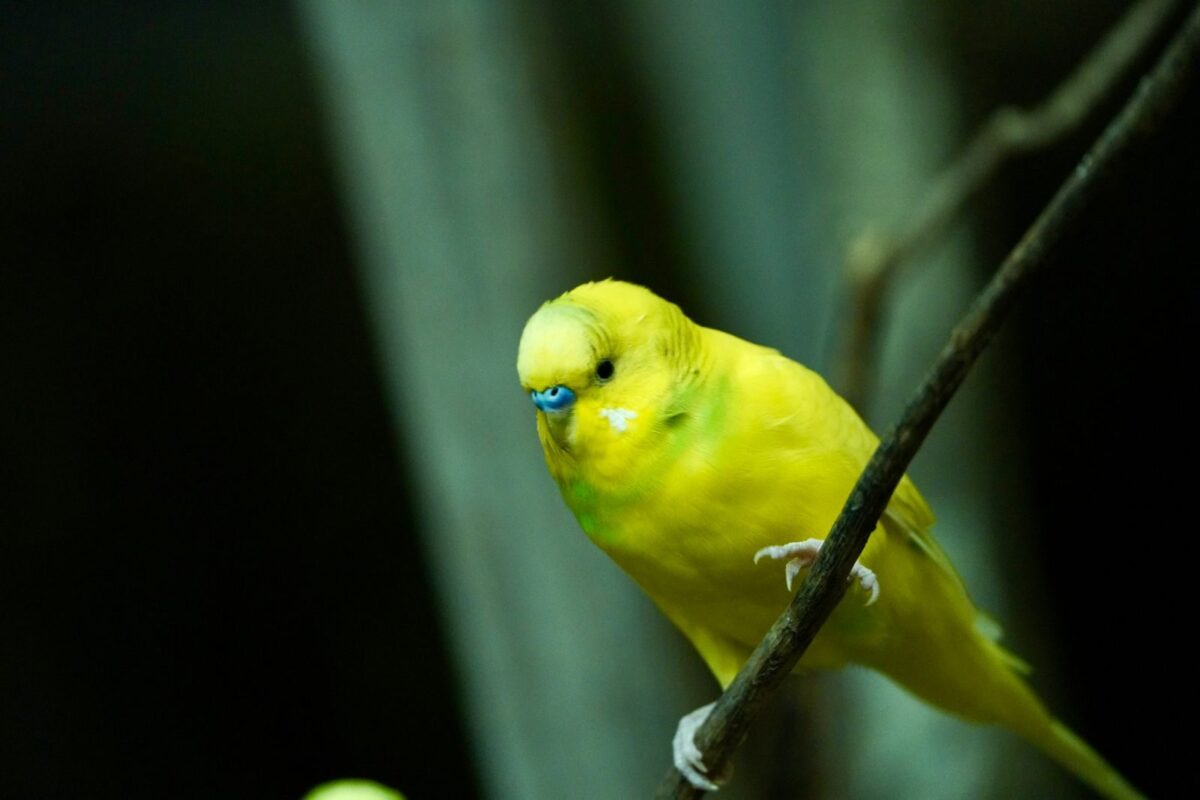
If you’ve ever watched your budgie fluff himself up into a round, feathery ball, you’ll know it can look completely adorable — and slightly worrying at the same time. One moment he’s a sleek little bird, and the next he’s twice as wide, sitting there like a tiny feathered pom-pom. Is he cold? Is he happy? Is something wrong?
The honest answer is that puffing up can mean several different things, and the meaning depends on the context. A budgie who puffs up briefly, then smooths his feathers back down and goes about his day, is doing something completely normal. A budgie who stays puffed up for hours, sits quietly at the bottom of the cage, and doesn’t eat is a bird who needs help. The difference between those two situations is one of the most useful things a budgie owner can learn.
The short answer: feathers are a budgie’s thermostat
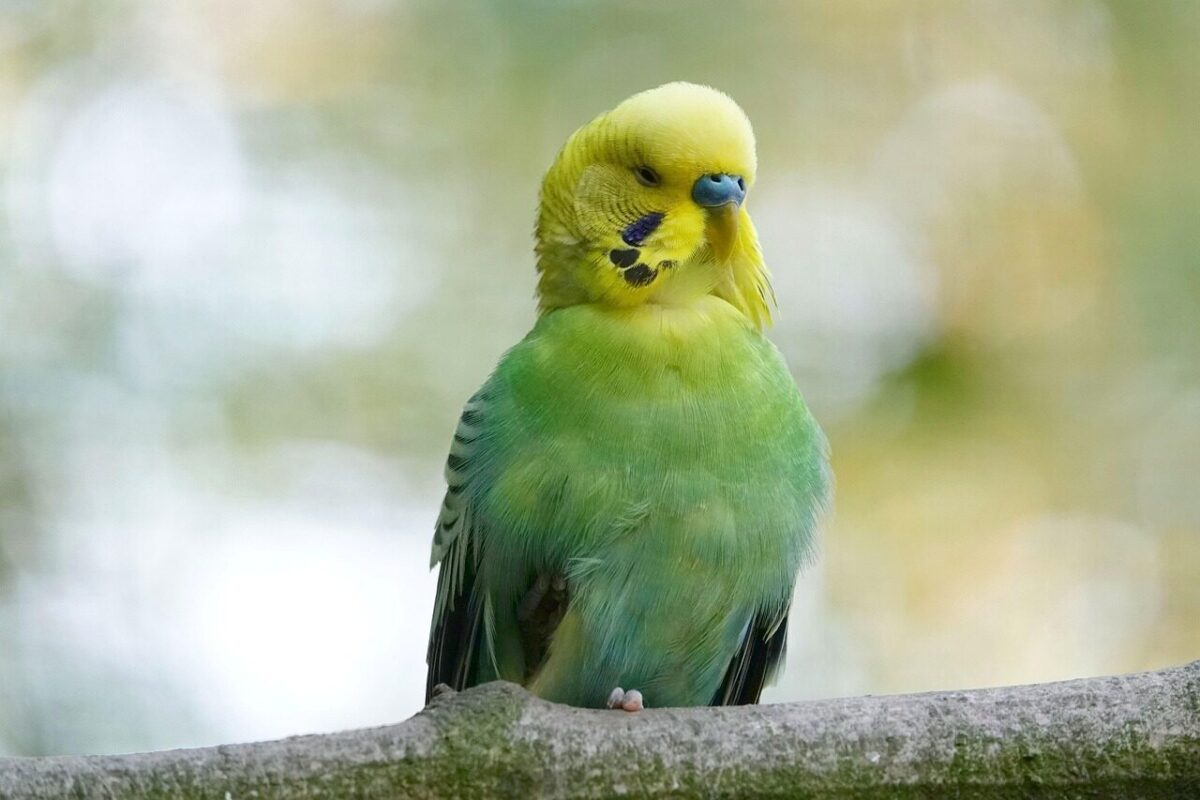
A budgie’s feathers aren’t just for flying. They’re insulation, and puffing them up is how a budgie controls his body temperature. When a budgie fluffs his feathers out, he traps a layer of warm air against his body — the same way a down jacket works for you. When he smooths them flat, he lets the heat out.
That means puffing up is, first and foremost, a temperature response. A budgie who is cold will puff up. A budgie who is settling down to sleep will puff up. A budgie who has just had a bath will puff up while he dries. In all of those cases, it’s normal, healthy, and nothing to worry about.
But puffing up is also something a sick budgie does, because a sick bird loses heat faster and tries to conserve it. That’s why context matters so much. The puffing itself isn’t a symptom — it’s the pattern around it that tells you whether something is wrong.
The normal reasons a budgie puffs up
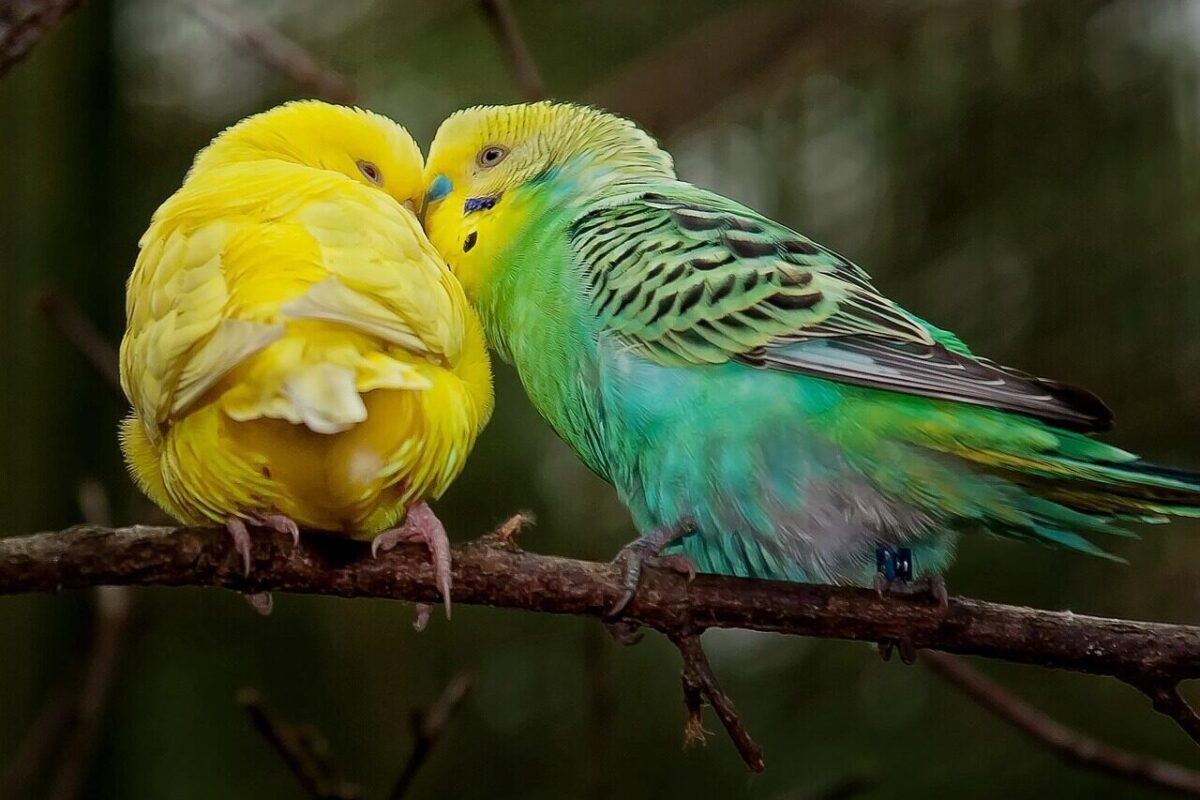
He’s going to sleep. This is the most common reason, and the one most owners see every evening. As a budgie settles down for the night, he’ll fluff his feathers out, tuck his head into his back, and stand on one foot. He’s making himself warm and comfortable for the night. If your budgie puffs up at bedtime and is his usual self in the morning, that’s completely normal. Budgies need around 10–12 hours of sleep a night, so a quiet, dark room — or a cage cover — helps them get the rest they need.
He’s cold. Budgies are small, and small birds lose heat quickly. A draught, a cold room, a cage near a window, or a sudden drop in temperature will all make a budgie puff up. If he’s puffed up and the room feels cool to you, warmth is the likely cause. Moving the cage away from draughts and making sure the room is comfortably warm usually sorts it out.
He’s just had a bath. Budgies love to bathe, and after a bath they puff up to dry off and to trap warm air against their wet feathers. A post-bath puff is normal and usually lasts until the feathers are dry. Our guide to bird baths covers how to offer water safely and what to look for in a bath.
He’s relaxed and content. A budgie who is feeling safe and comfortable will sometimes puff up briefly while he’s resting — a kind of feathered sigh. If he puffs up, looks around calmly, and then smooths down again, he’s just settling in. Our guide to signs your budgie is happy covers the other things a content budgie does, from chirping to beak grinding.
He’s preening. Budgies spend a lot of time grooming their feathers, and preening often involves fluffing the feathers out to reach the ones underneath. A budgie who puffs up while preening, then goes back to normal, is just doing maintenance.
He’s showing off. A male budgie who is feeling confident or trying to impress a mate may puff up his chest feathers as part of his display. It’s the bird equivalent of standing up straight. If the puffing comes with singing, head bobbing, or strutting, it’s display behaviour, not a health concern.
When puffing up means something is wrong
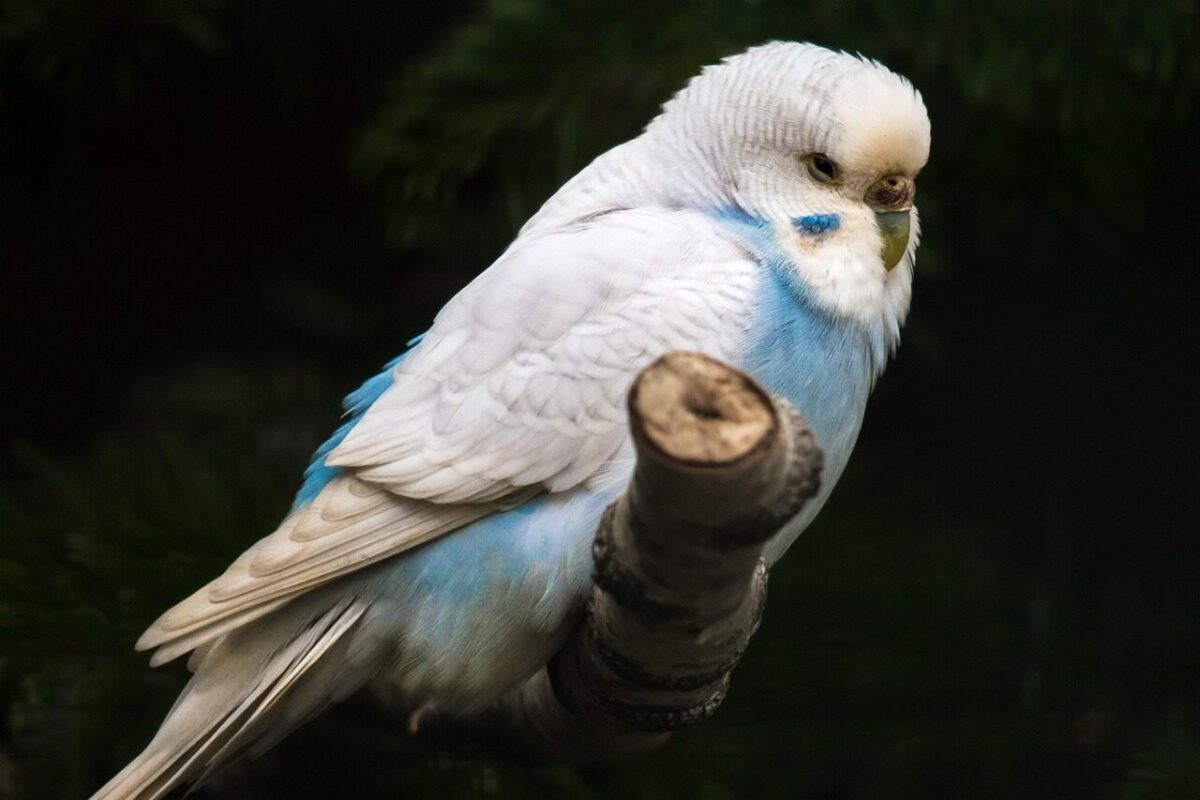
Here’s where it gets important. A sick budgie also puffs up — but the pattern is different, and learning to spot the difference could save your bird’s life.
He stays puffed up. A healthy budgie puffs up and then smooths down. A sick budgie stays puffed up for hours, sometimes all day. If your budgie has been a round, fluffy ball since morning and hasn’t smoothed out, that’s a sign to pay attention to.
He’s puffed up and quiet. A healthy puffed-up budgie is still alert — he’ll look around, respond to sounds, and move about. A sick budgie who is puffed up tends to be quiet, still, and uninterested in what’s going on around him. He may sit at the bottom of the cage, or on a low perch, rather than in his usual spot.
He’s puffed up and not eating. This is the combination that matters most. A budgie who is puffed up, fluffed out, and not eating or drinking is a budgie who needs a vet — ideally an avian vet — as soon as possible. Budgies are small, and they can go downhill fast. Don’t wait to see if it gets better tomorrow.
His droppings have changed. If the puffing comes with watery droppings, droppings that look different in colour, or a dirty vent, mention all of it to the vet. The combination of symptoms tells the vet much more than any single one on its own.
He’s puffed up and breathing differently. Rapid breathing, tail bobbing with each breath, or breathing with his beak open are all signs that a bird is struggling. Combined with puffing up, they mean a vet visit should not wait.
If you’re unsure, the safest approach is to call your vet and describe what you’re seeing. Avian vets would much rather hear from you early than late, and a phone call costs nothing. Our guide to your bird’s first vet visit explains how to find an avian vet and what a first visit usually involves.
How to tell the difference: a quick check
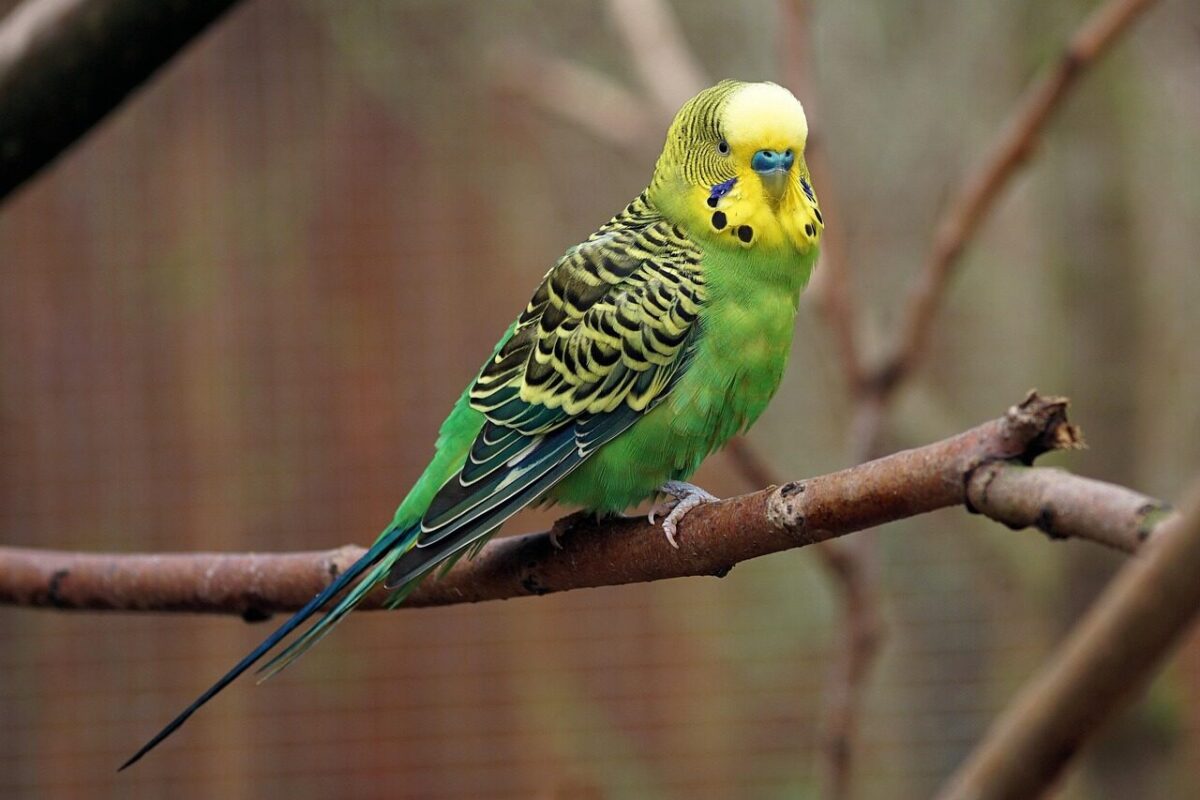
If your budgie is puffed up and you’re not sure whether it’s normal, run through this quick check.
Is he eating and drinking? A budgie who is eating normally is almost certainly fine. A budgie who isn’t eating is the one to worry about.
Is he moving around? A budgie who moves between perches, plays with a toy, or comes to the front of the cage is fine. A budgie who sits in one place for hours, puffed up and still, is not.
Does he respond to you? Talk to him, or move your hand near the cage. A healthy budgie will look at you, chirp, or move. A sick budgie may not react at all.
Is he on his usual perch? A budgie who is sleeping on his usual high perch, puffed up and tucked in, is resting. A budgie who has moved to the bottom of the cage is a budgie who doesn’t feel well enough to perch.
How long has he been puffed up? Minutes, while settling down or drying off — normal. Hours, without a break — not normal.
If the answer to most of these is reassuring, your budgie is probably fine. If several of them point the wrong way, call the vet. You know your bird better than anyone, and if something feels off, trust that feeling.
Keeping your budgie warm enough
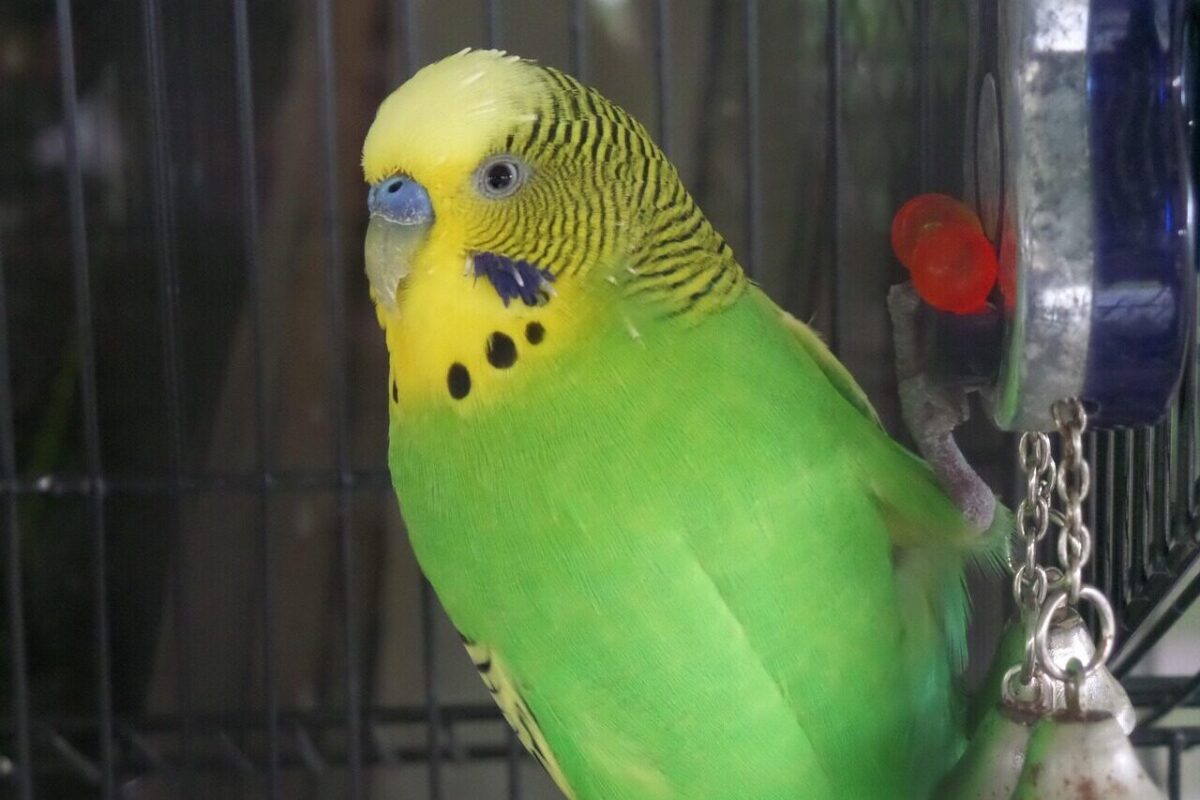
Since cold is the most common cause of puffing up, keeping the cage warm enough is one of the simplest things you can do for your budgie.
Room temperature. Budgies are comfortable in the same temperatures we are — roughly 18 to 25 degrees Celsius. If the room feels cold to you, it’s cold for your budgie too. At night, try not to let the room drop below about 15°C — that is a sensible night-time minimum for a budgie.
Avoid draughts. A cage near a window, a door, or an air conditioning vent can be much colder than the rest of the room. Move the cage to a sheltered spot, away from direct draughts, and never put it right next to a radiator either — the heat can be just as much of a problem.
A cage cover at night. Covering the cage at night helps trap warmth and gives your budgie a sense of security. Use a cover designed for the purpose, or a thick cloth, and make sure some air can still circulate. Our guide to bird cage covers covers what to look for and how to use one safely.
Watch for seasonal changes. Budgies often puff up more in winter, especially if the house gets colder at night. A small heat source near the cage — a ceramic heat emitter designed for birds, for example — can help on cold nights. Ask your vet or a bird specialist what they recommend for your setup.
Puffing up and moulting
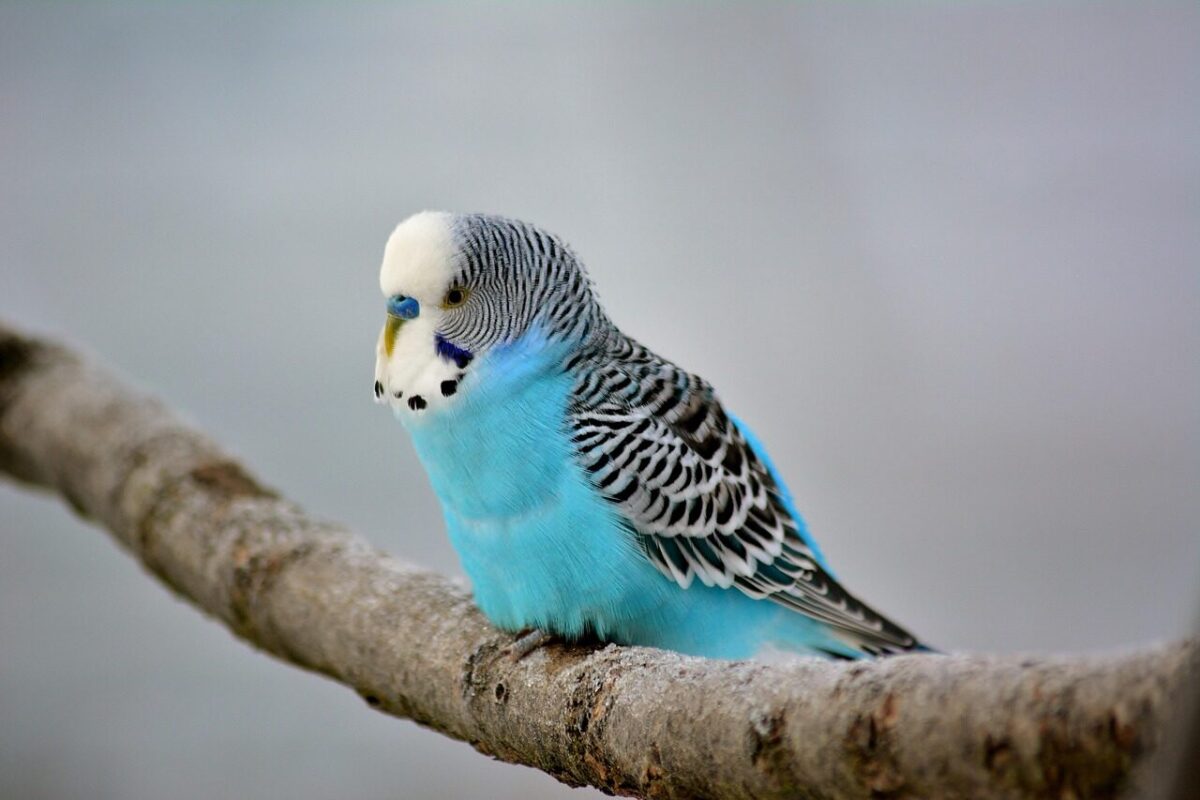
Budgies moult — they replace their feathers — usually once or twice a year, and moulting birds often puff up more than usual. Their feathers are growing in, the new ones are itchy, and the bird is using more energy than normal. A moulting budgie may look scruffier than usual, with pin feathers visible on his head, and he may be a little quieter and a little less active.
Moulting is normal, but it’s also a time when a budgie needs a little extra care: a good diet, fresh water, and a chance to bathe. If the moult seems to go on for a very long time, or if your budgie is losing feathers in patches rather than evenly, mention it to your vet. The life stages of a budgie, including what to expect as your budgie ages, are covered in our guide to how long budgies live.
Other feather behaviours worth knowing
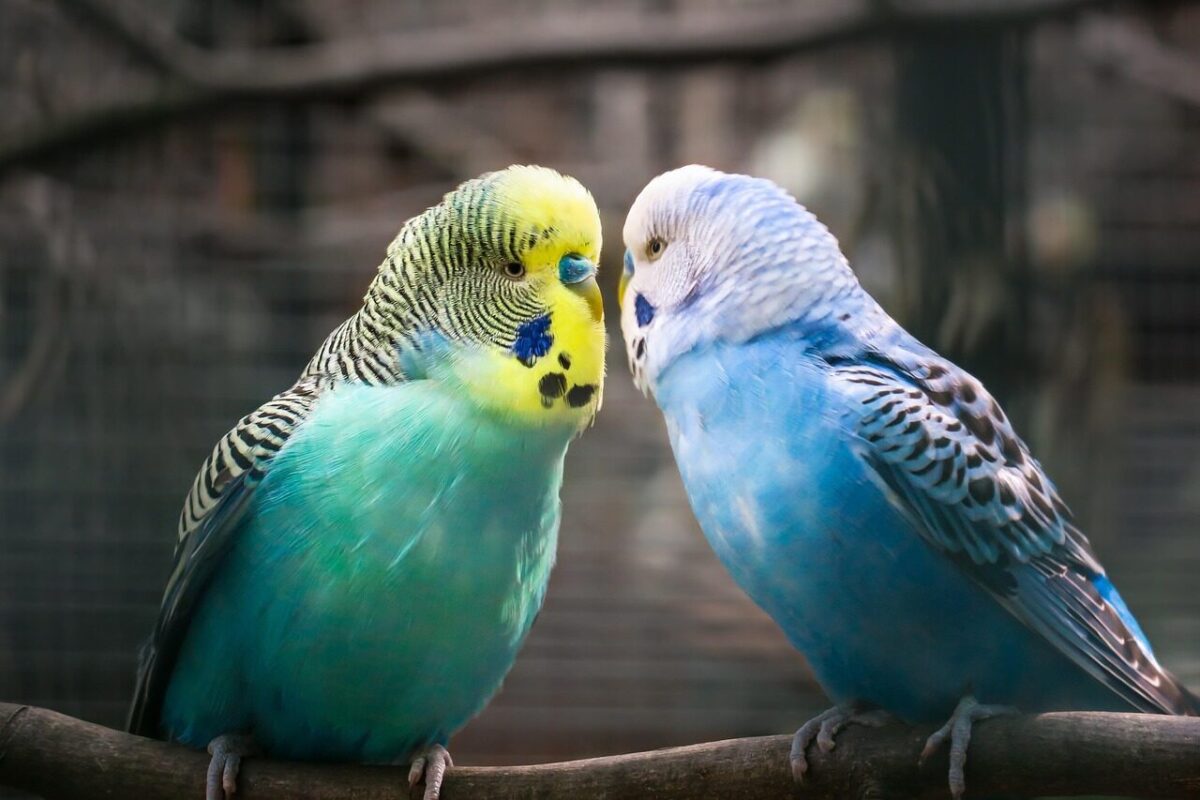
Puffing up isn’t the only thing budgies do with their feathers, and knowing the others helps you read your bird better.
Beak grinding. A budgie who grinds his beak — a soft, repetitive clicking sound, usually before sleep — is content and relaxed. It’s one of the clearest signs of a happy budgie. Our guide to why budgies grind their beaks explains what it means and why it’s a good sound to hear.
Fluffing and shaking. A quick fluff and shake — feathers out, then a shake, then smooth again — is a budgie resetting his feathers after preening or after a stretch. It’s normal and happens many times a day.
Slicked-down feathers. The opposite of puffing up: a budgie who slicks his feathers flat against his body, making himself look thin and streamlined, is usually alert, excited, or slightly nervous. It’s a different kind of signal, and it usually passes quickly.
Wing drooping. A budgie who holds one or both wings slightly away from his body may be hot, or may be trying to cool down. If it persists, or if it comes with other changes, it’s worth mentioning to your vet.
Reading the whole bird, not just the feathers
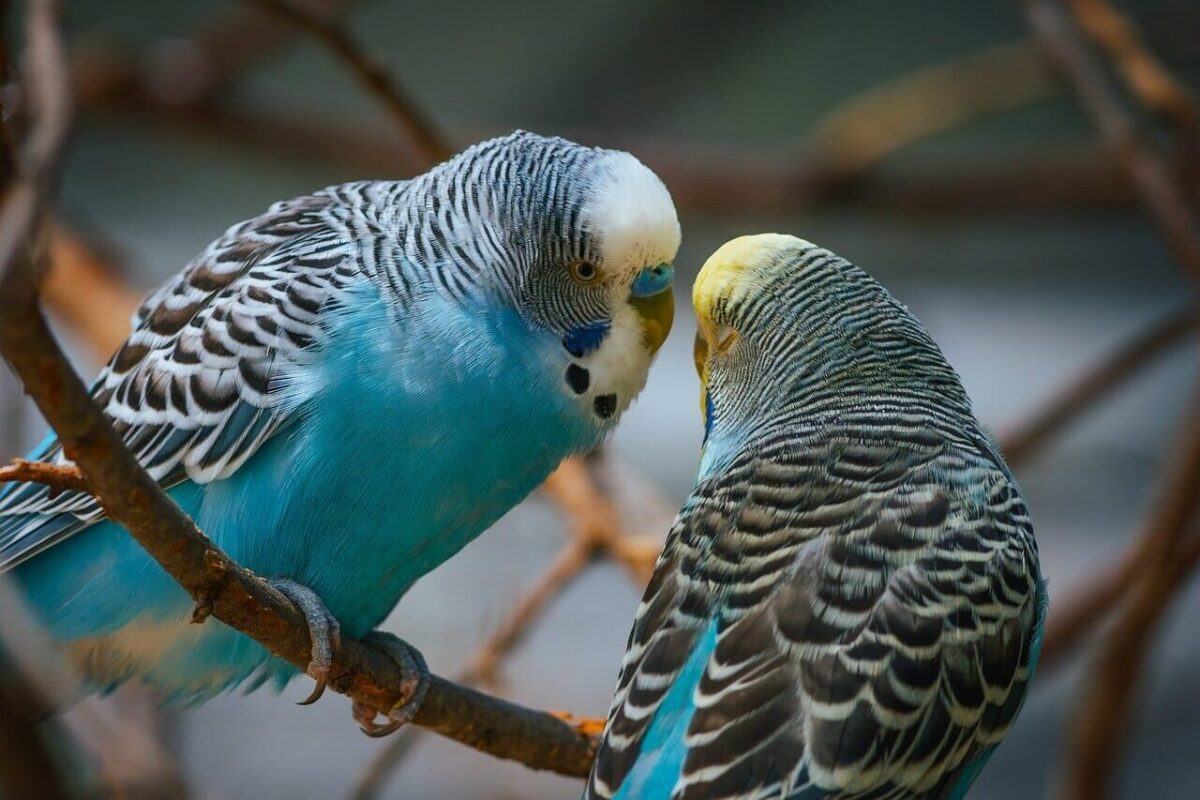
Puffing up is only one piece of the picture. A budgie tells you how he’s feeling with his whole body, and the feathers make more sense when you read them alongside everything else.
Eyes. A healthy, relaxed budgie has bright, clear eyes and blinks normally. A budgie who sits with his eyes half closed for long periods during the day — not sleeping, just sitting with drooping eyelids — is a bird who doesn’t feel well. Eyes that look dull, watery, or crusted around the edges are also worth mentioning to your vet.
Posture. A healthy budgie stands upright on his perch, tail level, both feet gripping firmly. A budgie who sits hunched, with his tail pointing down and his body low on the perch, is conserving energy — and a bird who is conserving energy is usually a bird who needs it for something else, like fighting off an illness.
Voice. Budgies are noisy little birds, and a quiet budgie is often a worried budgie. If your normally chatty bird has gone silent, and the silence comes with puffed-up feathers, that’s a combination worth taking seriously. On the other hand, a budgie who is puffed up and still chirping, singing, and chattering is almost certainly fine — a sick bird doesn’t sing.
Appetite. This is the single most reliable indicator. A budgie who is eating — cracking seeds, nibbling millet, picking at greens — is a budgie whose body is working normally. A budgie who sits puffed up next to a full food dish and doesn’t eat is a budgie who needs a vet, and the sooner the better.
The point is that puffing up never means anything on its own. It means something when it comes with a change in eating, voice, posture, or energy. Learn what your budgie looks like on a normal day, and the abnormal days will stand out clearly.
When to call the vet
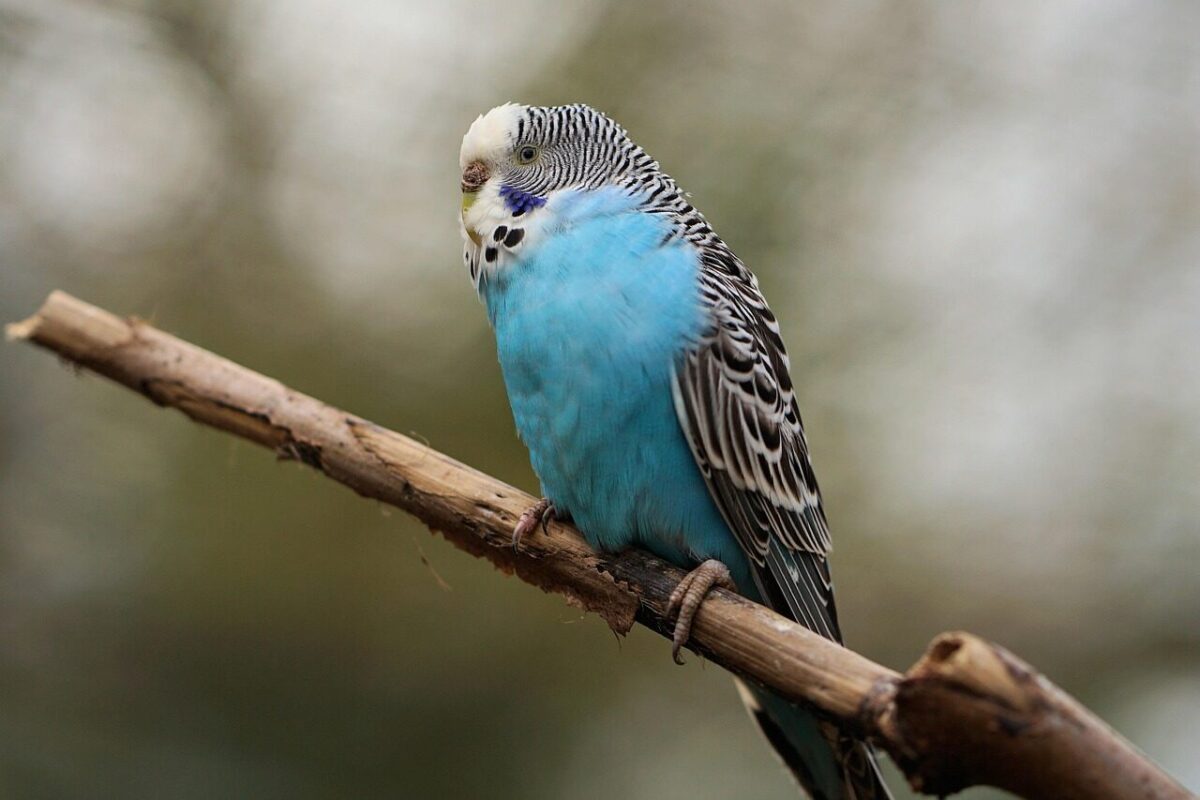
To sum it up: puffing up on its own is not a reason to panic. But puffing up combined with any of the following means you should call your vet, ideally an avian vet, the same day.
- Puffed up and sitting still for hours without a break.
- Puffed up and not eating or drinking.
- Puffed up and sitting at the bottom of the cage.
- Puffed up with watery or unusual droppings.
- Puffed up with rapid breathing, tail bobbing, or open-beak breathing.
- Puffed up and not responding to you or to sounds.
Budgies hide illness well — it’s a survival instinct — so by the time a budgie looks obviously unwell, he may have been unwell for a while. That’s why the combination of signs matters more than any single one. If your budgie is puffed up and something feels wrong, trust that feeling and make the call.
Frequently Asked Questions
Why is my budgie puffed up and sleeping all day?
A budgie who puffs up to sleep is normal — but a budgie who sleeps all day, stays puffed up, and doesn’t eat or play is not. The key is the pattern: sleeping at bedtime is fine; sleeping through the whole day, puffed up and quiet, is a sign to call the vet. If your budgie is also sitting at the bottom of the cage or has changed droppings, don’t wait.
Is it normal for a budgie to puff up after a bath?
Yes, completely normal. A budgie puffs up after bathing to trap warm air against wet feathers and dry off. The puffing usually lasts until the feathers are dry. Make sure the room is warm and free of draughts while he’s drying, and don’t put him back in a cold cage while he’s still wet.
My budgie puffs up when I talk to him. Is that good?
It depends on the rest of his body language. A budgie who puffs up briefly, then chirps or moves toward you, is relaxed and comfortable. A budgie who puffs up and goes still, with wide eyes and a tense body, may be unsure or nervous. Look at the whole bird, not just the feathers.
Why does my budgie puff up at night?
He’s keeping warm and settling down to sleep. Budgies fluff their feathers out at bedtime, tuck their heads into their backs, and stand on one foot. It’s one of the most normal things a budgie does. A cage cover helps trap the warmth and gives him a sense of security overnight.
My budgie is puffed up and sneezing. Should I worry?
An occasional sneeze is normal — budgies sneeze to clear dust, just like we do. But repeated sneezing combined with puffing up, especially if there’s any discharge around the nostrils or if the sneezing continues for more than a day, is worth a call to the vet. Respiratory problems in small birds can develop quickly, and early attention matters.
Do budgies puff up when they’re happy?
Sometimes, yes. A relaxed budgie may puff up briefly while resting, and a male budgie may puff his chest feathers as part of a display when he’s feeling confident. But puffing up is not mainly a happiness signal — it’s mainly a temperature and comfort response. The clearer signs of a happy budgie are chirping, singing, beak grinding, head bobbing, and playing with toys.