
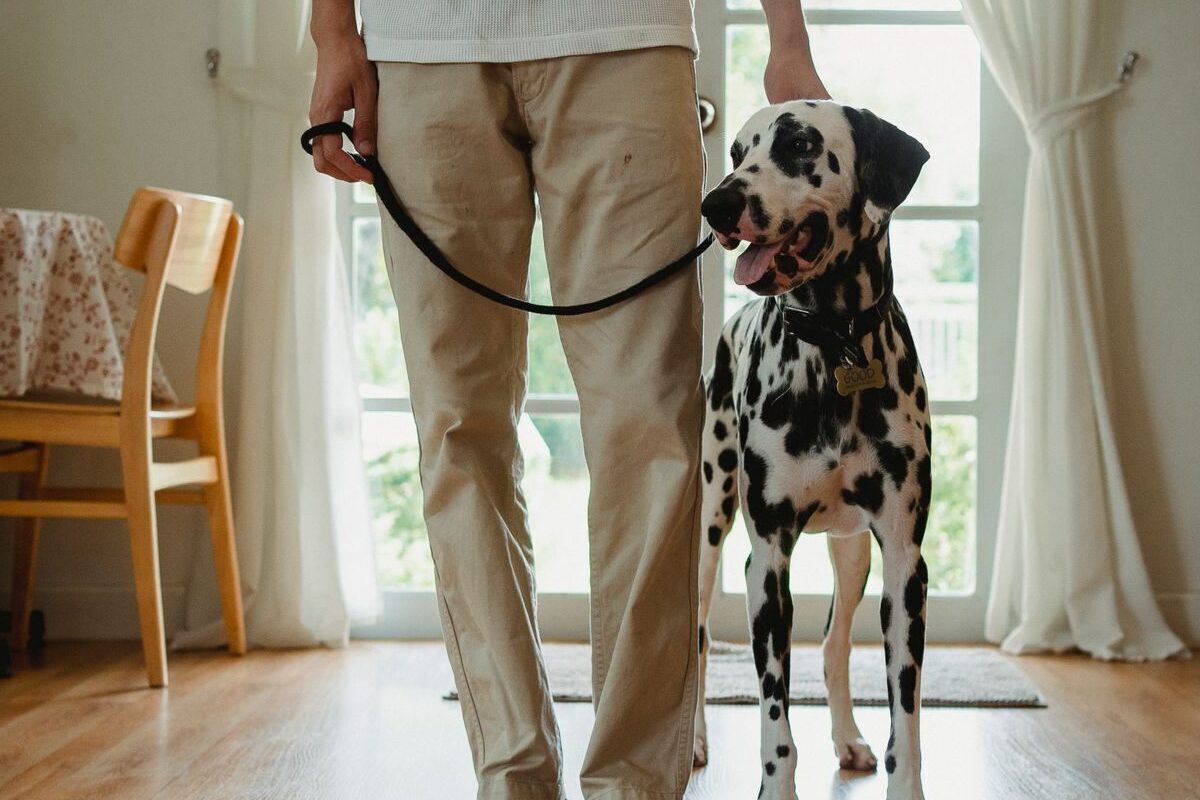
You stand up to get a glass of water. Your dog stands up too. You go to the bathroom — your dog is right there, sitting outside the door, waiting. You move to the kitchen, and there he is again, lying down in the exact spot where he can watch you. It’s sweet. It’s also, after the tenth trip of the day, a little strange.
Most of the time, a dog who follows you everywhere is doing something completely normal. Dogs are social animals, and you are their whole world — their food, their walks, their games, their comfort. Following you is how they stay close to the best thing in their life.
But there are a few situations where constant shadowing means something more, and it’s worth knowing the difference. This guide covers the usual reasons dogs follow their people, the signs that suggest anxiety or a health problem, and the small changes that help a clingy dog feel more confident on his own.
The short answer: it’s usually love, habit, and hope
Dogs follow their owners because it works. Every good thing in a dog’s life — meals, walks, play, treats, attention, the door opening — comes from you, and it comes when you move. A dog who stays near you is a dog who never misses out.
That’s the simplest explanation, and for most dogs it’s the whole story. They follow you because you are interesting, because you are warm, and because being near you has always paid off. There’s nothing wrong with it.
The most common reasons
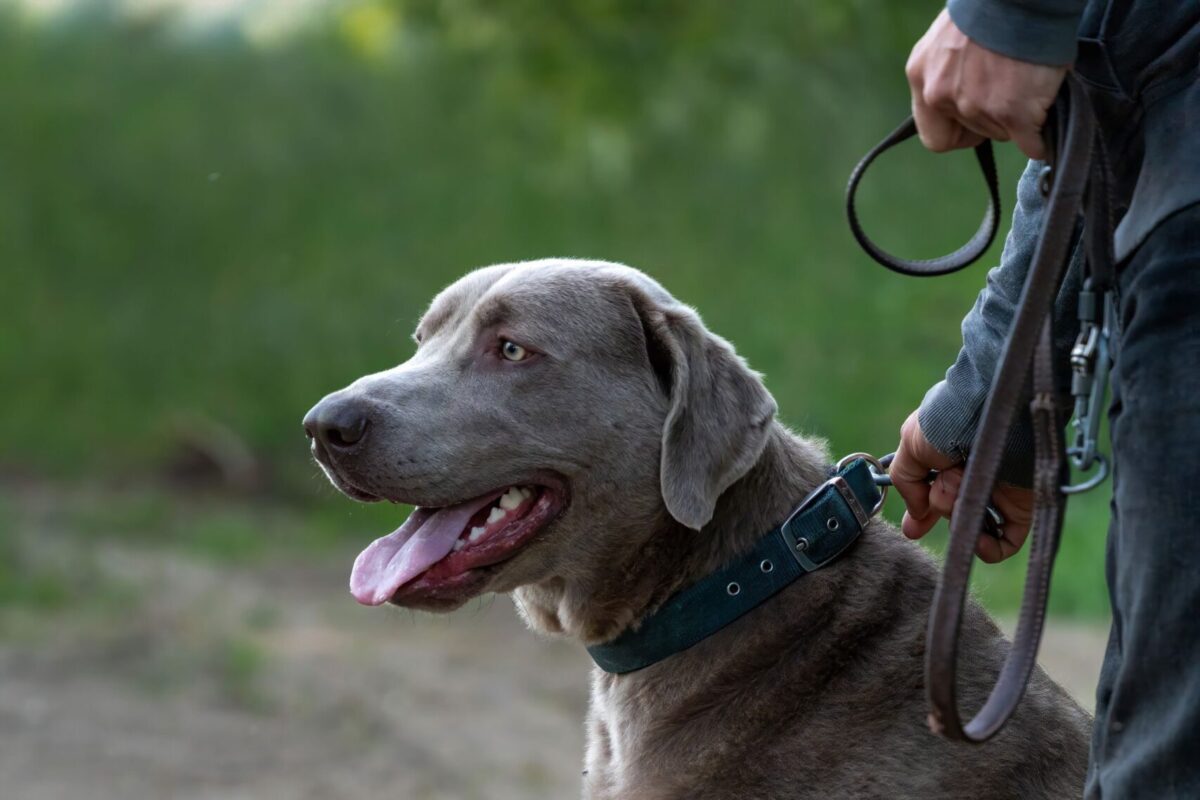
Companionship. Dogs were bred over thousands of years to live alongside people. Some breeds were bred to work closely with humans all day — herding dogs, gundogs, companion breeds — and those dogs tend to be the biggest shadows. A Border Collie or a Labrador who follows you everywhere is doing what his ancestors were selected to do: stay close and pay attention.
Routine and anticipation. Dogs learn routines fast. If you usually head to the kitchen before meals, or to the door before walks, your dog will start following you to the kitchen and to the door — just in case. Over time the habit spreads: he follows you everywhere because sometimes, following you leads to something wonderful.
Comfort and security. You are your dog’s safe place. When something is noisy, strange, or worrying — thunder, visitors, the vacuum cleaner — the safest spot in the house is next to you. Some dogs follow more when they’re unsure, and less when they feel confident.
Boredom. A dog with nothing to do will follow you simply because you’re the most interesting thing available. Dogs who get plenty of exercise, play, and things to chew tend to settle more on their own. A dog who has been lying around all day with nothing to do will glue himself to you out of sheer lack of alternatives.
Hunger or a learned cue. If following you to the kitchen has ever produced a treat, your dog has learned a very clear lesson. Dogs are excellent at connecting cause and effect, and “human walks to kitchen, food appears” is one of the easiest lessons there is.
Your dog is still young. Puppies follow their people constantly — it’s how they learn and how they feel safe. Most puppies grow out of the most intense shadowing as they mature and gain confidence, though some dogs stay close their whole lives.
Breed tendencies. Some breeds are famously clingy. Velcro breeds — the nickname says it all — include Vizslas, Labrador Retrievers, Border Collies, Australian Shepherds, and many toy breeds. If you have one of these, the shadowing is partly just who he is.
When following becomes separation anxiety

There’s a difference between a dog who likes to be near you and a dog who panics when you’re gone. The first is normal. The second is separation anxiety, and it’s worth taking seriously.
Separation anxiety isn’t about a dog being spoiled or badly trained. It’s genuine distress, and it tends to show up in specific ways. A dog who follows you everywhere and falls apart when you leave the house may be dealing with it.
Signs to watch for:
- Distress when you leave. Barking, howling, or whining that starts soon after you go out and continues for a long time.
- Destructive behaviour while you’re away. Chewing door frames, scratching at doors or windows, destroying things — especially things near exits.
- Toileting indoors when you’re out, even in a dog who is fully house-trained.
- Pacing, drooling, or panting before you leave, as if he knows what’s coming.
- Not eating while you’re gone, then eating hungrily the moment you return.
- Following you from room to room obsessively, including into the bathroom, and becoming distressed if a door closes between you.
If several of these fit your dog, the following isn’t just affection — it’s part of a bigger pattern. The good news is that separation anxiety is very workable, but it takes patience and a gradual approach. If it’s severe, a vet or a qualified behaviourist can help you build a plan.
When shadowing can signal a health problem
Sometimes a dog who suddenly starts following you much more than usual is telling you something has changed. A few possibilities are worth knowing about.
Pain or discomfort. A dog in pain often seeks out his person for comfort, the way a child seeks a parent. If the clinginess is new and sudden, and especially if it comes with stiffness, reluctance to jump or climb stairs, or changes in appetite, it’s worth mentioning to your vet.
Vision or hearing loss. An older dog whose sight or hearing is fading will stay closer to you because you’re the thing he can still track. If your senior dog has become your shadow in the last few months, and he also bumps into things or doesn’t respond to his name from another room, a vet check is a good idea. Our guide to senior dog care covers the changes that come with age.
Cognitive changes in older dogs. Some older dogs become more clingy as their minds change with age — the same way they may become more anxious at night or forget their housetraining. If the shadowing is part of a broader change in an older dog, your vet can help you understand what’s going on. The guide to senior dog vet visits explains what a checkup for an older dog usually involves.
A change in the household. A new baby, a new pet, a move, a change in your working hours — any big shift can make a dog more clingy for a while. This usually settles as the dog gets used to the new normal.
If the following is sudden, intense, and new, a vet visit is a sensible first step. It’s much easier to rule out a health problem than to train around one.
Is it a problem? Most of the time, no
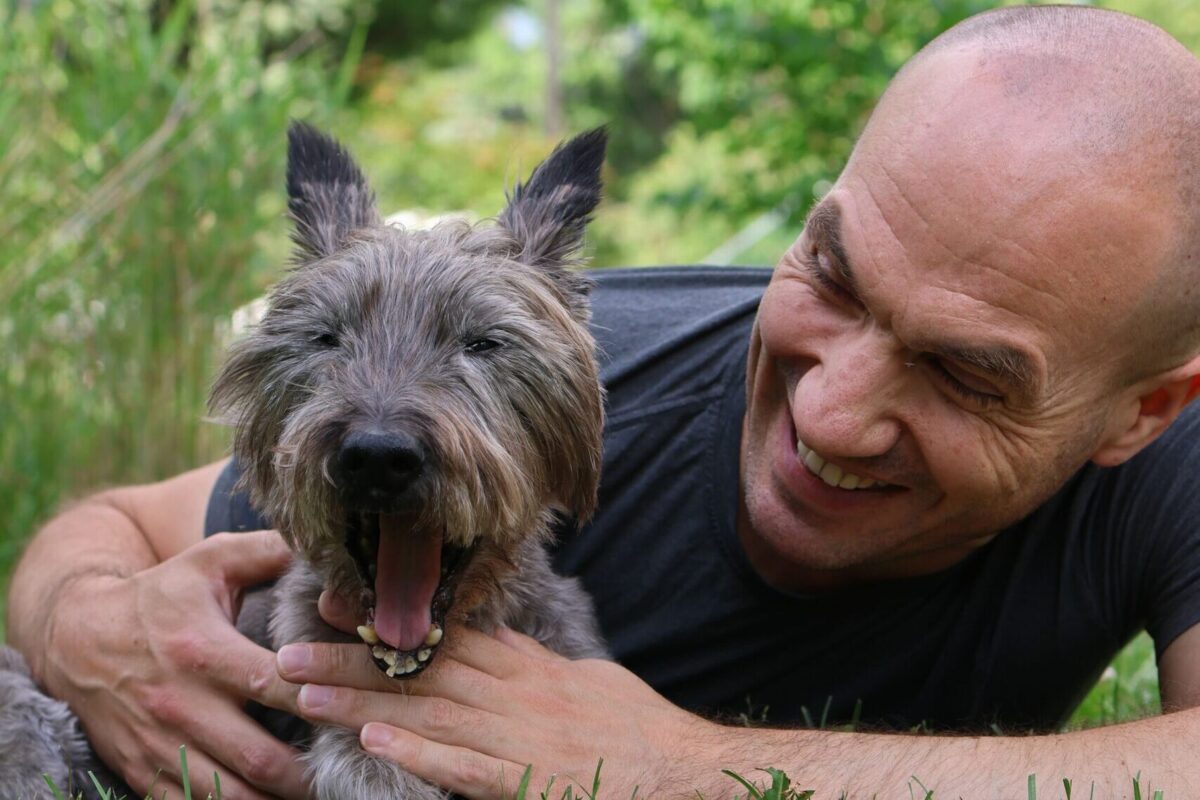
Let’s be honest: for most owners, a dog who follows them everywhere is not a problem at all. It’s part of the deal. You wanted a companion, and you got one — a very thorough one.
It becomes a problem when:
- You trip over the dog constantly, especially on stairs.
- The dog becomes distressed — not just disappointed, but genuinely panicked — when you leave the room.
- The dog can’t settle or rest unless he’s touching you.
- You can’t leave the house without the dog becoming destructive or injuring himself.
If none of those apply, you don’t have a problem to fix. You have a dog who loves being near you. That’s a good outcome.
Helping a clingy dog feel more confident
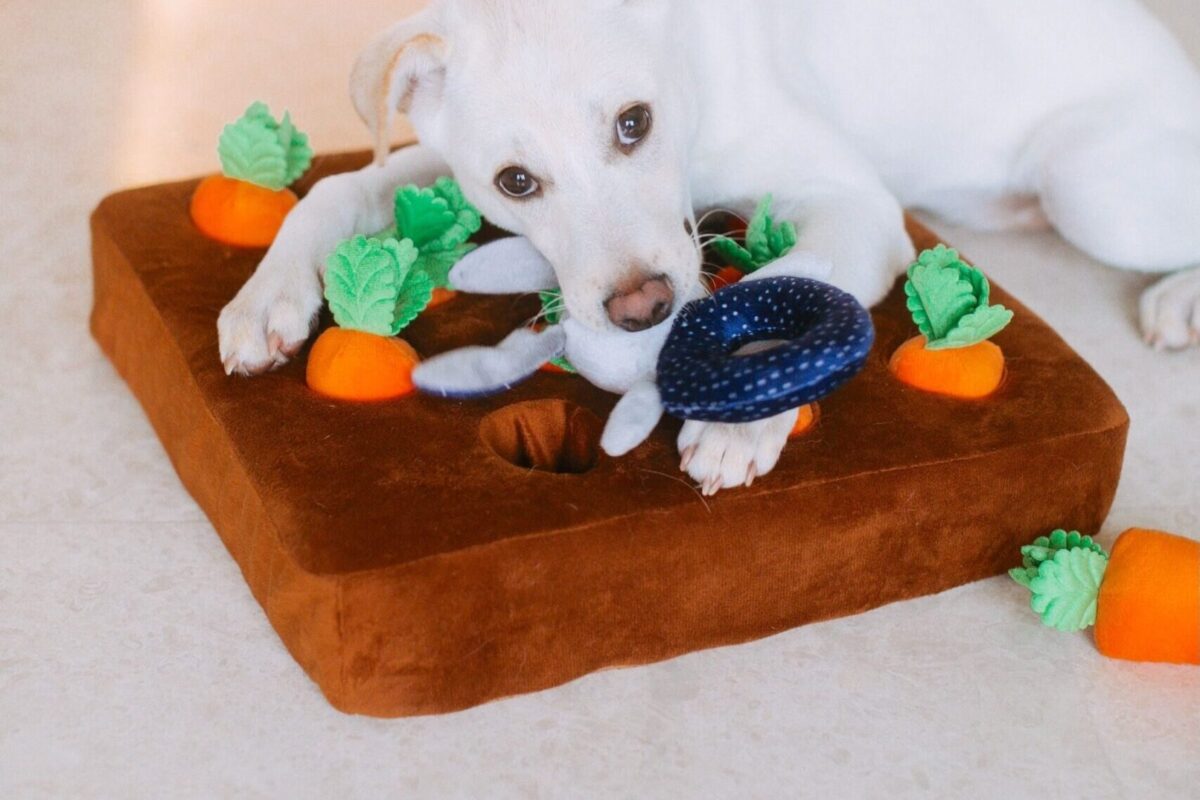
If you’d like a little more space — or if the shadowing comes with anxiety — the goal isn’t to push your dog away. It’s to help him feel safe and happy on his own, a little at a time.
Give him a job to do. A dog with a puzzle feeder, a chew, or a sniffing game is a dog who isn’t following you, because he’s busy. Enrichment matters more than most owners realise. A stuffed food toy or a scatter of kibble in the garden can keep a dog happily occupied for twenty minutes. Our guide to dog enrichment toys has ideas that actually keep dogs busy.
Make alone time rewarding. When your dog settles on his own bed, even for a moment, that’s worth a quiet treat or a calm word. You’re not rewarding him for leaving you — you’re rewarding him for feeling relaxed on his own. Over time, his own bed starts to feel like a good place to be.
Practise short separations. Step out of the room for a few seconds, come back calmly, and gradually build up the time. The key word is gradually. If your dog panics at thirty seconds, go back to ten. The goal is for him to learn that you leaving is boring and safe, and that you always come back.
Don’t make departures and arrivals a big event. Long, emotional goodbyes teach your dog that your leaving is a big deal. A calm, matter-of-fact exit — and an equally calm return — teaches him it’s nothing to worry about. Save the fuss for a few minutes after you’re home.
Exercise first. A dog who has had a good walk, a play session, or a training session is a dog who can settle. Many clingy behaviours are worse on days when the dog hasn’t had enough to do. If you’re not sure how much your dog needs, our guide to how much exercise a dog needs breaks it down by age, size, and breed type.
Teach a “settle” spot. Pick a bed or mat, and reward your dog for lying on it calmly while you move around the house. Start with a few steps away, then build up distance and time. The bed becomes his place, and going there becomes a habit.
Avoid punishment. Scolding a dog for following you doesn’t teach him to be confident — it teaches him that the world is a bit scarier than he thought, which usually makes the clinginess worse. If he’s underfoot, calmly redirect him to his bed with a treat rather than pushing him away.
What not to worry about
A few things that look like problems but usually aren’t:
- Your dog sleeps touching you. That’s warmth and comfort, not neediness.
- Your dog follows you to the bathroom. There’s no privacy in a dog’s world. He’s just staying with the pack.
- Your dog watches you constantly. Dogs read our body language all day — it’s how they know when a walk or a meal is coming. A dog who watches you is a dog who’s paying attention, which is a compliment.
- Your dog follows one person more than others. Dogs often bond most closely with the person who feeds them, walks them, and spends the most time with them. That’s normal, and it’s not a slight on anyone else in the house.
When following is actually guarding
Most following is affection, but there’s a related behaviour that’s worth knowing about, because it looks similar and means something different: guarding.
A dog who follows you is staying near you because he likes you. A dog who guards you is staying near you because he sees you as something to protect — from other people, other dogs, or anything that comes close. The difference is in the body language. A following dog is relaxed: loose body, soft eyes, tail wagging gently. A guarding dog is tense: stiff body, hard stare, standing between you and the other person or dog, sometimes growling when someone approaches.
Guarding can show up in a few ways. The dog may push between you and a visitor, bark at anyone who comes near you, or become stiff and still when someone reaches toward you. It’s more common in dogs who are generally anxious or under-socialised, and it can get worse if it’s rewarded — for example, if the other person backs away, the dog learns that guarding works.
If your dog’s following comes with this kind of tension, it’s a different problem from simple clinginess, and it’s worth talking to a qualified behaviourist. Guarding that isn’t addressed can escalate, and it’s not something to train away with a few treats. The good news is that it’s very workable with the right plan — but the plan needs to come from someone who can see the dog in person.
For most dogs, though, the following is just following. Relaxed, happy, and entirely about being near you.
When to ask for help
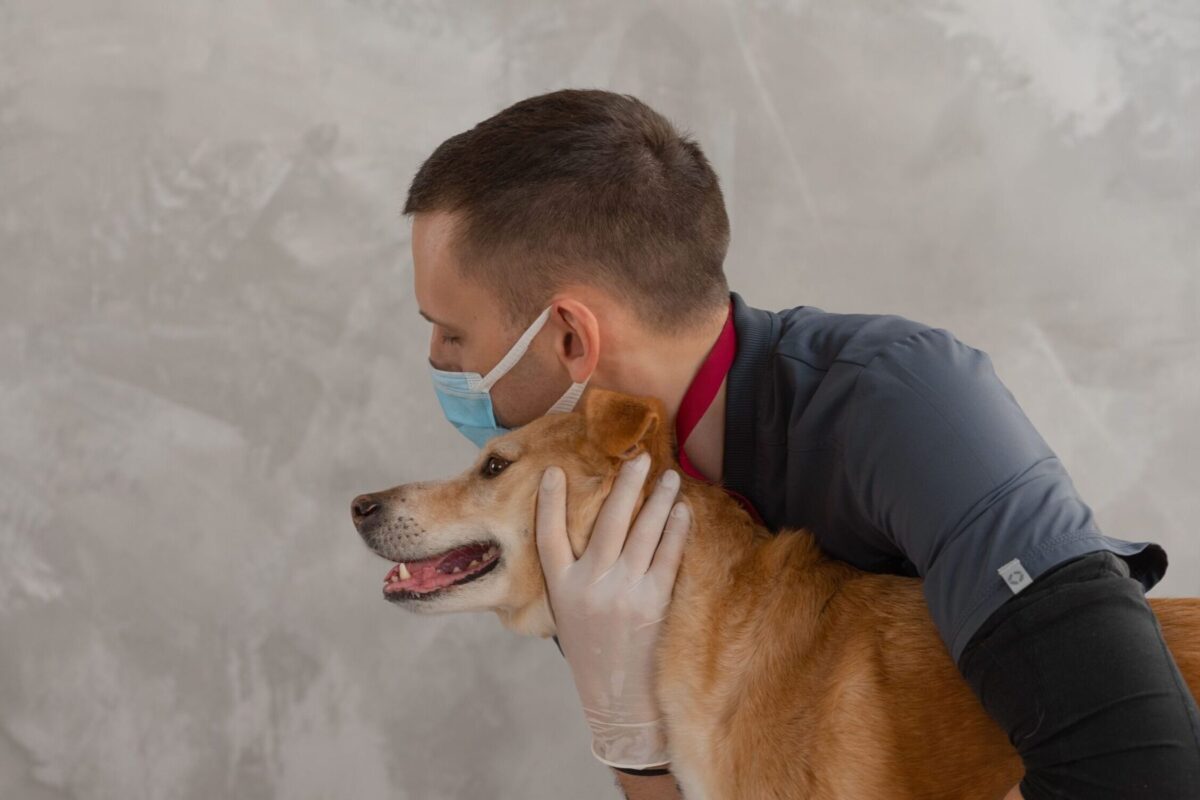
Most shadowing needs no professional help at all. But it’s worth talking to your vet or a qualified behaviourist if:
- Your dog injures himself trying to follow you or escape when you leave.
- He’s destructive when left alone, despite exercise and enrichment.
- The anxiety is getting worse rather than better.
- The clinginess appeared suddenly alongside other changes — appetite, energy, sleep, or mobility.
- You’ve tried gradual separation work for several weeks and nothing has changed.
A vet can rule out pain or a health problem first, which matters — training won’t fix a sore joint. A behaviourist can then build a plan for the anxiety itself. Neither step is a failure. It’s just getting the right help for the right problem.
Frequently Asked Questions
Why does my dog follow me everywhere, even to the bathroom?
Because you are the centre of his world. Dogs follow their people for companionship, habit, and the chance that something good — a walk, a meal, a game — is about to happen. The bathroom isn’t special to a dog; it’s just another room you’re in. Most of the time, it’s completely normal.
Is it bad if my dog follows me everywhere?
No, not on its own. It’s a problem only if your dog panics when you leave, can’t settle without touching you, or becomes destructive when alone. A happy dog who likes to be near you is normal. A distressed dog who can’t cope without you may need help with separation anxiety.
How do I stop my dog following me everywhere?
Don’t push him away — build his confidence instead. Give him enrichment to keep him busy, reward him for settling on his own bed, practise very short separations and build up gradually, and keep departures and arrivals calm. If he panics when left alone, speak to your vet or a qualified behaviourist.
Why has my dog suddenly started following me more?
A sudden change is worth paying attention to. It can be a response to a change in the household, a new routine, or a health issue — pain, vision or hearing loss, or cognitive changes in an older dog. If the clinginess is new and intense, and especially if it comes with other changes in appetite, energy, or mobility, a vet check is a sensible first step.
Do some dog breeds follow their owners more than others?
Yes. Herding breeds like Border Collies and Australian Shepherds, gundogs like Labradors and Vizslas, and many toy breeds were bred to work closely with people or to be companions, and they tend to stay closer than more independent breeds. If you have one of these, the shadowing is partly just who he is.
My dog only follows me, not the rest of my family. Why?
Dogs usually bond most closely with the person who feeds them, walks them, plays with them, and spends the most time with them. That’s normal, and it’s not a rejection of anyone else. Other family members can build the same bond by taking over some of the feeding, walking, and play.