

Your cat climbs onto your lap, settles in, and starts licking your hand. Or your arm. Or, if you’re unlucky, your face at six in the morning. The tongue is rough, the licking is persistent, and you’re left wondering: is this love, or is something wrong?
Most of the time, it’s love — or at least the cat version of it. Cats lick their people for a whole range of reasons, and nearly all of them are normal. But licking can also be a signal, especially when it starts suddenly, happens obsessively, or comes alongside other changes. Knowing the difference matters.
This guide covers the common reasons cats lick their people, when it’s affection and when it’s something else, what to do about the licking you don’t enjoy, and the signs that mean a vet visit is worth it.
The short answer: usually affection, grooming, and scent
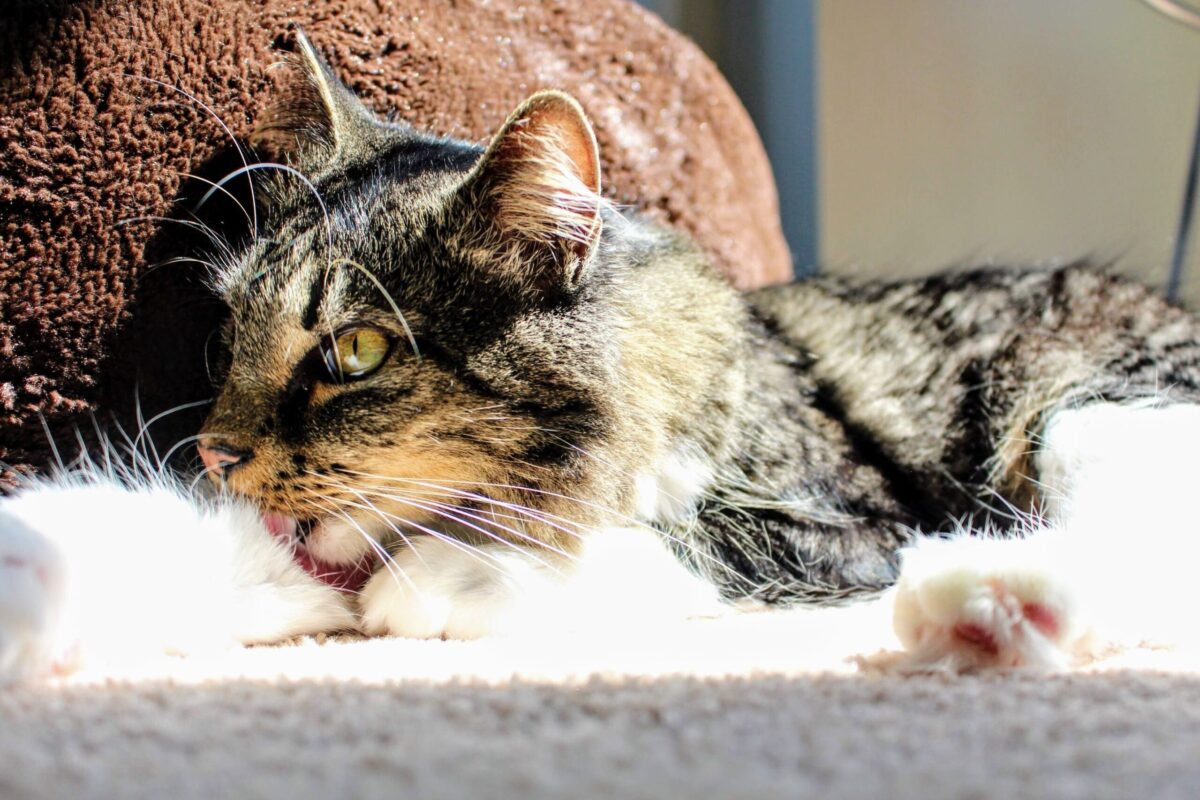
Cats groom each other. Mothers groom kittens, and cats who like each other groom each other — it’s called allogrooming, and it’s one of the clearest signs of trust between cats. When your cat licks you, she’s treating you the way she’d treat a cat she likes. You’re part of her group, and grooming you is how she says so.
That’s the most common reason, and for most cats it’s the whole story.
The common reasons cats lick people

Affection and bonding. A cat who licks you while purring, kneading, or settling in for a nap is showing affection. Licking releases calming chemicals in a cat’s brain — it’s soothing for her, not just for you. If she licks you and then curls up and goes to sleep, she’s content. That combination — licking, kneading, purring — is the feline equivalent of a hug. If your cat is a kneader too, our guide to why cats knead explains the behaviour in more detail.
Grooming you. Your cat thinks you need a wash. From her perspective, you’re a large, mostly hairless cat who clearly isn’t keeping up with grooming, and she’s helping. It’s a compliment, even if the sandpaper tongue on your forearm doesn’t feel like one.
Taste. This one is less romantic. Your skin tastes of salt, and if you’ve just eaten, handled food, or put on a scented lotion, you taste interesting. Cats will lick hands that smell of food, and some cats are drawn to certain soaps, moisturisers, and even the salt on sweaty skin after a workout. If the licking always follows a meal or a gym session, taste is probably the main reason.
Scent marking. Cats have scent glands in their cheeks and around their mouths. Licking deposits their scent on you, which marks you as theirs. It’s the same reason cats rub their heads against you — the headbutt is the more famous version, but licking does similar work. Your cat is, in her own way, labelling you as part of her territory.
Attention. If licking you has ever made you laugh, talk to her, or give her a treat, she’s learned that licking gets a reaction. Cats are quick learners, and attention is a powerful reward. A cat who licks you, looks at you, and waits is probably asking for something — food, play, or just your focus.
Comfort and self-soothing. Cats lick to calm themselves down, the way people might bite a nail or fidget. A cat who licks you during a thunderstorm, after a vet visit, or when the house is noisy may be soothing herself as much as showing affection. The licking is her way of coping, and you’re the safe thing she reaches for.
Learned behaviour from kittenhood. Kittens who were weaned early sometimes keep licking and sucking behaviours into adulthood. If your cat licks you and also sucks on blankets or fabric, the two behaviours are probably connected — both are leftover comfort habits from kittenhood. Cats who suck on blankets often do it for the same soothing reasons; our guide to why cats suck on blankets explains that habit in full.
When licking is about stress or anxiety
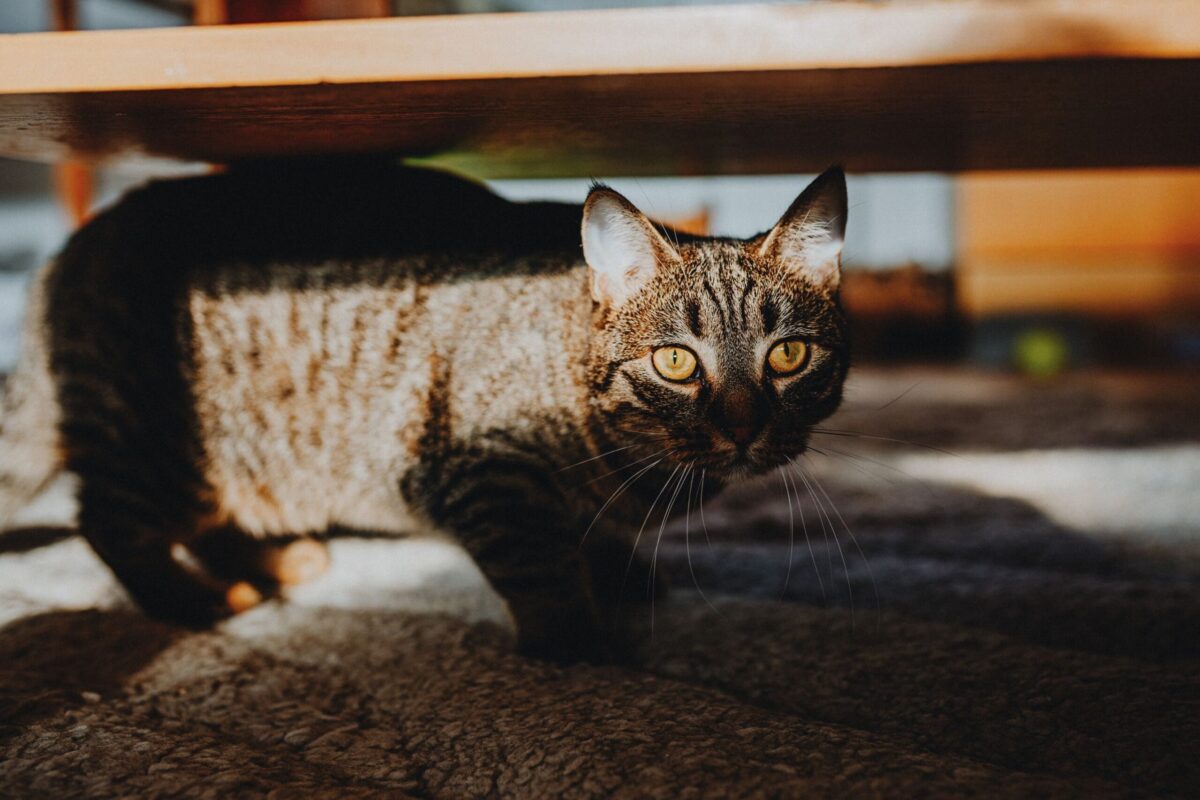
Most licking is affectionate, but a change in licking can be a sign of stress. The difference is usually in the pattern.
Affectionate licking tends to happen during calm, happy moments — on your lap, during a cuddle, at bedtime. Stress licking tends to happen at odd times, goes on longer, and may come with other signs: hiding more, eating less, over-grooming her own fur, or avoiding the litter box.
Common triggers include a new pet or baby, a move, building work, a change in your schedule, or a new cat in the neighbourhood that’s visible from the window. Cats are creatures of habit, and big changes can make them anxious.
If the licking started around the same time as a change in the household, the two are probably connected. The fix is usually to make the cat feel safe again — a quiet hiding place, a familiar routine, and patience — rather than to stop the licking itself. If your cat has started hiding a lot, our guide to why cats hide covers what’s normal and when to worry.
When licking can signal a health problem
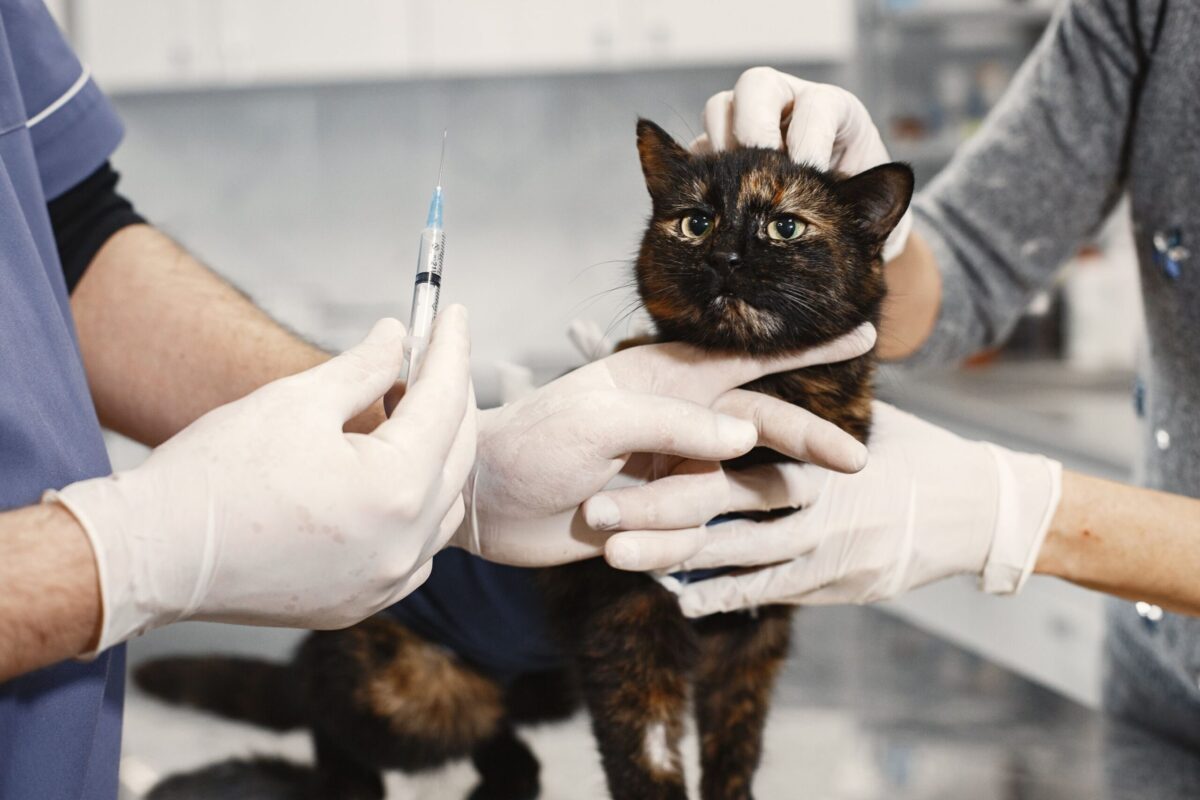
Licking is rarely the first sign of a health problem, but there are a few situations where it’s worth paying attention to.
Over-grooming herself. If your cat licks you a lot and licks her own belly or legs until the fur thins or the skin is sore, that’s a pattern worth mentioning to your vet. Over-grooming can be linked to skin irritation, allergies, pain underneath the area, or stress. The licking of you and the licking of herself are often part of the same behaviour.
Licking unusual surfaces. A cat who starts licking floors, walls, fabric, or plastic — not just you — may be showing a behaviour called pica, or may be trying to soothe nausea. If the licking has spread beyond you to inanimate objects, especially alongside changes in appetite, it’s worth a vet visit.
Sudden, intense licking. A cat who has never been a licker and suddenly starts licking you obsessively, especially if she’s also eating less, drinking more, or hiding, is a cat whose behaviour has changed. Behaviour changes in cats are worth investigating, because cats hide discomfort well.
Licking one spot on her own body. If she’s licking the same spot on herself repeatedly, there may be pain or irritation underneath — a sore joint, a skin problem, or something internal. That’s a vet question, not a behaviour question.
None of this means you should worry about a cat who licks your hand during a cuddle. It means you should notice when the pattern changes, and mention it to your vet if it does.
What about love bites?
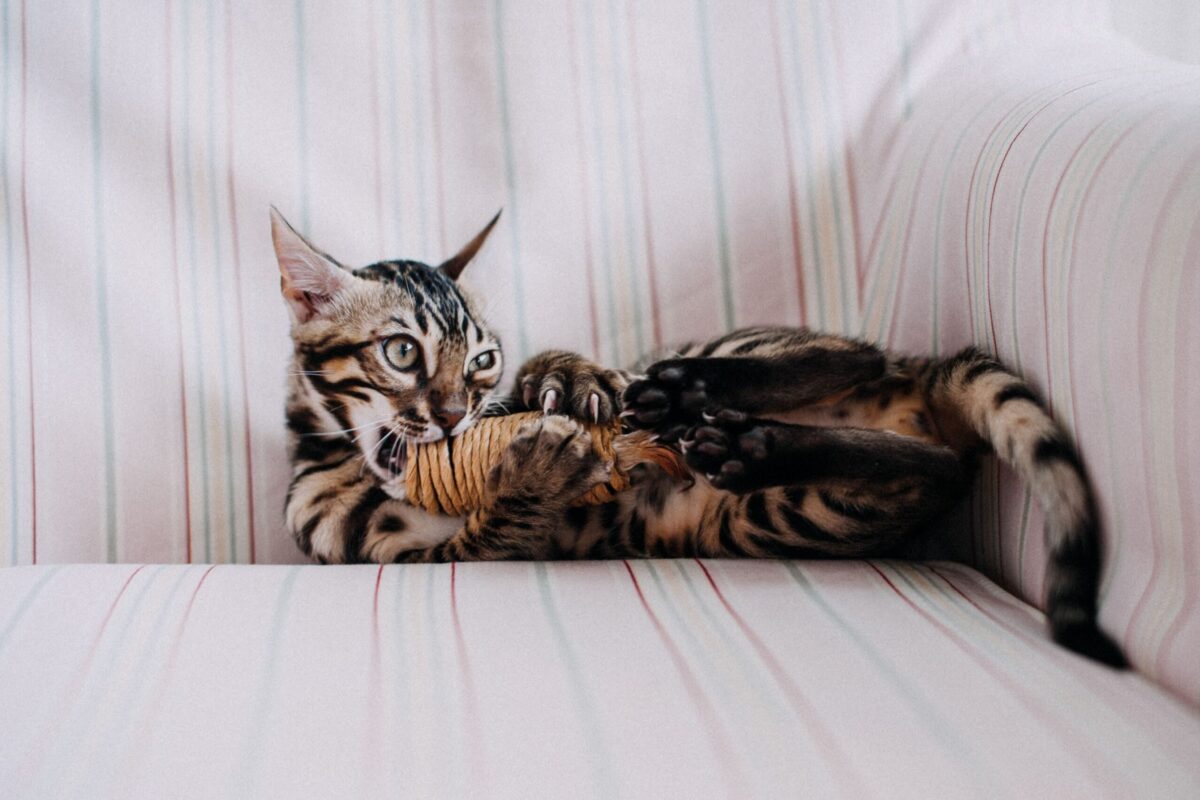
Licking and gentle biting often go together. A cat who licks you, then gives a small nip, is usually overstimulated or setting a boundary — not being aggressive. It’s the same pattern as petting bites: the cat enjoys the attention until she suddenly doesn’t, and the nip is her way of saying “enough.”
If the licking turns into biting, stop the interaction calmly and give her space. Don’t pull your hand away quickly — that triggers a chase reflex — and don’t scold her. Just go still, wait for her to let go, and then move your hand away slowly. Our guide to why cats bite when you pet them covers this pattern in detail, including the warning signs to watch for before the bite happens.
Why cats lick each other — and what it says about your cat
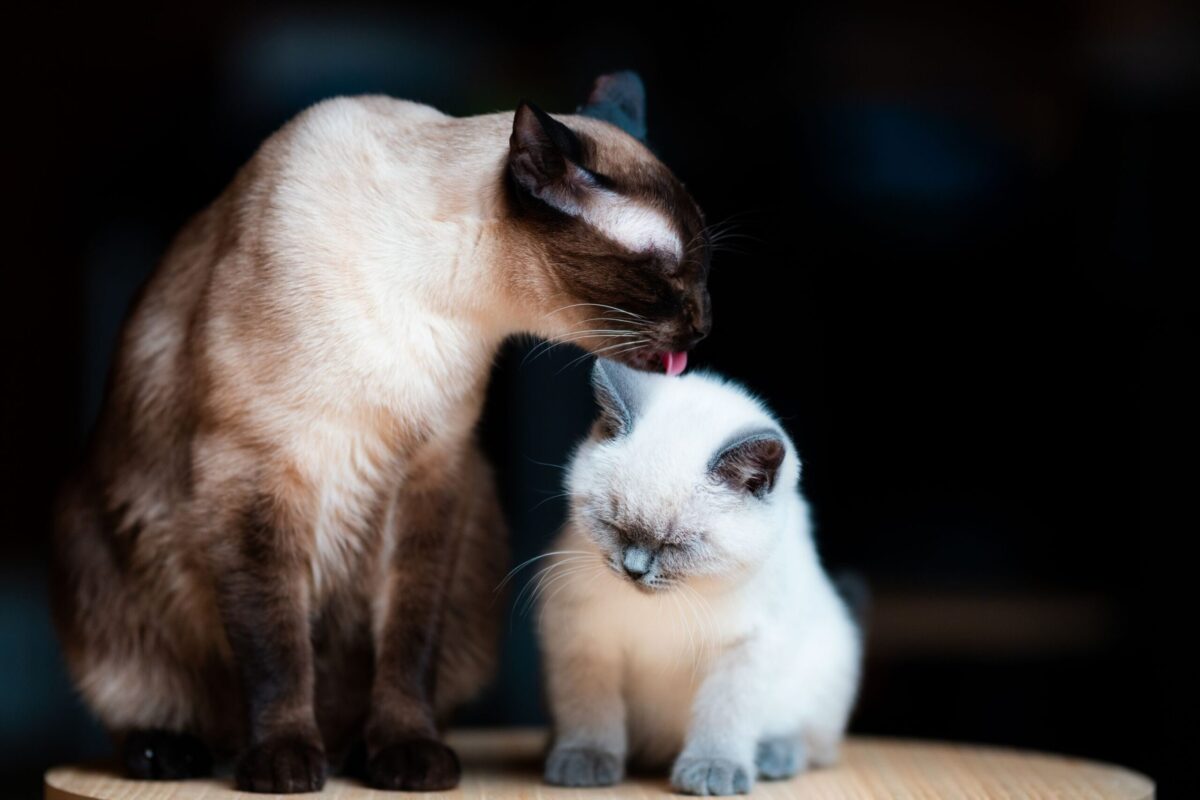
Watching two cats who like each other is the best way to understand why your cat licks you. They take turns. One licks the other’s head and ears — the spots a cat can’t easily reach herself — and then they swap, or they settle down together and fall asleep. It’s calm, it’s mutual, and it’s one of the strongest signs of trust between cats.
Cats who don’t like each other don’t groom each other. They might tolerate sharing a room, they might even sleep in the same house, but they won’t lick each other’s ears. Grooming is reserved for family — for cats a cat considers part of her group.
That’s why a cat who licks you is telling you something real. She isn’t just being cute, or just tasting salt. She’s treating you as one of her own. It helps to know that when the tongue is rough and the licking goes on a bit too long — she’s doing something she only does for cats she trusts.
There’s a limit, though, and cats know it. Grooming sessions between cats usually end naturally — one cat stops, shakes herself, and walks away. If your cat licks you for a while and then stops on her own, that’s the normal pattern. If she licks and licks without stopping, or if she seems unable to settle, the behaviour may be tipping from affection into anxiety or habit, and it’s worth watching for the other signs described above.
Licking and your cat’s age

Kittens lick a lot — their mothers lick them constantly, and they learn the behaviour early. A kitten who licks you is usually just being a kitten: curious, affectionate, and still learning how the world works.
Adult cats lick less often but more deliberately. An adult cat who licks you has chosen to do it, and it usually means something — affection, scent marking, or a request for attention.
Older cats sometimes lick more, and for different reasons. A senior cat who starts licking you — or herself — more than she used to may be soothing discomfort, or responding to changes in her senses or her joints. If an older cat’s licking increases noticeably, and especially if it comes with other changes like eating less, sleeping far more, or hiding, it’s worth mentioning to your vet. Older cats change gradually, and small changes are easier to address early. Our guide to how to choose the right vet for your cat explains what a checkup for an older cat usually involves.
How to handle licking you don’t enjoy
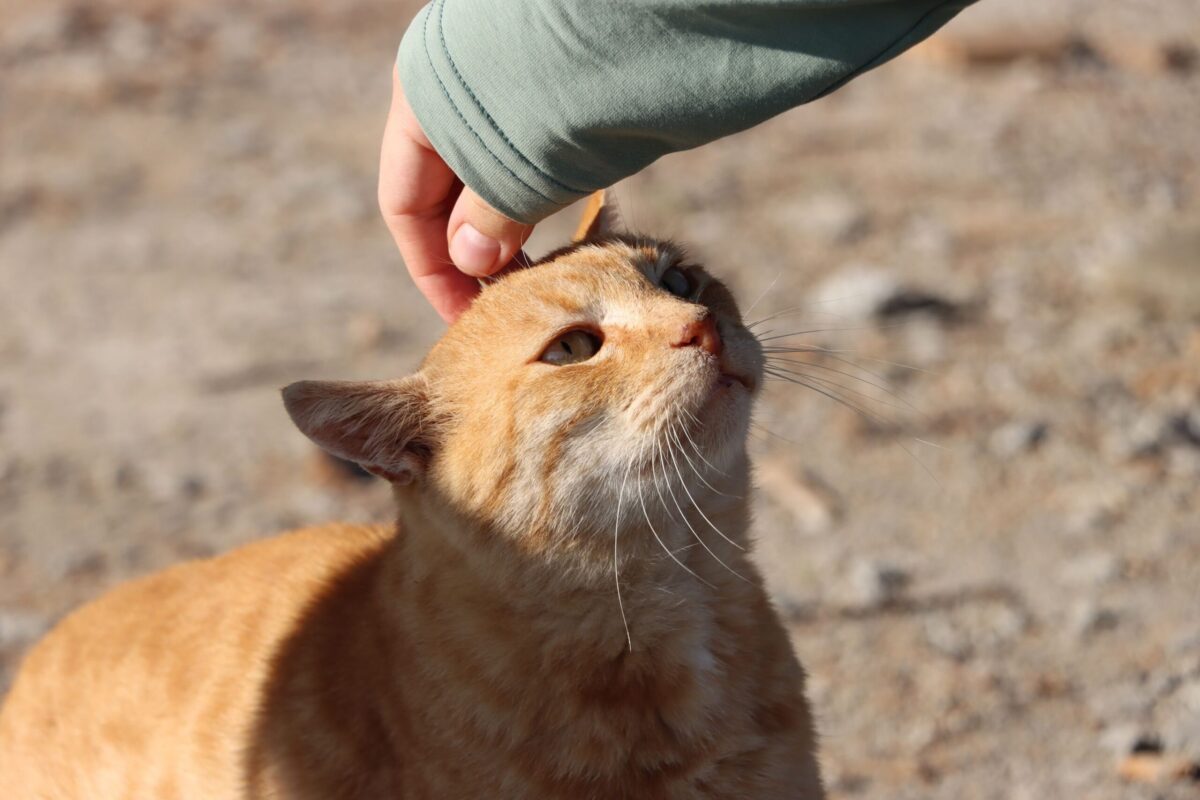
Some people love being licked by their cat. Others find it ticklish, unpleasant, or unhygienic — especially on the face. All of those reactions are fine. You don’t have to accept licking you don’t like, and teaching your cat to stop is straightforward if you’re consistent.
Redirect, don’t punish. When she starts licking, gently move your hand away and offer something else — a toy, a scratch behind the ears, or a treat placed on the floor. The goal is to give her something better to do, not to make her feel bad for being affectionate.
Don’t react dramatically. Laughing, squealing, or jerking your hand away is interesting to a cat. A calm, boring response — hand moves away, nothing happens — teaches her faster than any drama.
Be consistent. If licking is sometimes rewarded with attention and sometimes ignored, the cat will keep trying, because sometimes it works. Everyone in the household should respond the same way.
Cover up if needed. If your cat always licks your hands, long sleeves or a blanket over your lap during cuddle time can reduce the opportunity. It’s not a training method, but it works as a practical fix.
Never use punishment. Spraying water, shouting, or pushing the cat away doesn’t teach her not to lick — it teaches her that you’re unpredictable, which damages trust. A cat who is punished for affection may stop being affectionate altogether, and that’s a worse outcome than a licked hand.
Keep it hygienic. Cat mouths carry bacteria, and a lick on broken skin or on your face isn’t ideal. If your cat licks an open cut, wash it. If she licks your face, wash your face. It’s simple, and it keeps the affection harmless.
Encouraging the bond without the tongue
If you like the affection but not the licking, you can shape the interaction toward something you enjoy more.
- Pet her when she settles without licking. Reward the cuddle, not the lick.
- Play with her before cuddle time. A cat who has burned off energy is often calmer and less licky.
- Give her a grooming outlet. Some cats who like to lick will happily lick a treat paste from a lick mat instead of your arm. It gives them the same soothing action, directed somewhere better.
- Respect her timing. Cats who are allowed to come to you, rather than being picked up and held, tend to be more relaxed and less intense about it.
The goal isn’t to stop your cat being affectionate. It’s to shape the affection into something you both enjoy.
Frequently Asked Questions
Why does my cat lick me and then bite me?
It’s usually overstimulation. The cat enjoys the attention — the licking, the petting — until she suddenly reaches her limit, and the small bite is her way of saying “enough.” It’s not aggression. Stop the interaction calmly when it happens, watch for the warning signs before the bite (tail flicking, ears going back, skin twitching), and keep petting sessions shorter.
Is it normal for cats to lick their owners?
Yes, very normal. Cats groom cats they like, and they treat their favourite people the same way. Licking during a cuddle, while purring or kneading, is one of the clearest signs of affection a cat shows. It’s also how they mark you with their scent and how they soothe themselves.
Why does my cat lick me all the time?
If it’s constant, it’s worth looking at the pattern. A cat who licks you at every opportunity may be seeking attention, soothing anxiety, or responding to a taste on your skin. If the licking is new, obsessive, or comes with over-grooming her own fur, changes in appetite, or hiding, mention it to your vet — especially if it started suddenly.
Should I let my cat lick my face?
It’s best not to. Cat mouths carry bacteria, and the face — especially near the eyes and mouth, or on broken skin — isn’t a good place for it. If your cat licks your face, wash it afterwards. Redirecting the licking to your hand or arm, or to a toy, is a kinder option than letting it continue on your face.
Why does my cat lick me after I shower?
You smell different after a shower — the soap, the shampoo, the lotion — and you taste of salt and clean skin. Many cats are drawn to the scents of soaps and moisturisers, and some of the ingredients in scented products can be interesting or even attractive to cats. She’s investigating the new smell, and re-marking you with her own scent.
My cat licks plastic and fabric, not just me. Is that a problem?
It can be. Licking non-food objects — especially alongside changes in appetite — is worth mentioning to your vet. It can be linked to nausea, nutritional issues, stress, or a behaviour called pica. A vet can help work out whether it’s a habit or a sign of something that needs attention.