

Every cat owner knows the moment. Your cat is on your lap, purring, leaning into your hand. You stroke its back again, and again — and then, without warning, teeth. Not a hard bite, usually. A quick nip, sometimes with a bunny kick for good measure. Then the cat jumps down and looks at you as if you did something wrong.
Most of the time, you did nothing wrong. You just kept petting past the point where the cat was enjoying it. Cats have a limit for stroking that is much lower than most people expect, and when they hit it, they tell you the only way they know how.
Overstimulation: the main reason

A cat’s skin is full of sensitive nerve endings, and repeated stroking builds up sensation until it stops feeling good. Think of it like someone tapping the same spot on your arm again and again — pleasant at first, irritating after a while. For a cat, that tipping point can arrive after three strokes or after thirty. It depends on the cat, the day, and the spot you are touching.
This is why the bite often comes out of nowhere. The cat was enjoying it, genuinely. Then the sensation crossed a line, and the cat’s response was instant. It is not a mood swing and it is not spite. It is a cat with a nervous system that has had enough input for now.
Some cats give a gentler version of the same message: the love bite. A soft mouthing of your hand, no pressure, no claws, often while the cat is still purring. That is a different thing — a social, affectionate gesture, the same way cats groom each other with their teeth. A love bite does not hurt and does not break the skin. If it hurts, it was not a love bite.
The warning signs most people miss
Cats almost always warn you before they bite, but the warnings are small and easy to miss. The tail is the clearest one: a tail that starts lashing or thumping, even while the cat is purring, is a cat that is reaching its limit. The ears are next — ears that flatten back or swivel sideways are a sign to stop. Watch the skin along the back, too: a ripple or twitch under the fur means the nerves are firing hard.
The cat’s body will also change. A relaxed cat goes a little stiff. The purring may stop, or it may get louder and faster, which is not a sign of happiness — cats purr when stressed as well as when content. The eyes may widen, the pupils may dilate, and the cat may turn its head to look at your hand. That look is the last warning. If you see it, stop petting and let the cat decide what happens next.
Learning these signs takes a few weeks of paying attention, but it is worth it. Once you can read them, the bites mostly stop, because you stop before the cat has to tell you.
Petting zones and timing

Where you pet matters as much as how long you pet. Most cats love strokes on the head, cheeks, and chin — these are the places cats rub against each other and against you. The back is usually fine in short doses. The belly is almost always a trap: a cat that rolls over and shows its belly is not asking for a belly rub, it is showing trust, and touching the belly usually earns a bite and a kick.
Keep petting sessions short, especially with a new cat or a cat that bites often. A few strokes, then stop and let the cat ask for more by head-butting your hand or leaning in. If the cat walks away, let it go. A cat that leaves on its own terms comes back sooner than a cat that had to bite to escape.
Watch the time of day, too. A cat that has just woken up, or one that is wound up after play, has a shorter fuse than a sleepy evening cat. The same cat can accept ten minutes of stroking at night and three strokes in the morning.
What to do in the moment
When the bite happens, the worst thing you can do is pull your hand away fast and shout. A sudden movement turns a warning nip into a chase, and shouting teaches the cat that hands are unpredictable. Instead, go still. Freeze your hand, wait for the cat to let go, then slowly take your hand away and stop the session.
Do not hit the cat, spray it, or shoo it away. None of that teaches a cat anything except that hands are dangerous, and a cat that fears hands bites sooner next time. The lesson the cat needs is simple: biting ends the good thing. You stop petting, you walk away calmly, and the fun stops. Cats learn that fast.
If the bite breaks the skin, wash the area well with soap and water. Cat bites can become infected easily, so if the area gets red, swollen, or painful, see a doctor and say it was a cat bite.
When biting is not about petting
Most petting bites are overstimulation, but not all biting is. A cat that bites when touched in one particular spot — a hip, a paw, a patch of skin — may be sore there, and that is worth a vet visit. A cat that has suddenly started biting after years of gentle behaviour may be in pain somewhere, or stressed by a change in the house: a new pet, a move, building work, a new baby.
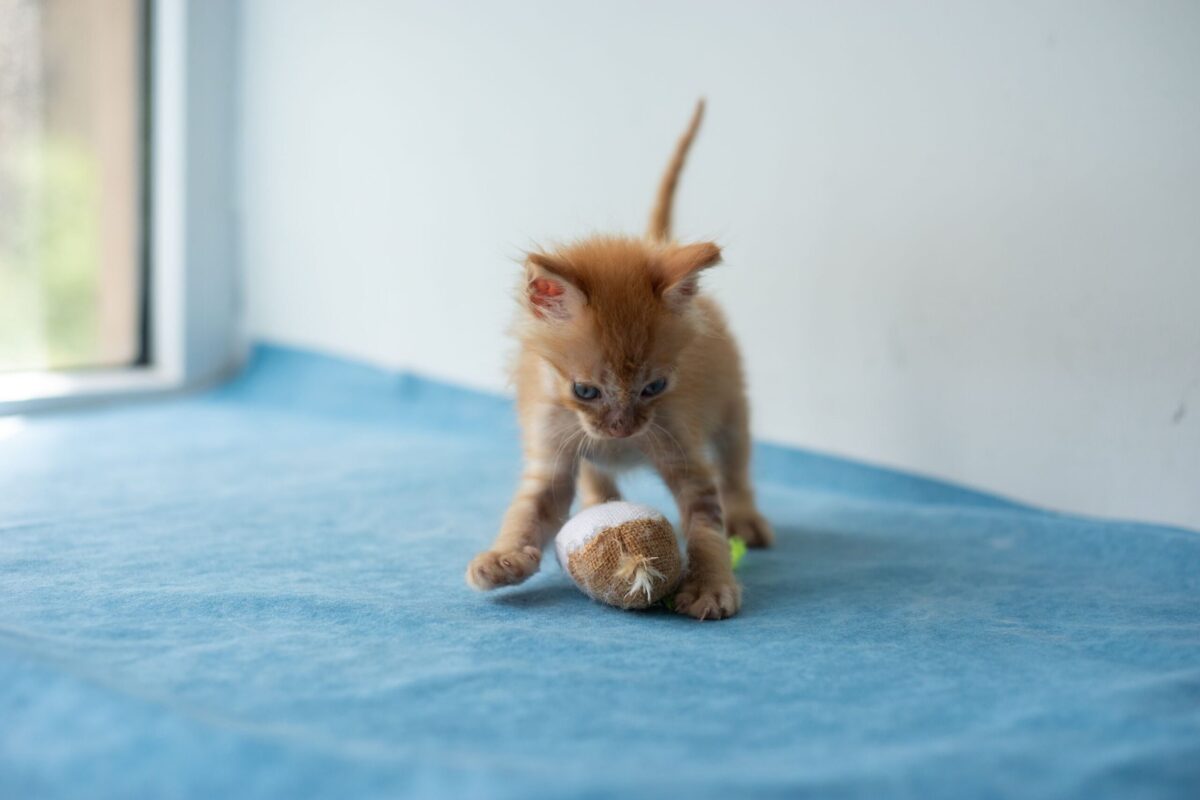
Kittens bite for a different reason: they are learning. Kittens play-bite constantly, and they need to be taught that hands are not toys. If your kitten bites during play, redirect it to a toy and end the game for a minute when teeth touch skin. The lesson sticks with time, but it takes weeks, not days.
Frequently Asked Questions
Why does my cat bite me while purring?
Because purring does not always mean happy — cats purr when overstimulated too. The bite usually means the stroking crossed the cat’s limit, even though it was enjoying it a moment before.
What is a love bite from a cat?
A soft mouthing of your hand with no pressure and no claws, often while the cat is still purring. It is a social gesture, like cats grooming each other. If it hurts or breaks the skin, it was not a love bite.
Where should I not pet a cat?
The belly is the main one — a cat showing its belly is showing trust, not asking for a rub. The back is fine in short doses; the head, cheeks, and chin are the safest spots.
How do I stop my cat biting when I pet it?
Learn the warning signs — lashing tail, flattened ears, rippling skin — and stop before the bite. Keep sessions short, let the cat ask for more, and end the session calmly when it bites, so biting ends the good thing.
When should I take a biting cat to the vet?
If the cat bites when touched in one particular spot, or if a normally gentle cat suddenly starts biting. Pain or stress from a change in the house can both sit behind a new biting habit.
Related reading
- Why Do Cats Knead? The Science Behind Biscuit-Making
- Why Do Cats Suck on Blankets? Wool Sucking, Comfort, and When to Worry
- Cat Sleeping Positions and What They Mean: A Visual Guide
- How to Make Your Cat Love You More: 10 Science-Backed Ways to Bond
Sources
- International Cat Care — cat behaviour and handling advice
- Cornell Feline Health Center — cat behaviour guidance
- American Veterinary Medical Association — cat behaviour resources