

Say your dog’s name in a certain tone, or make a funny noise, and there it is: the head tips to one side, ears up, eyes locked on you. It is one of the most photographed moments in dog ownership, and it is also a genuinely useful piece of dog behaviour. The tilt is not a trick. It is your dog trying to hear you better, see you better, and work out what you want.
Dogs tilt their heads for a few overlapping reasons, and most of the time all of them are happening at once. The tilt helps with hearing, it helps with seeing, and dogs learn very fast that it gets a warm reaction from the humans around them.
Listening: pinpointing a sound

Dogs hear far better than we do, and they locate sounds by comparing what each ear picks up. Tilting the head changes the angle of the ears and helps the dog judge where a sound is coming from and what it is. A new sound, a word the dog half-recognises, or a tone it has not heard before will often trigger a tilt while the dog works it out.
Some dogs tilt for sounds only they seem to hear — a distant siren, a mouse in the wall, a neighbour’s dog two gardens over. The tilt is the same, and the reason is the same: the dog is listening to something you cannot hear, and trying to place it.
This is also why the tilt shows up most when you talk to your dog. A dog that knows its name, or the word “walk”, or the sound of a treat bag, is listening hard for the rest of the sentence. The tilt is the dog turning up its attention. Puppies tilt more than adult dogs, because everything is new to them and they are listening to all of it.
Seeing past the muzzle
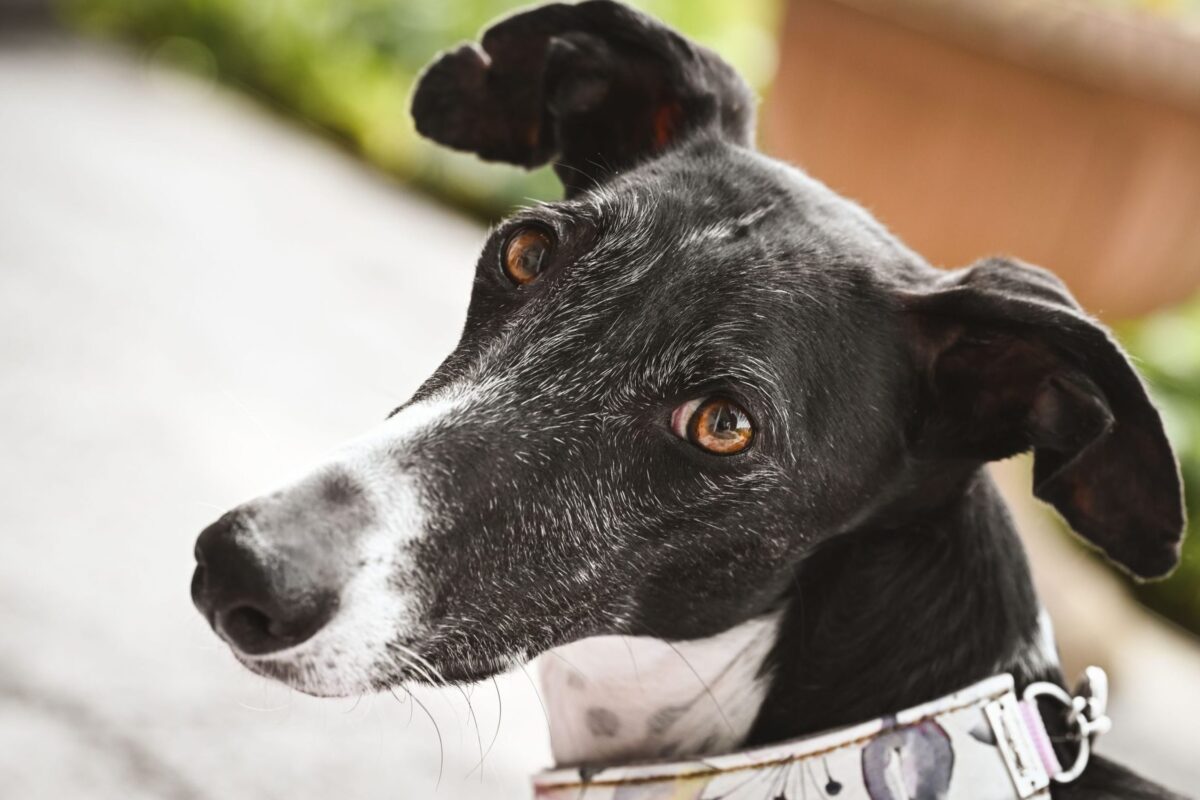
A dog’s muzzle gets in the way of its own view. For a long-muzzled dog — a collie, a greyhound, a spaniel — the nose blocks part of the lower field of vision, including the lower half of a human face. Tilting the head shifts the muzzle out of the way and gives the dog a clearer look at your mouth and eyes.
That matters because dogs read human faces constantly. Your mouth moving, your eyes widening, the shape of your expression — these are the signals a dog uses to work out whether you are pleased, calling it over, or about to do something interesting. The tilt is partly the dog adjusting its view so it can read you properly. Short-muzzled dogs tilt less, which fits: there is less nose in the way.
They learn it works

Dogs are quick students of human behaviour, and the head tilt is a lesson most dogs learn without being taught. A dog tilts its head, the human laughs, talks in a warm voice, maybe reaches for a treat. The dog connects the two. The next time it wants attention, it tilts again.
This is not manipulation. It is the same learning that teaches a dog to sit for a treat or to bring you its lead. The tilt started as a practical move — hearing and seeing better — and the warm reaction turned it into a habit. Dogs that tilt often are usually dogs that get a good reaction when they do it, which is a sign of a strong bond, not a problem.
Breed and age differences

Some dogs tilt more than others, and that is mostly down to shape and habit. Long-muzzled breeds tilt more, because the vision reason applies to them more. Breeds known for close work with people — collies, spaniels, retrievers — tend to tilt a lot, because they spend their lives reading human faces and voices. Smaller dogs with shorter muzzles tilt less often — that is usual for them.
Age matters too. Puppies tilt at almost everything, because they are still learning what sounds and words mean. Older dogs tilt less, partly because they have heard it all before and partly because their hearing may have dulled a little with age. A senior dog that stops tilting is not necessarily unwell — it may simply have less to listen for.
When to mention it to your vet
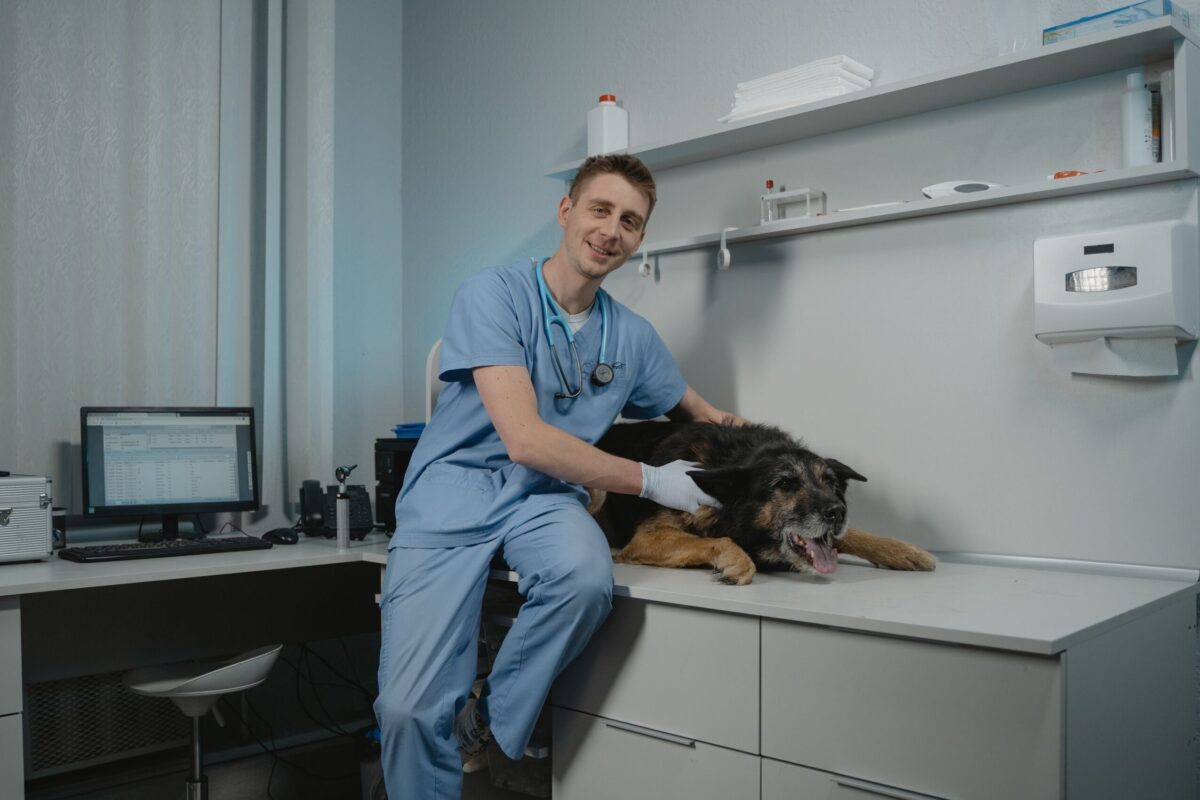
A head tilt that comes and goes with sounds and conversation is normal behaviour. A head tilt that stays stuck to one side is different. If your dog’s head is tilted constantly, if it is stumbling, circling, or holding its head low and still, or if the tilt appeared suddenly alongside a change in balance or appetite, that is worth a vet visit.
The same goes for a dog that suddenly stops responding to sounds it used to react to, or that seems confused by familiar noises. Hearing changes with age, and a vet can check what is going on and advise you on what to expect. You do not need to panic about a tilt — but a tilt that never goes away, or that comes with other changes, is a conversation to have with your vet.
Frequently Asked Questions
Why does my dog tilt its head when I talk?
It is listening hard and trying to see your face better. The tilt helps the dog pinpoint sounds and shifts its muzzle out of the way so it can read your expression.
Do all dogs tilt their heads?
Most do, but long-muzzled breeds tilt more, because their nose blocks more of their view. Short-muzzled dogs tilt less, and puppies tilt more than adult dogs.
Is head tilting a sign my dog is confused?
Not usually. A tilt during conversation is a sign of attention, not confusion. The dog is working out what you mean, which is exactly what you want it to do.
Why does my dog tilt its head at certain words?
Because those words matter to it — its name, “walk”, “treat”, or a sound it has learned means something good. The tilt is the dog focusing on a word it recognises.
When should I worry about a head tilt?
When the tilt stays stuck to one side, or comes with stumbling, circling, or a sudden change in balance or appetite. That is worth a vet visit, while an occasional tilt during conversation is normal.
Related reading
- Dog Body Language: How to Read What Your Dog Is Feeling
- Why Do Dogs Bark at Strangers? Fear, Territory and What Helps
- Why Do Dogs Lick Their Paws? Normal Grooming, Boredom, and the Signs to Watch
- How Much Exercise Does a Dog Need? By Age, Size and Breed Type
Sources
- American Kennel Club — dog behaviour and communication guidance
- RSPCA — dog body language advice
- VCA Animal Hospitals — dog behaviour articles