

A cockatiel wears its feelings on top of its head. That little fan of feathers — the crest — moves all day long: flat when the bird is relaxed, halfway up when something catches its eye, straight up like an exclamation mark when it is excited or startled. Once you learn to read it, you can tell a cockatiel’s mood from across the room, often before the bird makes a sound.
The crest is not decoration. It is a signal, and cockatiels use it with each other constantly. In the wild, a crest tells other cockatiels whether a bird is calm, curious, or alarmed. In your living room, it tells you the same thing, if you know what to look for.
Relaxed and flat: the happy default
A cockatiel that is relaxed holds its crest low and flat against the back of its head, sometimes so flat you barely notice it. This is the crest of a bird that is comfortable: perched, preening, dozing in a sunny spot, or grinding its beak softly before sleep. The crest stays low because there is nothing to react to.
You will see this crest most in the evening, when the bird is settling down, and during quiet moments through the day. If your cockatiel spends a lot of time with a flat crest, that is a good sign. It means the bird feels safe in its home, and safe around you. A flat crest plus a relaxed body — feathers slightly fluffed, one foot tucked up, eyes half closed — is a content bird.
Alert and upright: something caught its eye
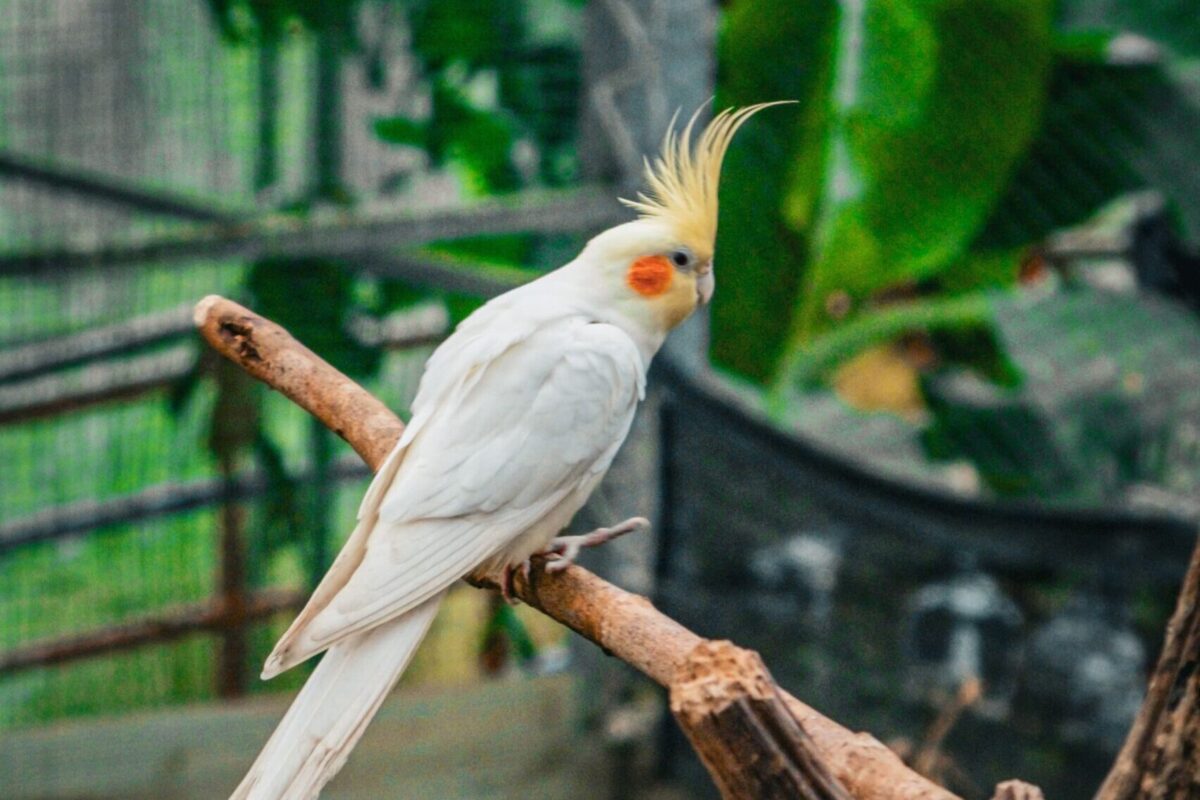
When something new happens — a sound outside, a person walking past, a toy moved to a new spot — the crest comes up to a middle position, pointing up and slightly forward. This is the alert crest. The bird is interested, not alarmed, and it is gathering information.
The alert crest usually comes with a still body and bright, focused eyes. The bird may turn its head to one side to get a better look, since cockatiels see best with one eye at a time. A new object in the room, a new person, or a sound the bird has not heard before will all bring the crest up like this. It usually settles back down within a minute or two, once the bird has decided the new thing is not a problem.
It is the same crest you see when a cockatiel is curious about you. A bird that raises its crest when you come over is paying attention to you, and it is often the moment before it comes closer or starts to whistle.
Fully raised: excited or startled
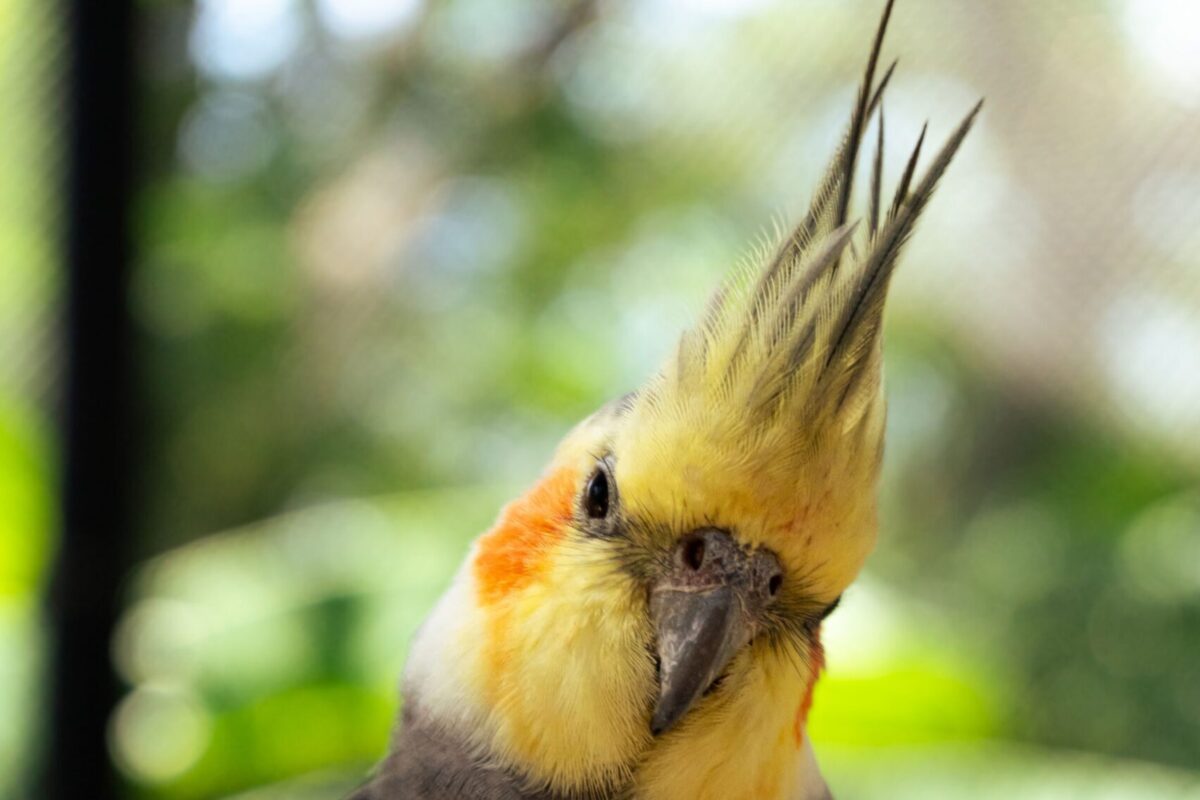
When the crest goes straight up, tall and stiff, the bird is feeling something strongly. It might be excitement — a favourite person arriving home, a treat appearing, a toy it loves. Or it might be alarm — a sudden noise, a shadow passing the window, a dog barking outside. The crest alone does not tell you which one. The rest of the body does.
An excited cockatiel with a raised crest will usually be moving: hopping, whistling, wings slightly out, leaning toward the thing it is excited about. A startled cockatiel with a raised crest will be still and tense, eyes wide, body stretched tall and thin, ready to fly. The difference is obvious once you have seen both, and learning it matters — a startled bird needs space and calm, while an excited bird wants to play.
Reading the crest with the rest of the body
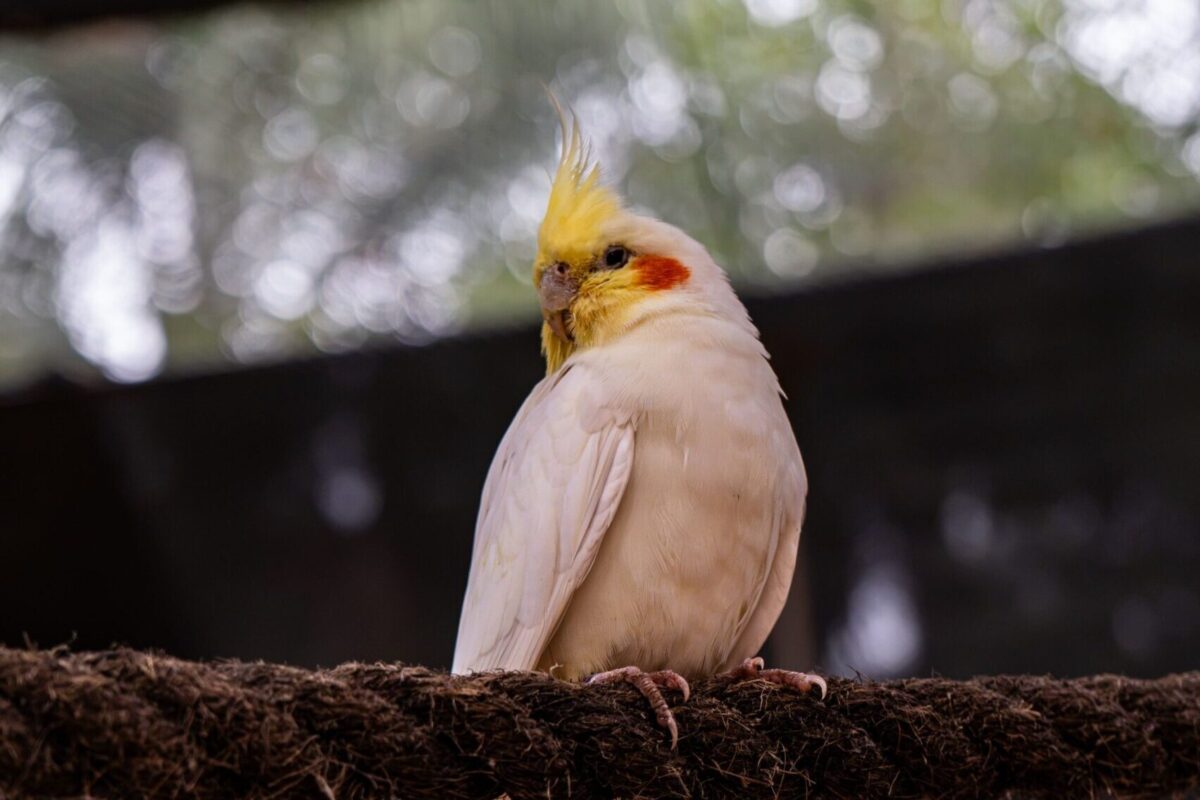
The crest is one signal, and it works best read alongside the others. A raised crest with a relaxed body and soft whistling means something very different from a raised crest with a stiff body and silence. A flat crest with fluffed-up feathers and closed eyes can mean a sleepy bird — or a bird that is not feeling well, if it stays that way all day.
Watch for the combinations. Crest up plus beak grinding means a bird settling in happily. Crest up plus hissing or lunging means back off. Crest flat plus eating, playing, and chatting means a bird going about its day. No single signal tells the whole story, but the crest is usually the first one to move, and it is the easiest to see.
Over time you will learn your own bird’s range. Some cockatiels are naturally expressive, with a crest that moves constantly. Others are quieter, with a crest that barely lifts. Both are normal. What matters is change against your bird’s own normal, not against some other bird’s.
Crest, molt, and bathing
A cockatiel’s crest can look different during a molt, when old feathers are being replaced. New crest feathers grow in as pin feathers — thin, spiky tubes — and the crest may look sparse or uneven for a few weeks. That is a normal part of molting, and the crest fills back in as the new feathers open.
After a bath or a misting, the crest will lie flat and wet against the head until it dries. A cockatiel that has just bathed often looks half the size it normally does, crest included. It dries out within an hour or so, and the crest pops back up on its own. Do not try to dry a cockatiel with a towel or a hair dryer — the bird will dry itself, and the noise and heat of a dryer are stressful.
When a flat crest plus other changes deserves a vet call
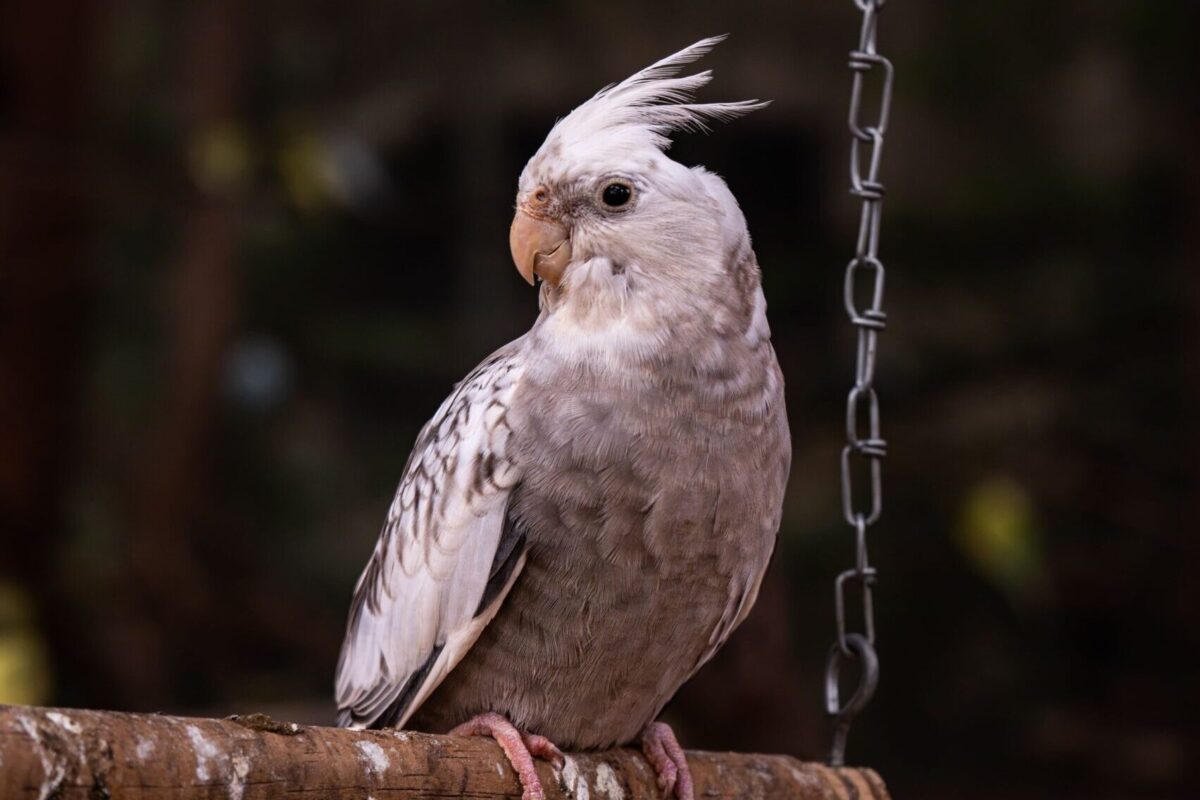
A crest that stays flat is normal for a relaxed bird. A crest that stays flat all day, on a bird that is also fluffed up, quiet, eating less, or sleeping much more than usual, is a different picture. Birds hide illness well, and a change in how a bird holds itself is often the first thing an owner notices.
If your cockatiel’s crest has gone flat and stayed flat, and the bird is also quieter or less interested in food and play, call an avian vet and say so. You do not need to guess what is wrong — that is the vet’s job. What you need to do is notice the change early, while it is still small.
Frequently Asked Questions
What does it mean when a cockatiel’s crest is up?
It depends on how far up and what the rest of the body is doing. Halfway up usually means alert and curious. Fully raised with movement and whistling means excited; fully raised with a stiff, still body means startled.
Is a flat crest a bad sign?
No — a flat crest is the normal relaxed position, especially when the bird is dozing or preening. It only deserves attention if it stays flat all day alongside other changes, like eating less or sleeping much more.
Why does my cockatiel raise its crest when it sees me?
Because you are interesting to it. The alert crest means the bird is paying attention, and it often comes just before the bird comes closer or starts to whistle at you.
Do all cockatiels have the same crest signals?
The basics are the same for every cockatiel, but each bird has its own range. Some are very expressive, others barely move their crest. Learn your own bird’s normal and watch for changes against that.
Does the crest change when a cockatiel molts?
Yes. New crest feathers grow in as thin pin feathers, so the crest can look sparse or uneven for a few weeks during a molt. It fills back in as the new feathers open.
Related reading
- Cockatiel Care for Beginners: The Complete Starter Guide
- Budgie Care for Beginners: The Complete Starter Guide
- How to Tame a Budgie, Step by Step: From a Shy New Bird to a Hand-Trained Friend
- How Long Do Cockatiels Live? Lifespan, Care Tips to Add Years
Sources
- Association of Avian Veterinarians — companion bird behaviour guidance
- Lafeber Pet Birds — cockatiel body language advice
- RSPCA — pet bird behaviour guidance