

Senior means the last 25 percent of expected lifespan: giant breeds can be seniors at 5 to 7, while small breeds often are not seniors until 10 to 12. Twice-yearly vet checks are the common guidance for senior dogs, because health can change fast.
Senior dog care starts with a shift in timing: a dog is classed as a senior in the last 25% of their expected lifespan, which can mean age 6 for a giant breed and 11 or later for a small one, and from that point twice-yearly vet checks, closer watching at home, and small comfort changes make the biggest difference. Age itself is not a disease, and many worrying changes — stiffness, weight drift, cloudy eyes, forgetfulness — have treatable causes.
The grey arrives gradually: pale hairs on the muzzle, a slower get-up after a nap, a shorter walk.
Good senior dog care is vet-first and home-practical — know when your dog counts as senior, keep check-ups close, adjust food, exercise and the house in small ways, and track how your dog is doing. Our complete guide to dogs, their behaviour and everyday care covers the earlier stages that lead here.
At a Glance
- Senior means the last 25% of expected lifespan. Giant breeds can be seniors at 6 to 7 (some guides say as early as 5); small breeds often not until 10 to 12.
- Twice-yearly vet checks are the common guidance for senior dogs, because health can change fast.
- Stiffness is often arthritis, not just age, and pain is worth investigating rather than accepting.
- Weight cuts both ways: spare weight strains sore joints; unexplained loss needs a vet visit.
- Gentle, regular exercise still matters. Short, frequent walks usually beat one long outing.
- Small home changes — ramps, non-slip mats, a supportive bed, food and water in easy reach — remove daily struggles.
Contents
- When does senior dog care begin?
- The vet is the centre of senior dog care
- Common changes to watch for
- Food and weight
- Gentle exercise for an older dog
- Making home easier: ramps, mats and rest
- Comfort, monitoring and quality of life
- Frequently Asked Questions
- Sources and Further Reading
When does senior dog care begin?

There is no single birthday when a dog becomes old. The American Animal Hospital Association defines a senior dog as one in the last 25% of their estimated lifespan — useful, because lifespans vary so much by size.
PetMD puts figures on it: small breeds at about 10 to 12 years, medium at 8 to 10, large at 8 to 9, giant breeds as early as 6 to 7 — with small dogs such as Yorkshire Terriers at around 11 and giant breeds such as Great Danes as early as 5.
| Dog size | Rough senior starting age (PetMD) |
|---|---|
| Small breed | 10–12 years |
| Medium breed | 8–10 years |
| Large breed | 8–9 years |
| Giant breed | 6–7 years |
Use the table as a prompt, not a label. Your vet can place your individual dog better than any chart. The point is timing: senior care should start when the stage starts, not when problems force it.
The vet is the centre of senior dog care

If you change one thing, make it the vet calendar. PetMD states senior dogs should see their veterinarian every six months, with an exam plus blood work and urine testing to catch disease early, and calls twice-yearly check-ups essential because health can change rapidly. The AKC agrees: yearly for adults, twice a year for seniors.
Bring your notes. PetMD’s senior exercise guide suggests monitoring weight, eating, sleeping, drinking and urination, cognitive ability, and the skin for lumps — and booking an appointment when they change.
Some dogs need closer monitoring: a dog on long-term medication, or with kidney, liver or heart disease, may be seen every three months so doses can be adjusted early. Between visits, you are the early-warning system. A dated phone note — the Tuesday your dog hesitated at the stairs, the half-left meal — turns a vague worry into useful evidence.
Common changes to watch for

Stiffness, arthritis and moving less
PetMD lists arthritis among the common senior issues, and notes older dogs lose muscle, gain fat more easily, and find stairs harder. Stiffness after rest, reluctance to jump into the car and lagging on walks are classic signs. Do not file stiffness under “just old”: pain has treatment options. A dog moving comfortably also sleeps better, so the sleep patterns in our guide to what your dog’s sleeping positions can tell you are worth watching alongside mobility.
Teeth and mouths
Dental disease is also on PetMD’s senior list: bad breath, slower chewing, dropped food, pawing at the mouth, a preference for soft food. PetMD advises daily brushing, and notes many senior dogs benefit from a professional cleaning about once a year. Mouth pain changes behaviour too — a dog who snaps at a collar fitting may be reporting teeth, not temperament.
Eyes and ears
PetMD describes nuclear sclerosis, a whitish-blue lens haze that does not affect vision, unlike cataracts, which do. They look alike, so cloudy eyes deserve a vet look. Hearing fades too: PetMD notes senior dogs may respond less to voice commands and hesitate outside at night. Hand signals learned earlier help. If that door greeting ever needs calming, the steps in our guide to teaching calmer greetings without punishment are gentle enough for an older dog, using four paws on the floor rather than a sit if sitting looks sore.
Mind and behaviour: cognitive changes
Canine cognitive dysfunction is a degenerative change in the ageing brain, often compared with early Alzheimer’s in people, affecting awareness, learning, memory and responsiveness, says PetMD. The University of Illinois College of Veterinary Medicine lists the signs: sleep-wake disturbance, disorientation, house soiling, changes in activity and interaction, anxiety, reduced interest in eating, walking or playing, and repetitive pacing.
Mild signs can have other causes — pain, infection, metabolic disease — so Illinois stresses ruling those out first. The condition cannot be reversed, but routine, enrichment, diet and sometimes medication can slow it, so early reporting helps.
Weight, appetite and thirst
PetMD notes metabolism slows with age, so some dogs gain weight on food that once suited them, while others struggle to hold weight. Either drift deserves a conversation. A clear appetite change, vomiting, diarrhoea or increased thirst should go to your vet, PetMD says — they can point to an underlying condition, not age alone.
Food and weight
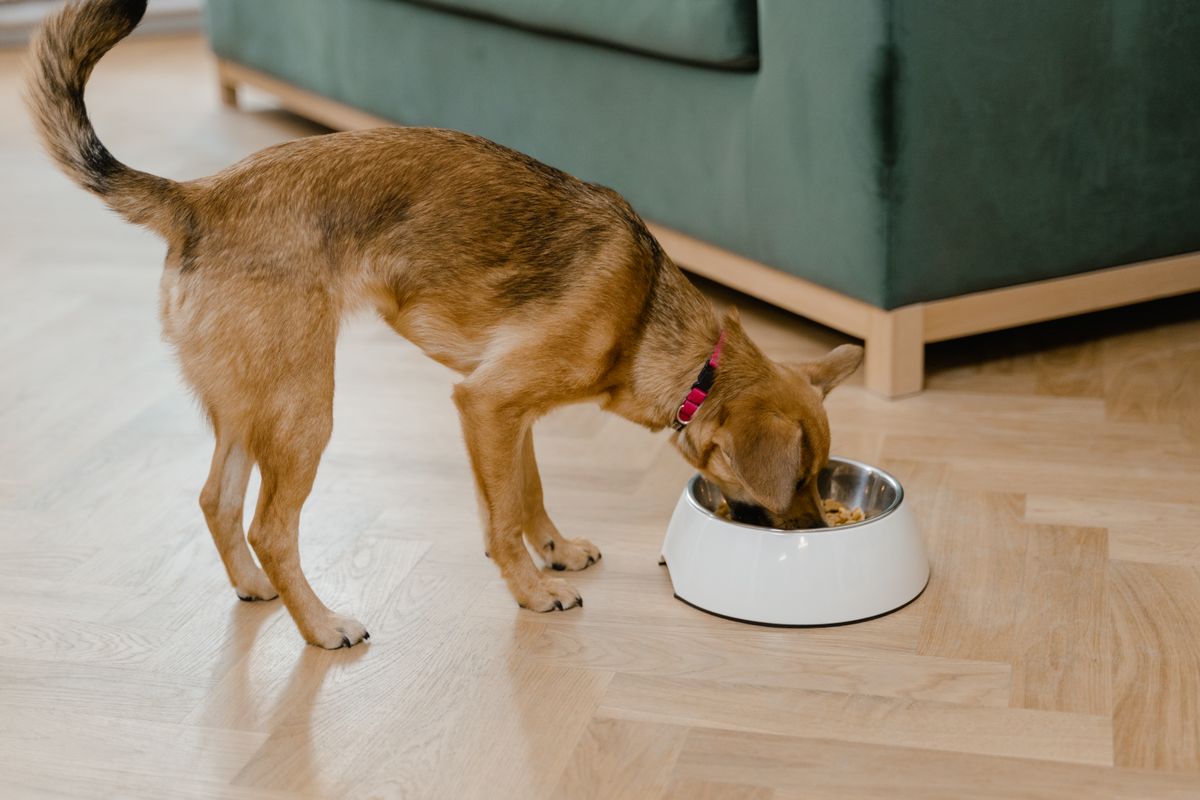
No single senior diet suits every older dog, and this guide names no brands. PetMD explains why: calorie needs go up for some dogs and down for others, and kidney or liver disease may need a prescription diet chosen by a vet.
At home:
- Feed measured meals, so an appetite drop shows up fast.
- Change food gradually if your vet advises it, and ask before adding supplements. PetMD notes some senior diets include glucosamine and chondroitin for joints.
- Keep treats inside the day’s food. PetMD links obesity in seniors to worse mobility and metabolic disease, and spare weight strains arthritic joints.
- Make eating easy. A bowl at a comfortable height can help a stiff-necked dog. Raised bowls are an option, not a rule — for deep-chested breeds, ask your vet, as bowl height is discussed in relation to bloat risk.
- Keep fresh water in easy places, and note if drinking increases.
The goal is steady: healthy weight held, meals eaten with interest, drinking unchanged.
Gentle exercise for an older dog

Rest is not the treatment for old age. PetMD’s senior exercise guide says movement keeps muscles and joints stronger, stimulates the mind, and generally recommends at least 30 to 60 minutes daily for senior dogs cleared for it. PetMD advises a vet visit first, with exam and bloodwork, especially with heart disease or arthritis.
For most older dogs, little and often works best:
- Two shorter walks suit stiff joints better than one long march. Let your dog set the pace, as PetMD suggests.
- Choose grass or dirt over hard pavement, and the cooler parts of the day.
- Count low-impact activity: gentle play, sniffing games, puzzle toys, short training refreshers. PetMD notes swimming is lowest-impact for dogs who enjoy water and can get in and out safely.
- Watch recovery. Excessive panting, limping or hours of stiffness afterwards means the session was too much.
Our guide to how much exercise a dog needs each day helps scale adult amounts down to senior pace. PetMD’s stop rule: stop if your dog limps, pants excessively, seems painful or refuses to continue, and contact your vet.
Making home easier: ramps, mats and rest

Small frictions add up: the slippery hallway, the high car boot, the bed that needs a jump. Removing them is some of the cheapest senior care there is. Treat these as options matched to your dog’s actual struggles, not a shopping list.
- Ramps or steps for car, sofa or bed, if your dog hesitates or needs lifting. PetMD suggests them when arthritis makes high places hard.
- Non-slip mats or runners on tile and wood along usual routes. PetMD recommends runners for traction.
- A supportive bed in a warm, draught-free spot. PetMD describes an orthopedic bed as cushioning joints and reducing pressure points.
- Everything on one level where you can — food, water, bed and an outside door — to save repeated stairs.
- Familiar layout and routine for fading senses: keep furniture in place, use hand signals alongside voice, and keep times predictable. PetMD stresses a consistent routine — familiarity helps an older dog feel secure.
- Gentle grooming checks: feel for new lumps or sore spots while you groom, and note them for the vet.
Introduce changes one at a time. A ramp is a new skill — reward your dog for walking it at ground level first, and never force a frightened dog up one.
Comfort, monitoring and quality of life

The honest heart of senior care is a recurring question: is my dog still enjoying life? No single test answers it, but a simple weekly record helps. Note appetite, water, mobility, sleep, toileting, interest in play, and good moments. PetMD’s monitoring list makes a good template. Good days with the odd stiff morning differ sharply from a steady slide across every line.
Acting early on treatable discomfort matters too. Pain relief, dental treatment, a diet change or a new routine can return real pleasure to a dog’s days — options are widest when changes are reported early.
End-of-life decisions belong with your vet and your family. Judge by your dog’s own pleasures — eating, company, gentle walks, comfortable rest. When pain or distress outweighs those and cannot be relieved, letting go is a loving decision, not a failure of care.
Frequently Asked Questions
At what age is a dog a senior?
It depends on size, because senior means the last 25% of expected lifespan. PetMD puts small breeds at 10 to 12 years, medium at 8 to 10, large at 8 to 9 and giant breeds at 6 to 7, with most dogs treated as seniors around 8.
How often should a senior dog see the vet?
Twice a year. PetMD recommends six-monthly check-ups including blood work and urine testing, and the AKC gives the same advice, because early-caught disease is usually easier to treat. Dogs on long-term medication or with chronic conditions may need three-monthly visits.
Is my dog stiff because of age, or is it pain?
Stiffness is a sign, not an explanation. Arthritis is common in seniors and painful. A vet examination can separate normal slowing from treatable pain, and relief plus weight and exercise changes can improve comfort and sleep.
Should I switch my dog to a senior food?
Ask your vet first. PetMD notes senior diets differ widely, some dogs need fewer calories while others struggle to hold weight, and kidney disease may need a prescription diet.
How much exercise does a senior dog need?
PetMD generally recommends at least 30 to 60 minutes a day for vet-cleared senior dogs, in shorter, gentler sessions shaped by mobility and medical history. Let your dog set the pace, choose soft surfaces, and stop if they limp or seem in pain.
What are the signs of cognitive dysfunction in older dogs?
The University of Illinois College of Veterinary Medicine lists sleep-wake changes, disorientation, house soiling, changes in interaction and activity, anxiety and pacing. Other illnesses can mimic them, so a vet should rule out pain, infection and metabolic disease first.
How can I make my home easier for a senior dog?
Add ramps for cars and sofas, non-slip mats on smooth floors, a supportive bed in a warm, draft-free spot, and food and water bowls at a comfortable height. Keep essentials on one floor if stairs become hard, and keep routines predictable — seniors cope worse with sudden changes than young dogs do.
Should a senior dog still play and train?
Yes, gently. Short play sessions, sniffing walks and easy training games keep a senior dog’s mind and body active without straining joints. Swap long runs for several short walks, use puzzle feeders for mental work, and stop before tiredness — a senior dog who overdoes it today may be stiff for days.
How do I judge quality of life in an older dog?
Track the good days against the bad: appetite, interest in walks and people, comfort resting, toilet control, and pain levels. Keep a simple diary — it is easy to miss a slow decline day by day. When bad days consistently outnumber good ones, or pain cannot be controlled, have an honest conversation with your vet about what comes next.
Sources and Further Reading
- AAHA — Defining the Senior Patient (senior as the last 25% of estimated lifespan) — https://www.aaha.org/resources/2023-aaha-senior-care-guidelines-for-dogs-and-cats/defining-the-senior-patient/
- PetMD — When Is a Dog Considered a Senior? — https://www.petmd.com/dog/general-health/when-is-a-dog-considered-senior
- PetMD — How to Care For Your Senior Dog — https://www.petmd.com/dog/general-health/how-to-care-for-senior-dog
- PetMD — Exercising Your Senior Dog — https://www.petmd.com/dog/general-health/how-to-exercise-your-senior-dog
- University of Illinois College of Veterinary Medicine — Canine Cognitive Dysfunction — https://vetmed.illinois.edu/pet-health-columns/canine-cognitive-dysfunction/
- American Kennel Club — The Longevity Quest: Extending Your Dog’s Lifespan — https://www.akc.org/expert-advice/family-dog/extending-your-dogs-lifespan/
This article is educational and is not a substitute for veterinary advice. If your older dog changes in appetite, thirst, mobility, sleep or behaviour, or you are worried about pain or quality of life, contact your vet — earlier is better in the senior years.
About the author
Furrology Team — pet owner and researcher behind Furrology. We read the veterinary research and draw on real owner experience, then turn it into plain-English guides about dogs, cats, birds and small pets. We are not vets — Furrology is researched information, not veterinary advice, and a poorly pet always needs a real vet. More about how we work: About Us · Editorial Policy