
An all-seed diet is high in fat and low in vitamin A and calcium, and birds pick out favourites, making it even less balanced. Pellets are the usual base: many avian vets put them at roughly 60 to 80 percent of the diet, with fresh food making up most of the rest.
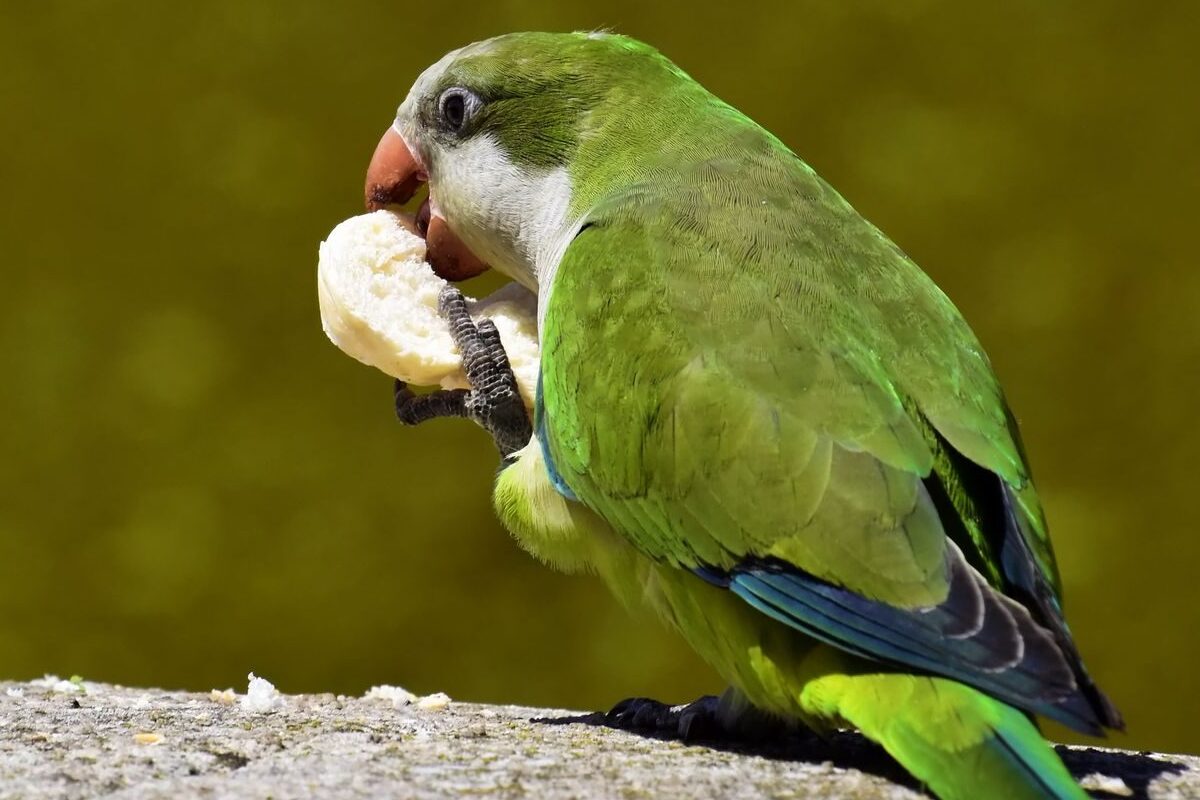
If you are asking what do parrots eat, the short answer is a lot more than seed. Most pet parrots do best on a base of formulated pellets, a daily helping of fresh vegetables and leafy greens, a smaller amount of fruit, and only a few seeds or nuts as treats, with clean water always available. An all-seed bowl looks natural, but on its own it leaves big gaps.
Seed mix feels like the obvious choice: cheap, easy, and your bird dives in happily. The trouble shows up slowly — duller feathers, weight creeping up, pickiness about everything else. This guide sets out what a balanced bowl looks like and which foods should never reach the cage. For housing and handling, see our complete guide to pet birds and their care.
At a Glance
- An all-seed diet is high in fat and low in vitamin A and calcium, and birds pick out favourites, making it even less balanced.
- Pellets are the usual base: many avian vets put them at roughly 60–80% of the diet, with fresh food making up most of the rest.
- Vegetables come before fruit. Orange and dark green vegetables supply the vitamin A seed diets lack.
- Fruit is a small extra, not a main course. Seeds and nuts are training treats in tiny amounts.
- Never feed avocado, chocolate, caffeine, alcohol, onion, garlic, or xylitol foods, and keep salty snacks away.
- Change a seed-loving bird’s diet gradually over weeks. Never starve a bird into eating.
Contents
- What do parrots eat in the wild?
- Why an all-seed diet falls short
- What do parrots eat as a base? Pellets
- Vegetables, leafy greens and fruit
- Treats and nuts
- Foods to avoid completely
- Water and daily feeding habits
- Moving a seed-loving parrot to a better diet
- Does species change what do parrots eat?
- A simple daily feeding checklist
- Frequently Asked Questions
- Sources and Further Reading
What do parrots eat in the wild?

Wild parrots do not live on one kind of seed. They forage across many plants in a day — seeds, fruits, flowers, buds, nuts and greens — and fly a long way to find them. Lafeber Vet notes that wild seed-eating species such as budgies and cockatiels can balance their intake across more than 60 types of seed, while a captive mix offers only a handful. A pet bird loves sunflower seeds because the fattiest food is always an inch away, not because it is choosing badly.
Why an all-seed diet falls short

The Avian and Exotic Hospital describes seeds as very high in fat and deficient in vitamin A, calcium and vitamin D. Given only nuts and seeds long-term, a parrot becomes more likely to develop liver disease, skin and feather problems, and obesity.
Selective feeding makes it worse: most birds eat the pieces they like first. Lafeber Vet notes seed mixes lack vitamins A, D3, E and K, certain amino acids, calcium and other minerals, and lead over time to vitamin A deficiency and poor feather quality. PetMD lists low vitamin A among common budgie problems, linked with an overgrown beak and fragile feathers. Seed should be demoted, step by step, from main course to garnish.
What do parrots eat as a base? Pellets

Pellets are grains and other ingredients ground together with vitamins and minerals, then shaped into small pieces. Each piece contains the same balance, so a bird cannot pick out only the tasty bits. That evenness is why vets recommend them as the base. The exact share varies:
- Avian and Exotic Hospital: pellets 70–80% for most parrots, fresh foods 20–30%, treats under 5–10%.
- PetMD, for budgies: pellets at about 70%, the rest from vegetables, fruit, grains and small treats.
- UC Davis: roughly 50–75% pelleted diet and 25–50% fresh vegetables and fruit for most pet birds.
In practice, aim for pellets as the clear majority — often around 60–70% as a starting target, higher for some birds on vet advice — and let fresh food fill most of the rest. Choose the right size: a fine crumble for a budgie, a piece a larger parrot can hold.
Vegetables, leafy greens and fruit

Fresh food supplies vitamins, variety and something to tear, hold and taste. VCA Hospitals advises a variety of vegetables every day, with a small offering of fruit, on top of the pellet base, and puts fresh produce at no more than 20–40% of the diet. Vegetables should outweigh fruit by a good margin.
Good options include kale, bok choy, romaine and dandelion leaves; carrots, sweet potato and squash; broccoli, bell peppers, peas, green beans, corn, zucchini and pumpkin. Bright yellow, red and orange vegetables are singled out by VCA as rich in vitamin A, as are mango, papaya and cantaloupe on the fruit side.
Wash produce well — VCA notes birds are sensitive to pesticides, and fresh or frozen beats canned, which can carry salt or sugar. Fruit (apple without seeds, berries, melon, banana, grapes) should stay the smaller part of the fresh share: dessert, not dinner. Remove uneaten fresh food after a few hours, because moist food supports rapid bacterial growth, as the Avian and Exotic Hospital warns.
Treats and nuts

Treats have a real job — training, bonding, foraging — but stop helping when they become a second diet. The Avian and Exotic Hospital puts treats at less than 5–10%: seeds, treat sticks, spray millet, nuts, and small amounts of plain popcorn, pasta or rice.
Nuts suit larger parrots in tiny amounts: a walnut is a meaningful treat for a big bird, while a budgie needs only a sliver. Chewy’s vet-reviewed guidance agrees: one unsalted nut a day is plenty for a larger bird. A seed fragment given the moment your bird steps up teaches far more than a bowl left out all day. If you are working on speech, our guide to teaching a parrot to talk with short, positive sessions shows how small rewards fit training, and a foraging toy stretches a few calories into ten minutes of activity.
Foods to avoid completely

Some human foods are unsafe at any dose, and should be kept out of reach.
| Food | Why it is unsafe |
|---|---|
| Avocado | Persin; linked by Chewy to breathing problems, weakness and heart failure; VCA: fatal toxicity reported |
| Chocolate | Theobromine and caffeine; vomiting, fast heart rate, tremors, seizures, death |
| Caffeine (coffee, tea, soda) | Increased heart rate, arrhythmia, hyperactivity, cardiac arrest |
| Alcohol | Depresses organ systems; can lead to death even in small amounts |
| Onion and garlic | Damage blood cells; Chewy links both to hemolytic anaemia |
| Xylitol (sugar-free foods) | Vets list it to avoid; bird-specific research is limited, so treat as unsafe |
| High-salt foods | Dehydration and kidney or liver problems |
| Fruit seeds and pits | Vets advise birds never eat them — apple seeds and stone-fruit pits are the usual examples; serve flesh only |
On xylitol, the honest version: Petco’s vet Q&A notes its effects in birds are not known for sure, while Chewy lists it as a pet bird no-no because it can cause low blood sugar and liver damage in pets. Do not offer it. If your bird eats anything on this list, call an avian vet straight away. If your bird shouts hardest when people eat, our explainer on why a parrot screams and how to calm the habit covers attention around food times.
Water and daily feeding habits

VCA’s tips include fresh water every day and cleaning all dishes daily. Many birds need water changed more than once a day because they dunk food in it. Try this rhythm: morning, fresh pellets, water and vegetables; later, a small piece of fruit or treat; evening, remove uneaten fresh food, check pellet eaten, wash dishes.
Moving a seed-loving parrot to a better diet

Vets agree on the shape: gradual, observed, never forced by hunger. The Avian and Exotic Hospital warns some birds may starve themselves rather than eat an unfamiliar diet, so you must see your bird eating and monitor droppings during any change. Conversion can take weeks to months.
- Start with a vet check if your bird has only eaten seed, is underweight, or shows illness.
- Offer pellets alongside the usual food. The hospital suggests layering pellets over the regular diet rather than mixing, which teaches a bird to sort, plus a second dish of pellets near a favourite perch.
- Try pellets first thing in the morning, when your bird is hungriest, then offer familiar food later. Never leave a small bird with nothing it will eat for a full day.
- Make new food social: eating, or pretending to eat, a pellet with your bird can prompt a first taste.
- Shrink the seed share slowly once pellets are being eaten. Lafeber’s advice follows the same pattern: crumble a formulated food over the regular diet, watch for real eating, then reduce the old diet gradually.
UC Davis advises monitoring seed intake for a week before conversion, and watching weight and droppings through it. A bird losing weight or going quiet needs its old food back and a vet conversation.
Does species change what do parrots eat?

The pattern stays the same, but portions shift. A budgie needs a fine pellet and can fill up on millet spray quickly. A macaw or Amazon eats far more, can handle a whole nut as an occasional treat, and gains weight easily. The Avian and Exotic Hospital advises researching your species and asking your vet, because some species need the proportions adjusted. At the small end, read what the evidence says about mirror toys for budgies, and see how long budgies live and what helps them reach the upper end for what good feeding protects. Lories and lorikeets are the exception: they need nectar-based diets, not a standard parrot plan.
A simple daily feeding checklist

- Pellets refreshed; amount eaten yesterday noted
- Fresh water given; bowl washed, not just rinsed
- Vegetables offered, including something orange or dark green
- Fruit kept small — a piece or two
- Seeds and nuts used only as treats or rewards
- Uneaten fresh food removed after a few hours
- No human plate food shared without checking first
Frequently Asked Questions
What do parrots eat every day, in plain terms?
Pellets as the base, mixed vegetables, fresh water, and a small amount of fruit or a treat. Most vets put pellets at roughly 60–80% depending on source and species, with fresh food making up most of the rest and seeds or nuts under about 10%.
Can parrots live on seed alone if the mix says fortified?
They can survive on it for a time, but vets do not recommend it. Lafeber Vet notes seed mixes lack key vitamins, amino acids, calcium and minerals, and the Avian and Exotic Hospital links seed-only feeding to liver disease, feather problems and obesity.
How much fruit should I give, compared with vegetables?
Less fruit than vegetables. VCA advises vegetables daily with a small offering of fruit, and produce overall at 20–40% of the diet. A useful habit is three parts vegetable to one part fruit.
My parrot throws pellets on the floor. Is it eating any?
Some waste is normal, but watch the totals: measure what is left, and watch droppings and weight over a week. If droppings drop sharply or weight falls, your bird may be refusing rather than wasting.
Are cooked beans, pasta and egg safe for parrots?
Plain, cooked beans are listed by VCA among suggested foods, and the Avian and Exotic Hospital includes cooked beans, grains, plain pasta and rice in the fresh share. Cooked egg appears as a treat in PetMD’s budgie guidance. Keep it unseasoned and small, and never offer raw dried beans.
What should I do if my parrot eats avocado or chocolate?
Treat it as urgent. Remove the food, note what was eaten and when, and call an avian vet straight away. Do not wait for symptoms, or try to make the bird vomit unless a vet tells you to.
How do I switch a seed-loving parrot to pellets?
Gradually, over weeks. Mix a few pellets into the seed, slowly increasing the share, and offer pellets first in the morning when the bird is hungriest. Try different pellet sizes and brands, and offer vegetables alongside. Never starve a bird into eating pellets.
How much water does a parrot need each day?
Fresh, clean water every day, in a clean bowl, with the bowl washed daily. Most parrots drink small amounts often, and some bathe in the drinking water — that is normal, but it means the bowl fouls fast. Two bowls (one for drinking, one for bathing) help, and any bird who suddenly drinks far more or far less than usual should see an avian vet.
Do different parrot species need different diets?
Yes, in emphasis rather than in kind. Large macaws handle more nuts, African greys need extra calcium, and some species such as lorikeets need nectar-based diets entirely. The pellet-plus-vegetables base holds for most common pet parrots, but check species-specific guidance before assuming one diet fits all — a diet that suits a budgie will not suit a hyacinth macaw.
Sources and Further Reading
- Lafeber Vet — Parrot nutrition and seed diets (all-seed diets lack vitamins A, D3, E, K, amino acids, calcium) — https://lafeber.com/vet/species/parrot/page/2/
- Avian and Exotic Hospital — Nutrition for Psittacine Birds (pellets 70–80%, fresh 20–30%, treats under 5–10%) — https://www.avianexotichospital.com/nutrition-for-psittacine-birds.html
- PetMD — Budgerigar Facts (pellets about 70% for budgies; seed-only diet deficient) — http://www.petmd.com/bird/care/budgerigar-facts-what-to-know-about-budgerigar
- VCA Canada — Fruits and Vegetables in Birds’ Diets (produce 20–40%, vitamin A foods, foods to avoid) — https://vcacanada.com/know-your-pet/fruits-and-vegetables-in-bird-diets
- Chewy, vet-reviewed — Foods Harmful or Poisonous to Pet Birds (avocado, chocolate, caffeine, alcohol, onion, garlic, salt, xylitol) — https://www.chewy.com/education/bird/food-and-nutrition/dont-feed-your-pet-bird-these-6-foods
- UC Davis Veterinary Medicine — Bird Diet Conversion (roughly 50–75% pellets, 25–50% fresh; gradual change) — https://healthtopics.vetmed.ucdavis.edu/health-topics/exotics/bird-diet-conversion
This article is educational, not a substitute for veterinary advice. If your parrot loses weight during a diet change, stops eating, or eats an unsafe food, contact an avian vet promptly.
About the author
Furrology Team — pet owner and researcher behind Furrology. We read the veterinary research and draw on real owner experience, then turn it into plain-English guides about dogs, cats, birds and small pets. We are not vets — Furrology is researched information, not veterinary advice, and a poorly pet always needs a real vet. More about how we work: About Us · Editorial Policy