

Research-based guide only. No product was personally tested, no brand or model is recommended, and no prices or links are included.
Cats are famously clean animals. A healthy cat spends a good part of every day grooming itself, and that tongue does a better job than any bottle on the shelf. Most cats never need a bath in their whole lives, and that is how it should be. A shampoo only earns its place when something has gone wrong — a cat that rolled in something sticky, a long-haired cat with a matted patch, a dusty rescue settling into a new home, or a cat whose coat has got greasy with age.
The whole point of a cat shampoo is that it is made for cats. That sounds obvious, and it is the single most important thing on the label. A cat’s skin is thinner and more sensitive than a dog’s, and cats groom themselves after a bath, which means they swallow whatever is left on the coat. A shampoo that is safe for a dog or a person is not automatically safe for a cat.
When a bath is actually needed
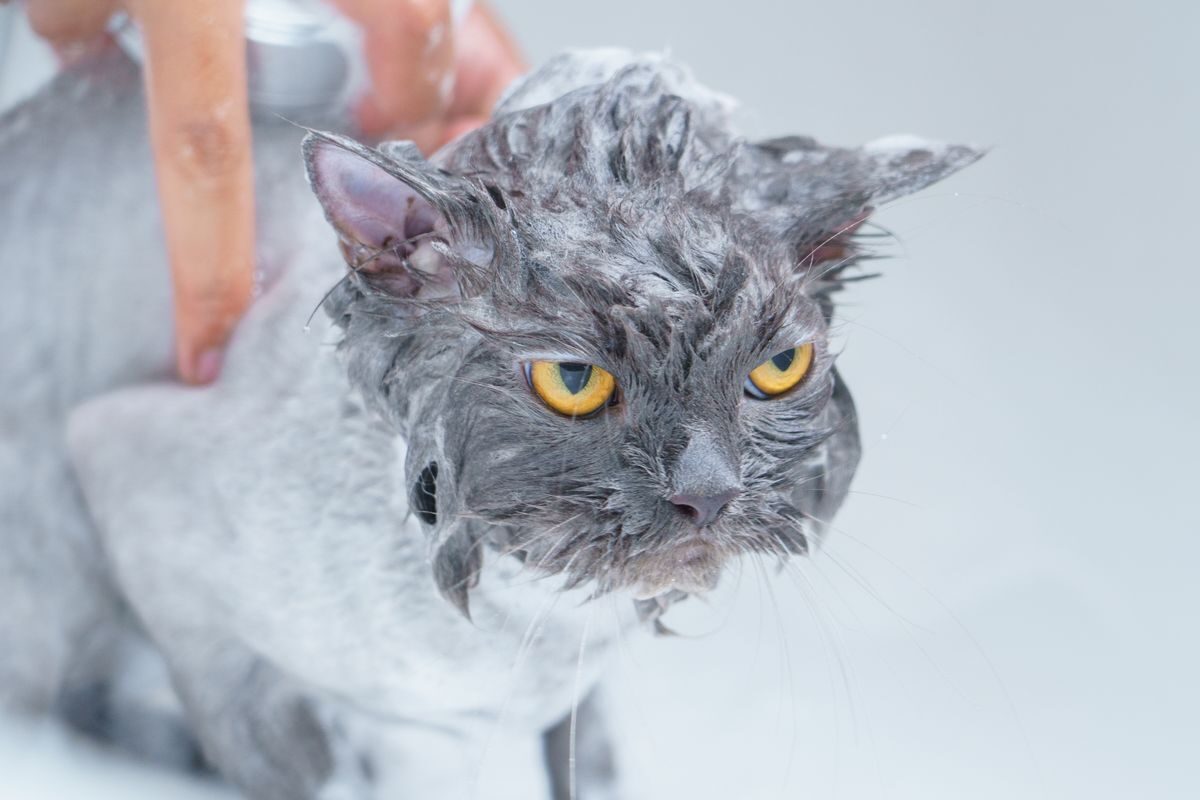
Most baths happen for a clear reason. A cat that has got paint, oil, or something sticky in its fur needs it washed out before it licks it off. A long-haired cat that has developed a small mat may need a wash before the mat can be worked out. An older cat that has stopped grooming properly may need help keeping its coat clean. A cat that has been outside in dust or mud and comes home filthy may need one wash, then go back to grooming itself.
What a bath is not for is routine cleaning. Bathing a healthy cat every week strips the natural oils from its coat, dries the skin, and stresses an animal that was perfectly clean already. If your cat looks clean, smells fine, and grooms normally, leave the shampoo in the cupboard.
If the problem is fleas, do not pick a flea product off the shelf on a guess. Ask your vet what to use. Some flea products made for dogs are dangerous for cats, and the wrong choice can do real harm.
What to look for on the label
A good cat shampoo starts with the words “for cats” on the front. After that, look for a gentle, fragrance-free formula. Strong scents linger on a cat’s coat and bother an animal that lives by smell. A pH-balanced formula made for cats is a better bet than a generic pet shampoo, and a shampoo with a short ingredient list is usually a safer choice than one with a long list of extras.
Oatmeal-based shampoos suit cats with dry or itchy skin, and they are widely available. Hypoallergenic formulas, which skip dyes and heavy fragrance, suit cats that react to most products. Waterless shampoos — foams and sprays you rub in and towel off — work well for a cat that only needs a light clean, or for a cat that panics at the sight of a bath. Kitten formulas are extra gentle, which matters because kittens are small and their skin is thinner still.
What to avoid: any shampoo made for dogs, any shampoo made for people, and anything with concentrated plant oils. Tea tree oil and several other plant oils are toxic to cats, and a cat will lick them off its coat. If a product lists an oil you do not recognise, skip it.
How to bathe a cat without a fight

Most cat baths go wrong before the water starts, because the cat is already stressed. Keep the room warm and quiet, gather everything first — shampoo, towels, a cup for rinsing — and close the door so the cat cannot bolt mid-bath.
Use a sink or a shallow tub with a few inches of lukewarm water, never a running tap or a shower head aimed at the cat. Wet the coat from the neck down, keeping the head dry. Work a small amount of shampoo through the coat with your hands, not a brush, and keep the whole thing quick — a few minutes of washing is enough. Rinse twice. Shampoo left in the coat gets licked off, so rinsing matters more than washing.
Wrap the cat in a towel straight away and hold it for a minute before letting it go. Most cats will finish the drying themselves by grooming, and that works as long as the coat is properly rinsed. Keep the cat indoors and warm until it is fully dry. Never use a hair dryer on a cat — the heat and noise frighten most of them, and the hot air can burn thin skin.
If your cat is truly terrified of water, do not force it. A waterless foam or a damp cloth wiped over the coat often does the job, and a groomer who handles cats regularly is a better option than a wrestling match in the bathroom.
What never to use on a cat
Dog shampoo is the most common mistake, and it is not a small one. Dog formulas are made for thicker skin and different chemistry, and some contain ingredients that are toxic to cats. Human shampoo is wrong for the same reason — it is too harsh for a cat’s skin and leaves a residue a cat will swallow while grooming.
Dish soap and household cleaners are worse. They strip the coat, irritate the skin, and are not meant to be licked off anything. If a cat has got something toxic on its coat — paint, oil, a chemical — do not reach for a household cleaner. Call your vet and ask what to do, before you wash anything off.
Frequently Asked Questions
Do cats need regular baths?
No. A healthy cat grooms itself and stays clean. Baths are only for a real reason — something sticky in the coat, a matted patch, an older cat that has stopped grooming, or a very dirty rescue.
Can I use dog shampoo on my cat?
No. Dog shampoo is made for thicker skin and different chemistry, and some dog formulas contain ingredients that are toxic to cats. Use a shampoo that says “for cats” on the front.
What is the safest type of cat shampoo?
A gentle, fragrance-free, pH-balanced formula made for cats, with a short ingredient list. Oatmeal-based shampoos suit dry skin, and waterless foam works well for a light clean or a cat that hates water.
How do I bathe a cat that hates water?
Keep it short and calm: lukewarm water a few inches deep, no running taps, wash from the neck down, rinse twice, towel dry. If the cat panics, stop — a waterless foam or a damp cloth often does the job instead.
Are plant oils safe in cat shampoo?
No. Several concentrated plant oils, including tea tree oil, are toxic to cats, and cats swallow whatever is left on their coat while grooming. Skip any shampoo that lists an oil you do not recognise.
Related reading
- How to Groom a Long-Haired Cat Without the Drama
- Why Do Cats Knead? The Science Behind Biscuit-Making
- Cat Sleeping Positions and What They Mean: A Visual Guide
- How to Socialize a Kitten: People, Sounds, and the First Few Months That Shape a Cat
Sources
- Cornell Feline Health Center — cat grooming and skin care guidance
- International Cat Care — bathing and coat care advice
- VCA Animal Hospitals — bathing cats guidance