

Research-based guide only. No product was personally tested, no brand or model is recommended, and no prices or links are included.
Watch any busy park path for five minutes and you will see the whole range: a dog walking loose and relaxed beside its owner, a dog straining at the end of a thin cord, and an owner being towed along by a dog that learned long ago that pulling works. The leash is the same tool in all three cases. What changes is whether it fits the dog, the walk, and the hands holding it.
A good leash does three quiet jobs at once: it keeps your dog close enough to steer, it gives you a way to communicate without shouting or yanking, and it keeps other people and dogs safe from a dog that is still learning manners. None of that needs the most expensive leash on the shelf — just the right length, material, and clasp.
Length is the first choice, not the last
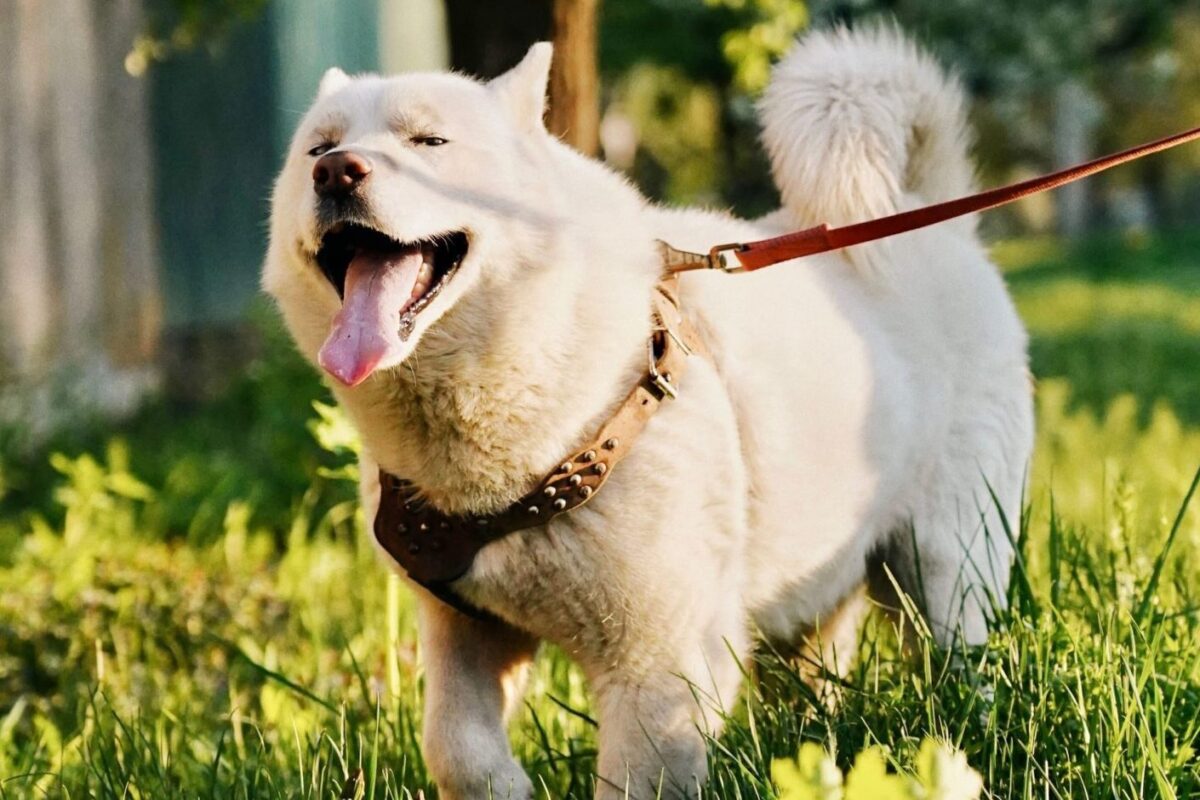
Most everyday walking leashes are 4 to 6 feet long. Four feet gives you close control on a pavement, near traffic, or in a crowd. Six feet gives the dog room to sniff and wander while you still have a real say in where it goes. If you only buy one leash, six feet is the safer bet.
Shorter leads, around 3 to 4 feet, help when you are teaching a dog to walk without pulling, because there is less rope for the dog to build speed with. Longer lines, 10 to 30 feet, have a place too — open fields, recall practice, letting a dog explore while you keep a hold — but they are training tools, not everyday walking leashes. A long line near a road is a hazard, not freedom.
Retractable leashes give a dog 10 to 26 feet of wandering room on a spring-loaded cord, and on an empty trail that can work well. In a busy place they are harder to control: the cord can wrap around legs and other dogs, and locking it in a hurry takes more practice than people expect. If you use one, keep it locked short whenever anyone else is near.
Materials and what they feel like in the hand

Nylon is the default for a reason: light, strong, cheap, and available in every colour. The downside is that a thin nylon leash can burn your hands when a strong dog lunges, and cheap nylon frays at the edges. Look for a width that suits the dog — about three quarters of an inch for a medium dog, a full inch for a large one — and stitching that runs the whole handle loop.
Leather feels better in the hand and softens with use, and a good one lasts years — but keep it out of the rain when you can and let it dry slowly if it gets soaked. Rope leashes, often made from climbing rope, are strong and easy to grip and suit big, strong dogs. Biothane, a coated webbing, is the one to look at if your dog swims a lot, because it does not soak up water or smells the way nylon and leather do.
Whatever the material, check the clasp first. A bolt snap works well if the spring is strong; a trigger clasp, which opens with a lever, is easier with cold hands or gloves. Clip it on and tug it hard a few times at home. If the clasp feels loose, sticky, or thin, do not trust it on a walk.
Matching the leash to your dog

A puppy and a 40-kilo adult dog do not need the same leash. Small dogs do fine with a light, narrow leash — a heavy clasp on a tiny dog is dead weight bouncing against its neck. Big, strong dogs need a wider leash, a solid clasp, and a handle you can hold without it cutting in.
Pullers need a shorter leash, not a longer one: a dog that pulls on six feet of slack has six feet to build momentum. A four-foot leash, clipped to a harness, gives you a shorter line and less force at your shoulder. For dogs that lunge, a leash with a second handle near the clasp — a traffic handle — lets you pull the dog in close for a few seconds.
If your dog chews through leashes, a chain leash stops the chewing, but it is heavy and unpleasant to hold. A better fix is to stop leaving the leash where the dog can chew it between walks. The leash is not the problem; the unsupervised chewing time is.
Teaching a dog to walk on it
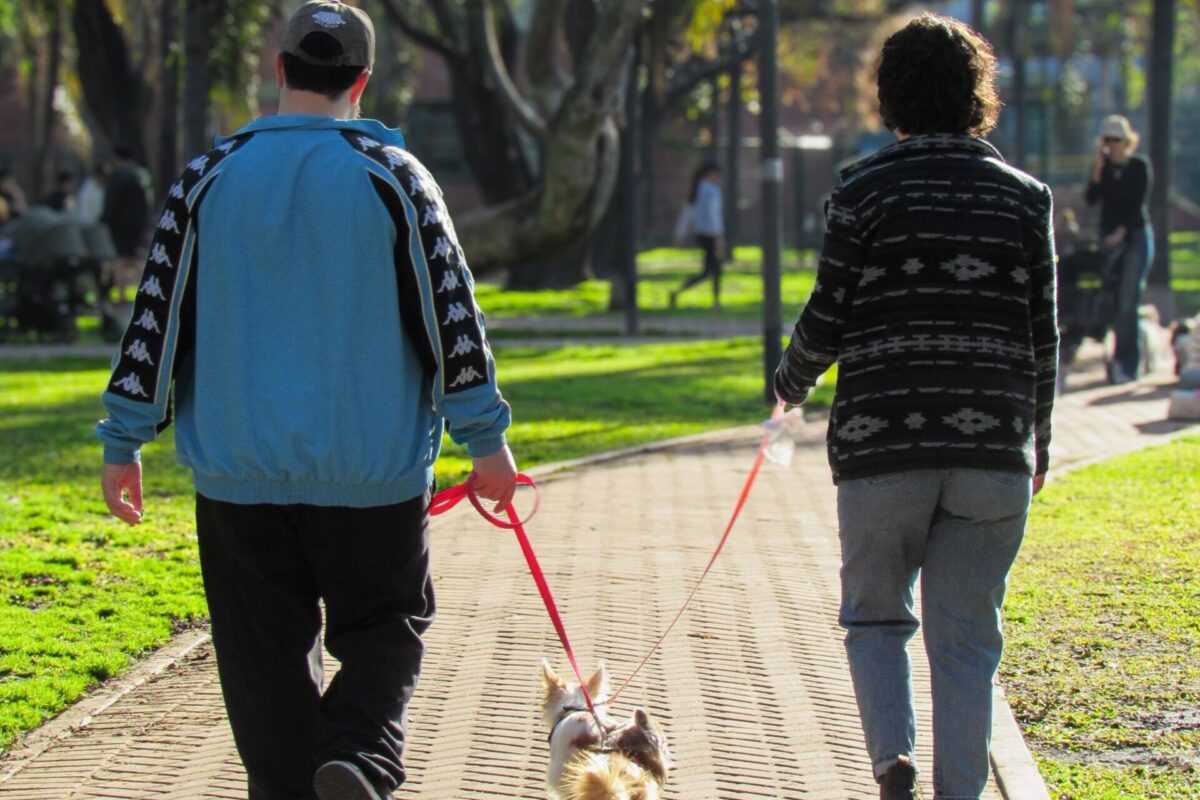
A leash does not teach a dog to walk nicely by itself. The rule is simple, even if it takes patience: when the leash goes slack, the walk continues; when the dog pulls, you stop. Stand still, wait for the dog to look back or the leash to slacken, then move again. Most dogs work it out in a week or two of short daily sessions, because pulling stops paying.
Treats help at the start: reward the dog for walking beside you and for checking in with you. Keep sessions short — ten minutes of good walking beats thirty minutes of a tug-of-war — and train on the same leash you use for normal walks.
Hands-free waist leashes suit runners and hikers, but they are not a training tool. Your hands are free, which means you have less control in a sudden moment. Use one only once the dog already walks well on a normal leash.
When to replace a leash
A leash is safety equipment, and it wears out quietly, so check it once a month. Run your hand along the whole length for frayed spots, thin patches, or stiff sections, check the stitching at the handle and the clasp, and test the clasp spring — it should snap shut firmly every time. If the clasp sticks, the stitching is coming loose, or the material is frayed through, replace it. A leash that fails on a walk fails at the worst possible moment.
Rinse a muddy leash in warm water, let it dry out of direct sun, and hang it up rather than coiling it tight in a drawer. A leash that is looked after lasts years.
Frequently Asked Questions
What length leash is best for everyday walks?
Six feet suits most dogs and most walks — enough room for the dog to sniff, short enough to keep control. Four feet is better near traffic, in crowds, or while you are teaching loose-lead walking.
Are retractable leashes safe?
They can work on empty trails, but they are harder to control than a standard leash. The cord can tangle around legs and other dogs, and locking it quickly takes practice. Keep it locked short whenever people or other dogs are near.
What is the best leash for a dog that pulls?
A shorter standard leash, around four feet, clipped to a harness, plus stopping whenever the dog pulls. The leash alone does not fix pulling — the stop-and-wait routine does that, usually within a week or two of short daily sessions.
Leather or nylon — which lasts longer?
A good leather leash usually outlasts nylon and feels better in the hand, but it needs to be kept dry. Nylon is cheaper, lighter, and fine for most dogs, as long as it is wide enough and the stitching is solid.
When should I replace my dog’s leash?
As soon as you find fraying, thin or stiff patches, loose stitching at the handle or clasp, or a clasp that does not snap shut firmly. Check it once a month — a leash that fails on a walk fails at the worst moment.
Related reading
- How Much Exercise Does a Dog Need? By Age, Size and Breed Type
- Dog Body Language: How to Read What Your Dog Is Feeling
- Best Dog Life Jackets for Swimming: Fit, Features, and What Actually Keeps Your Dog Safe
- Why Do Dogs Bark at Strangers? Fear, Territory and What Helps
Sources
- American Kennel Club — leash training and walking guidance
- RSPCA — dog walking and lead safety advice
- VCA Animal Hospitals — leash training for dogs