
Research-based guide only. No product was personally tested, no brand or model is recommended, and no prices or links are included.
The first time my neighbour’s Labrador jumped off a dock, everyone laughed — until the dog got tired twenty metres out and started paddling in circles. A man in a kayak towed him back. The dog was a strong swimmer. He was also exhausted, and exhaustion is exactly what a life jacket is for.
A life jacket does not teach a dog to swim. It buys time and keeps a tired, cold, or panicked dog’s head above water. That matters for far more dogs than people assume.
Even good swimmers get into trouble
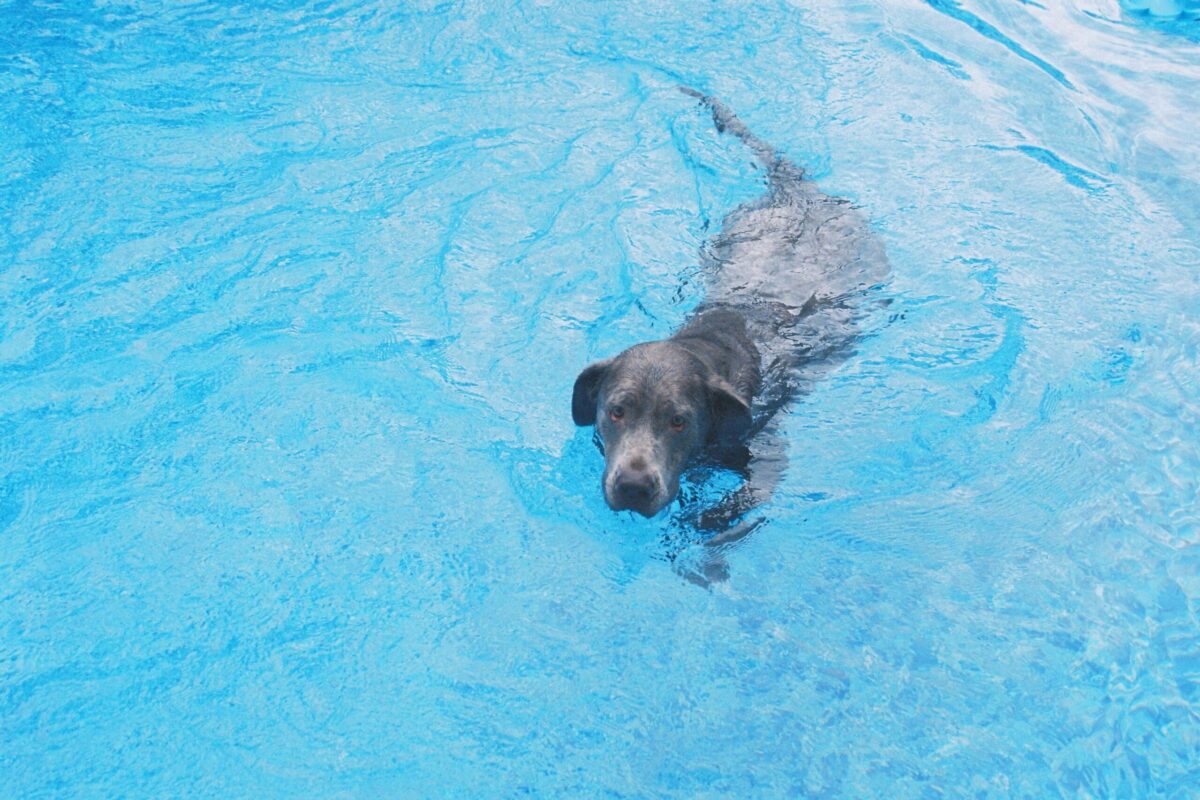
Some breeds are built for water and some are not, but fitness, age, and conditions matter more than breed reputation. An older dog tires faster. A puppy has enthusiasm and no stamina. A dog that swims beautifully in a calm pool can struggle in a lake with a current, a boat wake, or a steep bank it cannot climb.
Cold water is another quiet risk. A dog that is fine for ten minutes in summer can start shivering and slowing down in a cold spring lake. And panic undoes technique: a dog that slips off a boat or gets splashed in the face can gulp water and thrash instead of swimming.
A life jacket is cheap insurance for all of that. It is not a sign your dog is a bad swimmer. It is a sign you have thought about what happens when swimming stops going well.
Fit matters more than the jacket itself

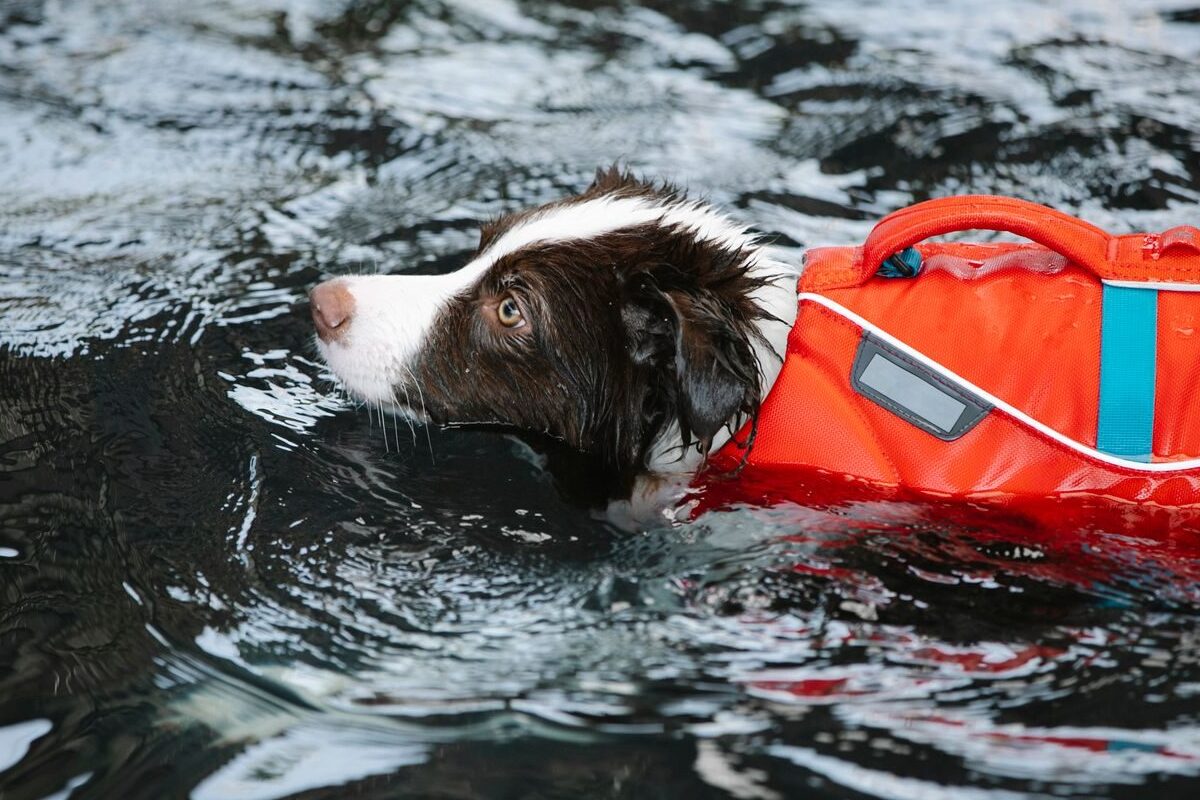
A loose life jacket is worse than useless — it slides around, rides up over the dog’s face, and can trap legs. A too-tight one restricts breathing and movement. Fit is the whole game.
Measure before you buy. You need the dog’s weight, the length from neck to tail base, and the widest chest measurement just behind the front legs. Most makers size by chest girth first and weight second, so if your dog falls between sizes, go by chest and check the return policy.
When the jacket is on, do the two-finger check: you should be able to slide two fingers under every strap, but not much more. Watch the dog walk. The jacket should stay put without sliding sideways, and the neck opening should sit clear of the throat. If the front edge presses on the windpipe when the dog lowers its head, the size or the cut is wrong.
Long-bodied dogs, deep-chested dogs, and barrel-chested dogs often need different cuts, so do not assume the jacket that fits your friend’s spaniel will fit your boxer. Try it on at home, dry, before you ever get near water.
The features worth paying attention to

A handle on top is the single most useful feature. It is how you lift a wet dog back onto a boat, a dock, or a bank without grabbing a collar or a leg. Look for a handle that is wide, stitched through the jacket, and positioned over the dog’s centre of gravity — roughly mid-back.
A strong D-ring lets you clip a lead on for dock walks and boat ramps, but it is not a substitute for a walking harness. The belly panel matters too: a full panel under the chest gives more buoyancy and keeps the jacket from rolling, while a strap-only design can shift on a wriggly dog.
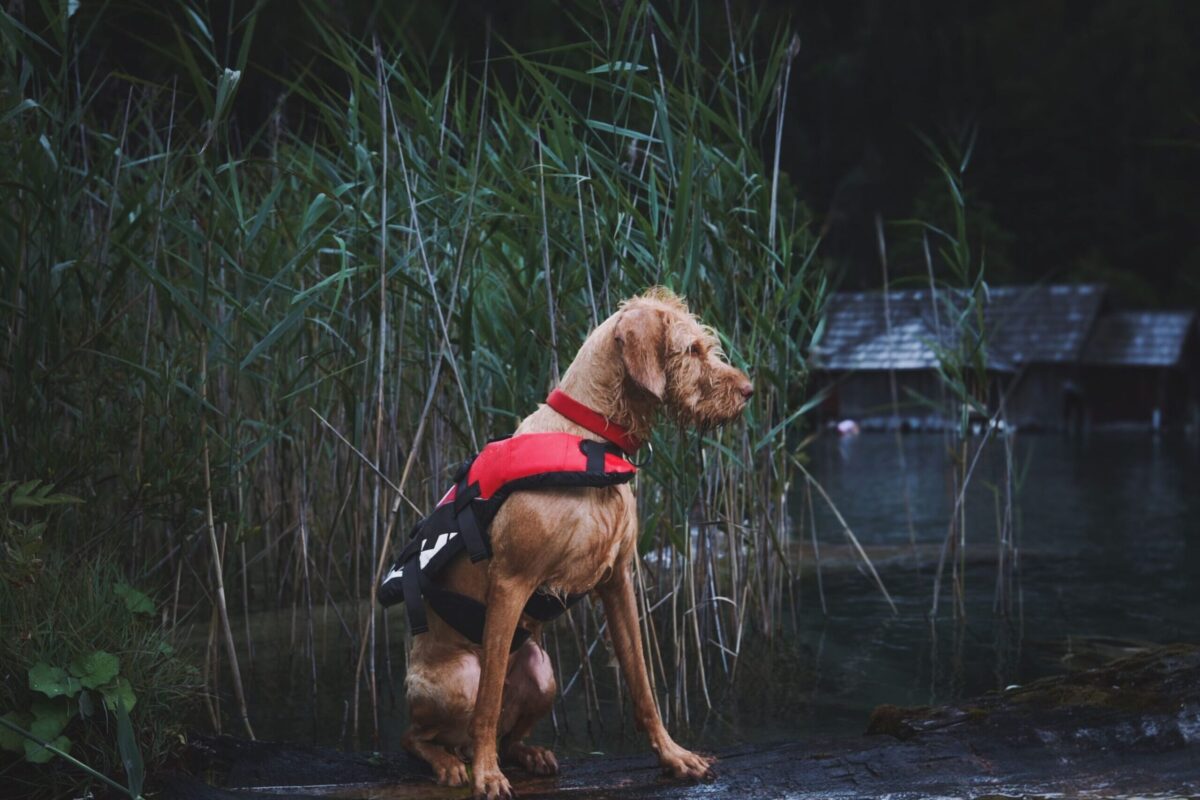
Bright colours and reflective trim are not fashion. On open water, a neon yellow or orange jacket is visible from a boat in a way a navy one is not. If you swim at dusk or on a busy lake, that visibility is the point.
Front flotation — extra padding under the chin and chest — helps keep a tired dog’s head up. It is especially worth having for dogs with heavy heads, short muzzles, or low body fat.
Getting your dog used to it before swim day
Do not put a life jacket on a dog for the first time at the lake. Put it on in the living room. Let the dog sniff it, then wear it for a few minutes while you hand over treats and play a normal game. Take it off. Repeat over a few days, a little longer each time.
Next, let the dog walk around the garden in it. Then try shallow water — a paddling pool, the edge of a pond — where the dog can stand. Most dogs forget about the jacket within minutes once something interesting is happening. A dog that freezes, flops over, or tries to chew the straps is telling you to slow down, not that the jacket is hopeless. Shorter sessions and better treats usually fix it.
When to use it, and when to skip it
Use one for boats, docks, rivers with current, deep lakes, and any swimming where the dog cannot easily climb out. Use one for puppies, seniors, and any dog that is new to swimming. Use one when the water is cold or the swim will be long.
You can skip it for a confident adult dog splashing in a shallow garden pool under your eye, or for a quick paddle at the edge where the dog can stand. Even then, keep the jacket in the car. Conditions change, and a dog that was fine at the edge may follow a duck into deeper water.
After swimming, rinse the jacket in fresh water, hang it to dry out of direct sun, and check the straps and buckles before the next outing. A jacket with a frayed strap or a cracked buckle is a jacket that fails when it is needed.
Frequently Asked Questions
Do all dogs need a life jacket?
No, but far more dogs benefit than owners expect. Strong swimmers still tire, and jackets help most in open water, on boats, and in currents — exactly the places where a tired dog cannot just stand up.
Can my dog swim in a life jacket all day?
A jacket helps a dog stay afloat, but it does not remove tiredness. Keep swims short, watch for slowing down or shivering, and bring the dog out for rests. A jacket is a safety aid, not an endurance aid.
What if my dog hates wearing it?
Slow down the introduction. A few minutes indoors with treats, then the garden, then shallow water, over several days. If the dog still panics, check the fit first — most refusals are a fit problem, not a jacket problem.
Is a life jacket the same as a harness?
No. A harness is for walking and control. A life jacket is for buoyancy, with a handle for lifting a dog out of water. Some jackets have a lead ring, but they are not built as everyday walking harnesses.
How do I know the size is right?
Measure the chest behind the front legs and match the maker’s size chart, not just weight. On the dog, the jacket should sit still when the dog walks, pass the two-finger strap check, and leave the throat clear.
Related reading
- How Much Exercise Does a Dog Need? By Age, Size and Breed Type
- Dog Body Language: How to Read What Your Dog Is Feeling
- Best Dog Enrichment Toys for Bored Dogs: What Actually Keeps Them Busy
- Why Do Dogs Bark at Strangers? Fear, Territory and What Helps
Sources
- American Kennel Club — dog water safety guidance
- RSPCA — dog exercise and water safety advice
- VCA Animal Hospitals — swimming safety for dogs