
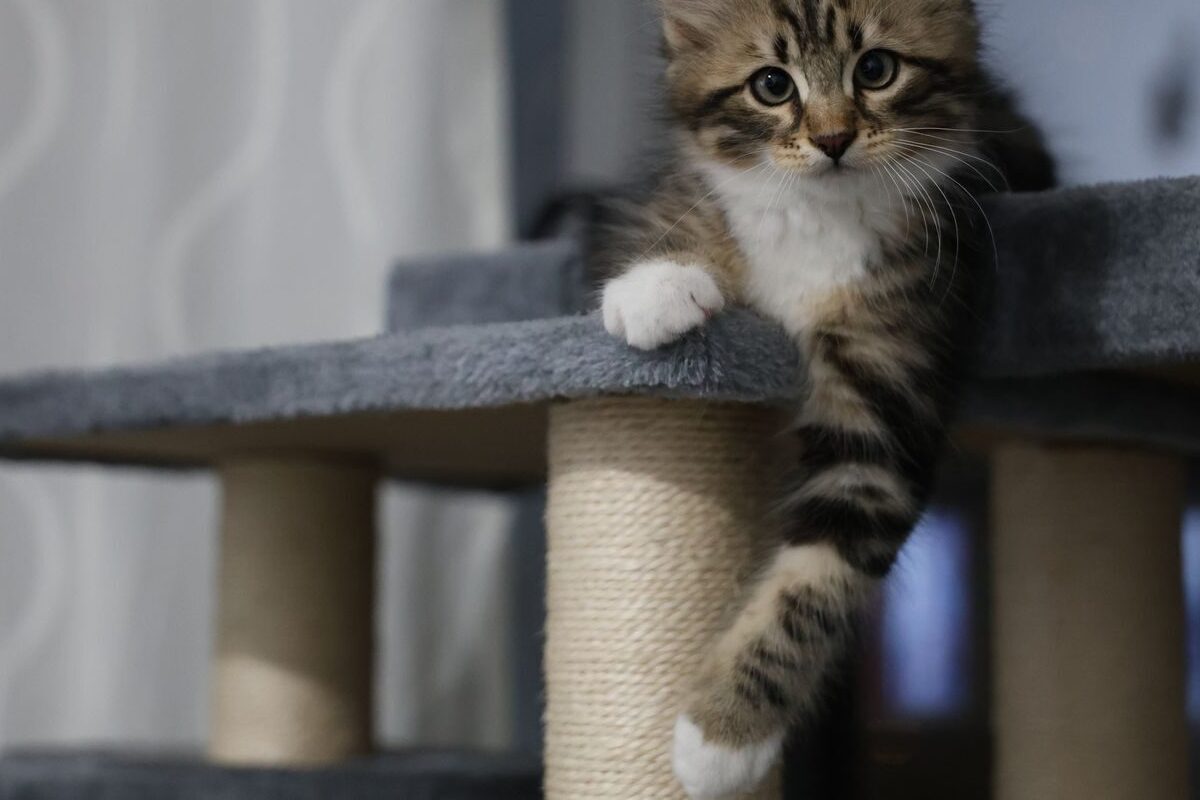
A cat tree only works if your cat actually uses it, and cats use trees for three things: height, scratching and hiding. The best tree is a stable one, placed near a window, with real sisal posts to scratch and a perch high enough to survey the household — not the tallest or prettiest tree in the shop.
Research-based only. No product was personally tested.
Cats live vertically. In the wild, height means safety and a view of everything coming, and pet cats keep that instinct: the cat on top of the wardrobe is not being difficult, she is being a cat. A good cat tree gives her that height in a form she can actually use, plus somewhere to scratch that is not your sofa. A bad one wobbles, sheds carpet, and becomes an expensive ornament she walks past.
The difference between a used tree and an ignored one is rarely the price. It is stability, placement and whether the tree matches how your cat actually behaves.
What makes a cat tree worth it
Stability comes first. A tall tree with a small base tips when a cat launches onto it, and one good scare can put a cat off a tree for good. Look for a wide, heavy base and a tree that does not rock when you push it at the top. Wall-mounting or a strap to the wall helps in homes with big, athletic cats.
Scratching posts are the second test. Cats scratch to maintain claws and mark territory, so a tree with real sisal rope posts, not carpet alone, gives them the right surface. Carpeted posts get shredded fast and do not satisfy the scratching urge the same way. A tree that combines sisal posts with a perch and a hiding spot covers the three things cats want most: scratch, survey, hide.
Height matters, but so does the route up. Older or less agile cats need steps or ramps between levels, not a single big jump. Kittens and athletic adults will use taller trees happily, but every cat needs to be able to get down as easily as she gets up.
Size, space and your cat
Measure before you buy. A tree that blocks a doorway or crowds a small room will annoy you, and a tree squeezed into a corner with no view will bore the cat. The best spot is usually near a window with a view, away from the food bowl and litter box, where the cat can watch the household without being in the middle of it.
For multi-cat homes, one tree is rarely enough — cats share territory uneasily, and a single high perch becomes something to guard. Two smaller trees, or a tree plus a window perch and a shelf, spread the territory out and cut down on squabbles.
Big cats need bigger perches. A perch that a large cat cannot stretch out on will be abandoned for the sofa, which defeats the purpose. Check the perch size and weight limit, not just the overall height.
Two options to compare
- Product: Frisco 72-inch Cat Tree and Condo
- Good for: The classic big family tree. Tall enough for serious climbers, with multiple perches, a condo hideaway and sisal posts, and a wide base for its height. A good pick for multi-cat homes with space for a large tree.
- Watch out for: It is big — measure your room and your ceiling first. The carpeted parts wear with heavy scratching, and very large cats may still find the top perch snug.
- Product: Go Pet Club 62-inch Cat Tree
- Good for: A mid-size tree that fits smaller rooms while still giving height, perches and a condo. The sisal posts are properly placed for scratching, and the stepped levels suit cats that do not jump huge distances.
- Watch out for: Lighter than the big trees, so anchor it or place it against a wall if your cat charges up it at speed. The lowest condo suits average cats better than very large ones.
What to avoid
Avoid trees with a tiny base and a tall tower — they tip. Avoid trees where every surface is carpet and there is no sisal to scratch. Avoid dangling toys on elastic strings left unsupervised, which can tangle, and avoid placing a tree right next to a bird cage or a high-traffic doorway, where the cat feels watched rather than safe.
Getting a cat to actually use it
Put the tree where the cat already likes to be, not where it looks tidy. A sprinkle of catnip on a new perch helps some cats investigate, and playing with a wand toy up the levels teaches a nervous cat the route. If a cat still ignores a tree after a few weeks, the problem is usually placement or stability, not the cat — move it near a window and check for wobble before giving up.
FAQs
How tall should a cat tree be?
Tall enough that the top perch is above sofa height, so the cat gets a real vantage point. For most homes that means around 4 to 6 feet, with a stable base to match.
Where is the best place for a cat tree?
Near a window with a view, away from food and litter, where the cat can watch the household without being in the middle of traffic. A corner with no view is the worst spot.
Why does my cat ignore her cat tree?
Usually placement, wobble, or the wrong surfaces. Move it near a window, check it does not rock, and make sure it has sisal to scratch, not just carpet.
Do I need more than one tree for two cats?
Ideally yes, or a tree plus a window perch or shelf. Cats guard high spots, and one perch for two cats causes tension even if they seem to tolerate it.
Are wall-mounted shelves better than a tree?
They serve the same instinct — height and territory. Shelves suit small rooms and confident climbers; a tree suits cats that also want a hideaway and scratching posts in one piece.
Do kittens need a cat tree?
Yes, but a small, stable one with low steps: kittens climb eagerly but tire and misjudge distances, so short levels and an easy route down matter more than height. A kitten tree with sisal posts also teaches scratching on the right surface from the start, which saves your sofa later.
How do I clean a cat tree?
Vacuum it weekly to remove fur and dust, spot-clean stains with a pet-safe cleaner, and check sisal posts for fraying as you go. Carpeted parts wear out first — a tree that smells stale or sheds will be ignored, so a quick weekly clean keeps it inviting and extends its life.
Can a cat tree help a cat that scratches furniture?
Yes, if it stands where the scratching happens: cats scratch to maintain claws and mark territory, so a tree with sisal posts next to the sofa gives them the right surface in the right place. Praise scratching on the tree and cover the furniture spot temporarily — moving the tree to a distant corner will not work.
Internal links (existing live Furrology posts)
- https://furrology.net/cat-sleeping-positions-meaning/
- https://furrology.net/indoor-vs-outdoor-cats/
- https://furrology.net/how-to-stop-cat-scratching-furniture/
- https://furrology.net/how-to-make-your-cat-love-you-more/
Sources
- PetMD, cat trees and vertical space
- RSPCA, indoor cat enrichment and scratching
- Cornell Feline Health Center, environmental enrichment for cats
- International Cat Care, cats and climbing behavior