
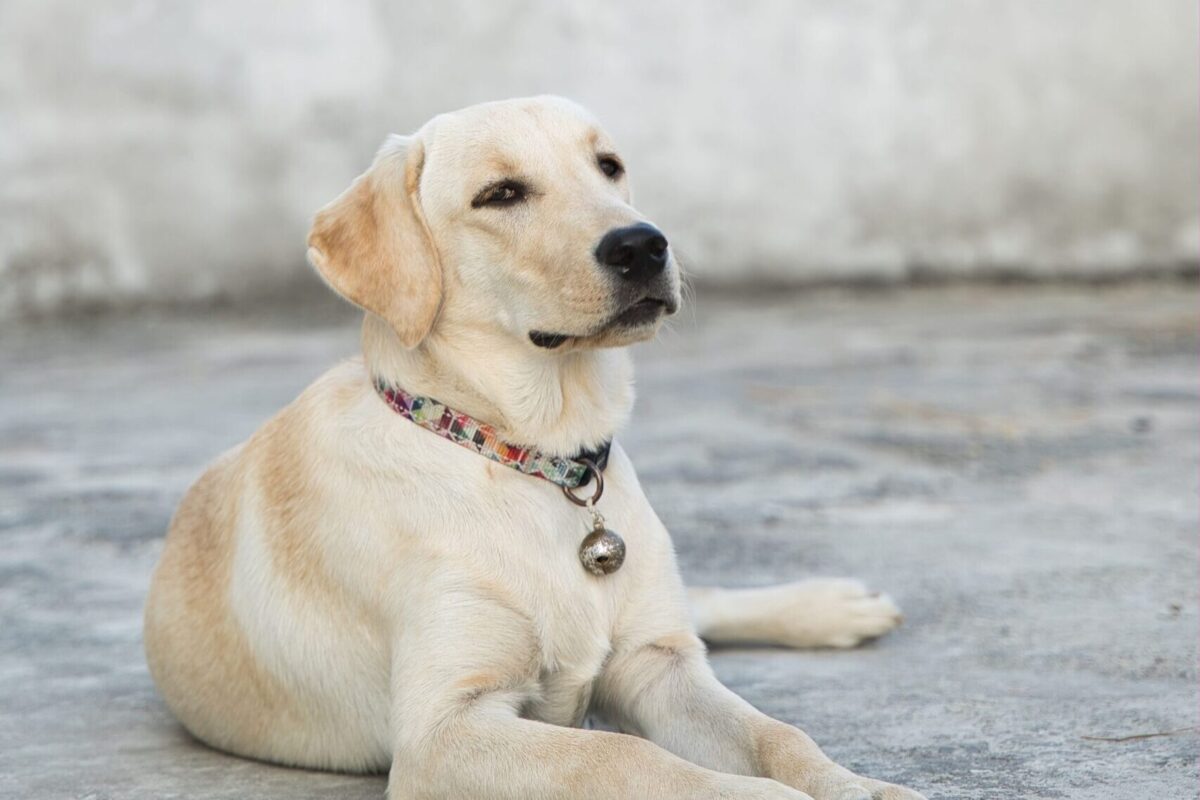
Walk into any pet shop and you’ll see collars from a couple of dollars all the way up to more than a week’s groceries. Leather ones with brass fittings. Collars with crystals. Collars that promise to do everything except walk the dog for you. And somewhere in the middle of all that, the simple question most owners actually have: how much do I need to spend to get a collar that does its job?
The honest answer is: not much. Fifty dollars is a generous budget for a dog collar. It covers a well-made everyday collar, an ID tag, and usually money left over. This guide is about spending that budget well: what to look for, which types are worth it, how to get the fit right, and which collars are a waste of money at any price.
The short answer: spend on fit and hardware, not on the label
A collar has three jobs. It holds your dog’s ID tag. It gives you something to hold onto, or to clip a lead to. And it needs to stay on, stay comfortable, and not fall apart. That’s it. A collar that does those three things well is a good collar, and it doesn’t need a famous brand name or a fancy material to do them.
What you’re actually paying for in a good collar is the fit and the hardware. A collar that fits properly and has a solid buckle and a strong D-ring will outlast a pretty collar with a flimsy clasp, every time. The label doesn’t keep your dog safe. The stitching does.
So the rule for a $50 budget is simple: put the money into a collar that fits well, feels comfortable, and has good hardware, and don’t pay extra for decoration, packaging, or a brand name. The best collar for your dog is almost certainly not the most expensive one in the shop.
What a $50 budget actually buys

Here’s the good news: $50 is more than enough. A plain, well-made nylon collar is one of the cheapest things you can buy for a dog, and it does the job perfectly well for most dogs. A decent leather collar still fits inside $50, and so does a waterproof one made from coated webbing.
What $50 doesn’t buy is a reason to worry. You don’t need to choose between a collar and anything else your dog needs. You can buy the collar, buy an ID tag, and still have money left over. And if the collar wears out in a year or two, you can replace it without thinking twice — which is exactly how it should be. A collar is a working item, not a keepsake. It gets wet, it gets muddy, it gets chewed by the dog occasionally. Buy one that works, use it hard, replace it when it’s worn.
One more thing to buy at the same time: an ID tag with your phone number on it. It’s the cheapest insurance you can buy, and a collar without a tag is only half a collar. If your dog gets lost, the tag is what brings him home — and it’s the part a stranger can read without any equipment. Most places also have some form of legal requirement for dog identification, whether it’s a tag, a microchip, or both. Our guide to your dog’s first vet checkup is a useful starting point for the microchip side of things.
The types worth looking at
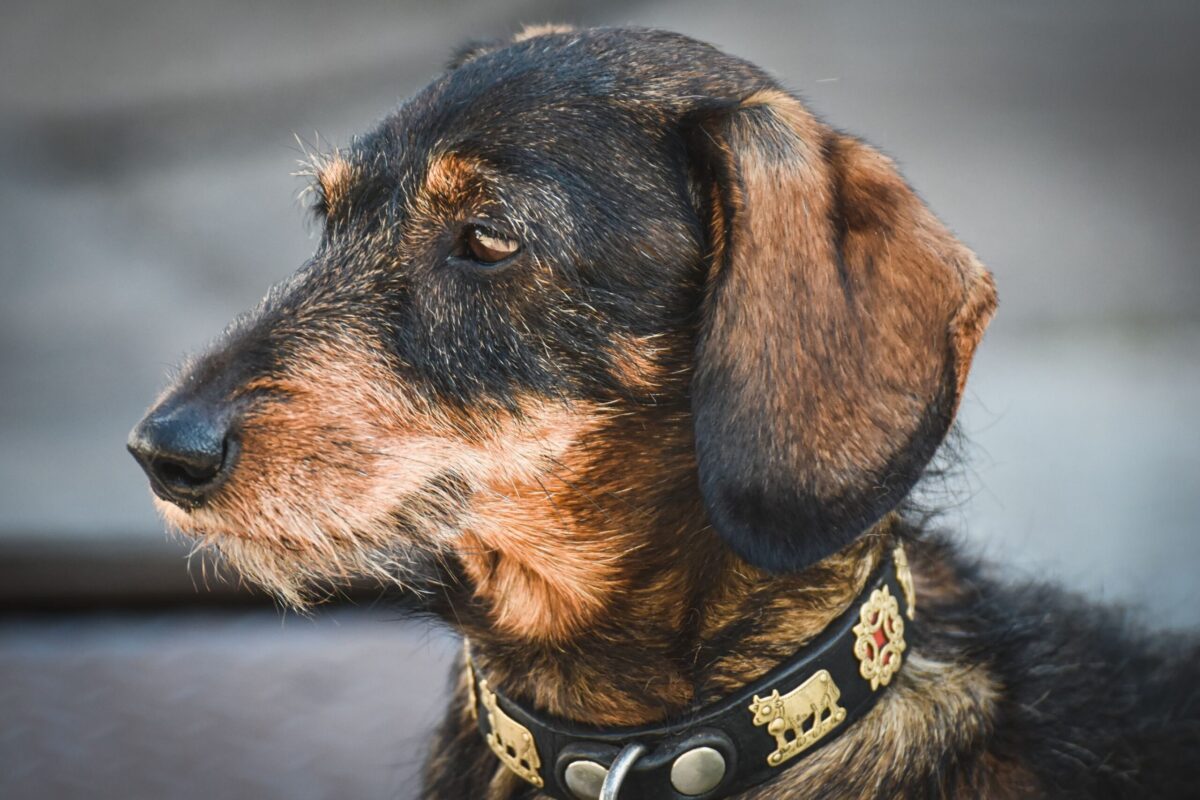
There are more types of collar than most owners realise, and the right one depends on your dog — his size, his coat, what he gets up to, and how he walks.
Flat collars. The everyday collar. A flat band of nylon, leather, or fabric with a buckle and a D-ring. This is what most dogs wear most of the time, and it’s the right choice for most owners. It’s comfortable, it’s simple, it holds a tag and a lead. If you’re not sure which type to buy, buy a flat collar. Our guide to dog collars, fit and comfort covers the basics of getting the fit right.
Martingale collars. These tighten slightly when the dog pulls, then loosen again when he stops. They’re not choke chains — the tightening is limited, and they can’t keep tightening the way a slip collar can. They’re useful for dogs with narrow heads — sighthounds like greyhounds and whippets, whose heads are barely wider than their necks and who can slip out of a flat collar. If your dog has ever backed out of his collar, a martingale is worth a look. They’re usually no more expensive than a flat collar.
Waterproof collars. Made from coated webbing, these don’t soak up water, mud, or smell the way nylon and leather do. If your dog swims, or if he comes home from every walk covered in mud, a waterproof collar is genuinely worth the money. They’re easy to rinse clean, they dry in minutes, and they last a long time. And they fit comfortably inside a $50 budget.
Reflective collars. These have a reflective strip woven in, so your dog shows up in car headlights at night — worth having if you walk in the dark. Many flat collars include reflective stitching at no extra cost, so look for it when you’re choosing.
How to get the fit right
A collar that doesn’t fit properly is worse than useless — it’s uncomfortable, it can rub, and it can slip off at exactly the wrong moment. Getting the fit right matters more than anything else in this guide.
The two-finger test. Put the collar on and slide two fingers flat between the collar and your dog’s neck. If they slide in easily and the collar sits snugly without pressing into the fur, the fit is right. If you can’t get two fingers in, it’s too tight. If you can get three or four fingers in, or if the collar slides around easily, it’s too loose. Check the fit every few weeks, too — puppies grow fast, and adult dogs gain and lose weight through the year.
Measure before you buy. If you’re buying online, measure your dog’s neck with a soft tape measure, around the middle of the neck, not too tight and not too loose. Then add about two centimetres (just under an inch) for comfort, and buy the size that covers that measurement. Don’t guess. A collar that’s one size too small is a collar that rubs, and a collar that’s one size too big is a collar that slips off.
Check it on the dog, not on the shelf. When you put a new collar on, watch how your dog reacts. Does he scratch at it constantly? That’s normal for the first hour or so, but if he’s still scratching at it the next day, the fit or the material may be wrong. Does it sit straight, or does it twist around so the buckle is under his chin? A collar that twists is usually too loose, or the wrong width for the dog.
Width matters. A wide collar spreads the pressure across more of the neck, which is kinder for a dog who pulls; a narrow one suits a small dog who doesn’t. As a rough guide: about 1.5 cm wide for a small dog, 2 to 2.5 cm for a medium dog, 2.5 to 4 cm for a large dog. If your dog pulls hard, go wider — and pair the collar with training rather than relying on the collar alone. Our guide to leash training a dog that pulls covers the loose-lead method step by step.
Materials: what lasts and what doesn’t

Nylon. The most common collar material, and for good reason. It’s cheap, it’s strong, it comes in every colour, and it washes easily. The downsides are that it soaks up water and smells, it can fray at the edges over time, and the colours fade in the sun. For most dogs, nylon is the sensible default.
Leather. The classic choice. A good leather collar is strong, comfortable, and it looks better as it ages. The downsides are that it’s heavier than nylon, it costs more, and it doesn’t like water — a leather collar that gets soaked regularly will stiffen and crack. If your dog doesn’t swim much, leather is a lovely choice that easily fits in a $50 budget.
Coated webbing (waterproof). The practical choice for wet dogs. It doesn’t soak up water, it doesn’t hold smells, it wipes clean, and it’s strong. It looks plainer than leather, and some owners don’t like the slightly rubbery feel, but for a dog who lives in mud and rivers, it’s the best material there is. It also tends to last longer than nylon, because it doesn’t fray.
Hardware that matters
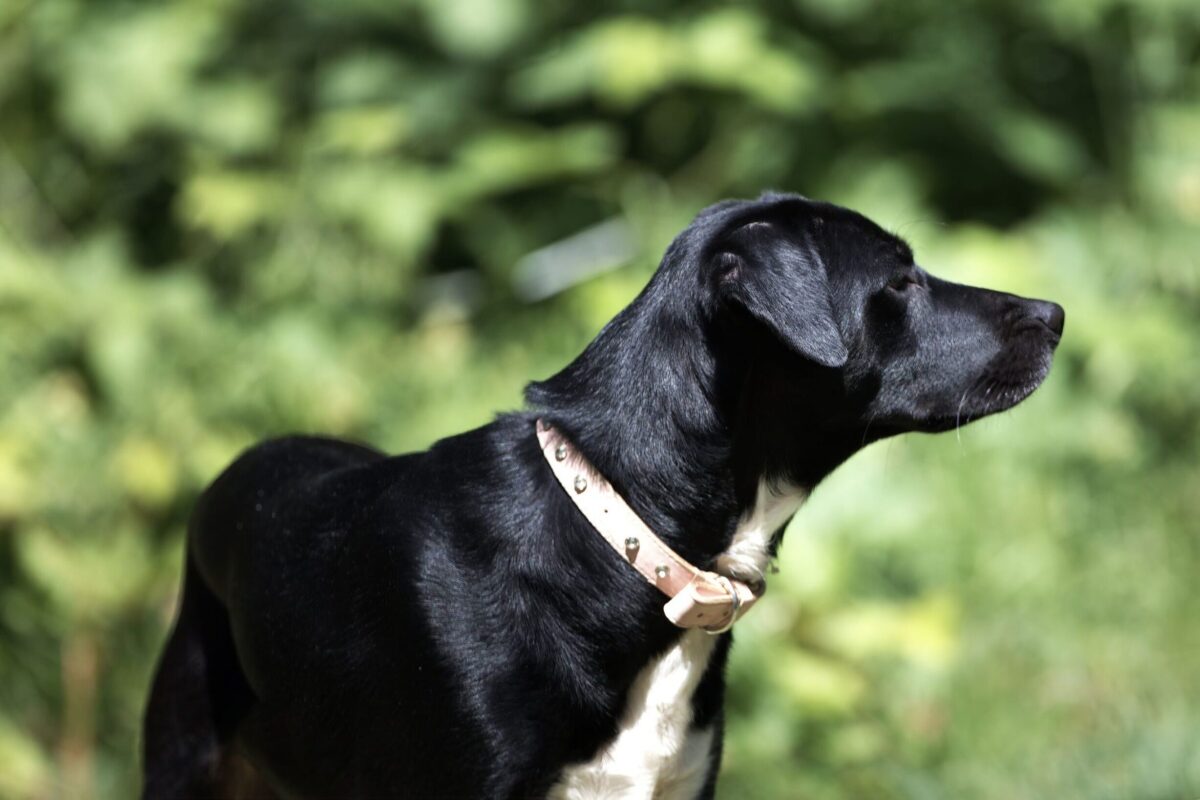
The hardware on a collar is the part that actually keeps your dog attached to you, so it’s worth a look before you buy.
The buckle. Plastic side-release buckles are the most common, and they’re fine for most dogs — light and easy to use one-handed. Metal buckles are stronger and last longer, but they’re heavier. For a large, strong dog, a metal buckle is worth having. For a small dog, a plastic buckle is lighter and more comfortable. Whatever the material, check that the buckle clicks shut firmly and doesn’t pop open with a light tug.
The D-ring. This is where the lead clips on, so it takes the most force. It should be welded — joined in a complete circle, not just bent together — and it should be sized to the collar. A tiny D-ring on a wide collar is a weak point. Give it a tug before you use it. If it bends or feels thin and flimsy, the collar isn’t worth your money.
The stitching. Check the stitching where the buckle and the D-ring are attached: it should be tight, even, and doubled up, with sealed ends. Sloppy stitching is the first sign of a collar that will fail, and it’s the easiest thing to check.
What to skip

Collars with no tag ring. A collar that can’t hold a tag is a collar that isn’t finished. Skip it.
Very cheap collars that feel wrong. If the buckle feels like it will snap, if the stitching is already loose, if the material feels papery or thin — trust your hands. A collar that costs almost nothing but breaks on the third walk is the most expensive collar you’ll ever buy, because you’ll be buying another one.
Heavy chain collars for everyday use. A chain collar is heavy, it can damage your dog’s coat and skin with daily wear, and it can catch on things. Some owners use them for specific training purposes under a trainer’s guidance. As an everyday collar, they’re a poor choice.
Collars with glued-on decoration. Rhinestones, studs, and glued-on charms look fun in the shop. On the dog, they fall off, they catch on things, and the glue can irritate skin. If you like the look, buy a collar with the pattern woven in, not glued on.
Anything that promises to fix behaviour. No collar fixes pulling, barking, or running away on its own. A collar is a tool. The behaviour changes come from training, and the training takes time. Be wary of any collar that claims otherwise — especially the expensive ones.
Puppies, pullers, small dogs, and water dogs
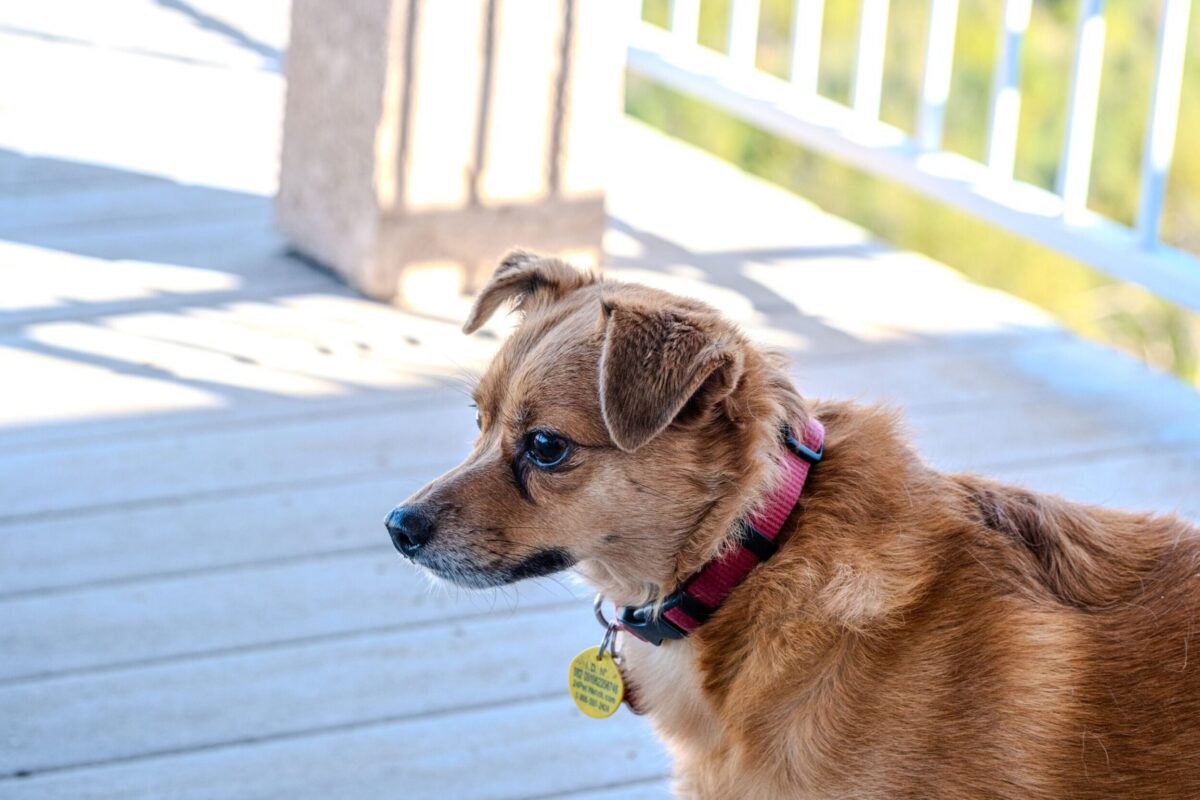
Puppies. A puppy needs a light, adjustable collar that you can widen as he grows — which, in the first few months, is often. Don’t buy the most expensive collar for a puppy, because he’ll outgrow it in weeks. Buy a cheap, light, adjustable one, check the fit every week, and buy a proper one when he’s closer to his adult size. Our guide to your puppy’s first week covers the early days, including getting him used to a collar and lead.
Strong pullers. If your dog pulls hard, the collar is not the solution — training is. But in the meantime, a wider collar spreads the pressure, and a harness may be kinder than any collar for a dog who pulls constantly. Our guide to the best no-pull harness covers that option. Don’t buy a choke chain or a prong collar without guidance from a qualified trainer — they’re tools with real risks, not shortcuts.
Small dogs. A small dog needs a light collar that doesn’t weigh his head down. A narrow nylon collar, with a small buckle and a small D-ring, is the right choice. Avoid heavy leather and thick hardware on a dog under ten kilos — it throws off his balance and chafes his neck.
Water dogs. If your dog swims, get a waterproof collar. Leather collars that live in water go stiff and smelly. A coated webbing collar rinses clean, dries in minutes, and doesn’t hold the pond smell. It’s the one type where spending a little more genuinely pays off.
Looking after a cheap collar

A collar that costs $20 or $30 deserves the same care as any other collar — mostly because the care is what makes it last.
Wash it. Nylon collars can go in the washing machine in a laundry bag, or be scrubbed by hand with warm water and a little soap. Leather collars should be wiped down, not soaked. Waterproof collars just need a rinse under the tap. Whatever the material, don’t let a muddy collar dry out caked in mud — the dirt works its way into the fibres and the stitching, and the collar wears out faster.
Check it monthly. Give the collar a once-over every month. Pull on the D-ring. Check the buckle still clicks firmly. Look at the stitching where the hardware is attached — is it fraying or coming loose? Is the collar itself getting thin or worn where it sits under the chin? A collar that’s wearing out is a collar that can fail, and it’s much better to replace it a month early than a day late. And if your dog has had a growth spurt or put on weight, check the fit again.
Frequently Asked Questions
How much should I spend on a dog collar?
For most dogs, $20 to $50 covers a well-made collar with money left over for an ID tag. A plain nylon collar costs less and works perfectly well. The price doesn’t tell you how good a collar is — the fit, the stitching, and the hardware do.
Is a cheap collar safe for my dog?
A cheap collar is safe if it’s well made and fits properly. The danger isn’t the price — it’s poor stitching, a flimsy buckle, or a wrong fit. Check the hardware, check the stitching, and do the two-finger fit test. A $15 collar that passes those checks is safer than a pricey collar that doesn’t.
What type of collar is best for a dog that pulls?
A wider flat collar spreads the pressure, but no collar on its own fixes pulling — training does. For a dog who pulls hard, a harness is often kinder than a collar. A no-pull harness or a well-fitted front-clip harness takes the pressure off the neck while you work on the loose-lead training that actually solves the problem.
Should my dog wear a collar all the time?
Most dogs wear their collars all the time, and that’s fine as long as the collar fits and the dog is comfortable. If you take it off, make sure your dog is still identified — a microchip that’s registered and up to date. And never leave a collar on a dog in a crate unsupervised if the collar could catch on something.
How do I measure my dog for a collar?
Use a soft tape measure around the middle of his neck, not too tight. Add about two centimetres (just under an inch) for comfort. Then buy the size that covers that measurement. Don’t guess by breed or by weight — dogs of the same breed can have very different neck sizes.
Is leather or nylon better for a dog collar?
It depends on your dog. Nylon is cheaper, lighter, and easy to wash — the sensible default for most dogs. Leather is stronger, looks better as it ages, and suits dogs who don’t swim much. Waterproof coated webbing beats both for dogs who swim or get muddy every day. None of them needs to cost more than $50.
Do I need a special collar for a puppy?
A puppy needs a light, adjustable collar that you can widen as he grows. Don’t spend a lot on a puppy collar — he’ll outgrow it in weeks. Buy something cheap and light, check the fit every week, and buy a proper collar when he’s closer to his adult size.