

There is a particular kind of hamster owner — most of us have been one — who buys a beautiful little house for their hamster, sets it up carefully, and comes back the next morning to find the hamster ignoring everything and chewing the bars instead. Or pacing. Or sitting in a corner, doing nothing at all.
A bored hamster is a hamster who chews bars, climbs the sides, paces in circles, and tries to escape. And the fix is usually simpler than owners expect: give him something to do. A hamster is a busy, curious, energetic little animal, and when he has nothing to do, he invents something — and it’s rarely something you want him inventing.
The good news is that hamster toys are cheap. Thirty dollars is a generous budget — it buys a wheel, several chews, a tunnel or two, and money left over. This guide covers the toys that actually get used, the ones to skip, and how to set up a cage that keeps a hamster busy without spending a fortune.
The short answer: wheels, chews, tunnels — and something to dig in

A hamster needs four things from his toys, and if you cover them, you cover almost everything. He needs to run — he’s a creature who would run several kilometres a night in the wild. He needs to chew — his teeth grow all his life, and chewing is how he keeps them in shape. He needs to hide and explore — he’s a prey animal, and tunnels and hideouts make him feel safe. And he needs to dig — burrowing is one of his strongest instincts, and a hamster who can’t dig is a hamster who gets frustrated.
So the rule for a $30 budget is simple: spend it on a good wheel, some chews, a tunnel or two, and deep bedding to dig in. Those four things will do more for your hamster’s happiness than anything else in the pet shop, and they’ll cost less than you think. The rest of this guide explains how to choose each one, and what to avoid.
The wheel: the one toy that matters most

If you buy one thing from this guide, make it a good wheel. A hamster in the wild runs several kilometres a night — running is not exercise for him, it’s the main thing his life is about. A hamster without a wheel is like a person without a way to move around. He gets bored, he gets restless, and he starts looking for other ways to use up that energy. That’s when the bar-chewing and the pacing start.
Size matters more than anything. A wheel that’s too small forces your hamster to run with his back arched — a position that hurts his spine over time and can cause real damage. The minimum wheel size for a Syrian hamster is 28 cm (about 11 inches) in diameter. For a dwarf hamster, 20 cm (about 8 inches). If you’re not sure, go bigger. A wheel that looks too big is almost never too big — but a wheel that looks about right is very often too small.
Solid floors, not bars. A wheel with a barred or mesh running surface is a trap for tiny feet. A hamster’s feet can slip through the gaps and get caught, and broken legs and injured feet are a common result. Choose a wheel with a solid running surface — smooth plastic or solid wood — and no gaps anywhere. Our guide to hamster cage setup covers the full cage picture, including the wheel.
Silence is a feature. A wheel that squeaks will keep you awake, and it will also put your hamster off using it. A silent wheel — one with a proper bearing, or one that runs on a smooth axle — is worth paying a little more for. Test the wheel in the shop if you can: spin it by hand and see how it sounds.
Chews: because their teeth never stop growing

A hamster’s teeth grow all through his life — about a millimetre a week — and he has to wear them down by chewing, or they grow too long and stop him eating. That’s why chews aren’t optional toys. They’re a health requirement.
The cheapest and best chews are the ones that come from nature: apple wood sticks, willow sticks, and untreated branches from hamster-safe trees. A packet of apple wood sticks costs very little, and it lasts weeks. Loofah chews are also popular — soft, fibrous, and good for wearing teeth down. Wooden chew houses do two jobs at once: your hamster chews the house, and he sleeps in it.
What to avoid. Don’t buy anything with paint, varnish, dye, or glue on it. Don’t buy salt licks or mineral blocks — they sound healthy, but hamsters don’t need them, and too much salt and minerals can cause health problems. And don’t buy chews made of soft plastic if your hamster can swallow pieces of them: wood and loofah are safer, because they break down. Our guide to safe hamster chews covers exactly which woods are safe and which are not.
Tunnels and hideouts
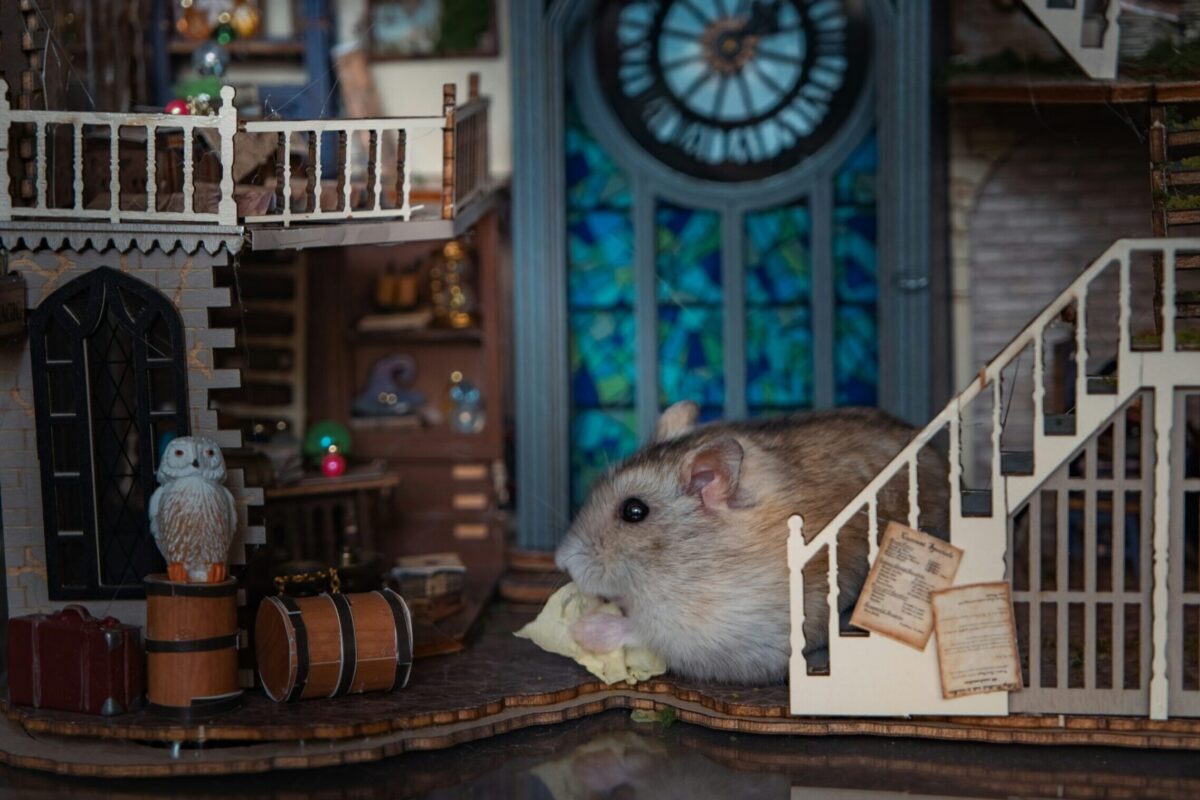
A hamster is a prey animal. In the wild, he lives underground, coming out at night to forage, and running for cover at the first sign of danger. That instinct doesn’t go away in a cage, and a hamster without places to hide feels exposed all the time — stressed, and unhappy.
Tunnels and hideouts give your hamster somewhere to go. A cardboard tube — a toilet roll tube, or a kitchen roll tube cut in half — is the cheapest and best tunnel there is, and it’s free. Cork tunnels, cork logs, and coconut hides are cheap and popular, and they double as chews. A wooden hideout is a classic: your hamster sleeps in it during the day, and it’s a place he can retreat to when he wants to be alone.
The important thing is variety. One hideout is not enough — three is better, spread around the cage, at different levels and in different corners. A hamster who has a choice of hideouts feels safer than a hamster who has one, and a hamster who feels safe is a hamster who comes out and plays. Our guide to hamster hideouts covers the different types and how to place them.
Digging and burrowing: the cheapest enrichment of all

If you had to name the single most important thing for a hamster’s happiness, it might not be a toy at all — it might be bedding. Deep bedding, so he can dig and burrow.
In the wild, a hamster lives in a burrow. He digs tunnels, makes chambers, stores food, and sleeps in a nest he built himself. In a cage, he can only do that if the bedding is deep enough — at least 15 cm (about 6 inches) deep, and more is better. Six inches of bedding lets him dig properly, build a burrow, and feel like he’s living in a home rather than a box.
Bedding is cheap, and it’s the best enrichment you can buy. Paper-based bedding, aspen shavings, or a mix of both — all of these are safe and cheap. Scatter-feeding — sprinkling his daily food through the bedding instead of putting it in a bowl — turns every meal into a foraging game, and it costs nothing. A hamster who has to search for his food is a hamster who is busy, engaged, and happy.
What to skip

Exercise balls. The clear plastic balls you put a hamster inside so he can roll around the room. They look fun, and they’re popular, but most experienced hamster owners don’t recommend them. The ball has poor ventilation, so it gets hot inside quickly. The hamster can’t control where he goes, and he can’t get out. And if the ball hits a wall or a step, the hamster gets thrown around. A good wheel and a large cage are a better — and cheaper — way to give your hamster exercise.
Scented toys and perfumed bedding. Hamsters have a very sensitive sense of smell — it’s their main way of understanding the world — and anything strongly scented can cause them real distress. Avoid anything with added scent, including scented bedding, scented chews, or toys with perfume on them. Plain and natural is better.
Tiny plastic houses with small openings. A hamster house that looks cute in the shop can be a trap in practice. If the openings are too small for your hamster to get through easily — especially a Syrian — he can get stuck, or he can chew the plastic and swallow pieces. Choose houses with generous openings, in natural materials — wood, cork, ceramic — and check that your hamster fits through every opening comfortably.
Anything too small to chew safely. A toy that breaks into small pieces is a toy that ends up in your hamster’s stomach. Avoid small plastic parts, anything with glued-on decorations, and anything with thin wire that can be chewed through.
Boredom busters that cost nothing

Some of the best hamster enrichment is free, and it’s worth a section of its own.
Cardboard boxes and tubes. A toilet roll tube, a kitchen roll tube, a small cardboard box with holes cut in it — these are the best hamster toys in the world, and they’re free. Your hamster will chew them, hide in them, and rearrange them. Replace them when they get soggy or chewed through. Cardboard is safe — it’s just paper and glue — and it’s the one toy your hamster will never get bored of.
Foraging. Scatter his daily food through the bedding, or hide it inside cardboard tubes with the ends folded in. A hamster who has to search for his food is a hamster who is busy, and a busy hamster is a happy hamster. Our guide to hamster foraging covers the different ways to set it up.
Herbs and sprays. A few dried herbs — dandelion leaves, chamomile flowers, dried parsley — scattered in the bedding give your hamster something to forage and nibble. Millet sprays are the classic hamster treat: a small branch of millet that your hamster can pick at, and it’s cheap and lasts for days.
Sand baths. A shallow dish of chinchilla sand — not dust, sand — gives your hamster a place to roll and clean his coat. It’s a natural behaviour, and it’s one of the best things you can give him. Sand is cheap, and the dish can be something as simple as a jam jar lid or a small ceramic dish.
Cage space matters more than toys
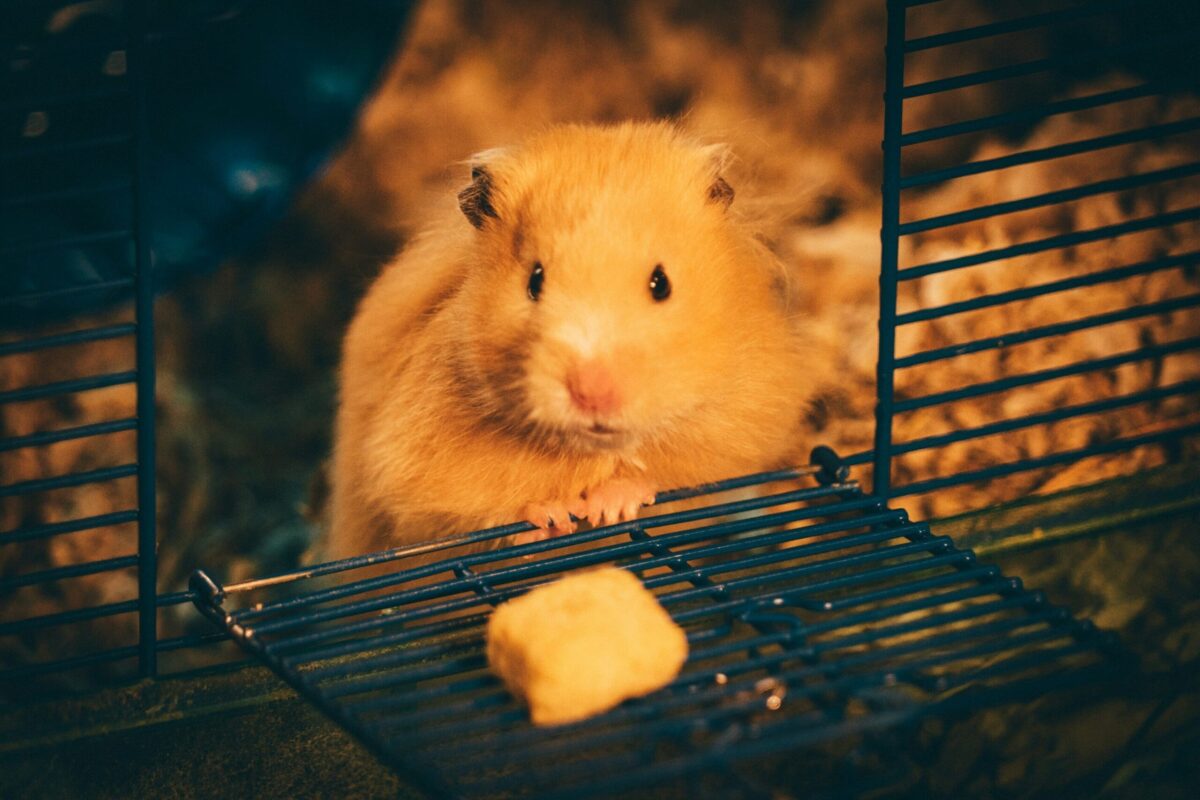
A word on cage size, because it matters more than anything in this guide. A cage that’s too small can’t be fixed by adding toys to it. It’s still too small. The minimum recommended cage size for a Syrian hamster is 100 cm by 50 cm of unbroken floor space — about 5,000 square centimetres — and the same minimum applies to a dwarf hamster. That’s a big cage, and it surprises most owners. But the simple truth is that a hamster in a small cage will never be happy, no matter how many toys you buy him.
If your hamster’s cage is smaller than that, the best use of your $30 is not toys. It’s a bigger cage, or a second-hand bin cage, or a DIY setup that gives him room to run, dig, and explore. A hamster in a large cage with a wheel and deep bedding is happier than a hamster in a tiny cage with a dozen toys. Our guide to hamster cage setup covers the space question in detail, including how to measure a cage and what the minimums mean in practice.
Frequently Asked Questions
How much should I spend on hamster toys?
$30 is more than enough. A good wheel, some chews, a tunnel or two, and deep bedding will usually come in well under $30, and that’s everything your hamster actually needs. The rest — cardboard tubes, scattering his food, hiding treats — costs nothing.
What size wheel does my hamster need?
For a Syrian hamster, 28 cm (about 11 inches) in diameter, minimum. For a dwarf hamster, 20 cm (about 8 inches), minimum. The wheel should have a solid running surface, with no bars or mesh that feet can slip through. If you’re not sure, go bigger — a wheel that’s too big is almost never a problem, but a wheel that’s too small can cause real damage.
Are exercise balls safe for hamsters?
They’re popular, but most experienced owners don’t recommend them. The ball has poor ventilation and gets hot inside, the hamster can’t get out, and he can’t control where he goes. A good wheel and a large cage are a better way to give him exercise, and they’re usually cheaper too.
Why does my hamster chew the bars of his cage?
Usually boredom, or a cage that’s too small. Bar-chewing is a sign that your hamster’s needs aren’t being met — he needs more space, a wheel, things to chew, and places to hide. It can also be a sign of stress, or of a cage that’s too small for him to feel safe. It’s worth acting on the moment you see it, because bar-chewing can damage a hamster’s teeth.
Do hamsters need toys?
Yes — they need things to do. A hamster with nothing to do gets bored, and a bored hamster chews bars, climbs, paces, and tries to escape. A wheel, some chews, a tunnel, and deep bedding to dig in give him the running, chewing, hiding, and digging he needs. A hamster who has things to do is a hamster who is happy and healthy.
What chews are safe for hamsters?
Apple wood, willow, and other untreated hardwood sticks are the best. Loofah chews, cork, and wooden hideouts are also safe. Avoid anything painted, varnished, or dyed, and avoid salt licks and mineral blocks. Our guide to safe hamster chews covers exactly which woods are safe and which are not.
Can I make my own hamster toys?
Yes — and the best ones are often homemade. Cardboard tubes and boxes, paper bags with the handles cut off, untreated wood, and herbs scattered in the bedding are all things you can make or find at home. Just avoid anything with paint, glue, staples, or strong smells, and check anything you give your hamster for sharp edges and small parts.