
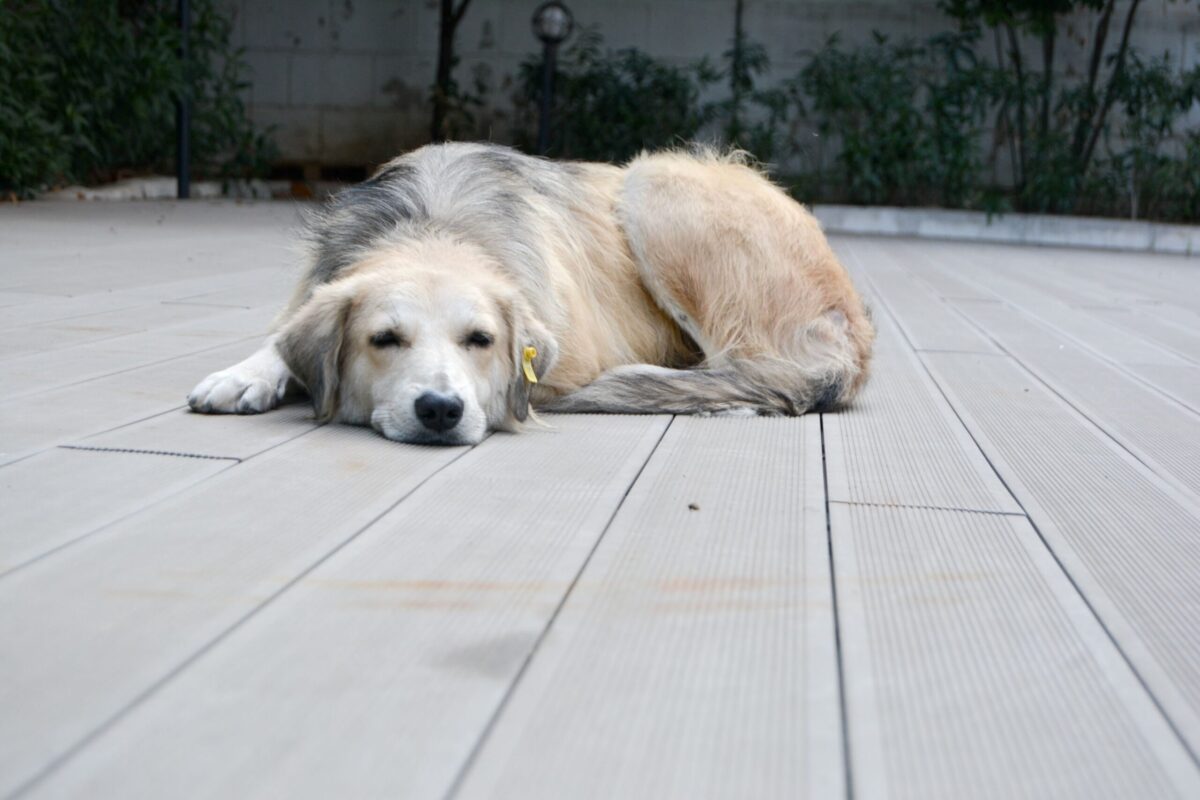
You’ve seen it a hundred times. Your dog is asleep on his side in the middle of the living room, and suddenly his legs start moving — little running steps, going nowhere. His whiskers twitch. He makes a small whimpering sound, or a muffled bark. His eyes move behind his closed eyelids. And you sit there watching him, wondering the same thing every owner has wondered at some point: is he dreaming? And if he is, what on earth is he dreaming about?
The short answer is yes — almost certainly. Dogs dream, and they dream about much the same sorts of things you do: their days, their routines, the people and animals they know, and the things they love to do. This guide explains what we actually know about dog dreams, what the twitching means, what dogs are probably dreaming about, and when a sleeping dog’s movements are something to pay attention to rather than smile at.
The short answer: yes, dogs dream

Dogs dream because their brains work the way yours does when it comes to sleep. Like people, dogs go through different stages of sleep, and one of those stages is REM sleep — rapid eye movement sleep, the stage where dreaming happens. During REM sleep, the brain is very active, the eyes move behind closed lids, and the muscles are mostly relaxed — which is why your dog twitches and paddles his legs instead of actually getting up and running across the room.
Researchers have studied this in detail, mostly in rats, and found that a sleeping animal’s brain replays the patterns of its waking experiences — the paths it ran, the places it visited, the things it did. The evidence is strong enough that scientists are confident: dogs dream, and their dreams are made of the same material as yours — the day they’ve just had.
You can’t ask a dog what he dreamed about, of course. But you can watch what he does in his sleep, and you can reason from what we know about how brains work. And the picture that comes out is straightforward: your dog dreams about being a dog — about walks, smells, other dogs, food, and you.
What dogs dream about
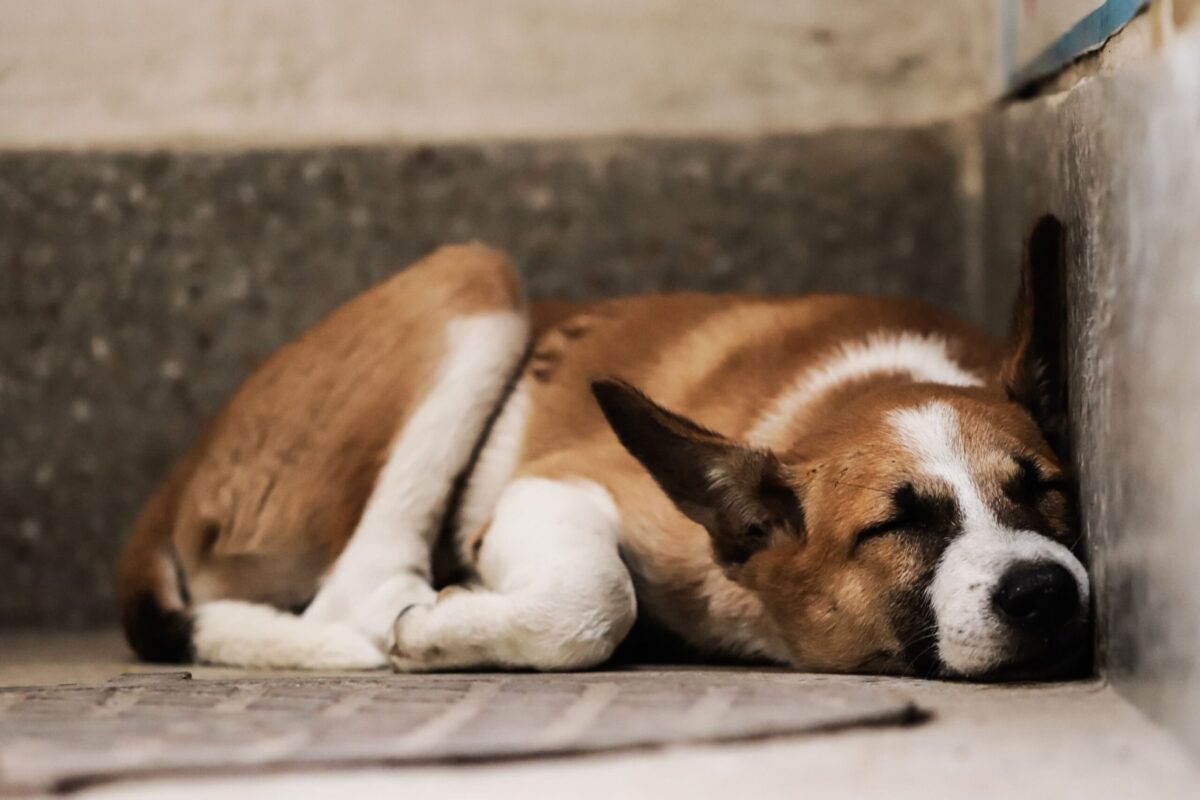
Nobody can prove exactly what a dog dreams about. But the best evidence we have comes from studies of the brain during sleep, and from watching dogs in their sleep, and it all points in the same direction: dogs dream about their days.
Their walks. The paths they ran, the smells they stopped at, the places they sniffed. A dog’s world is a world of smells, and his walks are the highlight of it. It’s no coincidence that the leg movements owners see most often look like running.
Other dogs. The dogs they played with, the dogs they barked at, the dogs they chased. Dogs are social, and their social life is a big part of their day. A whimper in their sleep might be the dream version of a greeting — or of a standoff.
Their people. You, most of all. Dogs spend their days watching us, following us, and waiting for us to do something interesting. It would be strange if we didn’t feature in their dreams. One researcher put it simply: dogs probably dream about their owners more than about anything else, because their owners are the most important thing in their lives.
Food. The treats, the meals, the things they found on the ground that they definitely shouldn’t have eaten. A dog who smacks his lips and licks his nose in his sleep might be dreaming about dinner.
This isn’t guesswork dressed up as science — it’s the most reasonable reading of what we know. Dreaming is the brain’s way of processing the day, and a dog’s day is walks, smells, other dogs, food, and us.
The twitching, whimpering, and running

The movements are the part owners notice most, and they’re also the part that’s easiest to misunderstand.
The leg movements. The little running steps — the paddling, the twitching, the kicking — are the dream happening. During REM sleep, the brain sends the signals to move, but the body is mostly paralysed, a safety mechanism called atonia that stops you from acting out your dreams. In dogs, that paralysis isn’t complete, so some of the movement leaks through. Your dog’s legs move because, in his dream, he really is running. He’s just not running anywhere.
The whimpering and muffled barks. These are the same thing — the dream, leaking into sound. A whimper, a soft growl, a muffled bark, a little yip: all normal. They’re the dream’s sound effects, and they’re no more a cause for worry than a person talking in their sleep.
The eye movements. The rapid flickering of the eyes under closed lids is what gives REM sleep its name, and it’s one of the signs that your dog is in the dream stage of sleep. It’s also one of the reasons dogs sometimes open their eyes a little while they’re asleep — the eyes are moving, and the lids don’t always stay shut.
The twitching whiskers and ears. These are smaller versions of the same thing. The whiskers are a dog’s fingertips — he’s constantly feeling the world with them — so a twitching whisker in a dream is a dog feeling something in his sleep. The same goes for the ears, which prick and flatten as the dream changes.
All of this is normal. A dog who twitches, whimpers, and runs in his sleep is a dog who is sleeping well and dreaming properly. The right response is to smile, leave him alone, and let him finish.
Puppies dream more than adult dogs
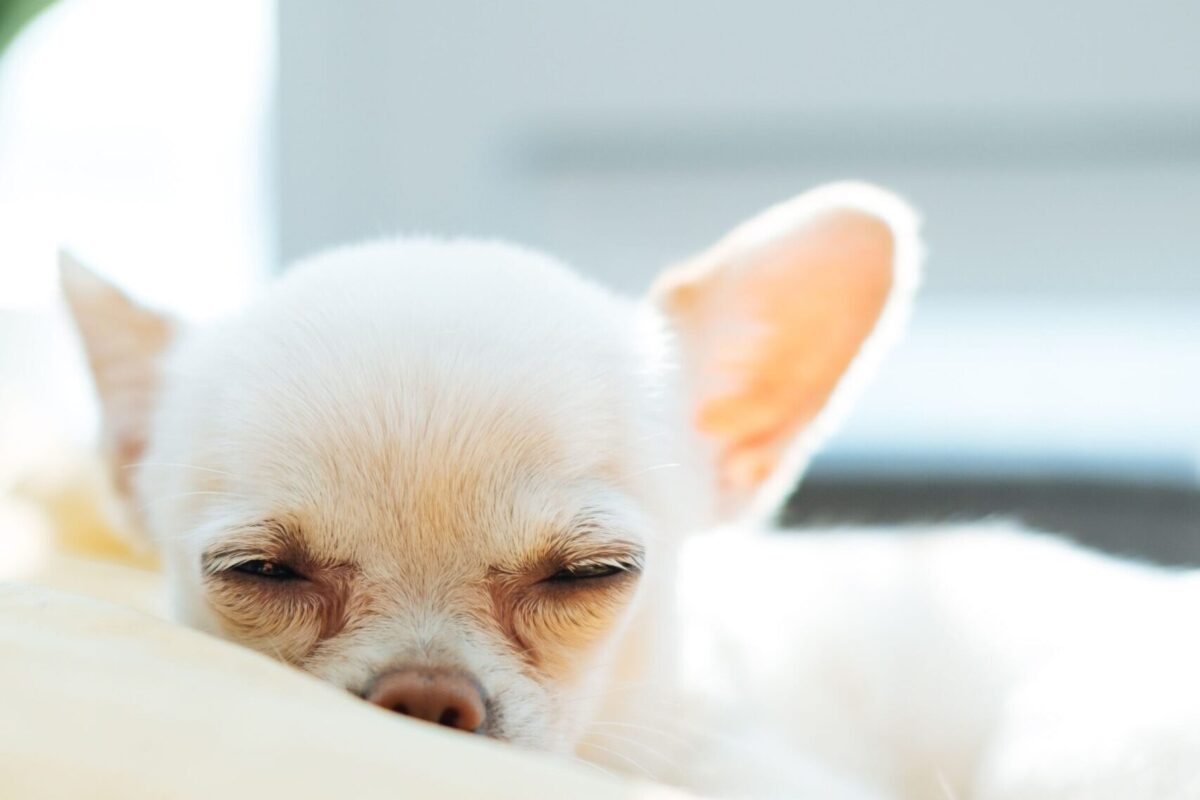
If you have a puppy, you’ve probably noticed that he twitches and jerks more than an older dog. That’s real — puppies do dream more, and their dreams are more active.
The reason is simple: puppies have more to process. Everything is new — the house, the garden, the lead, the other dogs, the smells, the sounds, the people. Their brains are working hard to make sense of a world they only just arrived in, and all that processing happens during sleep. Puppies also spend more time in REM sleep than adult dogs do, which means more dreaming, and more visible dreaming.
As a puppy gets older, the dreaming settles down. The movements get smaller, the sounds get quieter, and the sleep gets deeper. That’s normal too. An older dog dreams less theatrically, but he still dreams.
The same pattern holds for size: smaller dogs dream more often but for shorter bursts, and larger dogs dream less often but for longer. A small dog might have a dream every few minutes; a large dog might have one dream that lasts several minutes. It’s a pattern researchers have noticed across species, and it’s part of how sleep works rather than anything to do with your particular dog.
Do dogs have nightmares?
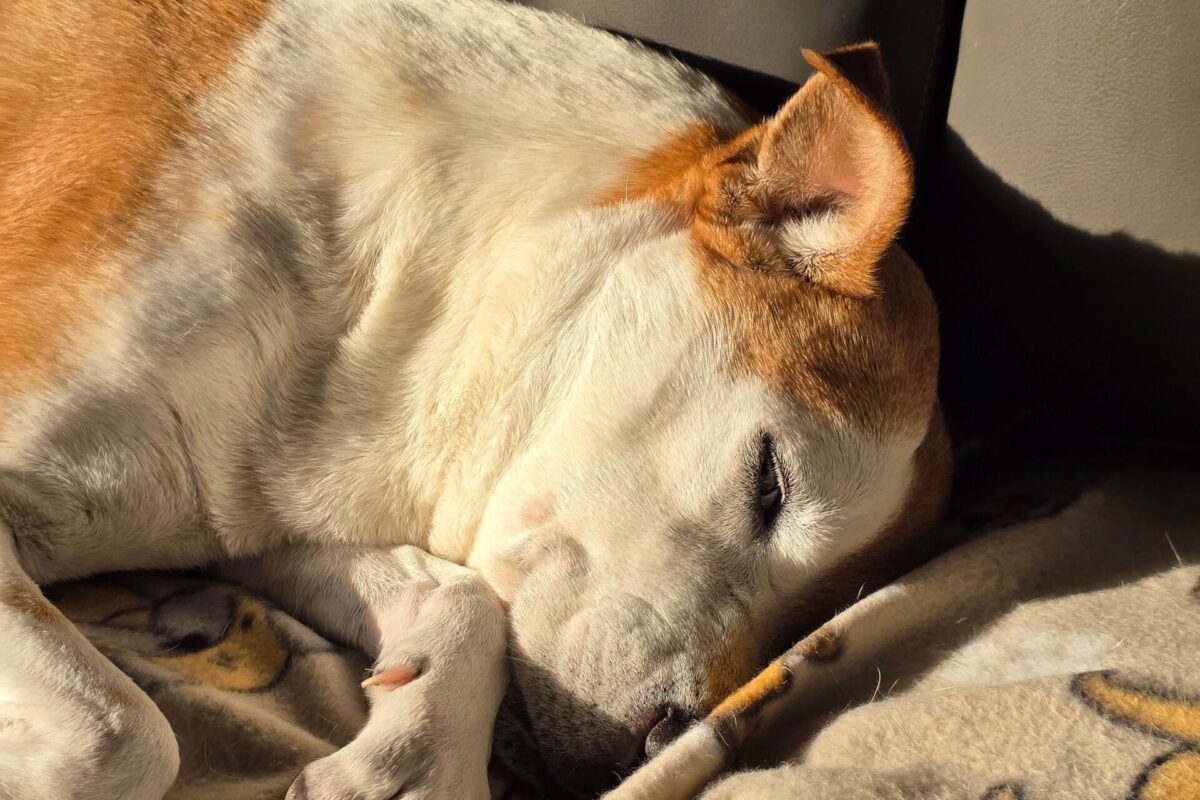
This is the question that makes owners reach for the phone — or reach for the dog. Your dog is whimpering in his sleep, and it sounds distressed. Is he having a nightmare? Is he scared? Should you wake him up?
The honest answer is: probably, sometimes. If dogs dream about their days, and their days sometimes include frightening things — a loud noise, a bigger dog, a vet visit — then it stands to reason that some of their dreams are frightening too. A dog who whimpers and twitches and seems scared in his sleep may well be having a bad dream.
But here’s the thing: a bad dream is not a problem. It’s a normal part of sleep. It passes on its own, and the dog wakes up fine — usually within seconds, and usually without remembering anything. The best thing you can do is nothing. Let the dream finish. Your dog will wake up, shake himself off, and go and find his water bowl, and the dream will be forgotten.
The one thing you should never do is wake a dreaming dog suddenly, especially by touching him. A dog who is startled awake from a deep dream — particularly an older dog, or a dog who doesn’t hear well, or a dog who has been startled before — can snap or bite before he’s fully awake. He doesn’t mean it. He’s scared, and his teeth are the first thing he reaches for. If you want to wake a sleeping dog, call his name from a distance, or make a gentle noise. Let him wake up on his own terms.
Sleeping patterns: how dog sleep works
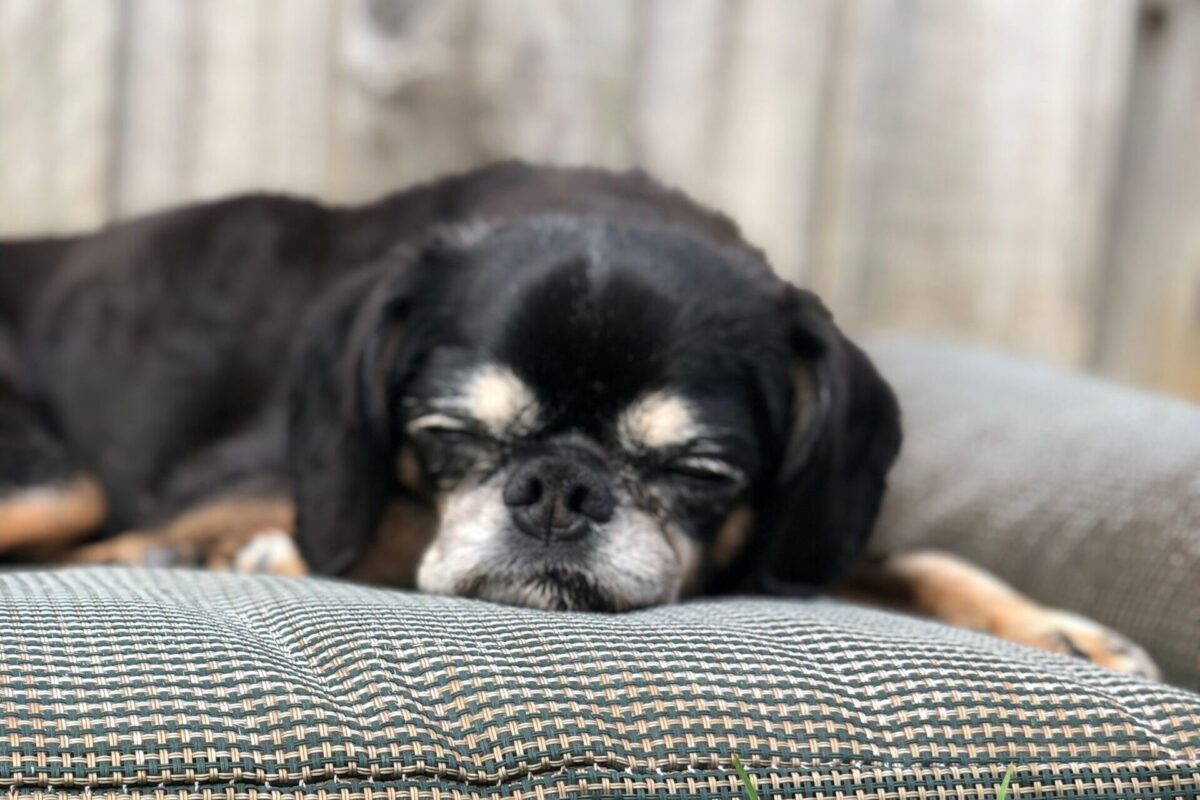
A dog’s sleep is different from yours in some useful ways. Understanding it explains a lot about why your dog behaves the way he does at night — and why he dreams when he does.
Dogs sleep in shorter cycles. Where your sleep cycle is around ninety minutes, a dog’s is around twenty. That means a dog moves through the stages of sleep more quickly, and reaches the dream stage more often. It’s also why a dog can fall asleep in minutes and wake up alert a moment later — his sleep is lighter and more flexible than yours.
Dogs sleep more than you do. An adult dog sleeps around twelve to fourteen hours a day, and puppies and older dogs sleep even more. But they don’t sleep in one long block the way you do. They sleep in short bursts throughout the day and night — a nap here, a doze there, a few hours at night, and then they’re awake again. That pattern is normal. It’s also why your dog seems to sleep all day and then be wide awake at your bedtime.
Dogs are most restless at dawn and dusk. Like cats, dogs are more active at the ends of the day than in the middle of the night, though they’re nowhere near as dramatically crepuscular as a cat. The deepest sleep — and the most dreaming — tends to happen in the middle of the night and during the long afternoon nap. Our guide to dog sleeping positions covers what his posture tells you about how deeply he’s sleeping, and how comfortable he feels.
When dreaming isn’t dreaming: the signs to watch
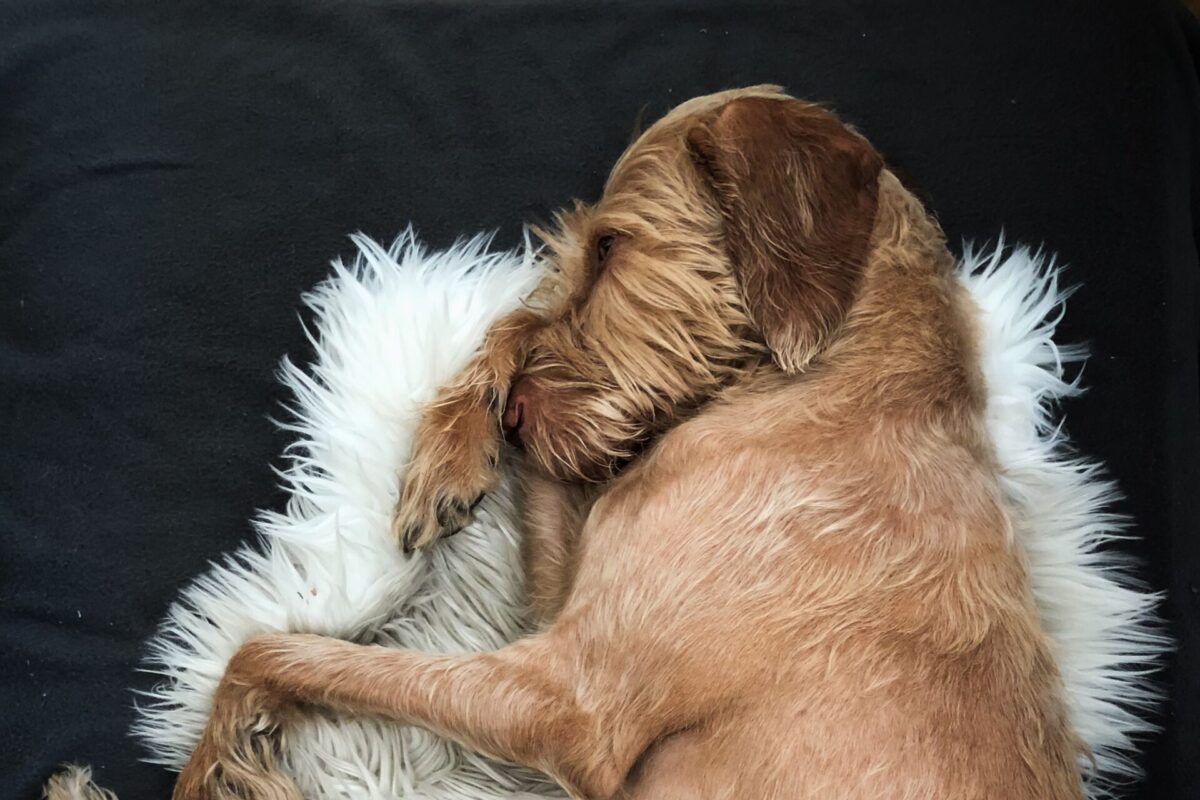
Most of the movements you see in a sleeping dog are dreaming, and they’re nothing to worry about. But there are a few movements that aren’t dreaming, and it’s worth knowing the difference — not because they’re common, but because it’s useful to know when to mention something to a vet.
A seizure. A dog having a seizure while asleep doesn’t twitch — he stiffens, and his whole body goes rigid, often with paddling that is much harder and faster than dream movements. He won’t respond to his name, and when the seizure ends, he will often be confused, disoriented, and unsteady for a few minutes. If you ever see your dog have what looks like a seizure, note how long it lasts — time it if you can — and call the vet the same day, even if your dog seems fine afterwards. Our guide to senior dog care covers the changes that come with age, and seizures are one of the things a vet will want to hear about.
Twitching while awake. A dog who twitches or jerks while he’s awake, or who seems to have trouble controlling his movements, is a different matter from a dog who twitches in his sleep. If your dog twitches while awake, or if the movements seem to happen more and more often, mention it to your vet.
Dreaming every night, all night. A dog who seems to be dreaming violently every night — thrashing, yelping, waking himself up — deserves a mention to the vet. Occasional bad dreams are normal. Constant ones are worth a conversation.
The test is simple: a dreaming dog wakes up fine. A dog who has had a seizure, or who has a problem, doesn’t wake up the same way. If your dog wakes from his sleep calmly, shakes himself off, and goes about his day, he was dreaming. If he wakes up confused, unsteady, or distressed, and it happens more than once, call the vet.
How to help your dog sleep well
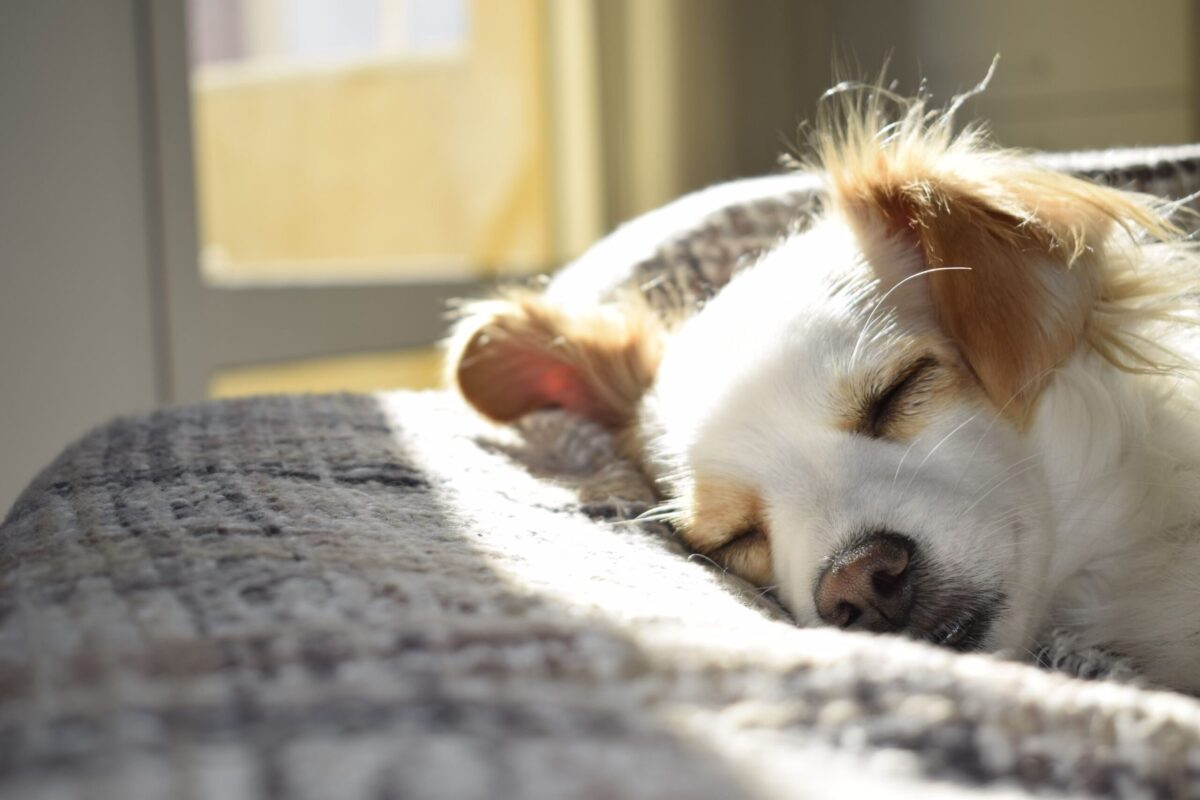
A dog who sleeps well dreams well. And a dog who sleeps well is usually a dog who has had enough to do during the day.
Exercise. A dog who has had a good walk — or a good play session, or a good run — sleeps more deeply than a dog who has been lying on the sofa all day. The exercise doesn’t need to be extreme. It needs to be enough. Our guide to how much exercise a dog needs breaks it down by age, size, and breed type. A tired dog is a well-rested dog, and a well-rested dog dreams properly.
A routine. Dogs are creatures of habit. The same bedtime, the same place to sleep, the same last trip outside — the routine tells your dog’s brain that it’s time to wind down. A dog who has a routine sleeps better than a dog whose evenings are unpredictable.
A comfortable place to sleep. A dog who sleeps on a hard floor, or in a draught, or somewhere noisy, sleeps badly. A warm, quiet, comfortable spot — a bed, a crate with a blanket, a corner of the room that feels safe — makes a real difference to the quality of his sleep. The best sleeping spot for a dog is one where he feels safe enough to relax completely, because only then does the deep sleep, and the dreaming, happen.
Mental tiredness. Physical exercise isn’t the only kind that matters. A dog who has had to think during the day — a training session, a puzzle feeder, a new route on a walk, a game of hide-and-seek — sleeps more deeply than a dog who has had nothing to think about. Mental tiredness is just as important as physical tiredness, and it’s the kind that’s most often missing from a dog’s day.
Frequently Asked Questions
Do dogs dream?
Yes — almost certainly. Dogs go through REM sleep, the dreaming stage, just as people do, and researchers have found that a sleeping animal’s brain replays the patterns of its waking experiences. A dog who twitches, paddles his legs, and whimpers in his sleep is almost certainly dreaming about his day — walks, smells, other dogs, food, and you.
What do dogs dream about?
Most likely, their days. The walks they had, the dogs they met, the smells they followed, the food they ate, and their owners. Dreaming is the brain’s way of processing the day, and a dog’s day is made of walks, smells, other dogs, food, and us.
Why does my dog twitch in his sleep?
Because he’s dreaming. During REM sleep, the brain sends signals to move, but the body is mostly paralysed to stop the animal acting out its dreams. In dogs that paralysis isn’t complete, so some of the movement leaks out as twitching, leg paddling, whisker movements, and muffled sounds. It’s normal, and it’s a sign of healthy sleep.
Should I wake my dog up if he’s having a bad dream?
No. Let the dream finish — it will pass on its own, usually within seconds. And never wake a dreaming dog suddenly by touching him, especially an older dog or one who doesn’t hear well. A startled dog can snap before he’s fully awake, and he doesn’t mean it. If you must wake him, call his name from a distance and let him wake up on his own terms.
Do puppies dream more than older dogs?
Yes. Puppies spend more time in REM sleep, because they have more new experiences to process, and their dreaming is more visible — more twitching, more movement, more sound. As they grow up, the dreaming settles down and becomes less theatrical. Smaller dogs also dream more often but for shorter bursts; larger dogs dream less often but for longer.
My dog whimpers in his sleep. Is he in pain?
Almost certainly not. Whimpering in sleep is the dream leaking into sound, the same as a person talking in their sleep. Pain is something dogs show when they’re awake — limping, flinching, hiding, not eating — not something they show in their sleep. If your dog whimpers while awake, that’s different, and it’s worth a vet visit. Our guide to why dogs whine covers the waking sounds and what they mean.
When should I worry about my dog’s movements in his sleep?
Worry if the movements are much harder and faster than normal dream twitching, if your dog stiffens and goes rigid, if he doesn’t respond to his name, or if he wakes up confused and unsteady. Those are signs of a seizure, not a dream. Note how long it lasts and call the vet the same day. Occasional twitching, whimpering, and leg paddling are normal dreaming and nothing to worry about.