
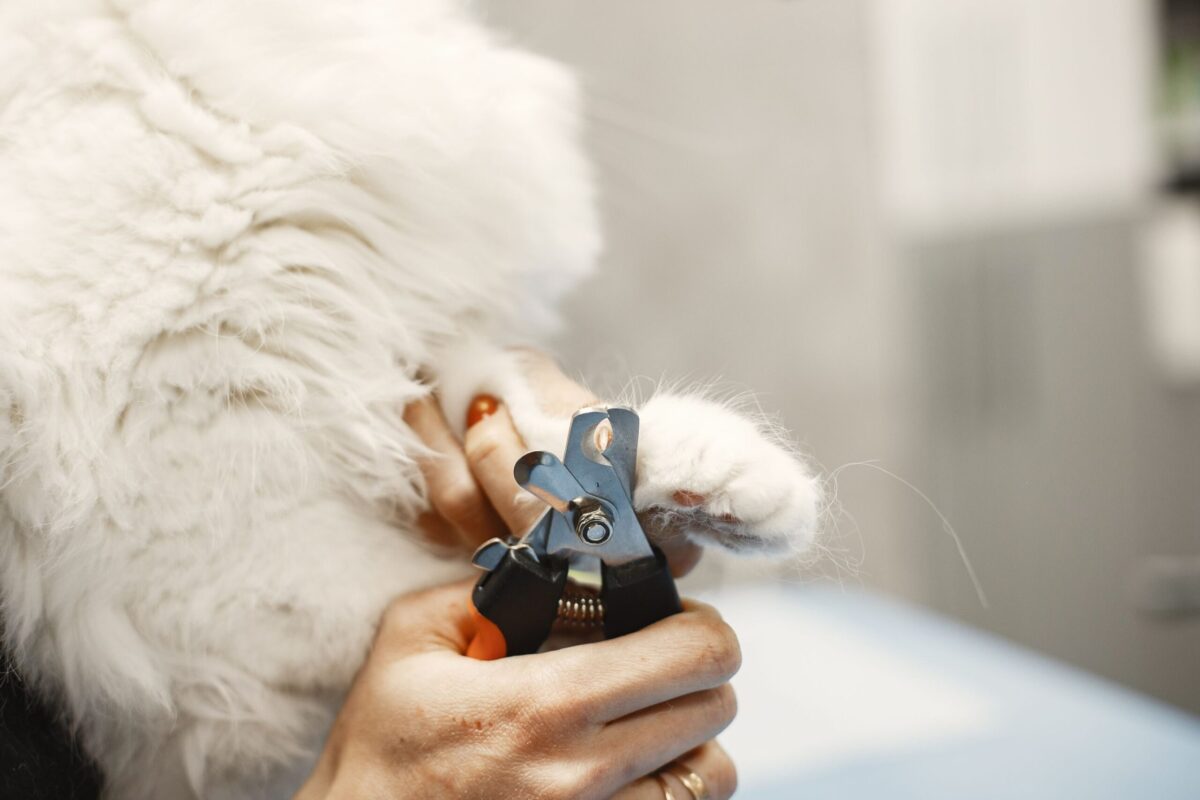
Your cat’s claws catch on the rug. They catch on your jumper. They catch on the sofa, on the bedding, on your leg when she jumps onto your lap. And every time, you think the same thing: her nails need trimming. And then you think the next thing, which is also the same every time: she’s never going to let me do that.
She will. Trimming a cat’s nails is easier than most owners expect — if you do it the right way, at the right time, and with the right expectations. This guide covers why trimming is worth doing, what you need, how to get your cat used to it, and the step-by-step method that works. It also covers what never to do — including one thing that should never be done to any cat, under any circumstances.
The short answer: slow, calm, and a little at a time

The whole secret of trimming a cat’s nails is to go slowly. Most owners fail not because the cat won’t cooperate, but because they try to do too much, too fast, on the first day. A cat who has never had her paws handled, who is suddenly grabbed, held down, and has a strange metal thing pressed against her claws, will fight — and who can blame her?
The method that works is the opposite. Spend a few days getting her used to having her paws touched. Then a few days getting her used to the clippers. Then trim one nail. Then another. Then a whole paw, then the rest, over the course of a week or two. It feels slow, and it is slow. But a cat who has been introduced to nail trimming gently will let you do it for years without a fuss. A cat who has been wrestled into it once will hide under the bed every time she sees the clippers.
Why trim at all?
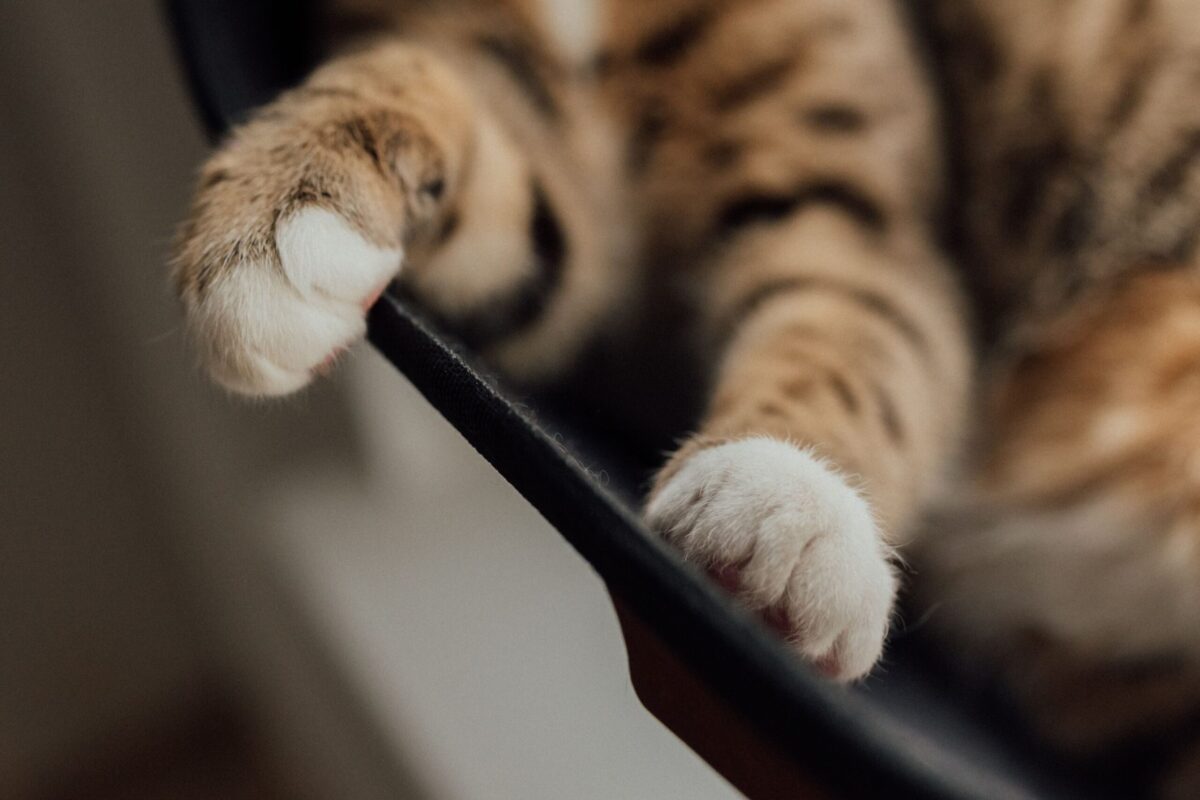
A cat’s claws are her tools. She uses them to climb, to catch prey, to defend herself, and to grip. In a cat who goes outdoors, the claws wear down naturally on rough surfaces — concrete, bark, stone — and they rarely need trimming. In an indoor cat, they don’t. And in an older cat, they often don’t wear down well at all, because the cat moves less and the claws grow thicker and more curved.
Catching and snagging. The most common reason to trim is that sharp claws catch on things. A claw that catches on the carpet can bend or break, and a broken claw is painful and can bleed. A claw that catches on your clothing scratches you. A claw that catches in the bedding wakes you up at three in the morning. Trimming keeps the tips blunt enough that they don’t catch.
Furniture and fabric. A cat with trimmed claws still scratches — trimming doesn’t stop scratching, and it shouldn’t, because scratching is a normal behaviour that keeps the claws healthy. But trimmed claws do less damage to furniture, to curtains, and to your skin. It’s one part of the answer, not the whole answer. Our guide to scratching posts covers the rest of it.
Older cats. An older cat’s claws often grow thicker and more curved, and the cat may not retract them fully any more. The claws can grow so long that they curl around and press into the paw pads, which is painful and can cause infection. Older cats need their nails checked regularly and trimmed more often than younger cats — and they need it done gently, because sore joints and a sore back make handling uncomfortable.
What you need

You don’t need much, and none of it is expensive.
Cat nail clippers. There are two main types: scissor-style clippers, which look like small scissors, and guillotine-style clippers, which have a hole you push the nail through. Either works. Scissor-style clippers are easier for most owners, and they give you a better view of where you’re cutting. Buy a pair made for cats, not for dogs — cat clippers are smaller and lighter, and they fit a cat’s nails better. A basic pair costs very little, and it will last years if you keep it clean and dry.
Styptic powder. This stops bleeding if you accidentally cut a nail too short. It’s cheap, it lasts forever, and you want it on hand before you start — not because you expect to need it, but just in case. A clean cloth and firm pressure work too, but a small tub is worth having in the drawer.
Treats. Small, high-value treats — the ones your cat really loves — are the most important tool in this whole guide. You’ll use them to reward your cat at every step, and to end every session on a good note. A cat who associates nail trimming with treats is a cat who will let you do it again.
A towel. Optional, but useful. A towel can be used to wrap your cat gently if she’s wiggly — with her head out and the paw you’re working on free. Don’t use the towel to restrain her tightly. It’s a comfort, not a straightjacket.
A nail-trimming session is also a good moment for a quick brush, since your cat is already sitting with you and relaxed. Our guide to cat grooming brushes covers the brushes that make shedding season easier and the ones that most cats actually tolerate.
Getting your cat used to it: the week before

This is the part most owners skip, and it’s the part that matters most.
Step one: paws. For a few days, when your cat is relaxed — sitting on your lap, or lying beside you — gently touch her paws. Just touch them. Press the paw pad lightly, so the claws extend a little, and then let go. Give her a treat. Do that a few times a day for a few days. You want her to learn that a hand on her paw is a normal, boring, treat-producing event.
Step two: the clippers. Leave the clippers out where your cat can see and sniff them. Let her investigate them. Then, during a calm moment, hold the clippers while you touch her paw, and give her a treat. You’re not cutting anything yet. You’re teaching her that the clippers are just another thing that exists, and that they mean treats.
Step three: one nail. When she’s comfortable with the paw handling and the clippers, trim one nail. One. Then give her a treat, praise her, and stop. That’s the session. The next day, trim another. Then another. Over the course of a week, you’ll have done all four paws — and your cat will have learned that nail trimming is a calm, treat-filled event that ends quickly.
Finding the quick

The single most important thing to know before you cut is where the quick is.
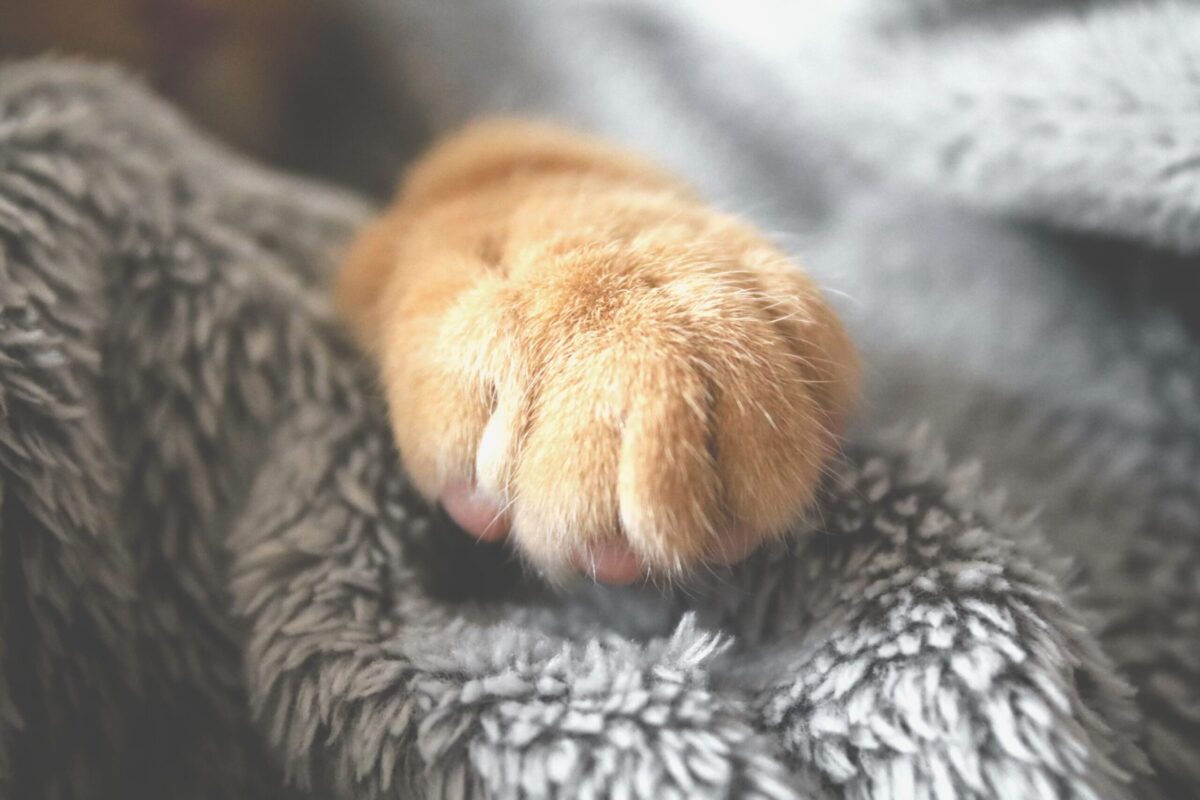
The quick is the pink part inside the nail — the living tissue, with blood vessels and nerves in it. If you cut it, it bleeds and it hurts, and your cat will remember it. The claw beyond the quick is dead keratin, like your own fingernail — it doesn’t hurt to cut, and it doesn’t bleed.
In a cat with light-coloured claws, the quick is easy to see: it’s the pink part, with the clear part of the claw beyond it. Cut only the clear tip, well before the pink. In a cat with dark claws, you can’t see the quick. In that case, cut very little — just the hooked tip — and cut more often. A good rule is to cut only the sharp, curved point of the nail, about one or two millimetres, and no more.
If you’ve never done it before, look at the nail from the side. The claw curves down like a hook. The sharp point is the part to remove. The quick sits further back, in the thicker part of the claw. Stay in the thin, hooked part, and you’ll be fine.
The step-by-step method
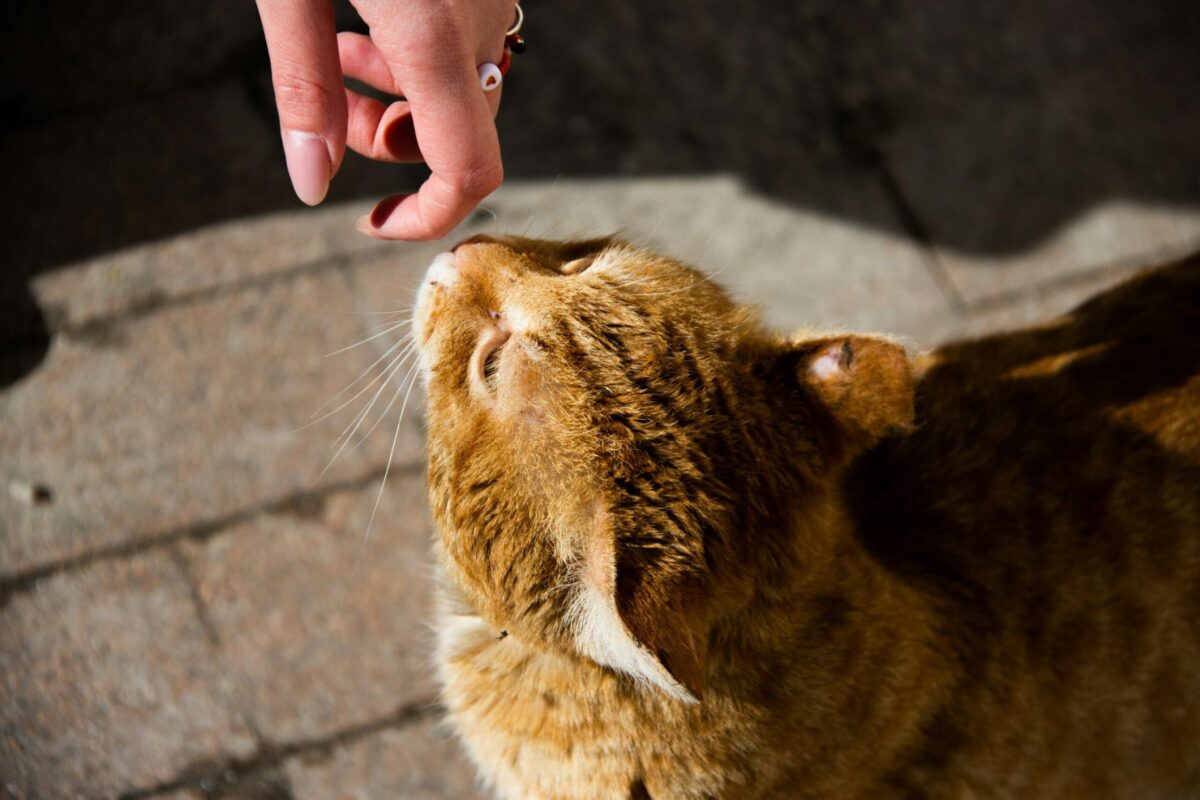
Pick your moment. The best time is when your cat is already relaxed and sleepy — after a play session, or in the evening, or when she’s lying on your lap. Never try to trim nails when your cat is wound up, when she’s just woken up, or when she’s already stressed.
Hold the paw gently. Cup the paw in your hand, and press the pad lightly between your thumb and forefinger. This extends the claws. Don’t squeeze, and don’t hold the paw tightly. If your cat pulls her paw away, let her. Wait a moment, and try again. The paw is hers, and the session is over when she says it is.
Cut the tip. Hold the clippers at a slight angle and snip off just the hooked tip. One nail, one snip. Don’t try to cut the whole nail off at once — you’re only removing the sharp point. A tiny snip is enough.
Treat and praise. After each nail, or after each paw, give your cat a treat and a calm word. Keep the tone soft. You’re not celebrating. You’re reassuring.
Go at her pace. If she lets you do one paw, do one paw and stop. There’s no rule that says all eighteen claws have to be done in one session — a cat who has had three good, short sessions will let you do the next one, and a cat who has had one long, stressful session will hide next time.
The back claws. Start with the front claws — they’re the longest and sharpest. The back claws grow more slowly, but they still need attention; try them in a later session.
If you cut the quick
It happens to everyone, eventually. You cut a nail a little too short, the quick bleeds, your cat yelps, and you feel terrible. It’s not a disaster. Stay calm.
Hold pressure. Put a clean cloth or a piece of tissue against the nail and hold firm pressure for a minute. The bleeding from a cut quick is usually small, and it usually stops on its own.
Use styptic powder. If you have it, dip the nail in the powder or press a pinch of it onto the tip. It stops bleeding quickly. If you don’t have styptic powder, plain flour or cornstarch will do in a pinch — it doesn’t work as well, but it helps.
Give your cat a treat and stop. Don’t try to finish the session. Try again in a few days, when she’s forgotten about it. One bad experience doesn’t ruin nail trimming, but two or three in a row will — so make the next session short, calm, and full of treats.
What never to do
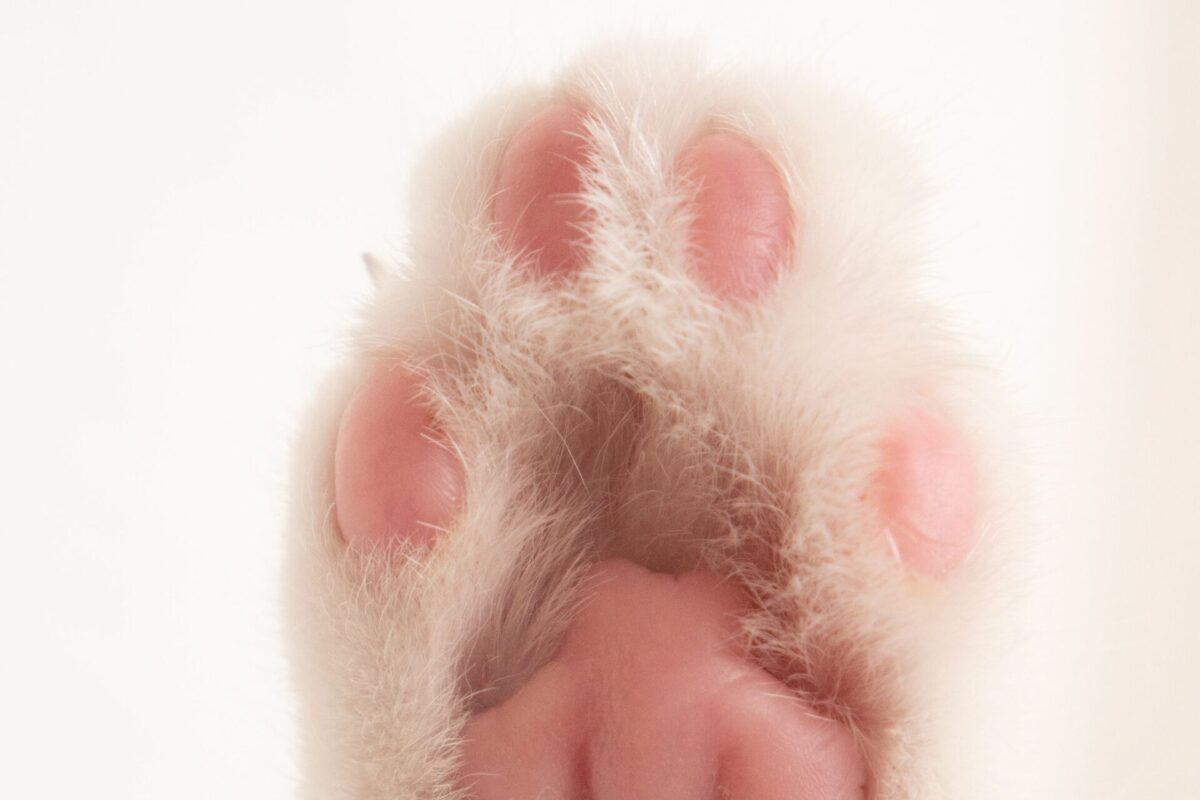
Never declaw a cat. Declawing is not a nail trim — it’s the surgical removal of the last joint of each toe. It’s painful, it changes how a cat walks, it can cause long-term pain and biting, and it should never be done for convenience. Declawing is banned or heavily restricted in many countries for good reason. If someone offers to declaw your cat, say no — trimming, scratching posts, or nail caps are always the better answer.
Never hold a cat down and force it. A cat who is pinned down and forced into a nail trim will panic, and a panicking cat is a cat who can be badly hurt — and who can hurt you badly. If your cat won’t sit still, the session is over. Try again another day, with a shorter session and better treats. Or take her to a groomer or a vet, and let a professional do it.
Never cut more than the tip. The temptation is to cut the nail short so you don’t have to do it again for weeks. Don’t. You only need to take off the sharp point. Cutting more risks cutting the quick, and a bad experience sets the whole process back.
Never use human nail clippers. They crush a cat’s nail instead of cutting it cleanly, because they’re designed for flat human nails, not curved cat claws. Buy proper cat clippers — they’re cheap, and they’re designed for the job.
When to let someone else do it

There are times when the right answer is not to do it yourself.
If your cat is very stressed. Some cats are too anxious, or too aggressive, or too frightened to have their nails trimmed at home, and no amount of treats and slow introductions makes it safe. A veterinary nurse or a groomer can do it — they have the experience and the equipment, and they can do it in minutes. Let them.
If you’re not sure where the quick is. If your cat has dark claws and you can’t see the quick, and you’re nervous about cutting too short, let a professional do the first trim. Watch what they do, ask how they judge the length, and then try the next one yourself with a little more confidence.
If your cat has a medical problem. A cat with sore paws, a cat with a skin condition, a cat with an injury — all of these are reasons to let a vet do the trimming rather than doing it yourself. The vet can check the paws at the same time, and can do it without causing more pain.
There’s no shame in this. A groomer or vet nurse trims nails in minutes — it’s part of their job. If you don’t have the confidence, or your cat doesn’t have the temperament, spend the small fee. It’s cheaper than a bad experience that sets your cat’s trust back by months.
Frequently Asked Questions
How often should I trim my cat’s nails?
It depends on the cat. Most indoor cats need their nails trimmed every two to four weeks. Outdoor cats who walk on rough surfaces may need it less often, because their claws wear down naturally. Older cats need it more often, because their claws grow thicker and don’t retract as well. Check your cat’s nails every couple of weeks, and trim when the tips are sharp enough to catch on things.
Does trimming hurt my cat?
No, as long as you only cut the tip. The part you’re cutting is dead keratin, like your own fingernails. It doesn’t have nerves in it. The quick — the pink part inside the nail — is what hurts, and you should never cut that. Cut only the hooked tip, one or two millimetres, and your cat won’t feel a thing.
My cat won’t let me touch her paws. What do I do?
Go more slowly. Touch her paws briefly when she’s relaxed and give her a treat, for a few days. Then hold the paw for a few seconds, then press the pad lightly to extend a claw. Build it up over a week or two — most cats will let you handle their paws if you introduce it gradually. If your cat still won’t let you after a few weeks, take her to a groomer or a vet nurse instead.
What if I cut the quick by accident?
Stay calm. Hold a clean cloth against the nail with firm pressure for a minute, and use styptic powder if you have it. The bleeding is usually small and stops on its own. Give your cat a treat and stop the session — don’t try to continue. Try again in a few days, when she’s forgotten about it.
Is it OK to trim only the front claws?
Yes — most owners do. The front claws are the longest and sharpest, and they’re the ones that do the damage to furniture and to you. The back claws grow more slowly and are less of a problem. Trim the front claws regularly, and do the back ones when your cat will let you.
Are nail caps a good alternative?
Nail caps — small, soft covers glued onto the claws — work for some cats, and they’re an alternative if your cat won’t tolerate trimming. They need to be replaced every four to six weeks, and they need to be fitted properly. They’re not a substitute for trimming, but they’re useful for a cat who won’t sit still for clippers. Ask your vet or a groomer about them if trimming isn’t working.
My older cat’s claws are very thick and curved. Is that normal?
Yes, it’s common in older cats. The claws grow thicker, they retract less, and they can curl around and press into the paw pads, which is painful. Older cats need their nails checked more often — every couple of weeks — and trimmed more gently, because they may have sore joints as well. And if your cat’s behaviour has changed along with her claws — if she’s hiding more, or eating less, or seems different — our guide to warning signs in cats covers what to look out for. A cat who has stopped using the scratcher, or who is suddenly grumpy about being handled, is a cat worth mentioning to the vet.