
Research-based only. No product was personally tested.
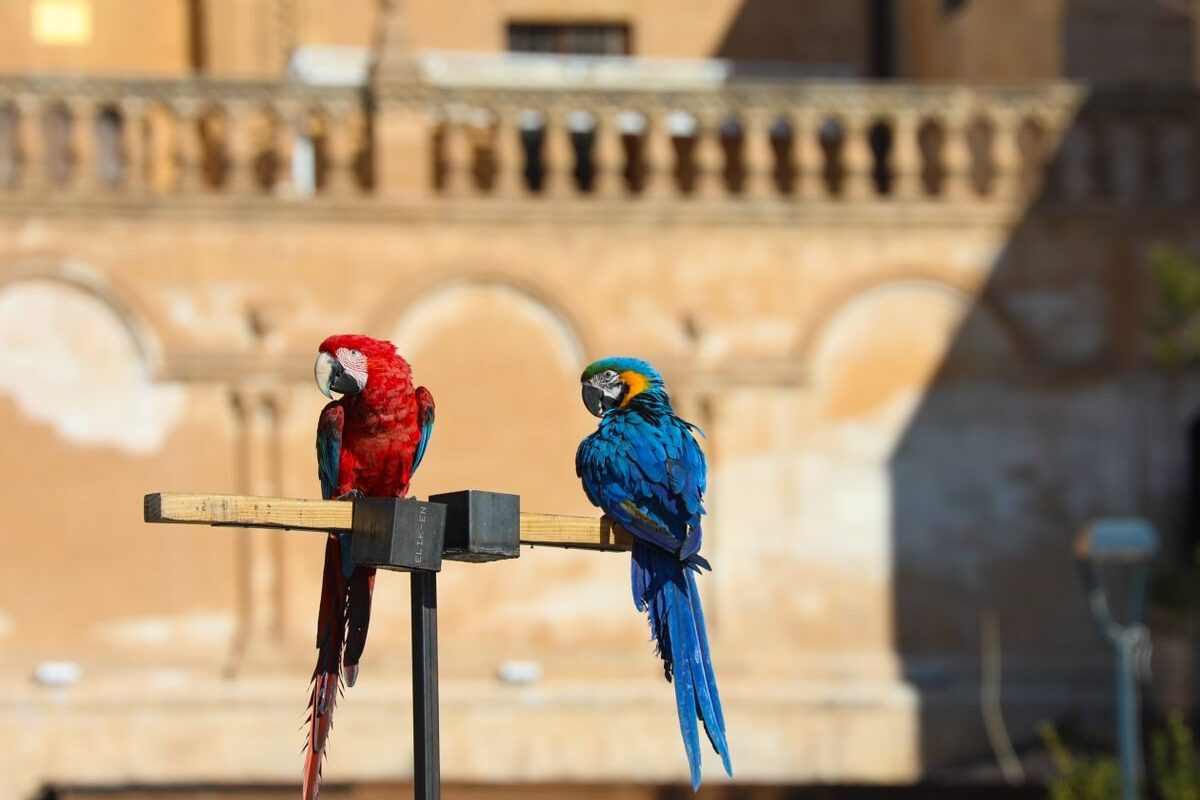
A parrot that only ever sits in its cage is a bored parrot, and bored parrots pluck, scream, and bite. Out-of-cage time is one of the most important parts of parrot care, but “out of the cage” needs a destination — otherwise the parrot ends up on the curtain rail, the bookshelf, or your head. A play stand is that destination: a safe perch with toys, food, and water, where the bird can hang out while still being part of the family.
Play stands are different from perches. Perches live inside the cage and are about foot health. A play stand lives outside the cage and is about time: a place for the bird to spend its daily hours out, play, and interact without chewing your furniture.
Tabletop or floor-standing
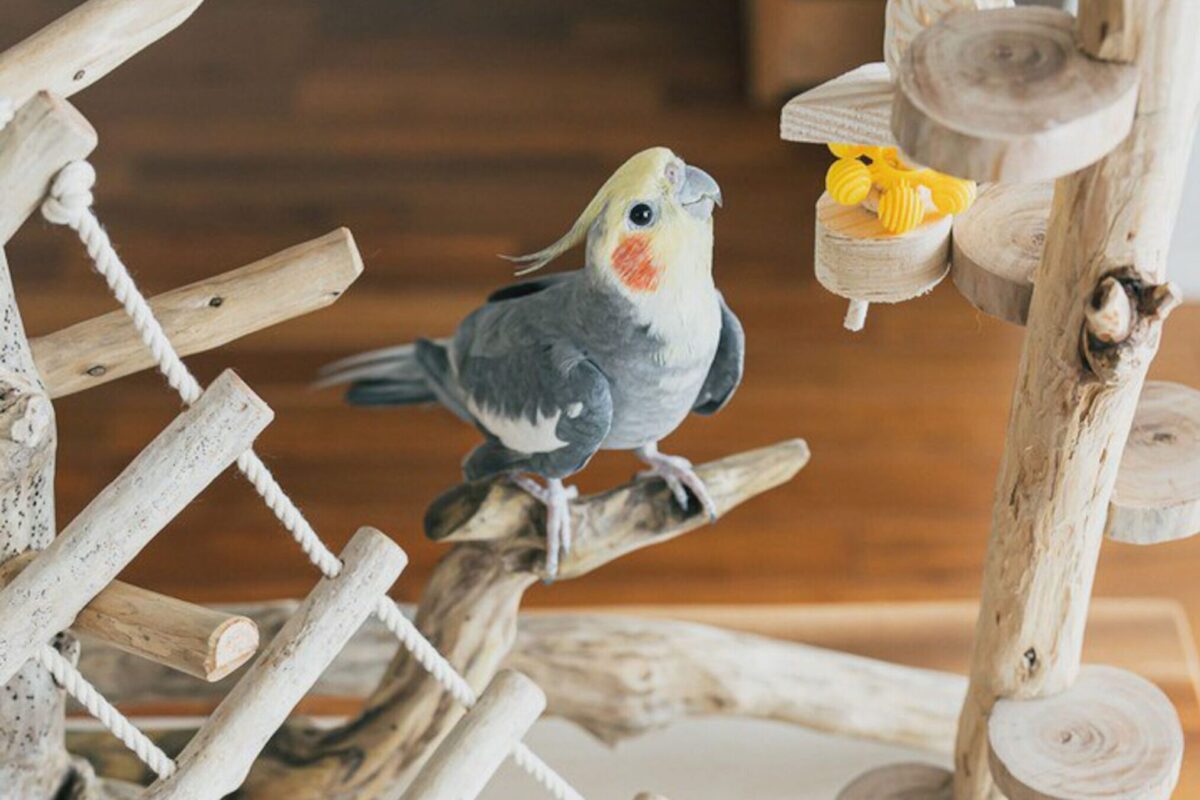
Tabletop stands are small, light, and cheap. They sit on a table or counter and suit small birds — budgies, cockatiels, lovebirds — and owners short on space. Their limit is size: a big parrot will outgrow a tabletop stand fast, and a determined large bird can tip a light stand.
Floor-standing stands are the work horses. They are tall, heavy, and stable, with a base that catches droppings and a perch at a height where the bird feels safe. They suit medium and large parrots — conures, African greys, Amazons, macaws — and they work in a living room without needing a table. The trade-off is space and weight: a floor stand is furniture, and moving it takes effort.
Size and perch diameter
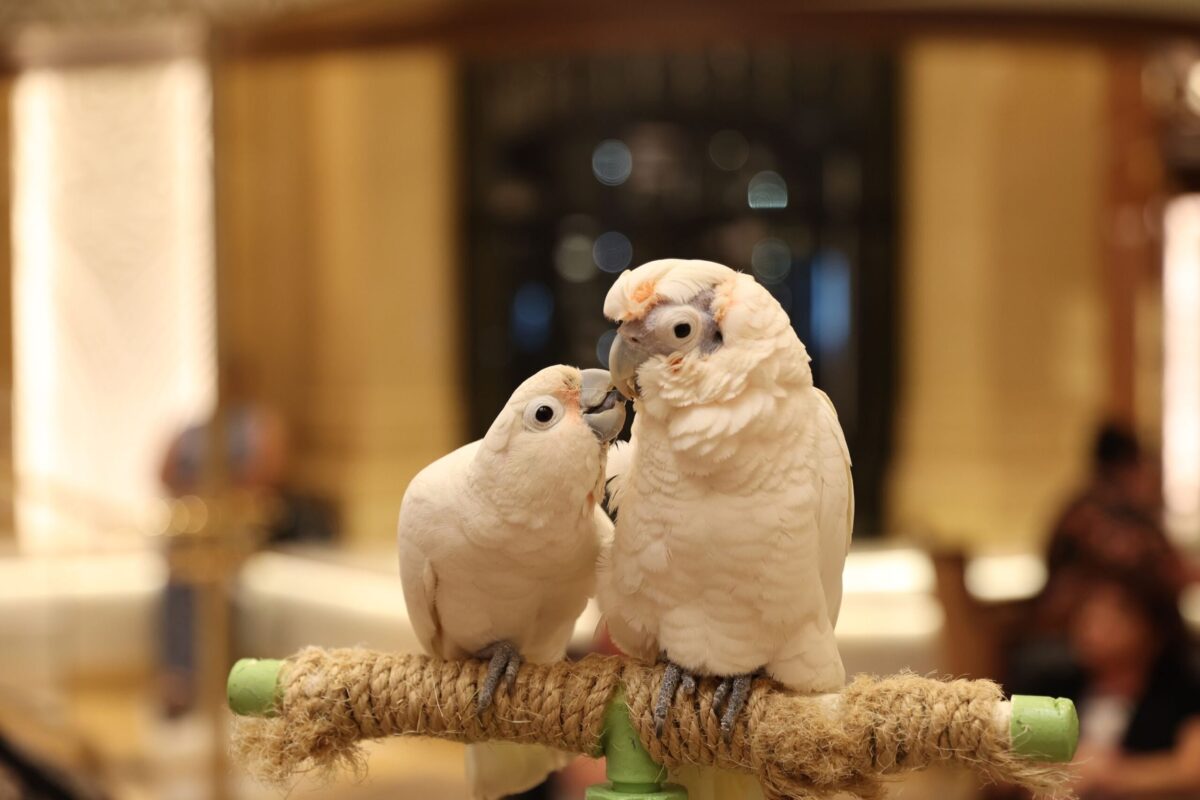
The stand must fit the bird, not the other way round. A perch that is too thin forces the foot into a tight grip all day; a perch that is too thick means the bird cannot grip at all. As a rough guide, the bird’s toes should wrap about three-quarters of the way around the perch, not meet underneath it. Natural branch perches, with varying diameter along their length, are better than a single smooth dowel, because they exercise the feet.
Height matters too. Parrots feel safest up high, so a stand that puts the bird at or above your chest height suits most birds. A stand that leaves the bird at knee height will be ignored in favour of the top of the door.
Wood, cups, and toys
Safe woods are the default for play stands: manzanita and java wood are the common ones, hard enough to survive chewing and naturally branch-shaped. Avoid stands made with soft, splintery wood or with paint and varnish the bird can chew off. Metal parts should be stainless steel or powder-coated bird-safe metal — never bare zinc or lead, which are toxic to birds, and never chains with links a toe can catch in.
Food and water cups on the stand mean the bird can stay out longer without going back to the cage. Toys matter just as much: a stand with no toys is just a perch in another room. Hanging toys, shreddable toys, and a ladder or two turn a stand into a playground, and rotating the toys keeps it interesting.
What to avoid

Avoid stands with sandpaper perch covers — they irritate feet rather than trimming nails. Avoid stands with gaps or hinges that can trap toes. Avoid placing a stand next to a window in direct sun, where a bird can overheat, or next to a kitchen, where cooking fumes are a real danger to birds. And avoid the idea that a stand replaces supervision: a parrot out of its cage should always be watched, because birds find hazards — cables, open water, other pets — faster than owners do.
Comparison table
| Stand type | Best for | Watch out for |
|---|---|---|
| Tabletop stand | Small birds, small rooms, low cost | Too light and small for large parrots |
| Floor-standing stand | Medium and large parrots, daily use | Heavy and bulky; needs floor space |
| Natural branch stand | Foot health, chewing | Check wood is bird-safe and unvarnished |
| Play gym with cups and toys | Birds that stay out for hours | Needs regular toy rotation to stay interesting |
Buying advice
Buy for your bird’s size first, then your room. A floor stand suits most medium and large parrots; a tabletop stand suits small birds and tight spaces. Check perch diameter against your bird’s feet, check that all metal is bird-safe, and plan for toys and cups from the start. Put the stand where the family actually spends time — a stand in an empty room will not be used, by bird or owner.
Methodology note
This guide is based on published avian care guidance, not on hands-on testing. Product types are described by size and material, not by brand claims, and no stand is presented as tested by this site.
Frequently Asked Questions
Does my parrot really need a play stand?
If your parrot gets daily out-of-cage time, yes — it needs somewhere safe to be. Without a stand, the bird ends up on furniture, curtains, and heads, which is unsafe for the bird and your home.
Tabletop or floor stand — which should I buy?
Tabletop for small birds and small rooms; floor-standing for medium and large parrots and for birds that spend hours out. Size the stand to the bird, not to the room.
What perch size does my parrot need?
The toes should wrap about three-quarters around the perch. Natural branches with varying diameter are better than a single smooth dowel, because they exercise the feet.
Are sandpaper perch covers a good idea?
No. They irritate feet and do not trim nails properly. A variety of natural perches and regular nail checks are the better approach.
Can I leave my parrot on its stand unsupervised?
No. Out-of-cage time should always be supervised, because birds find hazards — cables, open water, other pets, cooking fumes — very quickly.
Related reading
- Best Parrot Foraging Toys: Work for Every Bite
- Best Flight Cages for Budgies and Parrots: Size, Bar Spacing and What to Avoid
- Parrot Diet Guide
- Teaching a Parrot to Talk
Sources
- Association of Avian Veterinarians, parrot enrichment guidance
- PetMD, parrot play stands and out-of-cage time
- RSPCA, parrot care and housing basics
- VCA Animal Hospitals, parrot behaviour and enrichment