
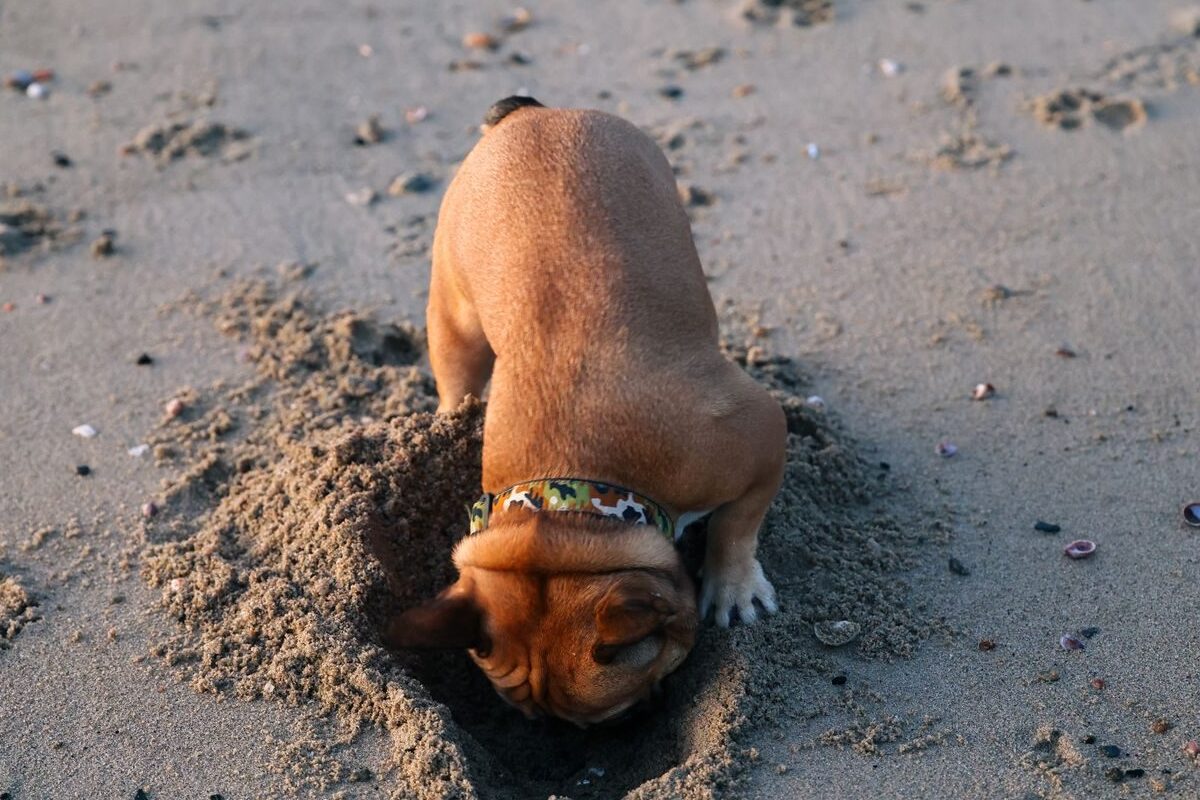
Digging is one of the most normal dog behaviours there is, and also one of the most annoying when it wrecks a lawn. Digging almost always has a reason: instinct, boredom, cooling down on hot days, burying food or toys, or escaping under a fence.
Every dog owner with a garden knows the scene: a hole by the fence, soil on the paws, and a dog looking extremely pleased with itself. Digging is one of the most normal dog behaviours there is, and it is also one of the most annoying when it wrecks a lawn. The good news is that digging almost always has a reason, and once you know the reason, you can usually redirect it instead of fighting it.
Dogs do not dig to punish you. They dig because their ancestors dug — for dens, for prey, for food storage and for cool earth to lie in. The modern version of that instinct just happens to land in your flowerbed.
The common reasons
Hunting and prey drive. Many dogs dig because something smells interesting underground: a mole, a mouse, roots, or just a scent trail. Terriers were bred for exactly this, which is why a terrier can spend an hour on one patch of soil. If the digging is intense, focused on one spot, and paired with sniffing and pawing at the same place, prey drive is the likely driver.
Cooling down and comfort. On a hot day, freshly dug earth is cooler than the surface. Dogs dig a shallow hollow and lie in it for the same reason people seek shade. If your dog digs mainly in summer and then lies in the hole, comfort is the reason, and shade, water and a cool mat will help more than scolding.
Burying and hiding things. Dogs bury bones, toys and treats to save them for later, and dig them up again when they want them. This is normal caching behaviour. A dog that buries its chew in the same corner every day is not being weird — it is running a small pantry.
Boredom and excess energy. A dog left alone in a garden for hours with nothing to do will often dig just to have something to do. This is the digging that spreads everywhere rather than focusing on one spot, and it usually comes with other boredom signs: chewing, barking, or pacing at the fence. More walks, play and mental work usually shrink this kind of digging faster than any garden fix.
Escape and roaming. Digging along a fence line, especially near a gate or a gap, is often an escape attempt — towards another dog, a smell, or just the world beyond the fence. This is the one to take seriously, because a dog that gets out can get lost or hurt. Check the fence, block the digging spots, and never leave an escape-digger unsupervised in the garden.
What actually helps
Start by matching the fix to the reason. A bored dog needs more exercise and enrichment, not a bigger fence. A hot dog needs shade and water. A prey-driven dog needs a job for its nose — scent games, snuffle mats, and supervised digging in an allowed spot.
The allowed-spot trick works surprisingly well: pick one corner of the garden, loosen the soil, bury a few toys and treats there, and praise the dog for digging in that spot. Many dogs happily move their digging to the place where digging pays off. It will not stop a determined escape artist, but it does save most lawns.
What does not help is punishment after the fact. Shouting at a dog standing next to a hole it dug an hour ago teaches it nothing except to dig when you are not watching. If you catch it mid-dig in a forbidden spot, a calm interruption and a redirect to a toy or the allowed spot works better.
When digging needs a closer look
Digging on its own is normal. Digging that starts suddenly in an older dog, comes with limping, licking paws raw, weight loss, or a big change in appetite or energy, is worth a vet conversation — this guide does not diagnose, but a sudden behaviour change plus physical signs is the line where a vet check makes sense. The same applies to a dog that suddenly starts escaping when it never did before: pain, anxiety or a change at home can sit behind it.
Frequently Asked Questions
Is digging normal for dogs? Yes. It is an instinctive behaviour tied to hunting, denning, cooling down and caching food. The question is not whether to stop it entirely, but where to allow it.
How do I stop my dog digging up the garden? Find the reason first, then redirect: more exercise for a bored dog, shade and water for a hot dog, and an allowed digging spot with buried toys for a keen digger. Punishing after the fact rarely works.
Why does my dog dig only along the fence? Usually it is trying to get out — towards another dog, a smell, or something interesting beyond the fence. Check for gaps, reinforce the fence line, and supervise garden time until the habit fades.
Should I fill the holes my dog digs? You can, but a determined dog will reopen them. Fill holes in forbidden areas and at the same time give the dog an allowed spot to dig, so the urge has somewhere legal to go.
Which breeds dig the most?
Terriers lead the list — they were bred to dig out prey — followed by dachshunds, huskies and other northern breeds, who dig for cooling and denning. But any bored, under-exercised or hot dog can dig. Breed explains the tendency; boredom, heat and habit explain the hole in your lawn today.
How do I make a digging pit my dog will actually use?
Pick a corner of the garden, loosen the soil or fill a sandpit, bury toys and treats in it, and reward the dog for digging there. Make the pit more rewarding than the lawn: the dog digs where the good stuff is. Praise digging in the pit and calmly redirect digging elsewhere to the pit — most dogs switch within weeks.
When is digging a sign of a bigger problem?
When it is frantic, compulsive or new: a dog who suddenly digs obsessively, digs to escape constantly, or digs with anxiety signs such as pacing, panting and whining may be stressed, fearful or under-exercised. Digging that comes with weight loss, lethargy or appetite change needs a vet check. Ordinary, happy digging in a favourite spot is not a problem to solve.
Related reading
- How Much Exercise Does a Dog Need?
- Dog Body Language Guide
- Why Do Dogs Eat Grass?
- Why Do Dogs Bark at Strangers? Fear, Territory and What Helps
Sources: American Kennel Club, why dogs dig; PetMD, digging behaviour in dogs; RSPCA, digging in dogs; The Humane Society of the United States, digging.