
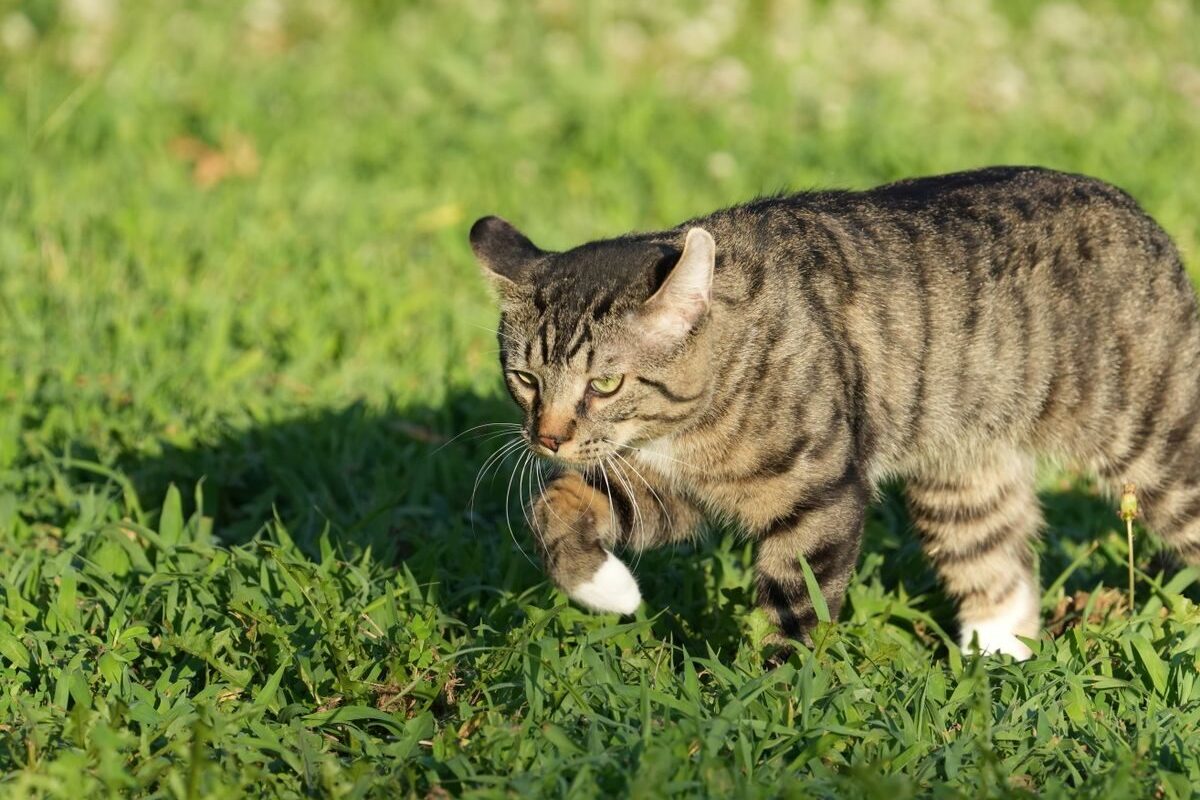
If you have ever watched a cat in a garden, you have seen it: the cat ignores the expensive bed, the sunny windowsill, and the toy you bought, walks straight to a patch of grass, and starts chewing it like a cow. Then it either wanders off perfectly happy or throws up on your rug. Owners have been puzzling over this for years, and the honest answer is that cats probably do it for more than one reason.
The first thing to know is how normal it is. Grass-eating is one of the most common cat behaviours there is. Wild cats eat grass too, and so do lions and tigers in the wild. It is not a sign that your cat is starving, and it is not a sign that something is deeply wrong. It is just something cats do.
The hairball theory, and where it falls short
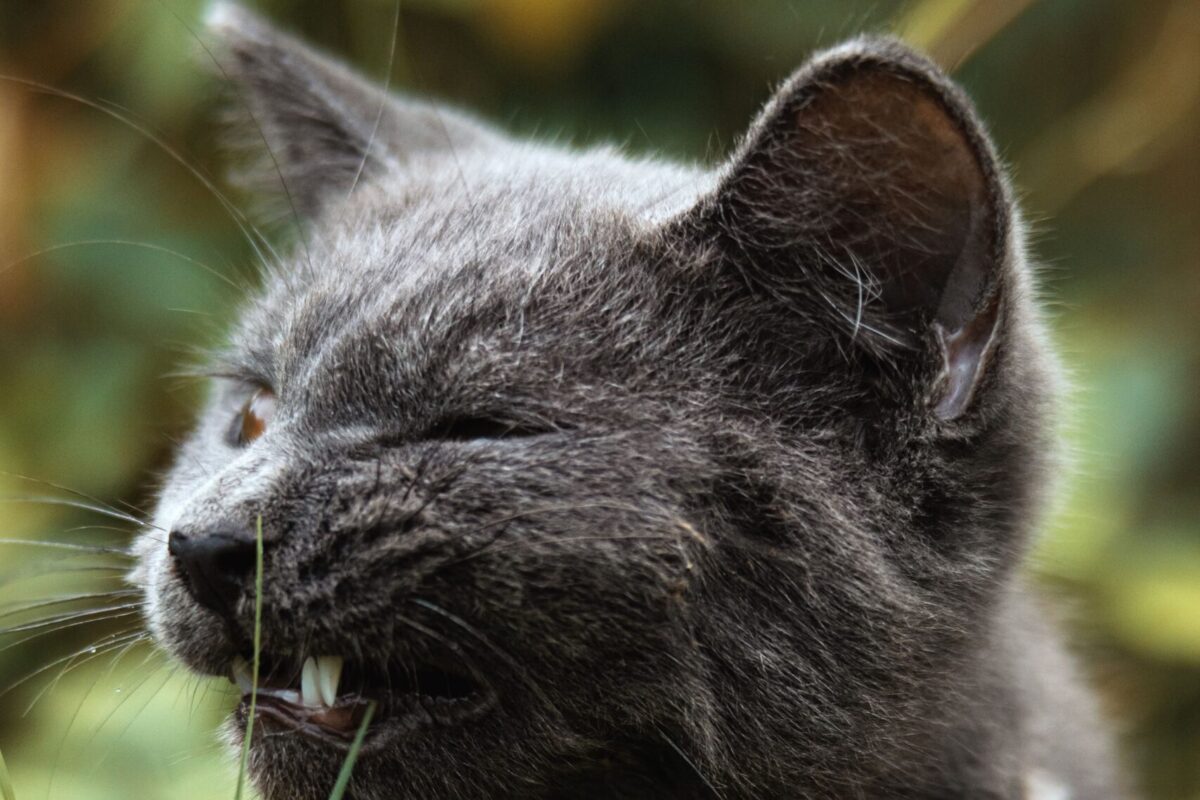
The explanation most people hear first is hairballs. The idea goes like this: cats swallow fur when they groom, the fur sits in the stomach, and grass helps move it through or bring it back up. There is some sense in it — grass is fibrous, and fibre does move things along. A cat that has just coughed up a hairball after a grass session looks like proof.
But the theory has a hole. Plenty of cats eat grass and never produce a hairball at all. Short-haired cats that barely shed do it. Kittens do it before they have much fur to swallow. And many cats eat grass and then carry on as if nothing happened, no vomiting, no hairball, nothing. If grass were only about hairballs, the cats without hairball problems would leave it alone. They do not.
So hairballs are probably part of the story, not the whole story. Grass may help some cats with fur, the same way fibre helps digestion generally, but it is not the only reason a cat heads for the lawn.
The vomiting question: do they eat grass to be sick?
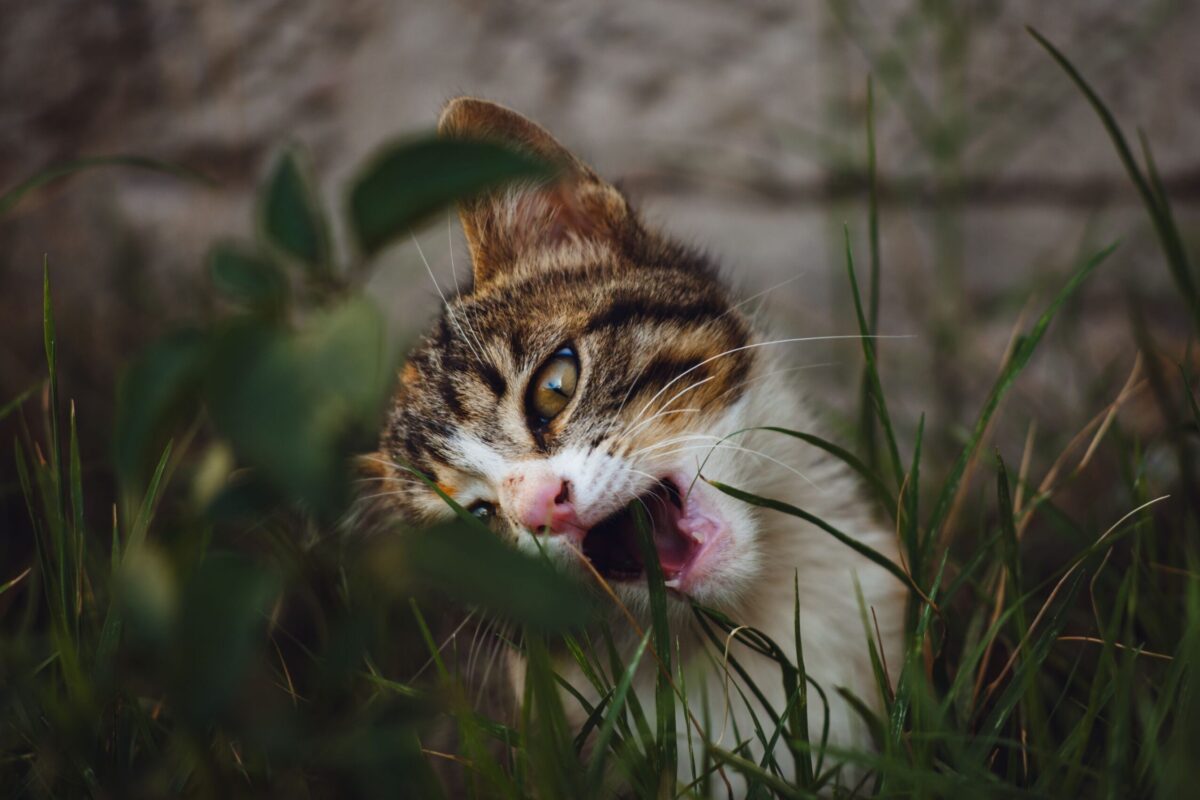
This is the part everyone gets backwards. People assume a cat eats grass because it feels sick and wants to vomit. The evidence points the other way round. Studies of grass-eating cats have found that most of them do not vomit afterwards at all. The ones that do usually vomit only occasionally, and they did not look ill before they started chewing.
What seems to happen is simpler: a cat eats grass, and sometimes the grass irritates the stomach lining enough to trigger vomiting, the way any indigestible plant matter can. The vomiting is a side effect, not the goal. Think of it like a human eating something that disagrees with them — the eating came first, the sickness followed, and nobody would say they ate it in order to be sick.
That distinction matters because it changes what you do. A cat that eats grass and vomits once in a while, then eats normally and plays normally, is doing something ordinary. A cat that suddenly starts eating grass constantly, or vomits repeatedly, or goes off its food, is a different situation — that change is worth mentioning to your vet.
What else grass might be doing for them
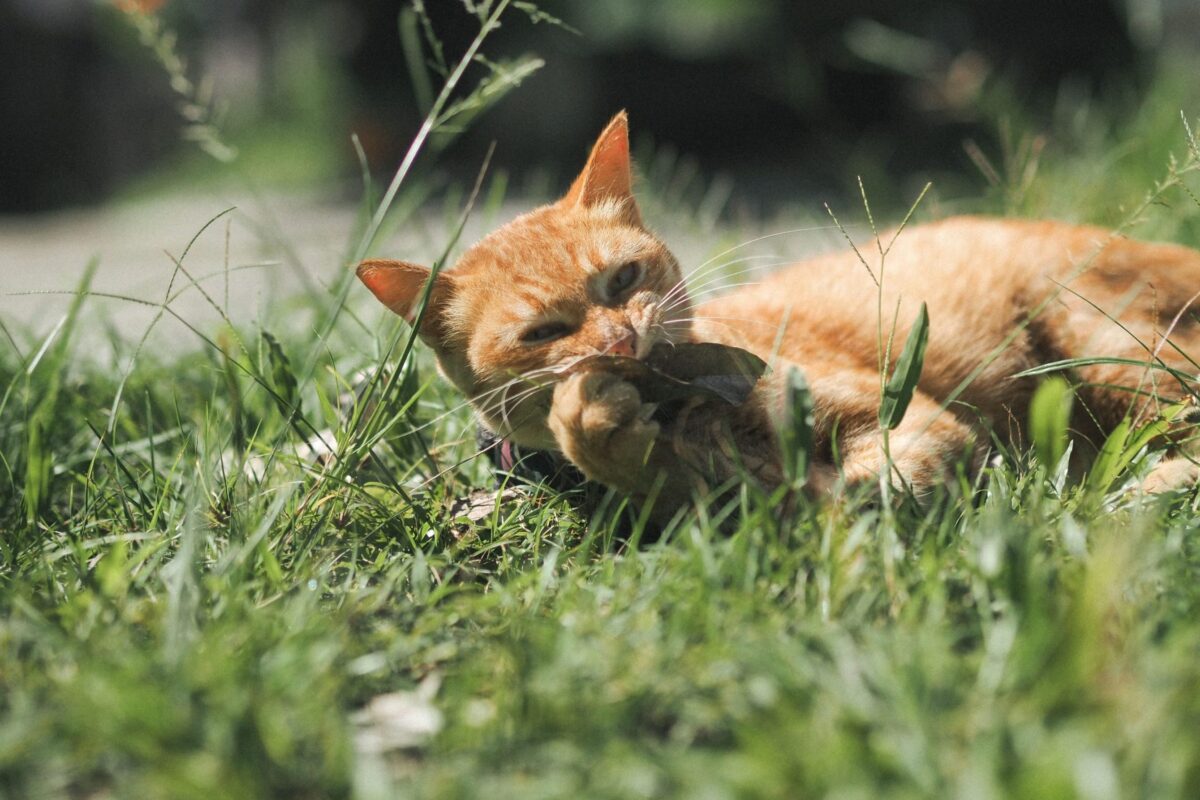
There are a few other sensible explanations, and they probably all play a part.
Nutrition is one candidate. Grass contains folic acid, a vitamin that helps with oxygen transport in the blood, and some researchers think cats instinctively top it up. Then there is simple digestion: cats are obligate carnivores, but a little plant fibre may help keep things moving, especially for indoor cats that eat a very uniform diet. And then there is the most ordinary explanation of all — taste and texture. Cats chew on things. Grass is there, it is fresh, it has an interesting texture, and some cats just like it. Not every behaviour needs a deep biological reason. Some of it is just a cat being a cat.
There is also the wild-cat angle. Wild cats eat the stomach contents of their prey, which include partly digested grass and plants. A pet cat eating grass may be echoing that old pattern, getting a small amount of plant matter its ancestors got from prey. It is a neat explanation, and it fits with how widespread the habit is across cat species.
The one real danger: what has been sprayed on it
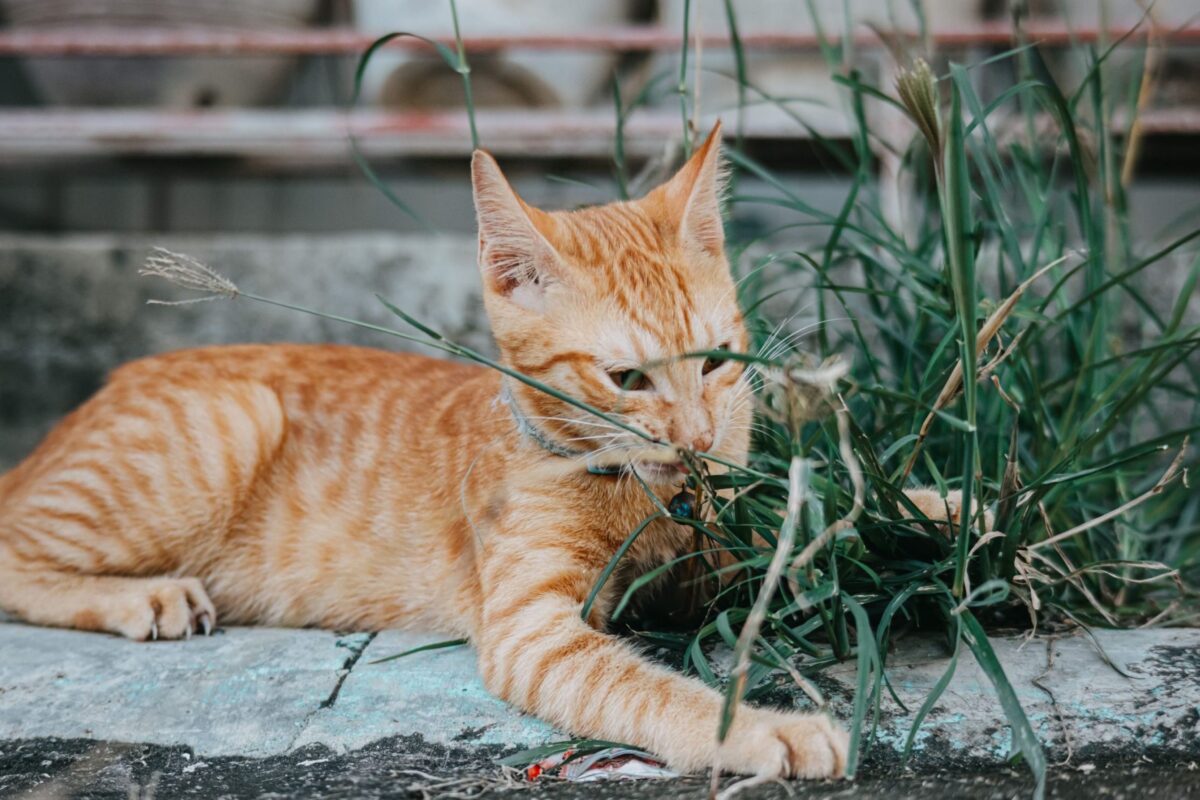
Grass itself is harmless to most cats. What is on the grass is where the danger lives. Lawns treated with weed killer, fertiliser, or pesticides can be genuinely harmful, and a cat that grazes a freshly treated lawn can pick up chemicals on its paws and fur as well as in its mouth. The same goes for ornamental plants mixed in with the grass — lilies are the famous one, and even a small amount of lily can be dangerous to cats, so a garden with lilies in it is a garden to keep a cat away from entirely.
If your cat goes outdoors, it is worth knowing what your neighbours spray as well as what you spray. A cat does not respect property lines. If you are unsure whether a lawn has been treated, keep the cat off it until it has been rained on or watered well, and wipe its paws when it comes in.
For indoor cats, the safe version is cat grass — usually wheat, oat, or barley grass grown in a pot. It gives an indoor cat the same chewing outlet without the risk of a treated lawn, and it is cheap to grow on a windowsill. Most pet shops sell pots or seed kits, and a pot lasts a couple of weeks of enthusiastic chewing before it needs replacing.
When grass-eating is worth a vet call
Most grass-eating needs no action at all. But a few patterns are worth paying attention to, because they can be the first visible sign that something has changed.
Call your vet if your cat suddenly starts eating grass far more than usual, especially if it comes with other changes: eating less food, drinking much more or much less, vomiting repeatedly rather than once in a while, diarrhoea, weight loss, or hiding and lethargy. One of these on its own may mean nothing, but a cluster of them, or a sudden change in a cat that never ate grass before, is worth a conversation.
Also watch kittens and older cats a little more closely. A kitten that eats grass constantly and vomits often may have eaten something else as well, and an older cat that suddenly develops the habit alongside weight loss deserves a check. In both cases the grass is not the problem — it is the clue.
For the average healthy cat, though, grass-eating is just one of those cat things. It looks strange to us, it makes no sense from the sofa, and it is completely normal from the cat’s point of view. Let them have their patch of lawn. Just keep the weed killer away from it.
Frequently Asked Questions
Is it normal for cats to eat grass?
Yes, very normal. Most cats do it, wild cats do it too, and it is not a sign of hunger or illness on its own. It only becomes worth attention if the habit suddenly changes a lot or comes with other symptoms.
Do cats eat grass to make themselves vomit?
Probably not. Most cats that eat grass do not vomit afterwards. Vomiting sometimes happens because grass can irritate the stomach, but the evidence suggests it is a side effect rather than the reason the cat started eating.
Is grass good for cats?
In small amounts, plain untreated grass is harmless and may help with hairballs and digestion. The risk is not the grass itself but chemicals sprayed on it, so treated lawns are the thing to avoid.
Should I grow cat grass for an indoor cat?
It is a good idea. A pot of wheat, oat, or barley grass gives an indoor cat a safe chewing outlet, and it is easy to grow on a windowsill. Replace the pot when it gets ragged, usually after a couple of weeks.
When should I worry about my cat eating grass?
If the habit suddenly increases a lot, or comes with vomiting repeatedly, eating less, drinking changes, diarrhoea, weight loss, or hiding. A sudden change in a cat that never ate grass before is also worth mentioning to your vet.
Related reading
- Why Do Dogs Eat Grass? When It’s Normal and When to Worry
- Why Do Cats Knead? The Science Behind Biscuit-Making
- Why Do Cats Purr? It’s Not Always Happiness
- How Often Should You Feed a Cat? Kitten, Adult & Senior Schedules
Sources
- RSPCA — Why do cats eat grass
- International Cat Care — Cat behaviour and grass eating
- Cornell Feline Health Center — Cats and plant eating