

Research-based only. No product was personally tested.
A cat bowl looks like the simplest thing in the house, yet it is the one most often bought wrong. Cats eat with their whiskers forward, and a deep, narrow bowl presses those whiskers against the sides with every bite. Some cats tolerate it; others eat half their food, walk away, and come back hungry an hour later. Owners blame fussiness, when the bowl is often the problem.
The fix is mostly about shape, then material, then placement. Get those three right and most cats eat happily from an ordinary bowl — no gadgets required.
Shape first: wide and shallow wins

The single most useful change is a wide, shallow bowl or a flat plate. Whiskers should not touch the sides while the cat eats, and the food should stay in the middle rather than piling against one edge where the cat cannot reach it. Saucer-style bowls and shallow, wide dishes suit most cats, and they are especially helpful for flat-faced breeds, whose short muzzles already make eating harder.
Depth matters for water too. Some cats dislike dipping their whiskers into a deep water bowl and will drink less, or paw at the water, or only drink from a running tap. A wide, shallow water dish solves the same problem the same way.
Material: stainless steel and ceramic lead
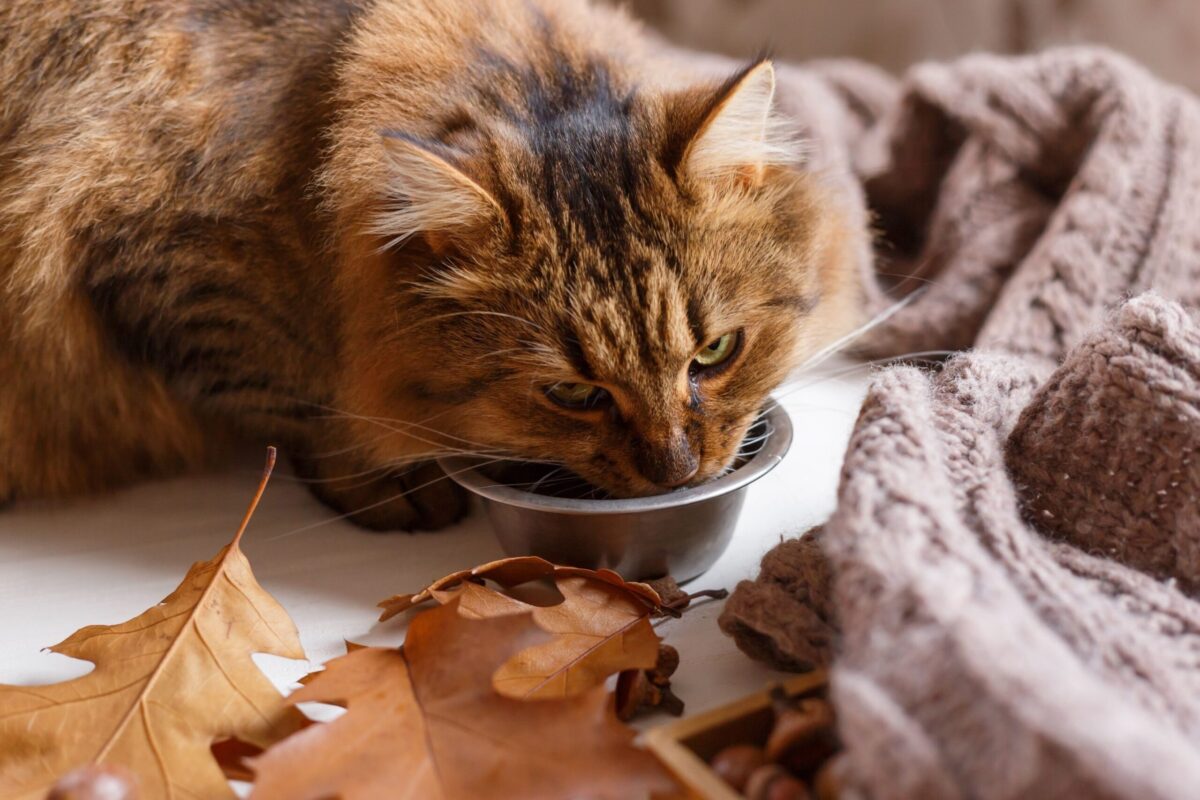
Stainless steel is the practical favourite: it does not absorb smells, it is hard to scratch, and it goes through the dishwasher without fuss. Scratches matter because bacteria settle into them, so a bowl that stays smooth stays cleaner.
Ceramic is the quiet favourite. It is heavy, so it does not slide or tip, and it comes in wide, shallow shapes easily. The trade-off is breakage — a ceramic bowl dropped on a tile floor is finished — and any chip means the bowl should be retired, since chips harbour bacteria and can cut a mouth.
Plastic is the one to be careful with. It scratches easily, holds smells, and some cats develop chin irritation from eating out of plastic bowls. If your cat has a sore or spotty chin, switching away from plastic is one of the first easy changes worth trying. Plastic bowls are cheap and light, which is exactly why they tip and slide, so they are the weakest choice for most cats.
Raised bowls and slow feeders
Raised bowls suit older cats and cats with stiff joints, since they do not have to crouch as far. For a young, healthy cat, height makes little difference, and a raised bowl is not a necessity. The key is that the cat eats comfortably — watch your cat eat and let its posture decide.
Slow-feeder bowls, with ridges or maze patterns inside, suit cats that gulp their food and then vomit it back up. Spreading the food out forces a slower pace and smaller mouthfuls. If your cat regularly vomits after eating fast, a slow feeder is worth trying — and if the vomiting continues, that is a vet conversation, not a bowl problem.
Placement matters as much as the bowl
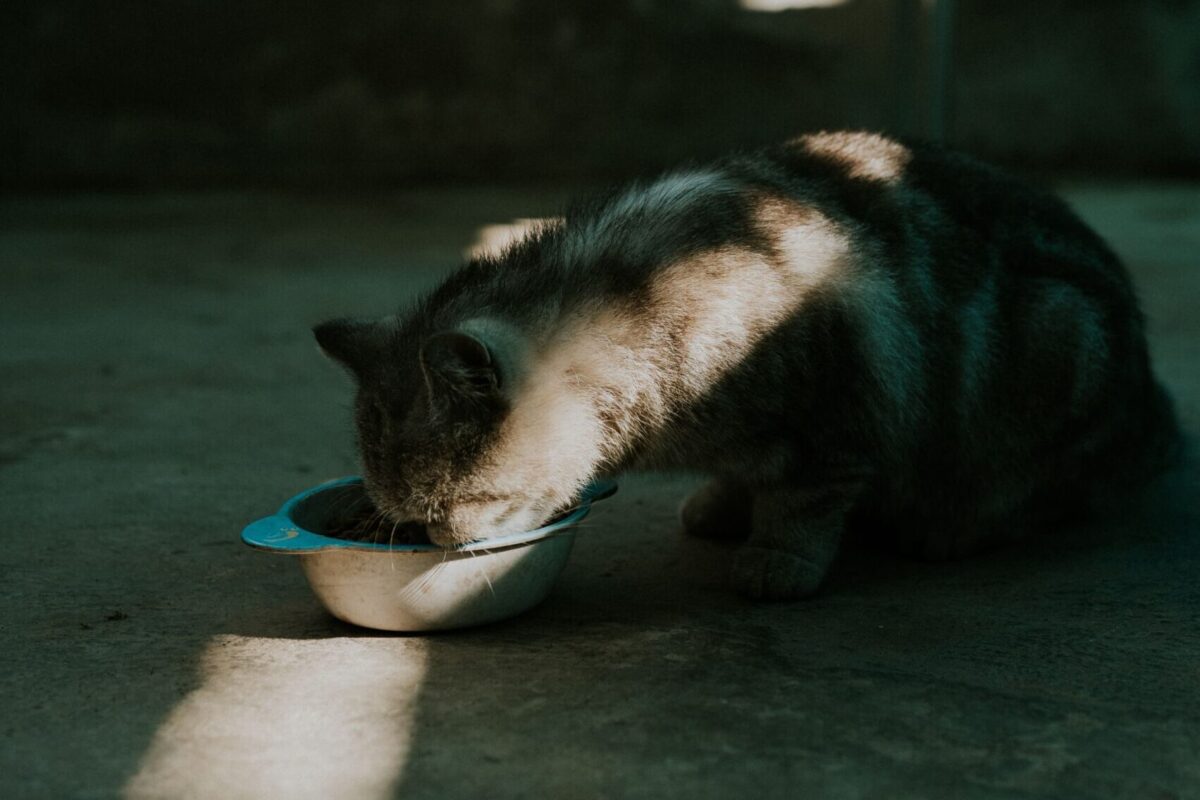
Cats do not like eating next to their litter tray, and many dislike eating right beside their water. In the wild, cats do not drink where they eat, and that instinct survives in the house: a water bowl placed away from the food bowl often gets used more. Multi-cat homes need one bowl per cat, plus one spare, placed apart, so no cat has to eat while being stared down by another.
Wash bowls daily. Old food residue goes rancid, and a cat that refuses a dirty bowl is being sensible, not fussy. Stainless steel and ceramic both make daily washing easy, which is another reason they beat plastic.
| Bowl type | Best for | Watch out for |
|---|---|---|
| Wide, shallow stainless steel bowl | Most cats, daily use | Light ones slide — choose a weighted base |
| Wide ceramic saucer or dish | Flat-faced cats, tip-proof feeding | Breaks if dropped; retire if chipped |
| Raised bowl | Older or stiff cats | Unnecessary for young, healthy cats |
| Slow-feeder bowl | Cats that gulp and vomit | Does not fix vomiting that keeps happening — see a vet |
| Plastic bowl | Temporary or travel use | Scratches, holds smells, can irritate chins |
Buying advice
Start with shape: wide and shallow, in stainless steel or ceramic. Buy one per cat plus a spare, place food and water apart and away from the litter tray, and wash daily. Change only if your cat tells you to — eating half its food, pawing food out of the bowl, or refusing to eat from it are all messages worth listening to.
Methodology note
This guide is based on published feline feeding and behaviour guidance, not on hands-on testing. Product types are described by shape and material, not by brand claims, and no bowl is presented as tested by this site.
Frequently Asked Questions
Why does my cat eat half its food and walk away?
It may be the bowl. Deep, narrow bowls press on whiskers and push food out of reach. Try a wide, shallow dish and see if the cat finishes more.
Are plastic bowls bad for cats?
They are the weakest choice: they scratch, hold smells, and some cats develop chin irritation from them. Stainless steel or ceramic is better for daily use.
Should I buy a raised bowl for my cat?
It helps older or stiff cats that struggle to crouch. For a young, healthy cat it makes little difference — watch how your cat eats and let that decide.
Why does my cat prefer drinking from a tap?
Many cats dislike dipping their whiskers into a deep bowl, and moving water attracts them. A wide, shallow water dish placed away from the food bowl often helps, and a fountain is another option.
My cat vomits after eating fast. Will a slow feeder help?
Often yes — spreading food out slows gulping. But if vomiting keeps happening, talk to your vet, because it may not be about speed at all.
Related reading
- How Often Should You Feed a Cat?
- Best Cat Puzzle Feeders: Slow Meals, Busy Minds
- Best Cat Trees: Height, Scratching and a Perch Your Cat Will Actually Use
- 10 Things That Hurt Your Cat Without You Knowing (And What to Do Instead)
Sources
- International Cat Care, feline feeding behaviour guidance
- PetMD, cat bowls and whisker fatigue
- VCA Animal Hospitals, feeding cats and bowl hygiene
- RSPCA, cat feeding and care basics