
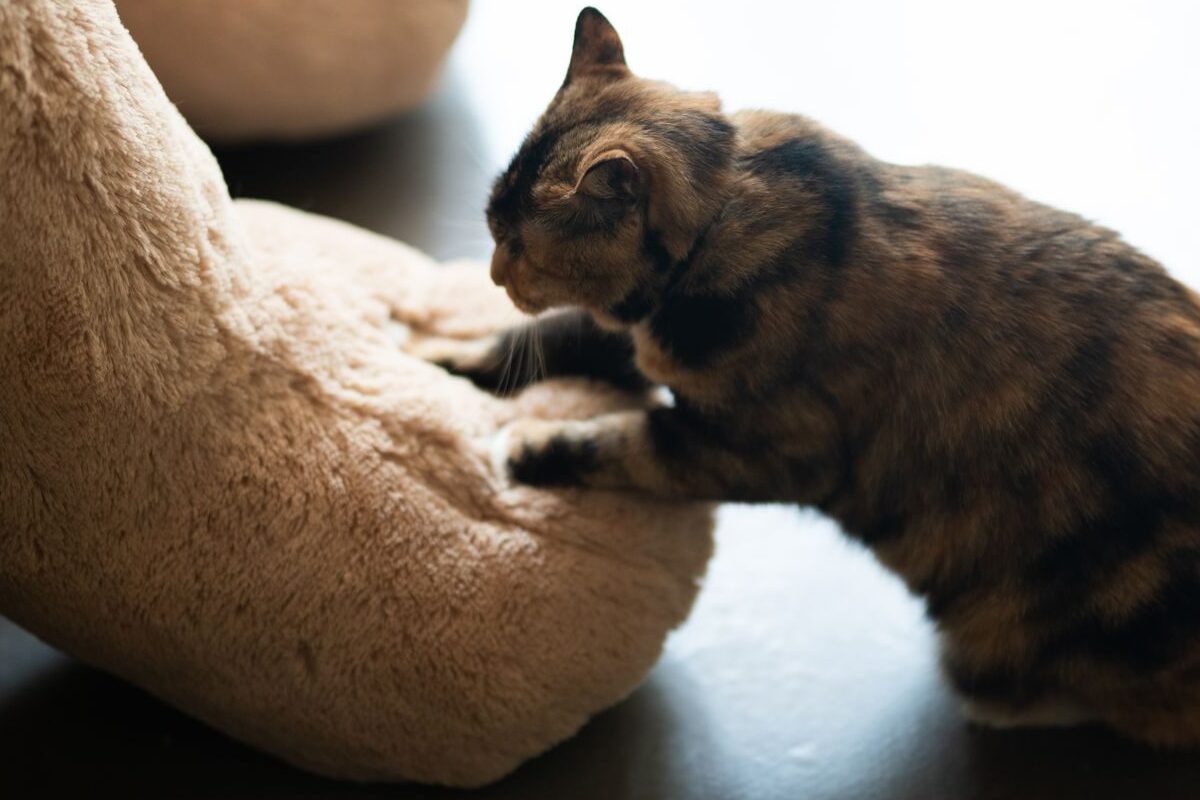
Cats drool for two very different reasons, and context tells them apart. Happy drool happens when a cat kneads, purrs or is petted in a favourite spot, and some cats have done it since kittenhood without anything ever being wrong. Trouble drool is new, heavy, or paired with other changes, and needs a vet check.
If your cat has always drooled a little when relaxed and nothing else has changed, that is almost certainly just her. If drooling is new, heavy, or comes with other changes, it deserves attention.
The happy drool
The commonest harmless drool is the relaxed drool. A cat that is deeply content — kneading, purring, half-asleep on a favourite person — sometimes lets a little saliva escape. It goes back to kittenhood, when kneading and nursing went together, and the settled, feeding state that came with it. Some cats drool when they are petted in exactly the right spot, and some drool when they smell or anticipate a favourite food. This kind of drool is small in amount, it happens in pleasant moments, and the cat is otherwise completely herself. If that is your cat, and it has always been your cat, there is nothing to fix.
Dental problems
Most medical drooling in cats starts in the mouth. Sore gums, a broken tooth, a mouth ulcer or advanced dental disease can all make swallowing painful, so saliva builds up and spills out instead of being swallowed normally. The signs that point this way are drooling paired with bad breath, dropping food, chewing on one side, pawing at the mouth, or a reluctance to eat dry food that used to be fine. Older cats are more likely to have dental problems, and many cats hide mouth pain well — drooling may be the first visible sign. A vet can check the mouth properly; this is not something to guess at from home, because a cat’s mouth is hard to examine while she is awake and in pain.
Nausea and upset stomach
A cat that feels sick often drools before she vomits, or drools instead of vomiting. If drooling comes with lip-smacking, retching, hiding, appetite loss or a recent change of food, nausea is a likely part of the picture. Motion sickness drools the same way — some cats drool heavily in the car and stop the moment the journey ends. Short-lived drool around a single vomit, with the cat back to normal afterwards, is usually just a stomach upset. Drooling that goes on, or comes with repeated vomiting, is a vet visit.
Taste, irritants and things she should not have licked
Cats drool when something tastes awful. A bitter medicine, a cleaning product licked off a paw, a plant nibbled out of curiosity — all of them can set off sudden, heavy drooling as the cat tries to get the taste out of her mouth. Lilies are the serious version of this: even a small amount of lily pollen licked off fur can damage a cat’s kidneys within days, and drooling is one of the early signs. The same goes for essential oils, which cats process poorly — droplets on fur, licked off during grooming, can cause drooling, pawing at the mouth and tiredness.
If drooling starts suddenly after access to a plant, a chemical or a new product in the house, treat it as urgent: note what she may have touched, keep the packaging if you can, and call the vet rather than waiting to see if it passes. For anything poisonous, speed matters more than certainty.
Mouth injuries and objects stuck in the mouth
A cat with something caught in her mouth — a piece of string, a small bone, a bit of toy — will drool, paw at her face and often panic a little. A cut inside the mouth, or a sting on the tongue from an insect, does the same. If your cat is suddenly drooling and pawing at her mouth, look if you safely can, but do not force her mouth open or reach in blindly — a frightened cat bites, and a stuck object can be pushed further in. If you can see something and remove it easily, do so; if not, the vet should do it.
When drooling is an emergency
Most drool is not an emergency. But call the vet promptly, or the emergency clinic out of hours, if drooling is sudden and heavy, if the cat is pawing at her mouth and distressed, if she has had access to lilies or chemicals, if she cannot swallow or her mouth hangs open, or if drooling comes with collapse, seizures, breathing trouble or swelling of the face. Those are the cases where waiting costs more than a phone call.
What the vet will check
A vet checking a drooling cat will look in the mouth first, feel under the jaw, ask about recent changes in food, products and plants, and check for fever or dehydration. Depending on what they find, they may clean teeth under anaesthetic, treat an ulcer or infection, or run blood tests if poisoning or organ problems are suspected. Knowing when the drooling started and what changed around the same time is the most useful thing you can bring to that appointment — more useful than the drool itself.
FAQs
Is it normal for cats to drool when happy?
Yes, for some cats. A little drool while kneading, purring or being petted in a favourite spot is normal, especially if the cat has always done it. It is the relaxed, kittenhood echo, not a problem.
Why is my cat drooling all of a sudden?
Sudden drooling usually means something changed: a sore tooth, nausea, a bad taste, or something she licked that she should not have. Check for access to plants, chemicals or new products, and look for other changes like appetite loss or pawing at the mouth.
Does drooling mean my cat has dental disease?
Not always, but it is the commonest medical cause. Drooling with bad breath, dropping food, chewing on one side or avoiding dry food points that way, and a vet dental check is the way to confirm it.
My cat drools in the car. Is that normal?
Yes, that is usually motion sickness. Many cats drool on car journeys and stop when the journey ends. If it happens on every trip, ask the vet — there are ways to make travel easier for a nauseous cat.
When should I worry about cat drooling?
If it is new and heavy, if the cat paws at her mouth or seems distressed, if she has had access to lilies or chemicals, or if drooling comes with appetite loss, vomiting, collapse or breathing trouble. Then call the vet promptly.
Why is my cat drooling and pawing at her mouth? Pawing at the mouth with drooling often points to something in the mouth: a stuck object, a sore tooth, an injury, or a bad taste. Look gently if you safely can, and do not reach deep into the mouth. If drooling is heavy or the cat seems distressed, call your vet promptly.
What will the vet check for drooling? Usually the mouth first: teeth, gums, tongue and throat, plus anything stuck or injured. The vet will also ask about recent changes — new plants, chemicals, foods or medicines — and about nausea, appetite and behaviour. Blood tests or imaging follow only if the mouth looks normal and the cause is still unclear.
Do kittens drool more than adult cats? Some kittens drool when relaxed or while teething, and it often fades as they grow. It echoes the settled, feeding state of kittenhood, and on its own it is rarely a worry. New, heavy drooling in a kitten, or drooling with not eating, vomiting or lethargy, still needs a vet check — kittens dehydrate and decline faster than adults.
Internal links (existing live Furrology posts)
- https://furrology.net/why-do-cats-knead/
- https://furrology.net/things-that-hurt-your-cat-without-knowing/
- https://furrology.net/cat-vomiting-when-to-worry/
- https://furrology.net/how-to-make-your-cat-love-you-more/
Sources
- PetMD, drooling in cats and causes
- VCA Animal Hospitals, feline dental disease and oral health
- International Cat Care, lily poisoning in cats
- ASPCA, toxic plants and essential oils and cats